Helen Nugent

First-time buyers flock to the bank of mum and dad

From our UK edition

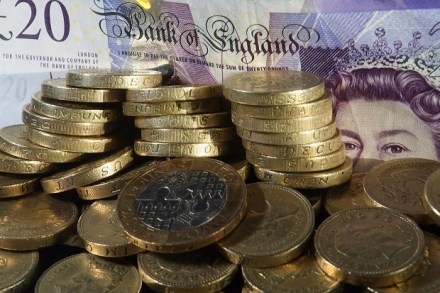
When my sister had a little girl, my aunt told her: 'You're vulnerable for the rest of your life.' She meant, of course, that my sister's overwhelming love for her daughter would mean a lifetime of worry - as well as all the incredible new experiences that motherhood would bring. She should have added financial vulnerability to that list. From pocket money to tooth fairy cash, childcare and education, children are expensive. According to the Centre for Economics and Business Research, the cost of raising a child to the age of 21 is £230,000, or more than the price of an average semi-detached house in Britain. Many parents will know that the financial outlay doesn't stop at 21.
It’s not grim up North: Manchester tops UK cities for house price growth

From our UK edition

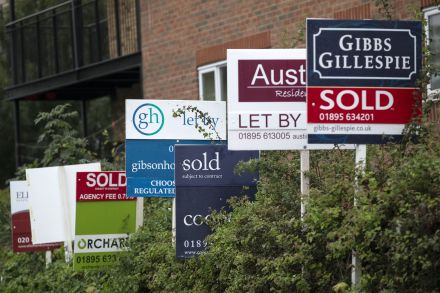
'Northern Powerhouse fires up house prices in Manchester' shouts one headline. 'Manchester is at the centre of Britain's property boom' declaims another. 'Manchester top for house price growth', a third declares. As a property-owning Mancunian who has no intention of moving, this is welcome news. According to Hometrack, prices in my home city increased by 8.8 per cent in February, a faster rate than the property market in any other large British city. Also in the top ten are Portsmouth, Bristol, Glasgow and Birmingham. But what of the capital? It is now in tenth place in terms of year-on-year house price growth in Hometrack's list which tracks the movements of house prices across the 20 biggest cities, having recorded 5.

Work till you drop: state pension age could be raised to 70

From our UK edition

There's an episode of the TV political drama The West Wing which focuses on the raising of the retirement age. After much to-ing and fro-ing it's decided that the subject is too toxic to tackle and so it is dropped from the President's agenda. If only art mirrored life. A new report suggests that the UK state pension age should rise to 68 by 2039 instead of the previously planned 2046. John Cridland, former director-general of the Confederation of British Industry and the author of the government-commissioned study, also rules out 'early access' to the state pension. The state pension age is already due to rise to 67 for both men and women by 2028.

Don’t let financial firms take you for a ride: shop around for the best deals

From our UK edition

Apathy. In a world where there are countless demands on our time, social media never sleeps and 24-hour news bombards us with stories of doom and gloom, it's tempting to down tools, reach for the duvet and adopt the foetal position. But an apathetic attitude has consequences, whether it's missing that crucial deadline or turning up late for work - again. The same is true in finance, as two new studies out today demonstrate. Take the thorny issue of remortgaging. According to L&C Mortgages, the advisory firm, four million UK households are languishing on standard variable rates. That's more than a third of homeowners. In addition, 3.4 million households don't know the current interest rate of their mortgage.

Cheque please: cheques to be cleared within one working day

From our UK edition

There are many mysteries in life. Where did we come from? Why do I always forget to take my bag for life to the supermarket? Why does the word lisp have an 's' in it? And, in the name of all that is holy, why does it take up to six days to clear a cheque? At least that last one is close to being answered - and solved. The Cheque and Credit Clearing Company (C&CCC), the organisation that manages the cheque clearing system, has today announced details of the launch of an industry-wide image-based cheque clearing system that will speed up cheque processing significantly for customers across the UK. At present, cheques have to be physically transported back to the bank that issued them.

UK inflation jumps to 2.3 per cent raising prospect of interest rate rise

From our UK edition

The economists were right. For months now, they have been warning that the Brexit vote and the subsequent fall in the pound would drive up prices. Today's figures from the Office for National Statistics confirm that consumer prices are rising at their fastest rate for more than three years. According to the ONS, the Consumer Prices Index (CPI) jumped to 2.3 per cent in February, up from 1.8 per cent in January and above the Bank of England's 2 per cent target. Food prices recorded their first annual increase for more than two-and-a-half years, reaching 0.3 per cent higher in February than a year earlier. With the prospect of an interest rate rise now on the cards, households are facing the first real squeeze in their incomes for some time.

Half the value of your home at risk from average care home stay

From our UK edition

Milestone birthdays have a tendency to get the mind racing. When I turned 40, I had a bit of a wobble. I remembered my mum's 40th and now here I was, the same age, and all I had to show for it was a middle-aged paunch and a geriatric cat. Or so I thought, anyway. This week my dad celebrates his 70th. He's lucky in that he still has his health, still works (his choice) and still enjoys a (relatively) active life. And he owns his own home. That last one, though. What if, god forbid, he needs social care at some point in the future? How will we pay for it? Will the house have to be sold? Will that be enough? A new report out today makes for bleak reading.

House prices now more than seven times income

From our UK edition

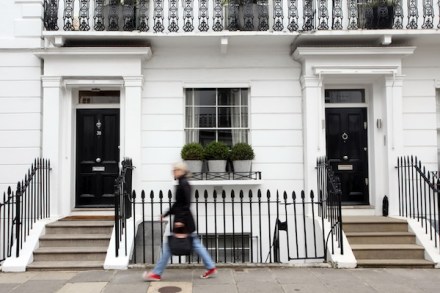
There are many things that beggar belief. The enduring popularity of Mrs Brown's Boys for one. A continued appetite for the songs of James Blunt. And the appointment of George Osborne as editor of the London Evening Standard. That last one is particularly hard to fathom. But then so is some other news out this morning: a typical home now costs more than seven times income. And I'm not talking about your luxury pads or property in the most desirable enclaves of the capital. According to the Office for National Statistics (ONS), the typical property now costs 7.6 times average annual earnings of employees in England and Wales. This is a record - and an unwelcome one at that, especially for first-time buyers already struggling to get onto the property ladder.

The retreat on National Insurance will do little to bolster the confidence of the self-employed

From our UK edition

U-turn, flip-flop, whatever you want to call it, there's no getting away from the fact that Philip Hammond's policy reversal on National Insurance is hugely embarrassing both for him and the government. Just one week after the Chancellor reneged on a manifesto promise not to raise taxes, he bowed to pressure and announced that the hike in National Insurance Contributions (NICs) for the self-employed would not go ahead. According to The Telegraph, Theresa May told Hammond that 'we are reversing this – I don’t care how bad it is for you’. The news comes as welcome relief for millions of self-employed who were facing an increase in Class 4 NICs.

Homeowners ‘earning’ more from their properties than their jobs

From our UK edition

It brings a whole new meaning to 'working from home'. New research has revealed that homeowners in one in three UK local authorities 'earn' more from their properties than going to work. I don't know whether to be thrilled or depressed by this news. Although given I live north of Manchester and (not surprisingly) more than nine out of ten areas where house prices are outpacing earnings are in London, the South East, South West and the East of England, I'm veering towards the 'crying on the inside' option. A closer look at the data from Halifax also shows that London boroughs dominate the top ten list of locations. The biggest gap between rising property values and earnings was in Haringey.

Pity the Co-op: bank reports fifth consecutive year of losses

From our UK edition

If you're a Manchester resident, you'll be familiar with the all-singing, all-dancing, brand-spanking-new Co-op headquarters. In much the same way that London's City Hall squats on the banks of the Thames, One Angel Square looms over Victoria Station, its solid glass bulk in stark contrast to the company's iconic 1960s CIS Tower just over the way. The UK's largest building when it was completed in 1962 (this title was later claimed by the capital’s Millbank Tower), the former home of The Co-operative Group is a relic of a bygone age. To step inside is be transported back to the grey vision of mid-20th century town planners. Once a jewel in Manchester's architectural crown, it is now a depressing reminder of the Co-op's fall from grace. Pity the Co-op.

New £5 million fund to help mothers returning to work is long overdue

From our UK edition

There's a lot happening today. It's International Women's Day, Discover What Your Name Means Day, and we're right in the middle of National Pie Week. Oh, and it's the Spring Budget. Mindful of at least two of these events, Theresa May has revealed a new £5 million fund to help mothers return to work after a long career break. Making the announcement on Mumsnet, the Prime Minister said: 'Returnships are open to both men and women but we should acknowledge that, more often than not, it is women who give up their careers to devote themselves to motherhood, only to find the route back into employment closed off, the doors shut to them. This isn't right, it isn't fair and it doesn't make economic sense.' I applaud this extension of return to work schemes.

UK house price growth slows to its lowest pace since 2013

From our UK edition

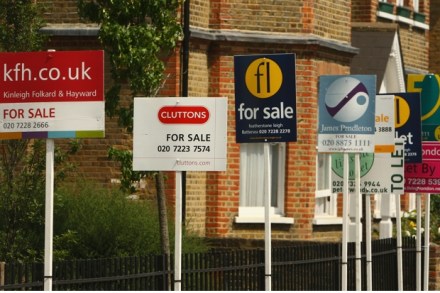
As a nation, we obsess. We obsess about the weather, taxes, the state of the roads, death and the cost of milk. I could go on. And there's one other thing uppermost in our minds: house prices. I've lived in the same place for six years but I still can't pass an estate agent without glancing in the window. I keep a close eye on house prices in my local area - are they, up, down, static - and I regularly calculate the amount of equity in my property. Yet I have no intention of moving. I'm not alone in all this, which goes some way to explain why house price indices are followed so closely. It's not just about first-time buyers, upsizers, downsizers or any of the other categories of home-movers; we all care about the cost of what will probably be our biggest ever financial outlay.

Customers will bear the brunt of BT’s Champions League deal

From our UK edition

As a Newcastle United fan, fretting whether my team will make it to the Champions League isn't something I am burdened with on a regular basis. If it was, I might be tempted to pay for BT Sport. If that was the case, however, I'd be among the 10 million people who, from April 2, will have to shell out more to watch their football teams chase European glory. For people who have BT broadband but watch BT Sport through a Sky box, they will be landed with a rise of £1.50 per month to £7.50 on April 2. And non-BT broadband customers who watch BT Sport with a Sky box will see prices increase by £1 to £22.99 per month on the same date.

Stamp duty, home ownership, retirement and pensions

From our UK edition

It's the bane of home-buyers' lives - and now a major building society has said that stamp duty is due a major overhaul. The Yorkshire Building Society said that nearly three-quarters of first-time buyers pay the tax, compared with just over half in 2006. It wants stamp duty to be a tax on property sellers, rather than buyers, according to the BBC. While house prices have risen, the stamp duty threshold has remained the same. It is levied on properties of more than £125,000, or £145,000 in Scotland. Home ownership The Guardian reports that home ownership in England has dropped to its lowest level for three decades but the amount of people who rent privately is higher than in the early 1960s.

PPI, incomes, new homes and spending

From our UK edition

The Financial Conduct Authority has finally announced a deadline for people seeking compensation over mis-sold payment protection insurance. The City regulator has said that people will have to make their claims before 29 August 2019. In one of the industry's biggest scandals, banks have set aside more than £40 billion to meet the payouts. Although millions of people have already received compensation, it is thought that many more have yet to lodge claims. The BBC reports that the FCA will conduct a two-year public awareness campaign, starting in August this year. Incomes The Telegraph reports that 'Britons should brace for two years of stagnant real pay as inflation surges while cautious employers hold back wage hikes'.