Helen Nugent

Money digest: today’s need-to-know financial news | 13 May 2016

From our UK edition

If like me you're plagued by Payment Protection Insurance phone calls, then it may interest you to know that cold callers have made at least £5 billion by bombarding the public with nuisance calls and texts. According to a report by MPs, failures by the Government and the City have encouraged the growth of the claims management industry, which makes up to 84 million unwanted calls a week. MPs on the Public Accounts Committee said that these firms are permitted to pocket as much as a quarter of PPI refunds. Almost half of all nuisance calls are from companies wanting to manage PPI claims, according to consumer group Which?.


Money digest: today’s need-to-know financial news | 12 May 2016

From our UK edition

The news for savers keeps getting worse. Analysis for BBC News shows that interest rates for savers have fallen to new record lows, after hundreds of cuts in recent months and more than 1,000 in the past year. Savings rates plummeted after the Bank of England cut the base rate during the financial crisis. Now ISAs, fixed rate bonds and easy access accounts are all at or near their lowest points. In research carried out for the BBC, the rate-checking firm Savings Champion recorded 1,440 savings rate cuts last year and more than 230 so far this year. Thisismoney.co.

Generation doomerang: moving back in with mum and dad

From our UK edition

Am I a 'doomeranger'? If a new survey is to be believed then, yes, that's exactly what I am. In a twist on the phrase 'boomerang generation' - used to describe young people who, not long after leaving home, move back in with their parents - some PR whizz has coined 'doomeranger' to mean adults who return to the nest years after moving out. These so-called doomerangers (who make up 14 per cent of the population) often have families of their own and have been forced back in with mum and dad after a bad break-up or financial problems. Thankfully I didn't fit into either of those categories when, five years ago, I left London and moved back to the family home some 230 miles north.

Money digest: today’s need-to-know financial news | 11 May 2016

From our UK edition

With the savings market in steady decline and interest rates at record lows, it’s hard to believe there is any upbeat savings news. But research by Moneyfacts.co.uk reveals that regular savings accounts have turned against the flow of rate cuts. As a result, the average fixed regular saving rate has risen by 0.10 per cent in the last six months. Charlotte Nelson, finance expert at Moneyfacts, said: 'It’s great news that regular savings accounts are seeing an improvement in rates, particularly as savers are currently struggling to get a decent return. These accounts are often overlooked as they require a monthly commitment. However, the fact is they pay far more than many other accounts on the market.

Money digest: today’s need-to-know financial news | 10 May 2016

From our UK edition

Owning houses and cars can sometimes seem like throwing money into a black hole. And there's little respite - new research has found that car insurance premiums rose by an average of 12 per cent over the past year. MoneySuperMarket, the price comparison site, looked at year-on-year quarterly car insurance premiums to identify overall and regional price fluctuations. The average premium paid in the first quarter of 2016 was £478, up from £428 in the same period in 2015 – a stinging £50 hike. Drivers in Tonbridge saw premiums rise by almost a quarter (23 per cent – or £75). Drivers in Dartford, Worcester and Wolverhampton also experienced hefty year-on-year increases, with prices ballooning by a fifth.

Money digest: today’s need-to-know financial news | 9 May 2016

From our UK edition

Just days after Halifax and Scottish Widows said they would raise their age limit for mortgages from 75 to 80, Nationwide has announced it is increasing its threshold too. The UK's biggest building society is raising its age limit for borrowers by ten years to 85. The change - which applies to when a mortgage term ends, not the maximum age a borrower at which can apply for a loan - is yet another sign of the impact of rising house prices on buyers. Nationwide said the increase was due to 'growing demand', and the limit would be in force from July. It means a 60-year-old could take out a 25-year mortgage as long as they prove they can afford the repayments.

Money digest: today’s need-to-know financial news | 6 May 2016

From our UK edition

Property news has dominated the financial headlines this week and today is no exception. On the front page of The Times is an exclusive story revealing that Britain’s biggest mortgage lender has decided to increase its age limit from 75 to 80 as it adapts to an ageing population. The change will be introduced by the Halifax next week in response to shifting 'demographics and working habits'. It means that for new applications the mortgage term will be allowed to run until the borrower’s 80th birthday. Scottish Widows, which is also owned by Lloyds Banking Group, will bring in the same rule. At present only building societies lend to people over 75.

Money digest: today’s need-to-know financial news | 5 May 2016

From our UK edition

If you're frustrated about the slowness of your internet connection, take heart from this morning's news that BT is to spend £6 billion over the next three years to roll out faster broadband and mobile phone services. BT has reported a 15 per cent rise in annual profits to £3.03 billion, helped by stronger demand for broadband and TV services despite criticism by consumer groups for high prices, slow broadband speeds and poor customer service. Total sales rose 6 per cent to almost £19 billion. Meanwhile, another £450 million is being set aside to compensate Clydesdale Bank customers for mis-sold payment protection insurance. It will take the total cost of mis-selling various financial products at the bank to £2.1 billion.

Money digest: today’s need-to-know financial news | 4 May 2016

From our UK edition

Yesterday we reported that the ‘bank of mum and dad’ is now the equivalent of a top ten mortgage lender in the UK. Today comes the news that one of Britain's biggest lenders has launched a new 'bank of mum and dad' deal for people with wealthy parents. The new mortgages from Barclays have reduced the deposit homebuyers need from 5 per cent to 0 per cent of the purchase price, as long as their parents agree to save at least 10 per cent in a special savings account. This marks a return to what some commentators view as the dark days of the 100 per cent mortgage, common before the last housing crash.

Money digest: today’s need-to-know financial news | 3 May 2016

From our UK edition

If you're a parent then today's housing news may come as little surprise: the 'bank of mum and dad' is now the equivalent of a top ten mortgage lender in the UK. Research by Legal & General and the Centre for Economics and Business Research has found that parents helping their children on to the property ladder have become such a crucial part of the housing market that they will be involved in a quarter of all property transactions this year. Rising house prices, years without real-terms wage rises, a shortage of supply and tougher mortgage regulations since the financial crisis have made it difficult for first-time buyers to get on the ladder. So family members have stepped in.

Money digest: today’s need-to-know financial news | 22 April 2016

From our UK edition

A rush by landlords and second home buyers to beat the deadline for a new three per cent stamp duty surcharge on additional properties saw mortgage lending in March soar 59 per cent higher than a year ago. The Council of Mortgage Lenders said it had seen the biggest stamp duty distortion of the property market ever, as buy-to-let purchasers flooded the market. A total of £25.7 billion was taken out by borrowers last month - 43 per cent more than February when lending totalled £18 billion. Richard Sexton, director of chartered surveyor e.surv, said: 'This peak of house purchase lending could be the highest we’ll see in a single month for the rest of the year. Last-minute lending ahead of stamp duty changes has sparked an inevitable rush of activity.

Money digest: today’s need-to-know financial news | 21 April 2016

From our UK edition

Millions of current account customers are languishing on terrible rates. Now new research shows that the number of Britons switching accounts has hit its highest monthly level. According to Bacs, the payments body, a total of 124,615 ditched their bank for pastures new in March, up 10 per cent compared to this time last year. Santander, Nationwide Building Society and Halifax were the biggest winners in terms of those switching in. Santander made a net gain of around 51,000 customers using the seven day switching service between July and September - far higher than any other provider.

A brief respite for motorists

From our UK edition

Ah, the put-upon motorist. Fees to park outside your own house, potholes littering the streets, road tax, MOTs, and the biggest liability of all: insurance. Last year insurance premiums soared by 14 per cent. That's an £81 increase in just 12 months, bringing the average annual comprehensive car insurance policy to £671, according to Confused.com. Analysis by the price comparison site found that every single region in the UK saw double-digit annual price increases in their car insurance costs over the past year. And that's just the average. Last time I renewed my car insurance, my existing insurer quoted around £1,500, more than double what I was previously paying.

Money digest: today’s need-to-know financial news | 20 April 2016

From our UK edition

Do you eat lunch at your desk or work into the night? The Telegraph reports that all those skipped lunch breaks and late evenings in the office accumulate over time – adding up to 39 days worth of unpaid work a year, on average. Britons clock up almost eight working weeks worth of overtime each year without being paid for this extra work, according to TotallyMoney.com. The finance comparison site calculated that the average British employee works for free for 6.6 hours every week, rising to 7.4 hours in London, or 43 days of unpaid labour per year. The capital is surpassed only by East Anglia, home of Cambridge and Norwich, where residents clock up 8.2 hours of unpaid overtime per week, or 48 days per year.

It’s Mortgage Freedom Day. Time to celebrate?

From our UK edition

Mortgage Freedom Day. It has a nice ring to it, doesn't it? Think about that for a second. Mortgage. Freedom. Day. Well, if you're a new borrower, then today's the day. According to Halifax, April 19 is when you'll have earned enough to pay off the annual cost of your mortgage. It works like this: based on the average annual mortgage repayment cost of £7,584 and the average net annual income of £26,023, Halifax has calculated that homeowners who took out a mortgage in the last three months of 2015 will have now earned enough on average to cover their mortgage payments for the rest of 2016. It is worked out on the basis that all earnings from January 1 are devoted to mortgage payments until these annual payments have been paid in full.

Money digest: today’s need to know financial news | 19 April 2016

From our UK edition

The Telegraph reports this morning that British Gas owner Centrica is attempting to shrug off a sharp drop in customer numbers with a range of new tariffs. In the first three months of the year, Britain’s biggest energy supplier lost 224,000 customer accounts – more than in the whole of 2015 – as customers turned to rival companies. The company has lost customers for five consecutive years, from highs of almost 16 million residential gas and electricity accounts in 2010. Now it has just over 14.4 million accounts. Iain Conn, chief executive, said that Centrica planned to introduce 'a number of innovative new tariffs' for customers in coming months, following energy regulator Ofgem scrapping its four-tariff limit last week.

Money digest: need-to-know financial news

From our UK edition

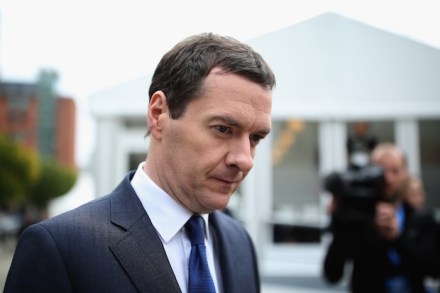
The Times reports this morning that Britain will be poorer by the equivalent of £4,300 a year per household if there is a vote to leave the European Union. In an article for the paper, George Osborne says that a Canadian-style post-Brexit deal with Europe, an approach advocated by Boris Johnson, would cause Britain’s economy to shrink by 6 per cent by 2030. He asks whether this is a 'price worth paying'. The Chancellor added: 'The conclusion is clear: for Britain’s economy and for families, leaving the EU would be the most extraordinary self-inflicted wound.' A Treasury analysis on the cost of an EU exit will be published today. A story about saving makes it to the front page of The Telegraph.

Money digest: today’s need-to-know financial news | 15 April 2016

From our UK edition

And still the fallout from the Panama Papers continues. Following the leak of more than 11 million documents revealing the tax affairs of the rich and famous, the five largest economies in the European Union have agreed to share information on secret owners of businesses and trusts. The UK, Germany, France, Italy and Spain have agreed to the data exchange. It is hoped that the move will make it harder for businesses and wealthy individuals to operate without paying correct taxes. Meanwhile, members of the Public Accounts Committee have said that HM Revenue and Customs (HMRC) is still not doing enough to tackle tax fraud.

Money digest: today’s need-to-know financial news | 14 April 2016

From our UK edition

A 'climate of uncertainty' is consolidating across Britain's housing market thanks to the impact of new stamp duty changes, the EU referendum and the forthcoming devolved elections, according to a leading industry body. For the first time since 2008, expectations for house sales have dipped into negative territory, the Royal Institution of Chartered Surveyors said. Nearly 40 per cent of surveyors told RICS they expect London property prices to fall over the next three months. Meanwhile, the Council of Mortgage Lenders reported yesterday that home-owners borrowed £8.7 billion for house purchases in February, up 4 per cent month-on-month and 21 per cent year-on-year. They took out 48,000 loans. First-time buyers borrowed £3.

Paying for the privilege to park outside your own front door

From our UK edition

I know it's de rigueur in many cities across Britain but it never ceases to rankle that councils charge people to park outside their own homes. And paying for the privilege of a parking spot is no guarantee of a space. When I lived in Hampstead, I would often arrive home to find the street chock-a-block with cars, leaving me no choice but to park some considerable distance from my front door. New research has revealed just how much councils pocket from residents' parking permits. According to the RAC, which surveyed almost 1,800 motorists and obtained details of council receipts from permits using the Freedom of Information Act, councils have almost doubled the money they collect from householders over the past five years.