George Magnus

George Magnus is a research associate at Oxford University's China Centre and at SOAS and author of Red Flags: Why Xi's China is in Jeopardy

How Trump’s tariffs will hurt China

From our UK edition

China has been hit hard by President Trump’s tariff list, which he unveiled yesterday in the White House rose garden. As part of his ‘Liberation Day’, Trump imposed new 34 per cent tariffs on China. This seems to be in addition to the 20 per cent tariffs levied on the country by the US since January. And in addition to 11 per cent tariffs previously applied after Beijing was accused of violating international trade and harming US commerce. That means the average tariff on imported goods from China possibly stands at 65 per cent. Next month, things will get even worse for China when the ‘de minimis’ exemption will be phased out.

Beijing is seriously concerned about the Chinese economy

From our UK edition

China’s leaders and economic policymakers – who have been optimistic and confident about the economy for years – are clearly spooked.  Just two weeks ago, Chinese state media was happily insisting that the country was experiencing ‘stable economic growth’. China requires a major rethink when it comes to the economy, something which may be politically impossible for a Leninist government Yet in the last week, Beijing has announced and is expected to approve over £319 billion in new fiscal measures – the biggest monetary policy stimulus since the pandemic. The move is a clear acknowledgement that China has a weak economy with an array of systemic economic and social problems.

How the Chinese markets lost faith in the CCP

From our UK edition

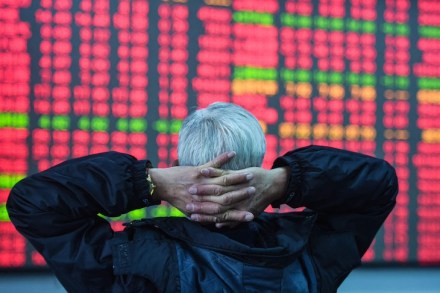
Ahead of the Chinese new year holiday, Beijing has been intervening to prop up the country’s stock markets. Regulators have tightened market trading conditions, and this week the head of the China Securities Regulatory Commission, Yi Huiman, was fired abruptly, presumably as the fall-guy for the relentless decline in the markets, which have lost about $6 trillion in value since the end of 2021. There is a palpable concern about financial instability in China that travels all the way up to Xi Jinping Chinese equity prices have touched their lowest levels since 2018, and are not far from the lows reached in the 2015-16 financial crisis. Mr Yi’s two predecessors were also fired in 2015 and 2019.

China’s property sector is on the brink of disaster – again

From our UK edition

Once, not that long ago, few people outside China had heard of the property developer Evergrande. Now it is synonymous with failure, debt and loss – and seen as the tipping point in China’s real estate market three years ago. Now meet Country Garden, another large property developer, hailed even a year ago as a model ‘corporate citizen’. As of this week, it is a penny stock facing a debt and liquidity crisis, cannot service its US dollar debt, and is on the brink of default. Its financial demise is not quite on the scale of Evergrande, but it comes at a worse moment, when China’s economy is in the eye of a bad economic news storm, consumer and business confidence are fragile, and when the word ‘contagion’ has resurfaced.

Beijing is right to be worried about the Chinese economy

From our UK edition

Going by the number of state and Communist party plans to ‘boost consumption’ over the summer, it appears that Beijing is rattled about the Chinese economy.   It is right to be worried. Deep-seated and systemic issues that predate Covid are tearing away at China’s fabled dynamism. These include excessive debt, low productivity, a flawed real estate market, weak income and consumption, poor demographics, a highly regressive tax structure, and a political governance structure that is controlling and generally hostile to entrepreneurship.

Britain’s new trade deal is about more than GDP

From our UK edition

With the announcement this week confirming the UK’s accession to the Comprehensive and Progressive Agreement for Trans-Pacific Partnership (CPTPP), the British government has concluded its most important trade agreement since leaving the EU. It is joining a modern free trade area (FTA) comprising 11 Pacific Rim countries located in the most dynamic part of the world, measured by GDP growth, and accounting for about 11 per cent of world output. Or just over 14 per cent with the UK included. Curiously though, the trade and economic benefits which the UK might derive are likely to be pretty meagre. The real story in the UK’s additional tilt into Asia is potentially about geopolitics.