Geoff Hill

Geoff Hill is a Zimbabwean author and journalist. His book of short stories, Pharaoh’s Bath, will be published this year.

Lightning is killing too many South Africans

From our UK edition

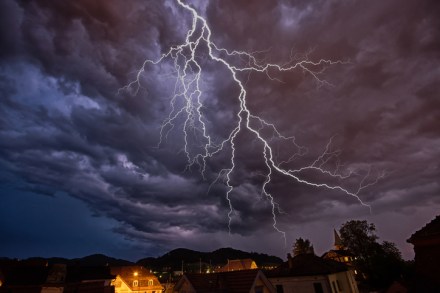
In Britain, lightning causes an average of two deaths a year; in South Africa, it can be well over 200. Near Pretoria over the Christmas break, more than 150 people were injured by what some call in Zulu 'ukufa ngomlilo': lethal fire. Yet little is being done to keep the public safe in a country with one of the highest lightning death tolls in the world. Thunderstorms are more common in South Africa – and the millions of people who commute on foot are at particular risk of being struck. Although many visitors to South Africa enjoy the Mediterranean climate of the Cape of Good Hope, with its dry summers, this milder weather isn't representative. Other parts of South Africa experience hot, rainy summers, accompanied by some of the world’s most violent storms.

The story of the Battle of Blood River

From our UK edition

Johannesburg, the wealthiest city in Africa and home to more than 12,000 millionaires is about to become a ghost town. Just over a week before Christmas, there's a lull in the traffic as homes in both the suburbs and the sprawling black townships empty out. On 16 December, the Day of Reconciliation marks 187 years since the Battle of Blood River when a party of 464 voortrekkers or white pioneers who had left British rule in the Cape to search for a homeland, moved east and passed through the Zulu kingdom. The trekkers, born in Africa of Dutch and French descent and speaking a blend that would become known as Afrikaans, had been granted free passage by the Zulu monarch Dingaan; with their wagons, horses and cattle they were looking for a place to settle.

Will Ivory Coast’s old guard ever let go?

From our UK edition

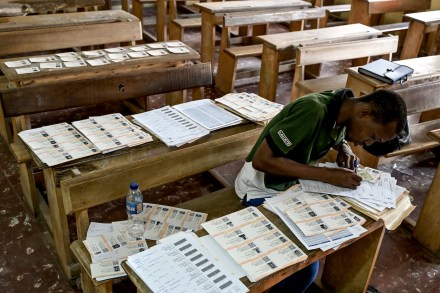
Next time you bite into a bar of chocolate, spare a thought for Ivory Coast. As the world’s largest supplier of cocoa, chances are the beans in your slab came from there. Elections, alas, have not been so sweet and with one due on Saturday 25 October, there are worries the protests, killings and all-out civil war that came in the wake of past votes could happen again. President Alassane Ouattara, the incumbent, is 83 and seeking a fourth term under a constitution that, like the United States, allows just two. The Constitutional Council which vets all candidates for high office has barred most of the contenders, so Ouattara should cruise to victory.

Starmer recognises Palestine. Where next?

From our UK edition

Sir Keir Starmer will recognise Palestine as a country despite objections from both the US and Israel. Yet when it came to independence for Scotland, the three main parties at Westminster were against the idea at the 2014 referendum, and none have called for a similar vote in Wales. How, then, to decide which 'two-state solutions' deserve our support? In 1974, the government of Cyprus was overthrown in a coup, and plans to merge the island with Greece followed. That might have worked, given Greek Cypriots made up 80 per cent of the population, but the Turkish minority, already marginalised, feared expulsion. Just five days after the coup, Turkey invaded from the north and by 1983 had created the Turkish Republic of North Cyprus.

What Trump gets wrong about South Africa’s white ‘genocide’

From our UK edition

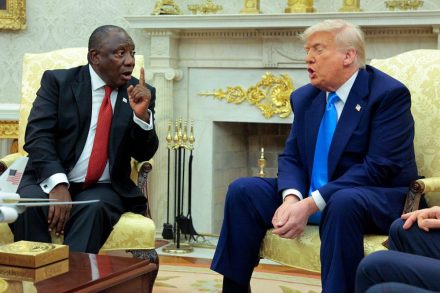
There's a joke in South Africa that it's so easy to claim asylum here, even the Swiss could do so. It's easy to believe. At our local shopping centre in Johannesburg, the security guards hail from various safe African countries – Tanzania, Zambia and Malawi. All are on refugee permits that are renewed every few months, often with a bribe. If there's murderous intent among South Africa's poorest, it's not directed at white people There are countless illegal migrants and refugees from as far away as Pakistan and Bangladesh. Ironic then that president Cyril Ramaphosa is making such a fuss about the 49 Afrikaners who have been granted asylum in the United States.

special relationship

How the Special Relationship could be renewed after US-UK elections

A record number of countries will hold elections this, including Britain on July 4 and the United States on November 5. These two great powers — each with a veto at the UN — have enjoyed a bond that has survived for so long, is it known on both sides of the Atlantic as “the Special Relationship.” There have been stand-offs: Britain refused to join the war in Vietnam, and when Argentina seized the Falkland Islands in 1982, the US did not intervene. But Ronald Reagan and Margaret Thatcher worked in tandem to bring down the Berlin Wall. And if the view on Ukraine and Gaza is not always the same, there is a shared commitment to the sovereignty of Russia’s neighbors and to a peace in the Middle East that secures the rights of Jews and Palestinians alike.

South Africa’s migrant crisis

From our UK edition

Johannesburg It’s called the ‘Reverse Jive’, retracing your steps to where your journey began, and you’ll hear it talked about all over Johannesburg, especially now, with an election next Wednesday and immigration such a hot-button issue. South Africa has a huge informal sector where the poor can at least scratch a living In Pretoria, the government estimates there are more than three million Zimbabweans, or ‘Zimbos’, living in South Africa. Decades of oppression and mismanagement at home have collapsed the economy and Zimbos form a visible presence in Jo’burg, Durban and Cape Town. And thousands of them have done the Reverse Jive.

Donald Trump should visit a black beer hall in South Africa 

If Donald Trump and Elon Musk really want to know if there is a “white genocide” happening in South Africa, as they claim, I’d suggest they start in a beer hall. Such speakeasies are common in the black townships around Jo’burg and in rural areas. Size varies from a shed to a small aircraft hangar, some are licensed, others not, and as a journalist, it’s where I read the pulse of the nation. The townships are where millions scrape by on next to nothing, crowded in shacks with few street lights and open sewers, while the political elite enjoy their mansions in the city.I am always the only white face in a sea of black. I don’t own a gun and move about engaging with drinkers who are mostly under the age of 30, the majority unemployed.

White genocide

Easter means hope in South Africa

From our UK edition

For urban South Africans – now 70 per cent of the country's population – there's much to celebrate this Easter because, in addition to the four-day weekend, there are two more breaks within a fortnight. On Monday 28 April, we remember the first democratic election in 1994, and in the same week is International Labour Day on 1 May, marking the strike of 1886 that shut America in a quest for better pay and conditions. How does it make Easter special? Because in South Africa, urban growth is recent, and the bonds to rural family are strong. In black culture, the children of anyone with blood-links to your parents' generation are thought of as siblings. Tourists making small-talk with a safari guide are surprised when asking, 'Do you have brothers and sisters?

South Africa dreams of a black Christmas

From our UK edition

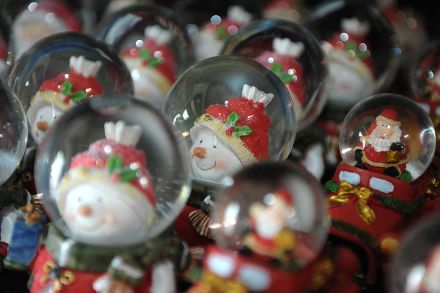
It’s 38C outside and I’m in a Johannesburg hypermarket owned by the Pick n Pay chain, one of the biggest in South Africa. Despite the heat, their music system has a woman singing ‘Let it snow!’ and songs themed around winter and chestnuts roasting on the fire. In rural areas, the scotch cart is common, a topless buggy pulled by cattle or donkeys, but few here can describe what ‘a one-horse open sleigh’ might look like. Across Pick n Pay and its major competitor known as Checkers, all the Santa props have a light complexion. Not even a black elf. Real holly would wilt in the sun, though it’s grown as a garden plant in winter (June to August) when temperatures slip below zero and a ski lodge operates in the mountains south of Jo’burg.

A fragile democracy has bloomed in Botswana

From our UK edition

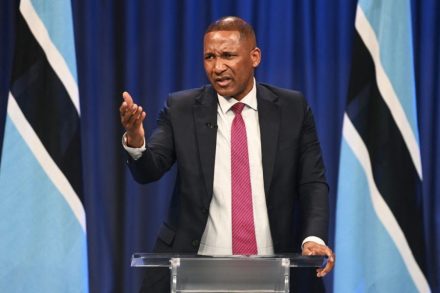
There’s been a momentous election in Africa, Botswana to be exact. Not heard about it? Don’t be surprised. The British and US media have all but ignored the story or got it wrong in the run-up. Even the BBC barely mentioned it though they bang on about Israel to such a degree you’d think the war was in Guernsey instead of Gaza. On 30 October, Botswana held a general election as they have every five years since independence from Britain in 1966. Of all the countries in Africa, it’s the only one that’s never had a coup or a period of autocratic rule. But since 1966, the Botswana Democratic Party (BDP) has won every time.

Will South Africa’s unemployed rise up?

From our UK edition

Beginning in the year 2000, Robert Mugabe began snatching white-owned farms for 'redistribution' and giving them to the black majority in Zimbabwe. The best properties were given to ministers, generals and retired ambassadors. Many used them as weekend retreats from the city. Mugabe's wife, Grace, took a vast citrus estate east of the capital, Harare. In a short time, a country that for half a century had fed itself and exported the surplus was bankrupt, and hungry. The president's plan was not so much about agriculture as politics. Young people in the city voted mostly for the opposition.

Jacob Zuma remains a problem for South Africa

From our UK edition

More than 30 years after the Berlin Wall came down, leaders of the African National Congress (ANC), South Africa’s long-time ruling party, still refer to each other as 'comrade'. Unless, that is, you’re seen as a problem. 'Comrade Cyril Ramaphosa will be here,' ANC secretary general Fikile Mbabula told journalists on Sunday morning as he explained how, around 5 p.m., the President would receive the final election results at the main counting centre between Johannesburg and the capital, Pretoria. 'There’s nothing to celebrate in terms of performance of the ANC,' he said.  Zuma has come away with 14.

Who will win South Africa’s election?

From our UK edition

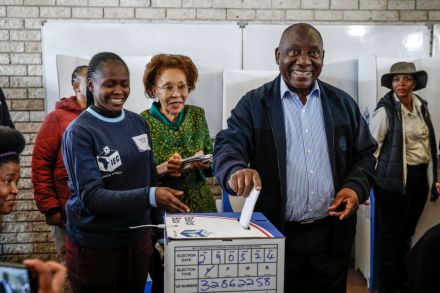
From the start, it didn’t look good this time round for the African National Congress (ANC), which has ruled South Africa since Nelson Mandela came to power in the first democratic elections 30 years ago. Since mid-2023, polls for the ANC have ranged from 38 per cent to the high-40s, a long way down from the 57 per cent President Cyril Ramaphosa had won five years ago. ANC party faithful have long chanted, ‘We will rule till Jesus comes’ The Independent Electoral Commission (IEC) says it will only have the full results by Sunday, given the unexpectedly high turnout. At the first national vote in 1994, a stunning 87 per cent took part, but in 2019 a third of those registered to vote stayed away. This time turnout has risen, though final figures are get to be released.

Modern-day slavery in Mauritania

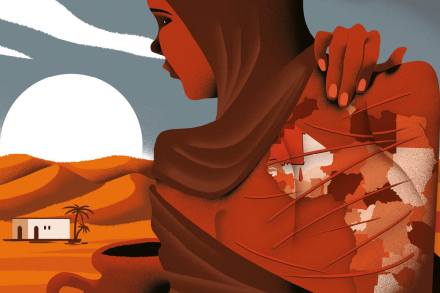
In April 1864, the US Senate passed a bill that set in motion what would become the Thirteenth Amendment to the Constitution. Slavery was to be abolished. Seven months later, Union forces would burn Atlanta to the ground, a year after Lincoln’s address at Gettysburg marked the battle that began the South’s collapse and the April 1865 surrender of General Robert E. Lee and his Confederate army. The Civil War remains the bloodiest and most divisive conflict in American history with at least a million dead, including soldiers and civilians from both sides. You might think that given American history, if slavery had an in-your-face visibility anywhere on the planet, Congress would call for intervention by the UN, perhaps threaten to send in the Marines. Think again.

Mauritania

The disruptive comeback of Jacob Zuma

From our UK edition

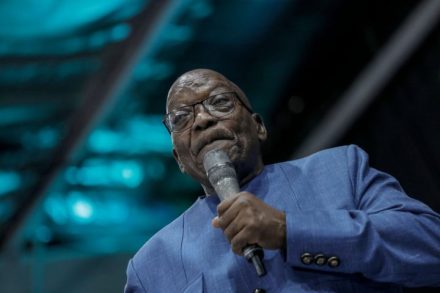
Johannesburg For a decade to 1973, Jacob Zuma – or JZ as he is known – was an inmate of Robben Island, the infamous prison built on a 1,300-acre slab of rock four miles off the South African coast. A fellow inmate was Nelson Mandela, also inside for treason. Both went on to become presidents of South Africa; but whereas Mandela had the Robben Island prison shut down and turned into a national monument, JZ, who has once again set his sights on high office, now wants it re-opened. In 2018 Zuma was removed from office by the ruling African National Congress (ANC), accused of theft and embezzlement. It’s bizarre that he has now made a return to politics in the run-up to the May presidential election, but so far his brand of patriotic populism has once more proved appealing.

How game ranching protects endangered species

Game ranching in Africa is big business, farming wild animals that unlike regular livestock have evolved there and don’t need much care. What they do need is space. South Africa’s most famous reserve, Kruger National Park, is an 8,000-square-mile chunk of wilderness on the border with Mozambique, but private land stocked with wildlife covers almost ten times that area. Ranchers stock their property at game auctions where animals are sold to ranchers who either want to introduce a species or add a new bloodline. In 2019, American cattle breeders were delighted when an Angus bull sold in North Dakota for a record $1.51 million. But in 2016, the winning bid for a stud buffalo in South Africa was close to $10 million.

game

Why Rwanda isn’t safe for migrants

From our UK edition

Kigali is, for now, one of Africa’s safest cities. Walk down a street in the Rwandan capital after dark and there are lights everywhere, police are on the beat and tourists and locals are strolling back to their lodgings or dining al-fresco. There are no potholes where you might twist your ankle and the city feels, and works, like a European capital, without the pickpockets. The power of the state here is absolute; few dare to test it. Many travellers come to Rwanda to see mountain gorillas. As with Kigali, Rwanda's national parks are safe and poachers risk being shot if they cross the fence. After decades in decline, gorilla numbers in Rwanda are on the increase. Rwanda is a country, to all appearances, that other African countries aspire to emulate. What will Sunak do then?

What’s the truth about South Africa’s ‘genocide’ of white farmers?

From our UK edition

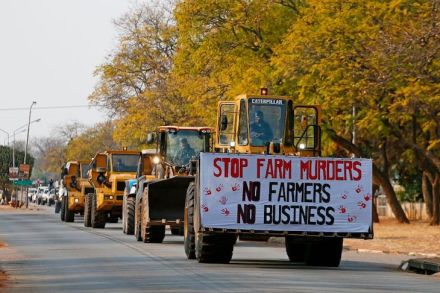
Is a crime against humanity at risk of unfolding in South Africa? Elon Musk, the Pretoria-born billionaire who owns X (Twitter) and Tesla, fears that there might be. Earlier this year, he wrote that he’d heard of calls for 'a genocide of white people’ in his former homeland. Musk isn't alone in his concerns. Steve Hofmeyr, a South African singer with a cult following, thinks that the 'g-word' is an appropriate way to describe what is unfolding: 'If you think that the slaughter of South African farmers is not genocide enough, ask them about their land, language, religion, education, universities, heritage, monuments, safety, dignity and the race-based regulations imposed upon them and their children'. Donald Trump voiced a similar concern when he was in the White House.

The joy of rescuing snakes

From our UK edition

Snake rescuers like me always get asked the same question: have you ever been bitten? I've dealt with mambas, giant pythons, cobras – some of the world's deadliest snakes – and, thankfully, the answer is no. But why do people always assume the worst about these wonderful creatures? People love to hate snakes. They are the Biblical baddy, the reptile that represents evil. Having nursed a sick cobra back to health, gently holding his head up during a daily bath, I know this depiction is deeply unfair. I've long been fascinated by these animals. My father’s family landed at the Cape in 1795 but I was the first to develop a love for snakes. Everyone I knew killed them even though most of the species in Africa are harmless to humans. In a few, the venom can be lethal.