Gavin Mortimer

Gavin Mortimer

Gavin Mortimer is a British author who lives in Burgundy after many years in Paris. He writes about French politics, terrorism and sport.

Coronavirus marks the end of open borders in Europe

From our UK edition

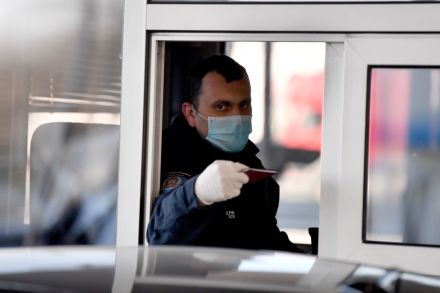
What with the wall-to-wall media coverage of the coronavirus pandemic it had rather slipped one's mind that there are other serious issues confronting Europe, but France got a bloody reminder at the weekend. On Saturday, a knifeman ran amok in the south-eastern town of Romans-sur-Isere, killing two people and wounding five. According to eyewitnesses, the alleged perpetrator, a Sudanese national who was granted asylum in 2017, accompanied his deadly assault outside a boulangerie with cries of 'Allah Akbar'. It is claimed in the French media that when police searched his flat they found handwritten documents in which he complained of living in 'a country of non-believers'.
Liberté, égalité and fraternité are being put to the test in France

From our UK edition

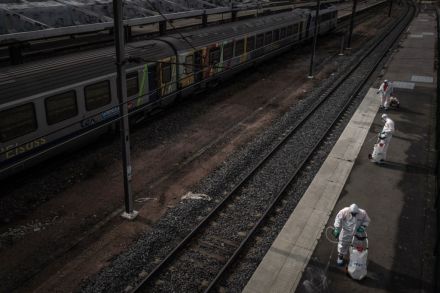
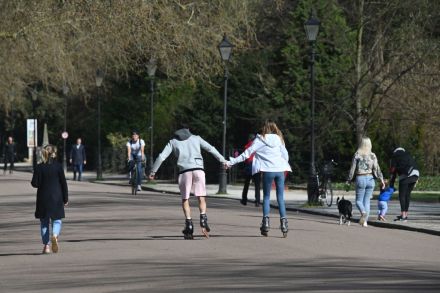
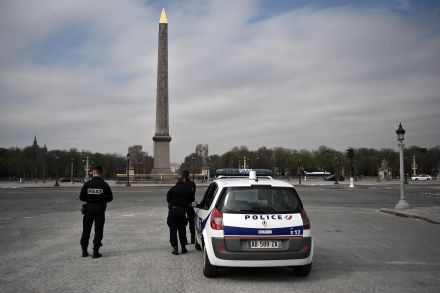
When I left my apartment for my morning run today I saw that someone had scrawled on the courtyard in large chalk letters 'Tenez Bon, Les Voisins' (Hang in there, neighbours). It could have been a message for the whole country. France is flagging after two and a half weeks of complete lockdown and the fact that today is the start of the official Easter holidays will only fray nerves further. To make matters worse, the country will be treated to a taste of summer this weekend with temperatures from Paris to the Pyrenees forecast to touch 23C on Sunday. In an interview today the Minister of the Interior, Christophe Castaner, revealed that since France went into lockdown on March 17 there have been 6.

Is France being pushed to breaking point?

From our UK edition

As France prepares to enter its third week of confinement the Prime Minister, Edouard Philippe, has warned that ‘the fight has only just begun’. Coronavirus has claimed 2,606 French lives to date, but at a press conference on Saturday evening Philippe said: ‘The first 15 days of April will be even more difficult than the last 15 days.’ Earlier in the week Philippe had praised the resolve of the vast majority for respecting the lockdown, and he urged France to hold the course while announcing that the confinement will continue until at least April 15. ‘This struggle will last,’ he said. ‘We will only win by being disciplined and observing lockdown measures.’ But how long can the French hold out?

Boris can learn from Churchill as he battles coronavirus

From our UK edition

As Boris Johnson self-isolates for seven days after testing positive for coronavirus, he must follow the example of his hero, Winston Churchill, in heeding the advice of his doctors. It was on the counsel of his chief medical officer, Chris Whitty, that the Prime Minister subjected himself to a test, which augurs well for the days ahead as he, in his own words 'continues to lead the government's response' to coronavirus. In December 1943, Churchill's physician, Sir Charles Wilson (Lord Moran), was quick to spot the signs that his friend of many years was not well. They had arrived in Cairo on December after an exhausting fortnight in which the PM had discussed allied strategy in conferences in Cairo and Tehran.

Why does Britain lack the lockdown discipline of France?

From our UK edition

There was a touch of schadenfreude as I heard that Britain has followed France, Italy and several other European countries in locking down. In the last week or so there have been a number of articles about how Britain would never impose on its people the draconian measures taken by Emmanuel Macron and others because their countries, unlike ours, have a history of authoritarian government. Boris Johnson was admirable in his wish to avoid locking down the country but the indiscipline of millions of his people left him no choice. Boris can't be blamed for the packed pubs last week, the teeming parks at the weekend or the street barbecues this week. Nor can he take the rap for the stripping of supermarket shelves up and down the country, a phenomenon which in Europe is unique to Britain.

My life as a French prisoner of coronavirus ‘war’

From our UK edition

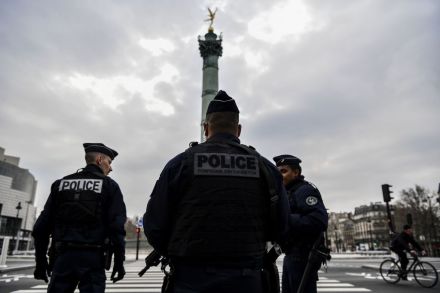
Seventeen per cent of Parisians have fled the city since President Macron ordered France to be confined, as part of his ‘war’ strategy to defeat coronavirus. The lockdown, which began on Tuesday, is for two weeks but on Friday the government indicated that it will likely be extended into April as France struggles to contain a pandemic that has now claimed 674 lives. Police are rigorously enforcing the regulations forbidding people to leave home except to buy provisions or briefly stretch their legs. Thousands have been fined for breaking the rules of confinement and there are reports that in future people will be jailed for up to six months if they're repeat offenders.

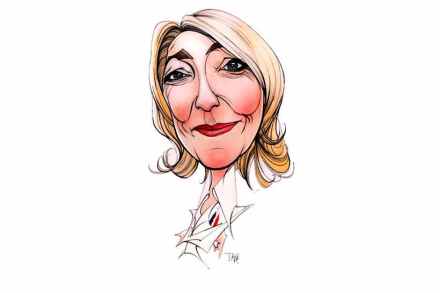
Marine Le Pen has the most to gain from France’s coronavirus crisis

From our UK edition

Any hope that the two week 'confinement' imposed by President Macron would heal France’s deep divisions has vanished as swiftly as food on the supermarket shelves here. There is growing anger in the provinces at the sudden arrival of thousands of well-heeled Parisians, who have fled the capital for their second homes. Many seaside residents in Brittany and the Côte d'Azur are senior citizens and they are furious about the sight of selfish Parisians stripping their stores of essential goods. Back in Paris, meanwhile, video footage has been uploaded onto several right-leaning news outlets of some mild disorder outside shops in districts such as Barbès, Château Rouge and La Chapelle.

Macron’s ‘war’ on coronavirus is bringing out the best and worst in Parisians

From our UK edition

I missed Emmanuel Macron's address to the nation last night. I popped to the supermarket, guessing (correctly) that the queues of earlier in the day would have dissipated with most people at home in front of their television sets listening to what their president had to say. I stocked up on essentials – wine, cheese and chocolate – and returned to the anticipated news that as of midday today France is under lockdown, or as they say across the Channel 'confinement'. Bars and restaurants have been closed since midnight on Saturday, and from now until the end of month (and probably beyond) one can only venture outside with a completed government form explaining the purpose of the sortie: to go to work, to buy more provisions at the supermarket or to walk the dog.

What Pepys’s plague diaries can teach us about coronavirus

From our UK edition

I’ve been writing a diary for 26 years and 2020 is shaping up to be a vintage one. I thought 2019 would be hard to beat, what with Brexit, Greta and Labour's implosion, but this year I've been feeling like Samuel Pepys as the 21st century answer to the bubonic plague sweeps the world. The virus first came to my attention on January 24, when I mentioned in passing 'the spread in China of something called "coronavirus".' But it wasn't until February 9 that I informed my diary that the arrival in Britain of Storm Clara has 'given the media something else to panic about other than coronavirus. Seven people now infected in the UK and 800 deaths in China.

Paris is increasingly lawless – but the middle-classes don’t seem to care

From our UK edition

Ah, Paris, the city of love, the city of light, the city of larceny. Theft, burglary, pickpocketing, assault and homophobic acts are on the up, and even the city's Procureur, the public prosecutor Rémy Heitz, has admitted the stats 'aren't good'. No, they're not. Theft, for example, increased by 15 per cent in 2019, up from 124,875 recorded incidents to 144,552. Pickpockets are also enjoying a boom period with an increase of 35 per cent in 12 months, and there were 7 per cent more burglaries last year than in 2018. True, car theft and gun crime have dropped but physical assaults have risen by 13 per cent, sexual harassment on the transport network has shot up by 30 per cent, and also mounting are crimes characterised as homophobic.

Can Macron halt the rise of Islamic extremism?

From our UK edition

Emmanuel Macron has unveiled his plan to combat the rise of Islamic extremism in France. Stressing that his fight was not against the religion but political Islam, 'which has no place' in the Republic, the president outlined a series of measures in a speech last week. Notably, his plans involve an end to the hosting of imams from countries such as Turkey and Algeria, and more rigorous control on foreign financing of mosques from the likes of Qatar. Macron stopped short of introducing an 'Islam of France', which had been mooted two years ago, but his intention is to eliminate the malevolent influence of outsiders.

British police must learn from France in dealing with Extinction Rebellion

From our UK edition

I’ve always been a fan of the French police, in part because when I lived in the south of the country I played rugby in a team that contained a couple of coppers who told me stories of what they had to deal with on a daily basis. But I’m also a little partial to them because they do what it says on the tin: they police I recall a summer’s evening in Montpellier a few years ago when two young drunks were causing a disturbance for diners and drinkers in a crowded square. The police arrived and manhandled the louts into their squad car, one of whom made the mistake of resisting arrest. As he was manoeuvred into the back seat the man’s head met the door frame. An accident? Mais oui, and one that drew a raucous cheer from diners.

We should be wary of our spooks’ complacency about Huawei

From our UK edition

I might be feeling more confident about the government's decision to give Huawei a limited role in building Britain's 5G network, 'on the advice of intelligence agencies', were I not reminded of the effectiveness of British spooks by the recent appearances of Alexandre del Valle on French radio. Del Valle is the author of numerous books on Islamism and the Middle East, a knowledge accrued over many decades, including a spell in the late 1990s working for France's General Secretariat for Defence and National Security, an inter-ministerial body answering to the Prime Minister. His latest book, The Project, explores how the Muslim Brotherhood has successfully spread across the West, and to promote the book he's been giving a series of media interviews.

Macron’s Jerusalem meltdown was a revealing moment

From our UK edition

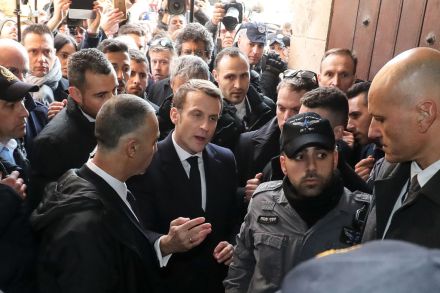
Emmanuel Macron lost his cool during a walkabout in Jerusalem's Old City on Tuesday and television cameras captured the moment for posterity. "Everybody knows the rules," shouted the president of France, directing his wrath at Israeli security officials. "I don't like what you did in front of me. Go outside!" The confrontation took place outside the Church of Saint Anne, a possession of the French government which is regarded as French territory. According to reports Macron snapped when Israeli security men attempted to accompany him into the church.

How long until there are no Jews left in France?

From our UK edition

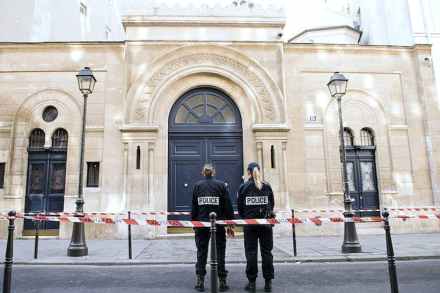
Two years ago I wrote on this platform that France is the most 'dangerous European country for Jews' – and so it remains. Anti-Semitic attacks in 2018 soared by 74 per cent on the previous year and the figures for the beginning of 2019 have revealed a 78 per cent increase on the same period in 2018. 'Jews, who make up less than one per cent of the population, are subjected to more than half the racist acts committed in France,' said Francis Kalifat last week. Kalifat, who is president of the Representative Council of Jewish Institutions in France (CRIF), believes the number of victims is actually higher. 'A lot of people don't make an official complaint,' he said. 'Either because it serves no purpose or because they fear reprisals.' French Jews are right to be scared.

Whatever happened to ‘Je Suis Charlie’?

From our UK edition

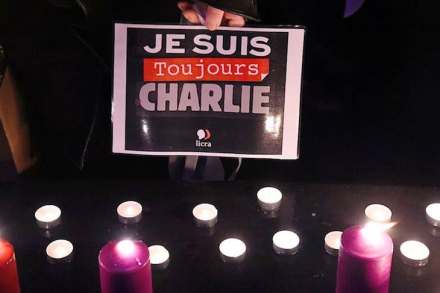
Five years on from the horrific Charlie Hebdo massacre in which a dozen people lost their lives, politicians have been busy showcasing their sanctimony. Socialist mayor of Paris Anne Hidalgo urged people 'never to forget' the price the cartoonists paid for the courage. Yet only last week, Hidalgo used Twitter to express her 'profound shock' at a small publicity campaign on the Paris transport network opposing assisted medical procreation for lesbian couples and single women, an issue currently under discussion in the Senate. Once she had recovered her equanimity, Hidalgo ordered 'that the posters be withdrawn immediately'. But what did Charlie Hebdo stand for if not the freedom to publish things others might vehemently disagree with?

The strategy of France’s Islamists is to turn Muslim against non-Muslim

From our UK edition

France has endured an appalling series of Islamist terror attacks in recent years. One might feel a sense of relief that the country escaped relatively lightly last Friday. That will, of course, be no consolation to the family of the man who was killed by 22-year-old Nathan C, a recent convert to Islam, who stabbed his victim to death as he defended his wife in the Parisian suburb of Villejuif. She is recovering in hospital, as is another woman, while a passer-by apparently has his religion to thank for his survival. Confronted by the killer who was dressed in a djellaba and shouting 'Allah Akbar', the man pleaded for mercy, pointing out that he was a Muslim. The terrorist ordered him to recite a prayer in Arabic, which he did, and so off he went in search of other victims.

How Boris Johnson’s victory helps Marine Le Pen

From our UK edition

Boris Johnson may have received a lukewarm reaction from Emmanuel Macron to his emphatic election victory last month but one French politician was cock-a-hoop at the result. Shortly after the scale of the Conservative win was clear, Marine Le Pen tweeted her delight, declaring that 'the crushing victory of Boris Johnson shows that neither manoeuvring nor intimidation can sway a people who have decided to take their destiny in their own hands.' Other than finding the EU objectionable, Johnson and Le Pen have little in common and economically, the Frenchwoman's desire to nationalise banks is more in line with Jeremy Corbyn's worldview. But the triumph of the Conservative leader has been a tremendous fillip for her. Like Johnson, Le Pen has had a rough couple of years.

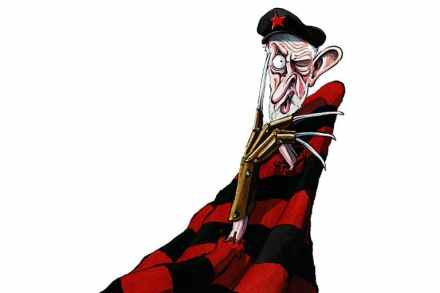
Corbyn may be a goner but his ideology is as strong as ever

From our UK edition

East Germans had a name for their version of 'woke' culture'; it was Zersetzung, or 'decomposition' in English. It was a form of psychological warfare deployed against citizens suspected of 'subversive incitement'. There were several techniques to Zersetzung but probably the most effective was what the Stasi described as the 'systematic discrediting of public reputation' by eroding the 'self-confidence and self-esteem of a person [to] create fear, panic, confusion'. This is now the strategy of the online mob, who have become ruthlessly adept at degrading those they charge with subversion: Toby Young, professor Nigel Biggar, Germaine Greer, Ian Buruma, Placido Domingo, Sir Tim Hunt and Sir Roger Scruton are just a few who have been targeted.

France, not Britain, is the real angry and divided nation

From our UK edition

Remember when Boris Johnson met Emmanuel Macron for the first time as Prime Minister? It was in August and, as the Guardian made clear to its readers, it was the French president calling the shots. The newspaper illustrated its point with a photograph of the two leaders at their lecterns, the French president looking statesmanlike and the British Prime Minister with a hand clasped to his head. Boris Johnson and Emmanuel Macron on the Guardian website[/caption] How different the fortunes of the leaders are four months on. Johnson has just been returned to power with a 'stonking' majority, as impressive as the one Macron's centrist LREM (La République En Marche) enjoyed in the 2017 French parliamentary elections.