Gavin Mortimer

Gavin Mortimer

Gavin Mortimer is a British author who lives in Burgundy after many years in Paris. He writes about French politics, terrorism and sport.

Churchill once challenged BBC intolerance

From our UK edition

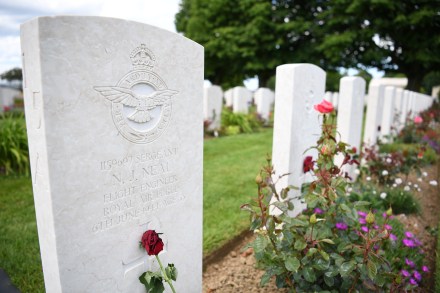
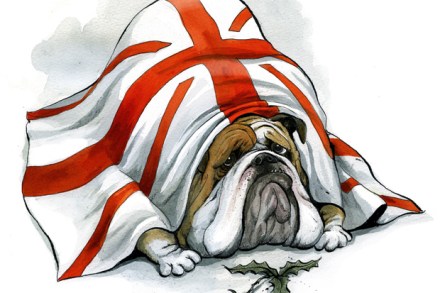
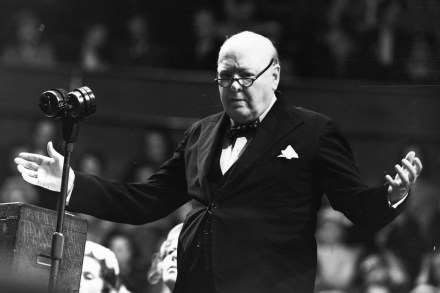
Winston Churchill: hero or villain? That was the question the BBC asked on its website on 10 June. It caused outrage in some quarters, but was Auntie taking its revenge for the humiliation it suffered at Churchill's libertarian hands during the second world war? In the summer of 1940, a movement was launched in Britain called the 'People's Convention', which brought together a disparate alliance of Marxists, socialists and pacifists. Among its most prominent backers were Robin Page Arnot, Harry Pollitt, and Willie Gallacher, all veteran communists.

Britain could learn from France’s coronavirus approach

From our UK edition

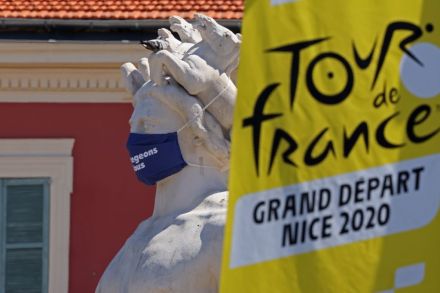
If there is a God, He's not French. Last night I was on the balcony of my apartment in Paris enjoying a celebratory 'deconfinement' bottle of wine; this morning on my first day of (partial) liberty there is heavy rain and high wind. So much for getting out and about on day one of post-lockdown life in France. Not that it will be that easy even when the weather does stop misbehaving. Paris is in the 'red zone', one of four regions of France that still has many restrictions in place, affecting 27 million people. In the 'green' zone, effectively the west and south of the country, parks are open, primary and secondary schools and shops are reopening and some beaches are also accessible. In Paris, however, while most shops will reopen the parks remain closed, as do secondary schools.

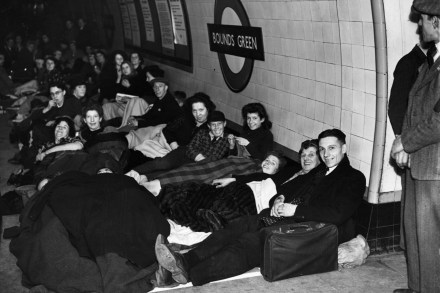
The return of the deep shelter mentality

From our UK edition

Seven weeks confined to a city apartment changes a man. Trees, for example, have never been a particular passion of mine but recently I've spent many happy moments studying the plane tree outside my bedroom window, and in particular the magpies' nest therein. On Saturday a baby magpie emerged from the nest and edged tentatively along a branch. There it stayed for several minutes until it retreated to the security of its nest. On Sunday, the Observer reported that a similar nervousness now afflicts the British. According to the paper, fewer than one in five of the public believe the time is right to end the lockdown. Britain is not alone in its apprehension.

Emmanuel Macron is experiencing the calm before the storm

From our UK edition

Today marks the third month of my confinement in my fifth floor apartment in Paris. As I wrote all those weeks ago, shortly after president Macron declared his 'war' on coronavirus, I had adopted a prisoner psychology to see me through what I suspected from the outset would be six weeks minimum of lockdown. I wasn't wrong. I'm due for release on Monday May 11th but I can't say I'm counting down every second with a sense of impatience. Not that I want to stay locked up but I'm not sure life will change that much in the short term once I've regained my liberty: no bars or restaurants to visit, no cinemas or theatres open, no sport to watch and no travelling beyond a 100km radius. It's not going to be a summer of fun.

Paris’s banlieues are burning once again

From our UK edition

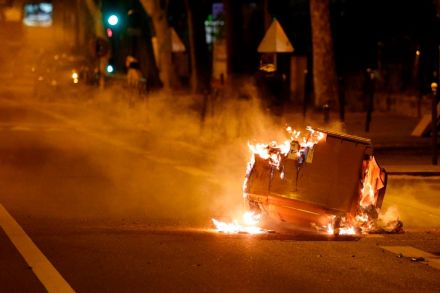
One of the persistent misconceptions of the riots that swept through France in the autumn of 2005 is that they were solely the result of the deaths of two youths as they ran from the police. The deaths of the teenagers on October 27 in Clichy-Montfermeil provoked unrest in the north-eastern Parisian suburb but it was what happened three days later that led to three weeks of nationwide riots and the declaration of a state of emergency by the then president of France, Jacques Chirac. According to Gilles Kepel in his 2015 book, Terror in France: genesis of the French Jihad, it was a stray tear gas grenade fired by police that landed close to the entrance of a mosque that lit the touch paper.

It’s no surprise Brits are denouncing each other for breaching lockdown rules

From our UK edition

The mayor of Paris's 20th arrondissement has asked residents of her neighbourhood to stop denouncing each other. 'When it's a question of violence against women or children, or selling drugs, I'm still all ears,' said Frédérique Calandra this week. 'But these calls stigmatising Parisians who wish only to get a breath of fresh for a few minutes, they're unacceptable.' Passing on a message from the police, Calandra told people to stop denouncing their neighbours for petty infractions of the confinement regulations because it was overwhelming their emergency phone lines. In reporting the case, Le Parisien newspaper headlined its story 'Halte à la délation', which is the word for passing on information to the authorities.

France won’t be fooled by Macron’s radical reinvention

From our UK edition

A couple of hours before Emmanuel Macron addressed France on Sunday night I received a meme on WhatsApp from a French friend. It was a game card for 'Macron's Aperitif Bingo', the rules for which were simple: swigs of a drink of your choice would have to be downed every time the president said a certain word or phrase during his latest declaration about his 'war' on coronavirus. 'War' incidentally was two swigs, while 'shortage of masks' was three and 'sacrifices' was four. I imagine that by the end of the president's speech quite a few players were somewhat unsteady on their feet. One suspects that Macron would not have been amused to learn that while he was making his solemn address to the nation, many of his 'chers compatriotes' were guzzling at his expense.

Coronavirus marks the end of open borders in Europe

From our UK edition

What with the wall-to-wall media coverage of the coronavirus pandemic it had rather slipped one's mind that there are other serious issues confronting Europe, but France got a bloody reminder at the weekend. On Saturday, a knifeman ran amok in the south-eastern town of Romans-sur-Isere, killing two people and wounding five. According to eyewitnesses, the alleged perpetrator, a Sudanese national who was granted asylum in 2017, accompanied his deadly assault outside a boulangerie with cries of 'Allah Akbar'. It is claimed in the French media that when police searched his flat they found handwritten documents in which he complained of living in 'a country of non-believers'.

Liberté, égalité and fraternité are being put to the test in France

From our UK edition

When I left my apartment for my morning run today I saw that someone had scrawled on the courtyard in large chalk letters 'Tenez Bon, Les Voisins' (Hang in there, neighbours). It could have been a message for the whole country. France is flagging after two and a half weeks of complete lockdown and the fact that today is the start of the official Easter holidays will only fray nerves further. To make matters worse, the country will be treated to a taste of summer this weekend with temperatures from Paris to the Pyrenees forecast to touch 23C on Sunday. In an interview today the Minister of the Interior, Christophe Castaner, revealed that since France went into lockdown on March 17 there have been 6.

Is France being pushed to breaking point?

From our UK edition

As France prepares to enter its third week of confinement the Prime Minister, Edouard Philippe, has warned that ‘the fight has only just begun’. Coronavirus has claimed 2,606 French lives to date, but at a press conference on Saturday evening Philippe said: ‘The first 15 days of April will be even more difficult than the last 15 days.’ Earlier in the week Philippe had praised the resolve of the vast majority for respecting the lockdown, and he urged France to hold the course while announcing that the confinement will continue until at least April 15. ‘This struggle will last,’ he said. ‘We will only win by being disciplined and observing lockdown measures.’ But how long can the French hold out?

Boris can learn from Churchill as he battles coronavirus

From our UK edition

As Boris Johnson self-isolates for seven days after testing positive for coronavirus, he must follow the example of his hero, Winston Churchill, in heeding the advice of his doctors. It was on the counsel of his chief medical officer, Chris Whitty, that the Prime Minister subjected himself to a test, which augurs well for the days ahead as he, in his own words 'continues to lead the government's response' to coronavirus. In December 1943, Churchill's physician, Sir Charles Wilson (Lord Moran), was quick to spot the signs that his friend of many years was not well. They had arrived in Cairo on December after an exhausting fortnight in which the PM had discussed allied strategy in conferences in Cairo and Tehran.

Why does Britain lack the lockdown discipline of France?

From our UK edition

There was a touch of schadenfreude as I heard that Britain has followed France, Italy and several other European countries in locking down. In the last week or so there have been a number of articles about how Britain would never impose on its people the draconian measures taken by Emmanuel Macron and others because their countries, unlike ours, have a history of authoritarian government. Boris Johnson was admirable in his wish to avoid locking down the country but the indiscipline of millions of his people left him no choice. Boris can't be blamed for the packed pubs last week, the teeming parks at the weekend or the street barbecues this week. Nor can he take the rap for the stripping of supermarket shelves up and down the country, a phenomenon which in Europe is unique to Britain.

My life as a French prisoner of coronavirus ‘war’

From our UK edition

Seventeen per cent of Parisians have fled the city since President Macron ordered France to be confined, as part of his ‘war’ strategy to defeat coronavirus. The lockdown, which began on Tuesday, is for two weeks but on Friday the government indicated that it will likely be extended into April as France struggles to contain a pandemic that has now claimed 674 lives. Police are rigorously enforcing the regulations forbidding people to leave home except to buy provisions or briefly stretch their legs. Thousands have been fined for breaking the rules of confinement and there are reports that in future people will be jailed for up to six months if they're repeat offenders.

Marine Le Pen has the most to gain from France’s coronavirus crisis

From our UK edition

Any hope that the two week 'confinement' imposed by President Macron would heal France’s deep divisions has vanished as swiftly as food on the supermarket shelves here. There is growing anger in the provinces at the sudden arrival of thousands of well-heeled Parisians, who have fled the capital for their second homes. Many seaside residents in Brittany and the Côte d'Azur are senior citizens and they are furious about the sight of selfish Parisians stripping their stores of essential goods. Back in Paris, meanwhile, video footage has been uploaded onto several right-leaning news outlets of some mild disorder outside shops in districts such as Barbès, Château Rouge and La Chapelle.

Macron’s ‘war’ on coronavirus is bringing out the best and worst in Parisians

From our UK edition

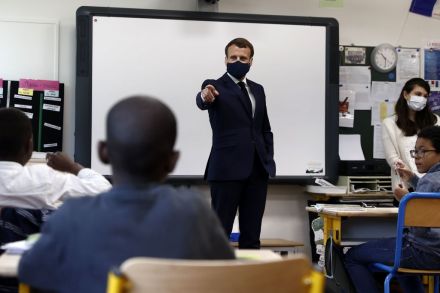
I missed Emmanuel Macron's address to the nation last night. I popped to the supermarket, guessing (correctly) that the queues of earlier in the day would have dissipated with most people at home in front of their television sets listening to what their president had to say. I stocked up on essentials – wine, cheese and chocolate – and returned to the anticipated news that as of midday today France is under lockdown, or as they say across the Channel 'confinement'. Bars and restaurants have been closed since midnight on Saturday, and from now until the end of month (and probably beyond) one can only venture outside with a completed government form explaining the purpose of the sortie: to go to work, to buy more provisions at the supermarket or to walk the dog.

What Pepys’s plague diaries can teach us about coronavirus

From our UK edition

I’ve been writing a diary for 26 years and 2020 is shaping up to be a vintage one. I thought 2019 would be hard to beat, what with Brexit, Greta and Labour's implosion, but this year I've been feeling like Samuel Pepys as the 21st century answer to the bubonic plague sweeps the world. The virus first came to my attention on January 24, when I mentioned in passing 'the spread in China of something called "coronavirus".' But it wasn't until February 9 that I informed my diary that the arrival in Britain of Storm Clara has 'given the media something else to panic about other than coronavirus. Seven people now infected in the UK and 800 deaths in China.

Paris is increasingly lawless – but the middle-classes don’t seem to care

From our UK edition

Ah, Paris, the city of love, the city of light, the city of larceny. Theft, burglary, pickpocketing, assault and homophobic acts are on the up, and even the city's Procureur, the public prosecutor Rémy Heitz, has admitted the stats 'aren't good'. No, they're not. Theft, for example, increased by 15 per cent in 2019, up from 124,875 recorded incidents to 144,552. Pickpockets are also enjoying a boom period with an increase of 35 per cent in 12 months, and there were 7 per cent more burglaries last year than in 2018. True, car theft and gun crime have dropped but physical assaults have risen by 13 per cent, sexual harassment on the transport network has shot up by 30 per cent, and also mounting are crimes characterised as homophobic.

Can Macron halt the rise of Islamic extremism?

From our UK edition

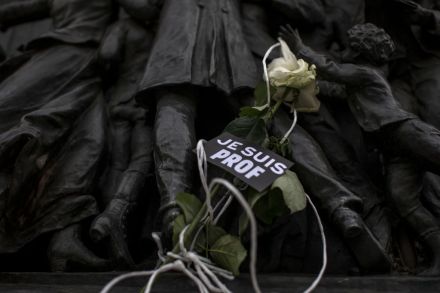
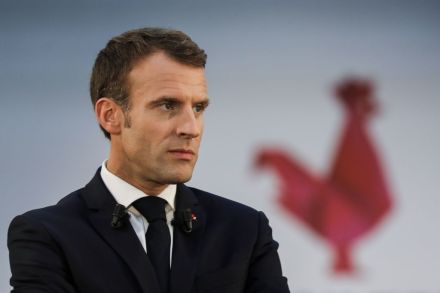
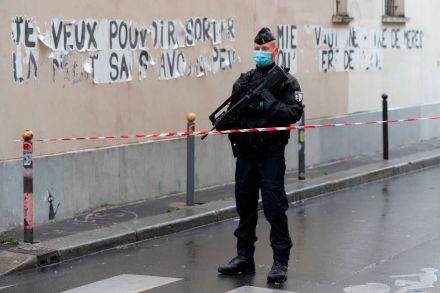
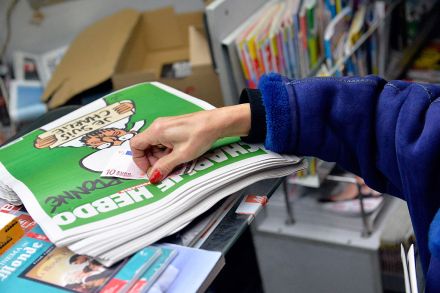
Emmanuel Macron has unveiled his plan to combat the rise of Islamic extremism in France. Stressing that his fight was not against the religion but political Islam, 'which has no place' in the Republic, the president outlined a series of measures in a speech last week. Notably, his plans involve an end to the hosting of imams from countries such as Turkey and Algeria, and more rigorous control on foreign financing of mosques from the likes of Qatar. Macron stopped short of introducing an 'Islam of France', which had been mooted two years ago, but his intention is to eliminate the malevolent influence of outsiders.

British police must learn from France in dealing with Extinction Rebellion

From our UK edition

I’ve always been a fan of the French police, in part because when I lived in the south of the country I played rugby in a team that contained a couple of coppers who told me stories of what they had to deal with on a daily basis. But I’m also a little partial to them because they do what it says on the tin: they police I recall a summer’s evening in Montpellier a few years ago when two young drunks were causing a disturbance for diners and drinkers in a crowded square. The police arrived and manhandled the louts into their squad car, one of whom made the mistake of resisting arrest. As he was manoeuvred into the back seat the man’s head met the door frame. An accident? Mais oui, and one that drew a raucous cheer from diners.

We should be wary of our spooks’ complacency about Huawei

From our UK edition

I might be feeling more confident about the government's decision to give Huawei a limited role in building Britain's 5G network, 'on the advice of intelligence agencies', were I not reminded of the effectiveness of British spooks by the recent appearances of Alexandre del Valle on French radio. Del Valle is the author of numerous books on Islamism and the Middle East, a knowledge accrued over many decades, including a spell in the late 1990s working for France's General Secretariat for Defence and National Security, an inter-ministerial body answering to the Prime Minister. His latest book, The Project, explores how the Muslim Brotherhood has successfully spread across the West, and to promote the book he's been giving a series of media interviews.