Gavin Mortimer

Gavin Mortimer

Gavin Mortimer is a British author who lives in Burgundy after many years in Paris. He writes about French politics, terrorism and sport.

Macron’s selective defence of free speech

From our UK edition

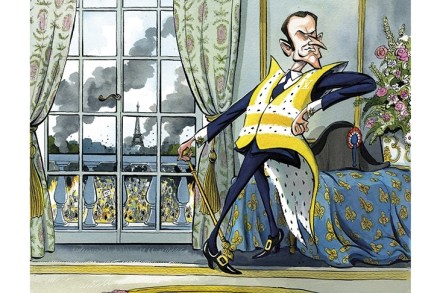
In the early years of his presidency, Emmanuel Macron became known as Monsieur 'En Meme Temps'. The president of France was in the habit of setting out one vision but, 'at the same time', presenting an alternative point of view. He acquired the reputation of a man who was ideologically elusive. What does he stand for? Neither left, neither right, was his campaign slogan in 2017, and four years on he continues to flummox the French. Nowhere is this equivocation more apparent that in Macron's attitude to free speech. Twelve months ago, the French teacher Samuel Paty was brutally slain outside his school because he had shown a caricature of the prophet during a class discussion about freedom of expression.
Is this the real reason Macron dislikes Brexit?

From our UK edition

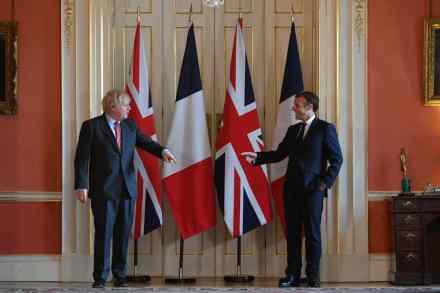
As I read The Wet Flanders Plain by Henry Williamson, a veteran of the first world war who encountered hostility from locals when he returned to the western front in 1927, a thought struck me: have I stumbled upon the source of Emmanuel Macron's Anglophobia? Let's not beat around the bush; the president of France does not like us. Politicians and diplomats may gainsay, and claim that Macron has the greatest respect for the United Kingdom. But his behaviour during the last four and a half years indicates that the current resident of the Elysée is the most Anglophobic president since Charles de Gaulle. Throughout the Brexit negotiations Macron was the most intransigent of the EU leaders, and following Britain's departure he has been the most embittered.

The Bataclan trial is forcing France to confront some difficult questions

From our UK edition

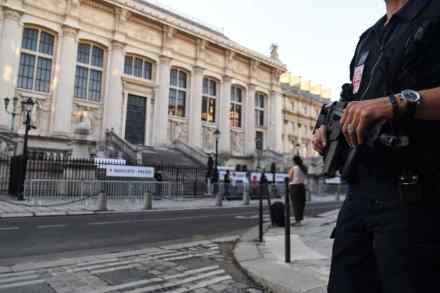
It's a stroke of good fortune for France that Salah Abdeslam is a coward. Had he not been he would have died with the other nine members of the Islamist terror cell (one of whom was his brother) when they attacked Paris on the evening of 13 November 2015. Instead of detonating his suicide vest, Abdeslam dumped it in a dustbin and then called a friend in Belgium and asked to be collected. He spent the next four months hiding in a suburb of Brussels before police tracked him down. It's rare for a potential suicide bomber to be taken alive. In most cases all we have to judge them by is a theatrical video message filmed shortly before their death. The capture of Abdeslam therefore has been a boon. The trial is now in its third week and is expected to last until May.

Should we listen to Shamima Begum’s verdict on the hijab?

From our UK edition

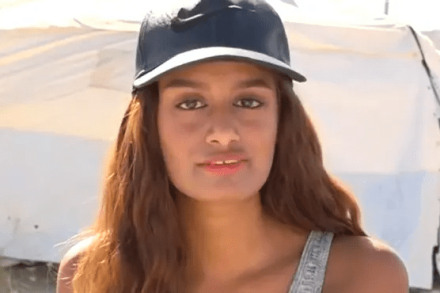
What should one make of Shamima Begum's appearance on Good Morning Britain? The London schoolgirl left the UK in 2015 to join Isis in Syria, but it appears she's converted to common sense in recent times. Dressed in a sleeveless top and a baseball cap, Begum made a number of frank admissions, including how she 'felt very constricted in the hijab. I felt like I was not myself.' The cynic will suggest it is an act in an attempt to be allowed back to Britain. Perhaps. Or maybe we should give Begum the benefit of the doubt. She was young and naive at the time. Now she understands how an enforced dress code demeans women – a reality that woman in Afghanistan are now living through.

The West’s Islamist capitulation

From our UK edition

On Monday, Tony Blair addressed a military think tank in London and stated that the West should continue to intervene in countries under threat from Islamist extremism. According to the former PM, who led Britain as it joined the American invasions of Iraq and Afghanistan, an isolationist policy would serve no purpose because:  Islamism, both the ideology and the violence, is a first-order security threat and, unchecked, it will come to us even if centred far from us... Its defeat will come ultimately through confronting both the violence and the ideology, by a combination of hard and soft power. His declaration was along the lines of the one he made in October 2015 at the 9/11 Memorial Museum in New York City.

Are British spooks complacent about the next terror threat?

From our UK edition

Unless you’re a dog lover the news from Afghanistan has been unceasingly bleak over the course of the last month. But one story this week should give Britons particular cause for concern. The Daily Telegraph reports that senior British intelligence officials have ‘held secret talks’ with the Taliban in Kabul. Apparently the spooks have sought assurances from the new rulers of Afghanistan that the country won’t be used to launch terrorist attacks on Britain. Assuming that this time MI6 were talking to genuine Taliban – and not an imposter, as was the case in 2010 when they were duped by a Pakistani shopkeeper pretending to be a senior figure in the organisation – one fears that British intelligence will again under-estimate their enemy.

Afghanistan could fatally undermine Macron’s election strategy

From our UK edition

To nobody’s great surprise, France’s Minister of Health, Olivier Véran, announced last week that the Covid Passport may have to be extended beyond 15 November – the initial expiry date of the government’s controversial measure, first introduced in July. I’ll hazard a guess that come April 2022 the French will still have to show their passport to enter cafes, shopping centres, sports clubs and cinemas. April, of course, is the date of the presidential election and Emmanuel Macron is banking on his response to Covid helping him to secure a second term. His belief is that the electorate, particularly the over-50s, will be reluctant to change presidents in the midst of a pandemic. Better the devil, and all that.

France is nervous about welcoming a wave of Afghan refugees

From our UK edition

Emmanuel Macron has once more infuriated many in France, but this time it has nothing to do with Covid passports or mandatory vaccination. In an address to the nation this week, the president discussed the disturbing scenes from Kabul as the Taliban invaded the capital of Afghanistan. France, he said, would be a haven for those Afghans 'who share our values' but nevertheless the country must 'anticipate and protect ourselves against significant irregular migratory flows that would endanger the migrants and risk encouraging trafficking of all kinds.' His rhetoric went down badly with much of the French left.

Macron’s Covid passports are causing intergenerational warfare

From our UK edition

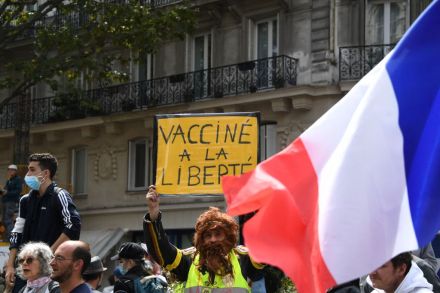
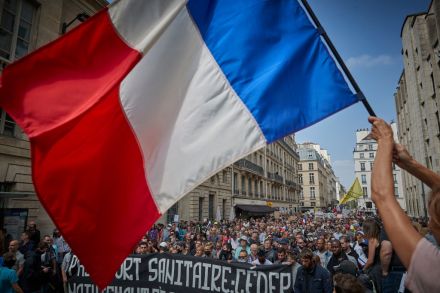
The protest movement against Emmanuel Macron’s Covid passport, which comes into full effect today, continues to grow in France. On Saturday over 200,000 men, women and children took to the streets, more than twice the number that demonstrated when the protests began on July 17. As a veteran of the Paris protests, I’ve found one of the most interesting aspects to be the reactions of passers-by as the cortège files through the streets of the capital. Some clap, some look on in contempt, others shout words of encouragement and a few hurl terms of abuse.

A word of warning for Brits flocking to France

From our UK edition

So as of Sunday Britons will flock to France in their 'tens of thousands'. That is what is being reported this morning after the government's announcement that double-jabbed tourists returning from France will no longer have to quarantine. The Daily Mail, playing the party pooper, tempered the good news with a warning that Brits may have trouble finding accommodation with 'a particular shortage of gîtes and hotel rooms in the south of the country'. Having visited the Pyrenees and Lake Annecy in recent weeks I can confirm that the popular destinations are chock-a-block with French, Germans, Dutch, Scandinavians and Belgians. Imagine how I felt, watching the final of the European Championships, in the bar of a French campsite.

Macron’s vaccine passport is uniting French anti-fascists and nationalists

From our UK edition

Saturday was what is known in France as the Chassé-croisé, the busiest day of the year on the roads, when those who took their holidays in July return home and those who chose August depart. By lunchtime there were 625 miles of traffic jams on the roads. The thoroughfares of many cities were also blocked, but for another reason. For the third consecutive Saturday, thousands of people marched to protest against the introduction of the government's Covid passport. Almost a quarter of a million people took to the streets in 180 demonstrations, according to the government. These numbers are disputed by the organisers, who claim they are wildly conservative. But whatever the exact figure, it was a phenomenal number of demonstrators for the final weekend of July.

The French are rebelling against Macron’s Covid Passports

From our UK edition

A manager of an attraction park in France was reportedly assaulted on Sunday after he denied entry to a customer. It's alleged the man lost his rag when he was turned back because he didn't have a valid Covid passport. It is unlikely to be the last such incident. In the space of a fortnight, the atmosphere in France has turned toxic. A hospital in Saint-Étienne was invaded on Monday by 60 demonstrators, mainly medical professionals, opposed to the measure that will force them to vaccinate or be suspended without pay. That is also a strike at a Lyon hospital that will start tomorrow. Elsewhere cinemas, theme parks and fitness centres have been labelled 'collaborators' for their participation in the government's Covid Passport scheme.

Emmanuel Macron’s dangerous infantilisation of the French

From our UK edition

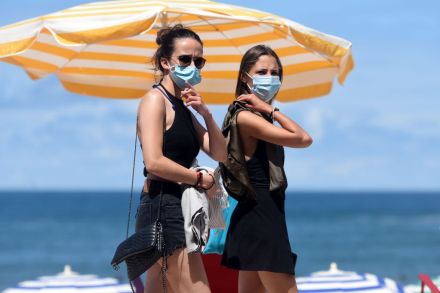
From St Tropez to La Rochelle to Deauville, there is a familiar sight this summer in many of France’s most popular coastal resorts. A year after the wearing of masks outside was made mandatory they are back, and French and foreign sunseekers are forced to muzzle under a broiling sun. It was only a month ago that the government relaxed the rule on the wearing of masks outdoors, but that was before a rise in cases caused by the Delta variant. Most of the infected are the young and unvaccinated, hospitalisations are stable and deaths remain minimal: there were 11 in the last 24 hours, compared to ten last Saturday.

Macron’s vaccine passports are a betrayal of French values

From our UK edition

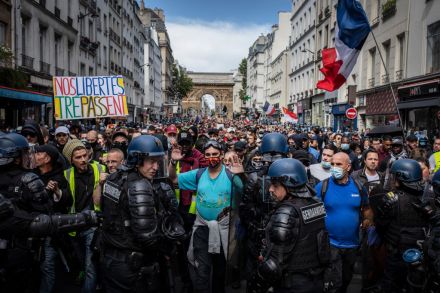
What a celebration of diversity I witnessed in Paris on Saturday as tens of thousands of demonstrators marched through the capital. Organisers put the figure at 50,000, the government at 18,000; I'd say the former is the more accurate estimation. It took two hours to walk the one and three-quarter miles between the start of the march, in the Place du Palais Royal, to its terminus at the Place Pierre Laroque outside the Ministry of Health. In total, and again depending on your source, between 114,000 and 150,000 people demonstrated across France on Saturday to protest against the planned introduction of the 'Pass Sanitaire', France’s vaccine passport. All ages, sexes, classes and colours were represented.

Le Pen is just another establishment politician

From our UK edition

One Saturday in March, I attended an anti-lockdown rally in central Paris. I was there partly out of journalistic curiosity but also out of solidarity with those Frenchmen and women who believed it was high time life returned to normal. What struck me was the similarity between the protestors and those I had walked with in 2018 in the early weeks of the yellow vest movement in Paris — overwhelmingly middle-aged blue-collar workers. The yellow vests famously had no leader because it was a protest movement that arose not out of any strong political conviction but from what the French call ras-le-bol: despair at what was perceived as an arrogant and out-of-touch political class who seemed intent on punishing the poorest in society.

Macron steps up his war on identity politics

From our UK edition

The lifestyle magazine Elle is best known for its beauty tips, fashion recommendations and recipe ideas but the latest issue in France contains what could be one of the more significant political statements this year. In an interview with Emmanuel Macron, the publication asked what he thought of 'identity politics'. His response was robust, a welcome change to the frequent cowardice of other Western leaders when confronted with the aggressiveness of this movement. 'I see a society that is progressively racialising itself,' said the French president, adding that 'the logic of intersectionality fractures everything.' It's not the first time that Macron has waded into the culture war.

The growing extremism of France’s Green party

From our UK edition

On Sunday evening I met three left-leaning French friends for a picnic in a Parisian park. We'd hardly begun the pâté before they were arguing. One confessed that she hadn't voted in the second round of the regional elections. The other two were aghast. Why hadn't she done her duty as a good socialist? She had voted in the first round but she baulked at supporting a radical left-wing coalition comprising the socialists, the greens, the communists and the far-left France Insoumise. As it turned out, her vote wouldn't have made a difference. Valérie Pécresse, the incumbent centre-right candidate was comfortably re-elected in the Ile-de-France with 45.6 per cent of the vote, 11 per cent more than Julien Bayou, the Green candidate of the left-wing coalition.

Boris is in danger of becoming Britain’s François Hollande

From our UK edition

Last week's by-election result in Chesham and Amersham was a slap in the face for Boris Johnson. Fortunately it was a figurative one, unlike the punishment dished out to Emmanuel Macron by a disgruntled voter the previous week during a presidential walkabout. But it's the fate of Macron's predecessor in the Elysee that should focus Conservative minds in the wake of their chastisement in Chesham. A decade ago, François Hollande was in the early stage of campaigning for the 2012 presidential election. He styled himself as 'Monsieur Normal', a welcome contrast to Dominique Strauss-Kahn, long tipped as the man who would lead the Socialists to victory in the election. That was before he disgraced himself in a New York hotel room in May 2011.

French democracy is in trouble – and the EU is to blame

From our UK edition

France's airwaves have been crackling with indignation this week, as politicians wring their hands at the record abstention in the first round of voting in the regional elections. Sixty six per cent of French voters found something else to do last Sunday other than vote, prompting Gabriel Attal, a government spokesman, to proclaim that the 'abysmal' turnout 'imperilled democracy'. 'French democracy is sick,' said Emmanuel Rivière of polling institute Kantar Public. It was perhaps unfortunate timing for Monsieur Attal that his remarks were made on Wednesday June 23, five years to the day since the British people voted to leave the European Union.

How Les Bleus united France by not taking the knee

From our UK edition

For those who lean to the right and live in France, Tuesday night was magnificent. Not only did Les Bleus open their European Championship campaign with a 1-0 victory against Germany, but their boys defied expectation by not taking the knee before kick-off. The build-up to the match had been overshadowed by an announcement on Monday by the team captain, Hugo Lloris, that France would follow England and Wales in taking the knee. Cue 24 hours of controversy. On social media, in TV studios and in the National Assembly it was 'La question du jour'. Should they or shouldn't they? The issue proved as divisive in France as it has in Britain, with the response conforming to political ideologies. The far-left applauded the move and the far-right expressed their outrage.