Freddy Gray

Freddy Gray

Freddy Gray is deputy editor of The Spectator and the editor of the US edition. He hosts Americano on YouTube.

Facts, unlike opinions, are hard to come by in Minneapolis

19 min listen

Freddy Gray is joined by Spectator World online editor Ben Clerkin to discuss the situation in Minnesota, where for a second time an ICE officer shot dead a protestor. Freddy and Ben discuss how Trump’s team are divided on the issue, why this time Trump has not been quick to defend the ICE officers and the significance of the freezing cold weather in keeping protestors at bay.

Facts, unlike opinions, are hard to come by in Minneapolis

The odious attempt to compare Trump’s health to Biden’s

Trump Derangement Syndrome has become horribly over-diagnosed. Now, anyone who expresses doubts about his wondrous abilities – or just fails to repeat the White House’s preferred talking points – risks being branded a "TDS" sufferer. It’s boring. Still, there remains a large faction of elite journalists, social-media influencers and political actors who loathe Donald Trump with a pathological intensity and who feel their mission in life must be to undermine him by whatever means necessary. They have spent the last decade condemning Trump and his supporters as conspiracy loons even as they leap from one dark theory to the next – Trump is a Russian asset! A closet Nazi! An Al Capone-style mobster! A serial rapist and possibly even a pedophile!

trump

Trump’s Arctic madness, political treachery & banning social media

From our UK edition

45 min listen

Another week, another foreign policy crisis – this time over Greenland. America's European allies watched as Trump increased the tension over the Arctic territory, only to announce he 'won't use force' in a set-piece speech in Davos. For the Spectator's cover this week, Paul Wood examines the strategic role of the Arctic, both against Russia and China and from nuclear energy to the space race. With a deal supposedly done between Denmark and the US, is there method in Trump's madness? For this week’s Edition, host William Moore is joined by deputy editor Freddy Gray, online commissioning editor Lara Brown and broadcaster Miriam Cates.

What’s the matter with Minnesota?

22 min listen

Freddy Gray speaks to investigative journalist and policy fellow at American Experiment Bill Glahn about the situation in Minneapolis. They discuss how Minnesota – a state once occupied by Scandinavian peace loving people became the heart of political eruptions; the multibillion dollar fraud of state social benefits which led to the immigration crackdown and the effect of the cripplingly cold weather in calming the chaos.

What’s the matter with Minnesota?

Can Trump sink the UK’s Chagos Islands handover?

"Better late than never." That’s how Reform party leader Nigel Farage has described Donald Trump’s sudden and dramatic repudiation of the United Kingdom’s Chagos handover. "This should be enough to sink just about the worst deal in history." Early this morning, Trump used his Truth Social account to lay into "our 'brilliant' NATO ally, the United Kingdom, over Prime Minister Keir Starmer’s decision to "give away the Island of Diego Garcia, the site of a vital military base, and to do so FOR NO REASON WHATSOEVER.

chagos islands

Nigel Farage: Trump can still ‘sink’ the Chagos deal

From our UK edition

‘Better late than never.’ That’s how Reform party leader Nigel Farage has described Donald Trump’s sudden and dramatic repudiation of the United Kingdom’s Chagos handover. 'This should be enough to sink just about the worst deal in history.’ Early this morning, Trump used his Truth Social account to lay into ‘our “brilliant” Nato ally, the United Kingdom', over Keir Starmer’s decision to ‘give away the Island of Diego Garcia, the site of a vital military base, and to do so FOR NO REASON WHATSOEVER.

Is Greenland a new Suez crisis?

37 min listen

Freddy Gray is joined by Jacob Heilbrunn, Editor of The National Interest, and David Whitehouse, science journalist and former BBC Science Editor, to discuss Donald Trump’s threat to annex Greenland and the potential rupture in transatlantic relations. They also discuss Greenland’s strategic importance for missile defence, the 'Golden Dome', Arctic shipping routes and space-based surveillance; and how Russia and China’s expanding presence in the Arctic, in space and in critical minerals is reshaping global security.

These tariffs aren’t just about Greenland

During his visit to Washington, DC on Wednesday, the Danish foreign minister Lars Løkke Rasmussen said that he had a ‘frank but also constructive’ discussion with Vice President J.D. Vance. He added, however, that the Kingdom of Denmark and the US remained in ‘fundamental disagreement’ about the future security of Greenland. Well, in typically explosive style, Donald Trump has just emphasised how deep that disagreement is. On Truth Social, he has announced that, starting on February 1, his administration will impose 10 per cent tariffs on all goods sent to the United States from Denmark, Norway, Sweden, France, Germany, the Netherlands, Finland, and the United Kingdom.

What will Donald Trump say at Davos?

From our UK edition

25 min listen

Freddy Gray is joined by John Carney, who leads finance and economics news for Breitbart, to discuss what Donald Trump will say at the World Economic Forum. Will the president 'stick it to Davos man' about tariffs and the world's trade reliance on China? They also discuss how Trump's quest to resolve the cost of living crisis has led him to find common ground with unlikely figures: Zohran Mamdani and Elizabeth Warren.

What’s really going on in Iran?

24 min listen

Spectator contributor and author Charlie Gammell and Freddy Gray discuss what is really happening as protests play out on the streets of Iran. They discuss imams turning on the Shah, whether Trump could actually be seeking talks rather than war, what the Middle East wants from a fractured Iran, and what issues could arise from replacing the regime with Reza Pahlavi.

Gabbard 2028, anyone?

"The United States needs to stay out of Venezuela," said Tulsi Gabbard. "Let the Venezuelan people determine their future. We don’t want other countries to choose our leaders – so we have to stop trying to choose theirs."That was in 2019, when Gabbard was still a rebellious anti-war Democrat. Nobody then could have predicted that, six years on, she would be Donald Trump’s Director of National Intelligence (DNI). But in 2024, Gabbard jumped aboard the Trump Train and became a key player, alongside Robert F. Kennedy Jr., in the big realignment of that year. Yet now, she finds herself isolated. Her dovish foreign policy views make her a bad fit for an administration committed to the "Donroe Doctrine" – and, asserting itself through violence in Latin America.

Tulsi Gabbard

Stormy seas, Trump’s revolution & Gen Z’s sex recession

From our UK edition

43 min listen

Can Farage plot a route to Number 10, asks Tim Shipman in our cover article this week. He might be flanked by heavyweights – such as his head of policy Zia Yusuf and Conservative Party defector Danny Kruger MP – but he will need a lot more people to pull off his biggest upset for British politics yet. Where will they come from? And what’s the balance he needs to strike between being radical enough to win power but also without alienating significant chunks of the electorate? Plus, as former UK ambassador to the US Peter Mandelson breaks his silence – in this week's Spectator – to argue that Europe needs to adapt to a new reality, Freddy Gray ponders what Trump’s ‘Donroe Doctrine’ is actually all about. Immigration? Drugs? Oil? Or just plain chaos?

Is Trump going for Iran next?

23 min listen

Donald Trump’s stunning attack on Venezuela has the world wondering what his next move might be. What does it mean for Iran, Russia, and the future of the global order? Freddy Gray is joined by Owen Matthews and Paul Wood to discuss the rest of this podcast.

Immigration is foreign policy now

Invade the world, invite the world. That pithy phrase was invented in the 2000s by Steve Sailer, the right-wing writer, to mock the then bipartisan consensus which supported George W. Bush’s war on terror abroad while pushing open borders at home. Or, as Sailer also put it: "Bomb them over there and indulge them over here." Back then, such analysis was generally dismissed as the preserve of white supremacist cranks. Now, it’s fair to say that Sailerite thinking animates the spirit of the second Donald Trump administration. Disrupt the world, deport the world. That’s the order of the day. Since America’s stunning attack on Venezuela last weekend, almost everybody has had a stab at revealing Trump’s real intentions – including, naturally, Trump and his talking heads.

immigration

Does America need Venezuela’s oil?

43 min listen

Freddy Gray is joined by Robert Bryce, energy expert and author of Robert Bryce’s Substack, to discuss what America’s strike on Venezuela has to do with energy and oil. They examine the strategic importance of heavy crude, the role of China and Russia in the Western Hemisphere, and why electricity grids – not democracy – may be the real battlefield.

Disrupt the world, deport the world – the ‘Donroe doctrine’ is about immigration

From our UK edition

Invade the world, invite the world. That pithy phrase was invented in the 2000s by Steve Sailer, the right-wing writer, to mock the then bipartisan consensus which supported George W. Bush’s war on terror abroad while pushing open borders at home. Or, as Sailer also put it: ‘Bomb them over there and indulge them over here.’ Back then, such analysis was generally dismissed as the preserve of white supremacist cranks. Now, it’s fair to say that Sailerite thinking animates the spirit of the second Donald Trump administration. Disrupt the world, deport the world. That’s the order of the day. Since America’s stunning attack on Venezuela last weekend, almost everybody has had a stab at revealing Trump’s real intentions – including, naturally, Trump and his talking heads.

Which Latin American narco-state will Trump topple next?

24 min listen

Freddy Gray is joined by Joshua Trevino, Chief Transformation Officer at the Texas Public Policy Foundation and Senior Director of the Western Hemisphere Initiative at the America First Policy Institute. They discuss the complex history of so-called ‘narco-states’ and how they came to dominate vast parts of Latin America. Trump’s assault on Venezuela may prove to be the first of several military operations – which states could come next? And how significant has Marco Rubio been in shaping this policy priority?

What is the Donroe Doctrine’s plan for Venezuela?

The US launched a military operation in Venezuela, targeting the regime in Caracas and detaining President Nicolás Maduro, who has been transferred to New York where he faces charges of narcoterrorism. Donald Trump has described the move as a decisive defence of American interests, but critics point point to the double standards when it come to Trump's ‘America First’ doctrine. Jacob Heilbrunn, editor of The National Interest, joins Freddy Gray to discuss the strategic importance of Venezuela’s oil reserves, the role of socialism in the country’s collapse, and how Trump may seek to manage the risk of regional backlash and a counter-insurgency.

Why Trump captured Maduro

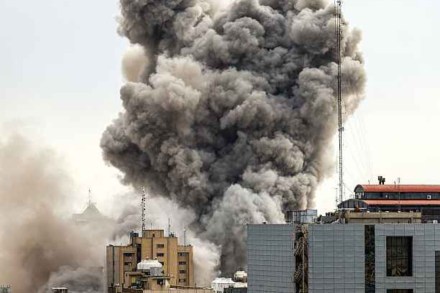
Donald Trump likes to start the new year with a bang – or better yet a series of loud bangs. On January 3, 2020, his first administration ordered the drone strike that killed Qasem Soleimani, the head of the Islamic Revolutionary Guard Corps-Quds Force. Exactly six years later, his second administration has carried out a large-scale regime-change operation in Venezuela, blowing several sites to smithereens and capturing the Venezuelan president Nicolas Maduro and his wife and flying them out of the country. This after a series of military strikes against Venezuelan and cartel targets in recent weeks and months. There had been strong rumours in Washington that Trump would order the operation in the run-up to Christmas. But he’s waited until the start of 2026 before pulling the trigger.

Trump’s 2026 wish? More executions

Ever since he began flirting with politics, Donald J. Trump has been a death-penalty enthusiast. In response to 1989’s infamous Central Park jogger rape, Trump spent $85,000 taking out full-page advertisements in the New York press calling for the suspects to be killed. ‘BRING BACK THE DEATH PENALTY,’ it said. ‘I want to hate these murderers and I always will,’ said the then 42-year-old real-estate mogul. ‘I am not looking to psychoanalyze or understand them. I am looking to punish them.’ Trump has never changed his position on ‘the Central Park Five’, even though in popular culture they are now known as ‘the Exonerated Five’ and often held up as innocent examples of racial bias in law enforcement.