Fraser Nelson

Fraser Nelson

Fraser Nelson is a Times columnist and a former editor of The Spectator.

Why won’t the Tories back Birbalsingh?

From our UK edition

15 min listen

Katharine Birbalsingh, headteacher at the Michaela community school in Brent, is being challenged in the High Court over a policy which allegedly bans students from praying. Ms Birbalsingh has defended the policy, arguing that it is vital to 'maintain a successful learning environment where children of all races and religion can thrive.' Should the Tories step in? Max Jeffery speaks to Fraser Nelson and James Heale.  Produced by Max Jeffery and Oscar Edmondson.
Is the ERG a spent force?

From our UK edition

12 min listen

After much back and forth, the Rwanda Bill passed last night with only 11 votes against while other critics, such as Lee Anderson who resigned his party role, abstained. Rishi Sunak can celebrate a small victory as it appears that the Brexit 'Spartans' of yesteryear are something of a spent force today. Cindy Yu talks to Katy Balls and Fraser Nelson. Produced by Cindy Yu.

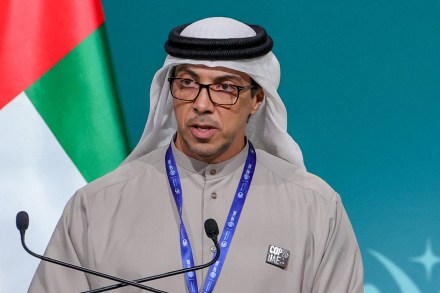
Why Emirati ownership of The Spectator matters

From our UK edition

George Osborne was originally meant to fill this slot. We were always rather mean to him when he was chancellor (deservedly so) so it pains me to admit what a good diary writer he is: always stylish, engaging, ready to spill some beans. He had agreed, but then suddenly pulled out, leaving us scrambling. Something had come up, he said. But what? The next day’s papers brought the news: he has been hired to advise the Emiratis in their bid to buy this magazine and the Telegraph. To write for us and sell us at the same time may have been a bit much, even for this famously adept multitasker. I’d love to know what advice Osborne is giving the UAE. The Emiratis stand to be the first government in the world to buy a national newspaper in another country, so it’s a test case.

The problem with Chris Skidmore’s resignation

From our UK edition

12 min listen

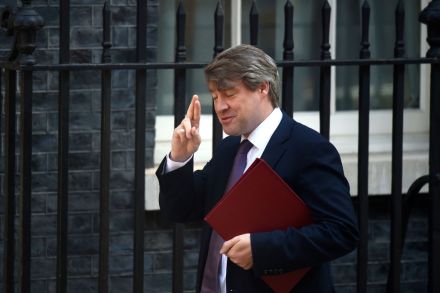
Chris Skidmore has formally announced his resignation today, triggering another by-election in the process. His departure from the Commons is in protest against the government's bill on new oil and gas licenses, which is set to be debated later this evening. What's the reaction been in Westminster? James Heale speaks to Katy Balls and Fraser Nelson. Produced by Oscar Edmondson. The Spectator is hiring! We are looking for a new producer to join our broadcast team working across our suite of podcasts – including this one – as well as our YouTube channel Spectator TV. Follow the link to read the full job listing: https://spectator.

Fact check: Sunak’s ‘tax cut’ claims

From our UK edition

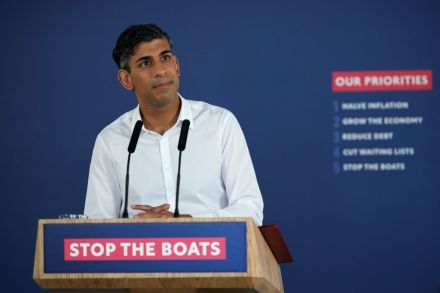
Rishi Sunak seems to have a New Year’s resolution: to claim that taxes are falling and say it so often that people start to believe him rather than their own lying payslip. He says that the last Budget was the biggest tax-cutting event since the 1980s, etc. He tells today’s Sunday Telegraph that more welfare reform will allow him to cut taxes even more. I was on the panel after he spoke on Laura Kuenssberg’s BBC1 show and said was stretching the truth a bit too much. For every £1 cut by his National Insurance tax reductions (which have now come into effect) he is raising £4 by stealth taxes.

How will Sunak and Starmer run their election campaigns?

From our UK edition

15 min listen

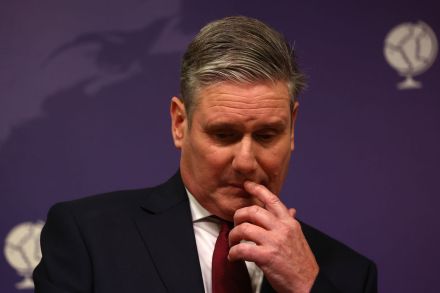
Rishi Sunak has all but confirmed that this year’s general election will take place in autumn. How will the Prime Minister, and Keir Starmer, run their campaigns? James Heale speaks to Fraser Nelson and Katie Perrior, former director of communications for Theresa May, and now a director at iNHouse Communications.

Is Rishi fishy on the asylum backlog?

From our UK edition

12 min listen

Rishi Sunak claimed that the Conservatives have cleared the 92,000 asylum claims, despite figures showing the backlog still stands at tens of thousands of applicants, with several thousand missing. Natasha Feroze speaks to James Heale and Fraser Nelson about the figures, and whether blags like these are a gift to the Reform party.

Why The Spectator didn’t cancel Karol Sikora

From our UK edition

Before the year ends, I’d like to tell the story of Karol Sikora and attempts to have him removed from a Spectator-sponsored discussion on the NHS at the last Tory conference. It offers an insight not just into how we work at 22 Old Queen Street but the dynamics of sponsored discussions. The Tory conference has become the Edinburgh Festival of political discussion: a place where ministers, activists, advisers, corporates and journalists converge to discuss pretty much everything. As with Edinburgh, the real action is on the fringe rather than the official lineup. When I became editor in 2009, The Spectator had no presence at the conference; now we host about a dozen discussions and a party.

Benefits caseload to rise by 920 a day – for the next five years

From our UK edition

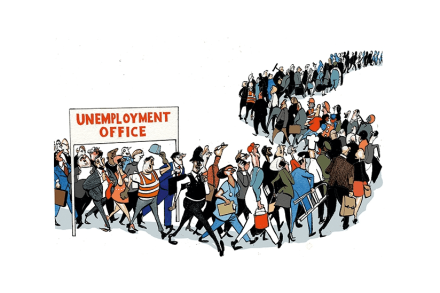
Back when Radio 4’s Thought for the Day was original and insightful, Lionel Blue was a regular source of rabbinical wisdom and dodgy jokes. Sometimes he’d come up with a phrase, a concept, that let you see the world in an entirely new way. One certainly changed how I see politics: his notion of 'moral long-sightedness'. The ability to see and get worked up about problems thousands of miles away or a hundred years’ hence, while failing to see the scandal under one’s own nose. It sums up the indifference over welfare. It’s in crisis, with 4,000 claiming sickness benefit every day. Worklessness scars our great cities: in Manchester, 18 per cent are on out-of-work benefits.

UK becomes first G20 country to halve its carbon emissions

From our UK edition

A major milestone has just been passed: Britain has become the first major country to halve its carbon emissions. The rapid pace of UK environmental progress means that our output is now below 320 million tonnes – less than half the 652 million tonnes of our 1970 peak. This is in spite of Britain now having a far larger population than 50 years ago and an economy more than twice the size. Had things gone the other way – if our carbon emissions had doubled, for example – this would be front page news. But I’m not sure you can expect to read about this good news anywhere other than The Spectator. There are no campaign groups tracking it, no politicians likely to trumpet it.

Why are birth rates falling?

From our UK edition

A few weeks ago, I chaired a debate in Westminster about the falling birth rate and its implications. It was organised by the Centre for Social Justice, which I’ve long been proudly involved with. Miriam Cates, a Tory MP, was on the panel as was Rosie Duffield, a Labour MP. But when I arrived, Duffield had pulled out: she had taken so much abuse and threats from those furious that she would attend this debate that she felt she could not continue. The debate, quite plainly, is one many people would rather never took place and I look at it in my Daily Telegraph column today. While populists have embraced this argument, there is nothing populistic about it.

Christmas Special 2023

From our UK edition

70 min listen

Welcome to this festive episode of the Edition podcast, where we will be taking you through the pages of The Spectator’s special Christmas triple issue.  Up first: What a year in politics it has been. 2023 has seen scandals, sackings, arrests and the return of some familiar faces. It’s easy to forget that at the start of the year Nicola Sturgeon was still leader of the SNP! To make sense of it all is editor of The Spectator, Fraser Nelson, The Spectator’s political editor Katy Balls, and Quentin Letts, sketch writer for the Daily Mail. (01:06) Next: The story that has dominated the pages of The Spectator in the latter half of this year is of course the conflict in Gaza.

What Sunak really said about lockdown

From our UK edition

14 min listen

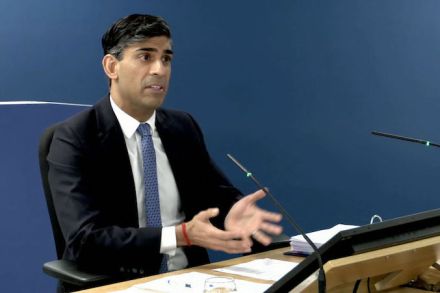
It was Rishi Sunak's turn at the Covid Inquiry today. The Prime Minister faced questions on Eat Out to Help Out, his relationship with No.10, tiers and PPE procurement. How did the former Chancellor come across? And how has his tone changed because he is now Prime Minister? Natasha Feroze speaks to Fraser Nelson and Kate Andrews.

What Sunak really said about lockdown

From our UK edition

In the dying days of Rishi Sunak’s leadership campaign, he gave an interview to The Spectator about lockdown which he was grilled on today at the Covid Inquiry. At the time he was speaking candidly as he had nothing to lose: it was clear that Liz Truss would win the Tory leadership contest. Now, he is Prime Minister and has to defend the record of the Conservative government, including decisions he argued against. So he was in a difficult position when the inquiry asked him about he had told me in that interview. When lockdown struck, Sunak had just been made Chancellor and was relatively new to government. There was an aspect of Mr Smith Goes to Washington about his disbelief at the way lockdown was implemented without any recognition about the harm it would cause.

Was Starmer right to praise Thatcher?

From our UK edition

11 min listen

This weekend Keir Starmer's team took the opportunity to discuss Margaret Thatcher in an op-ed for the Sunday Telegraph. Whilst Starmer also praised other former prime ministers – such as Tony Blair and Clement Attlee – his admission that ‘Margaret Thatcher sought to drag Britain out of its stupor by setting loose our natural entrepreneurialism', has ruffled a few feathers in the Labour party. Could this be a genius piece of politics to reach out to those on the right? Or is it a misfire?  Also on the podcast, Rishi Sunak has started the week with the news that he has recorded his lowest rating ever in the latest ConservativeHome league table, racking up a dire -25.4 among card-carrying Conservatives. Can he turn it around?

The thinking behind Rishi Sunak’s common sense Net Zero approach

From our UK edition

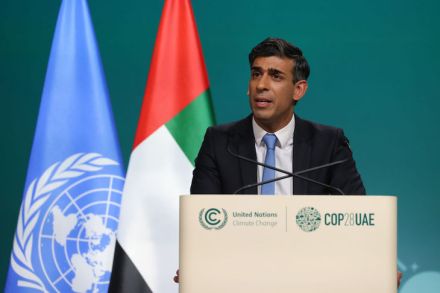
Rishi Sunak has a new approach to Net Zero, defining himself against ‘zealots’ and acknowledging the side effects of proposed green taxes. He’s replacing the old, often hyperbolic precautionary-principle logic and bringing in the language of tradeoffs: stressing the importance of democratic consent and the futility of green taxes that voters will not accept and are likely to rebel against. The Prime Minister has just taken his case to the UN ‘Cop’ Climate Summit in Dubai and his short speech deserves more attention than it has received. The standard form, in such events, is for leaders to try to outdo each other in ‘dark green’ jeremiads and say 'we' must act or the world fries. Such language skips the definition of 'we' which, of course, is the problem.

The memory and legacy of Alistair Darling

From our UK edition

14 min listen

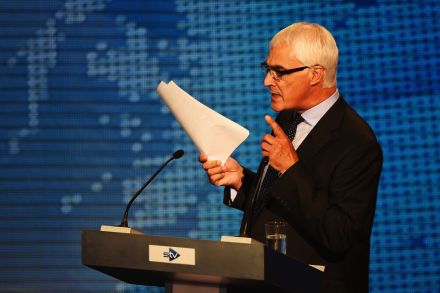
Former chancellor Alistair Darling passed away this week, aged 70. To discuss his career, life and legacy, Katy Balls speaks to Fraser Nelson and Catherine MacLeod, former political editor of the Herald, and later a special adviser to Darling.

Should Sunak reduce immigration?

From our UK edition

23 min listen

Figures out this week put net migration at 672,000 in the year to June 2023. Should the government cut the number of work visas, to immediately reduce this figure, or should it accept that high levels of immigration are needed to sustain the economy? Natasha Feroze speaks to Fraser Nelson and Kate Andrews.

The truth about Hunt’s ‘tax cutting’ Autumn Statement

From our UK edition

18 min listen

The Chancellor today delivered his fiscal update, branding it as an ‘Autumn Statement for Growth’. In it, he announced a series of tax cuts for both businesses and workers including the decision to make 'full expensing' permanent and a surprise announcement on National Insurance, which has been cut by two percentage points for workers and simplified for the self-employed. Fraser Nelson, Kate Andrews and Katy Balls unpack the details of Jeremy Hunt's Autumn Statement.

Did Covid expose a ‘failure of imagination’?

From our UK edition

11 min listen

This week it is the scientists’ turn to appear before the Covid Inquiry with Sir Chris Whitty, the Chief Medical Officer and Sir Patrick Vallance. James Heale speaks to Fraser Nelson and The Spectator's data editor, Michael Simmons to discuss the findings this week.