Fraser Nelson

Fraser Nelson

Fraser Nelson is a Times columnist and a former editor of The Spectator.

Trump makes clear: Theresa May’s deal means no FTA with America

From our UK edition

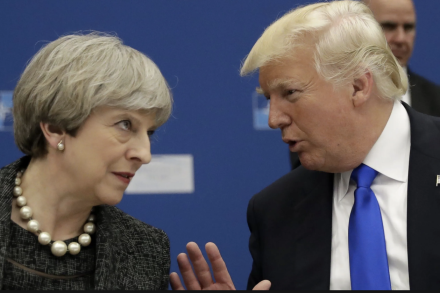
Donald Trump might change his view on many things but he has been completely consistent on Brexit. He saw the referendum as a great vote of confidence in the nation state, a declaration that Britain was thinking bigger than the EU and ready to do better deals with the world. America stood ready to conduct a free trade deal, he said, and Britain would be at "the front of the queue". But his officials were appalled to see the direction Mrs May then took with her Chequers deal, saying that it meant the UK had chosen to stick with EU rules and regulations. Ever since, this has been the message from US State Department. Trump has repeated that verdict today. The deal, he said, “sounds like a great deal - for the EU.
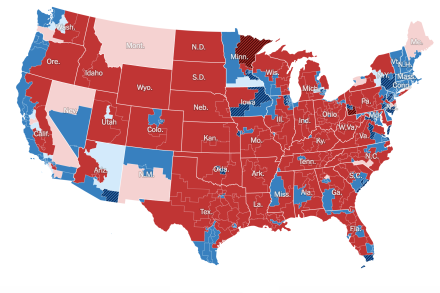
The Democrat ‘wave’ was barely a wash. The midterms will embolden Trump

From our UK edition

“Tremendous success tonight. Thank you to all!" said Trump before turning in for the night. “Tomorrow will be a new day in America,” said Nancy Pelosi, now likely to be speaker of a Democrat-controlled House. For once, both are right. Both have their victories to celebrate and defeats to mourn. Trump lost his 42-seat hold of the House and the Democrats look set for a 20-seat majority. But the Republicans did surprisingly well in the Senate, strengthening their majority with several unexpected and important victories. Overall, it's a blow for Trump - but not a crushing one. And far from the ‘blue wave’ that the Democrats had once hoped for. Where Trump campaigned, turnout rose and he did well.

The Tories can’t blame BBC bias for losing a Budget spin battle

From our UK edition

The Mail on Sunday today splashes on “the most biased BBC News bulletin in history” – a reference to the Radio 4 Today programme on the morning after the Budget. I was a guest on that programme, coming in at the end, so I should be pleased to have been a part of history. But was it really so biased? I’m not so sure. The furore is around the decision by R4 news to lead on a Resolution Foundation critique about the distributional effects of the tax cuts, saying that raising the personal allowances etc helps the richest the most. A left-wing story? Yes, but it was clearly identified as such by the 8am bulletin. The Tories simply lost the spin wars to one of the leading left-wing think tanks that morning, and seem upset now.

Don’t believe the critics. If you like Queen’s music, see the Queen film

From our UK edition

When it was released as a single, Bohemian Rhapsody was slated by the critics – yet went on to be the most popular commercial record in history. Ben Elton’s Queen musical, We Will Rock You, was panned by reviewers when it was released 16 years ago: today, it’s still packing in crowds the world over. So when the Queen film, Bohemian Rhapsody, was trashed by pretty much every film reviewer in Britain this week, it should not have been a surprise. Nor, for those planning on watching it, a deterrent. The film is not an expert portrait of Freddie Mercury, but it doesn’t pretend to be, any more than We Will Rock You pretends to be Chekov. The star is the music. We see how it’s written, recorded, argued over, revised and performed.

Will the Tories have the wit to save Universal Credit – and themselves?

From our UK edition

The row over Universal Credit is a reminder that reforming welfare is the toughest job in politics. The question, right now, is whether it’s too tough – and whether the government, distracted by Brexit and unable to defend its own successes, might give up on – or ‘pause’ – its flagship welfare reform. The UK benefits system governs the lives of millions, and its failures meant that a million people were out of work for every one of the Labour boom years. We ended up with a system where those trying to move from welfare to work, or escape low pay, were keeping just 10p of every extra £1 they earned. And they were forgotten, written off as the ‘hard to reach’.

Today, we saw the best side of Theresa May

From our UK edition

Theresa May has three faces that she shows to the world: the Brexit Boudicca, the dull technocrat (her default mode) and then what we saw today: the optimistic globalist. This act, that tends to come out only in set-piece speeches, portrays her as an open-hearted, funny and even (at times) inspiring Prime Minister. The speech today was perhaps the best she has given. Politics isn’t about governing. It’s about making and winning arguments, telling captivating stories, winning people over. And this afternoon, she told stories: of penniless migrants from the Punjab whose son went on to become (her) Home Secretary. Of a mother-to-be, soon to marry her girlfriend and still lead (her) party in Scotland.

Even now, Theresa May struggles to apologise for Windrush

From our UK edition

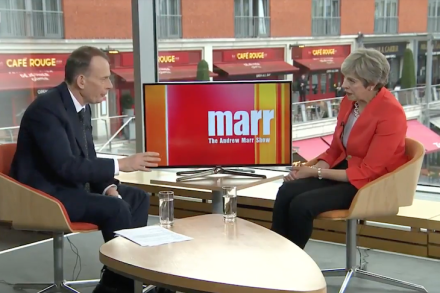
It’s now six months since the Windrush debacle that ended Amber Rudd’s career – but does Theresa May recognise what went wrong? Andrew Marr sought to find out this morning, saying that a general apology was not enough: ‘There are apologies which say: “I’m sorry something bad happened”, and then there are apologies which say: “Do you know what? My policy – my policy – made these bad things happen, and my policy was wrong and I’m sorry for it.”’ So which was May’s? Here’s what she said:- ‘The point of the policy was to ensure that those people who were here in the United Kingdom illegally were identified, and that appropriate action was taken.

Alan Duncan on Boris: ‘publicity is his cocaine’

From our UK edition

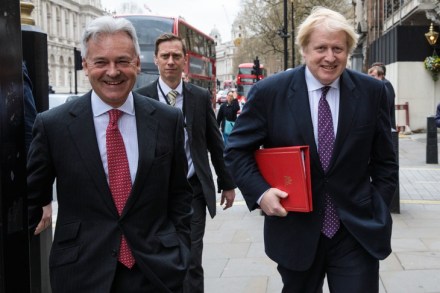
It’s no secret that quite a few Tory MPs think Boris Johnson is on manoeuvres and must be stopped. But none are as vocal as his former deputy in the Foreign Office, Alan Duncan. He recently tweeted that 'I’m sorry, but this is the political end of Boris Johnson. If it isn’t now, I will make sure it is later.' I asked him why he had responded in such a way, and we had an interesting conversation that I suggested we put on the record. He agreed, and we met recently in his Westminster home. What follows is an edited transcript of the conversation.   FN: You attacked Boris in pretty forthright terms on Twitter. Why?   AD: We are at a very critical moment, where if we get this wrong, we have no Brexit, no government, Corbyn.

‘She will decide’

From our UK edition

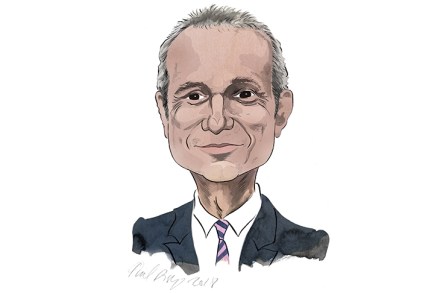
David Lidington is the most powerful minister you’ve never heard of. He is Theresa May’s de facto deputy, tasked with both supervising the domestic agenda and solving the trickiest Brexit conundrums. Much of government business is, nowadays, done through committees of cabinet members: he chairs seven such committees and sits on another 20. ‘I am the man who stands on the stage spinning plates on the top of poles,’ he says cheerfully. ‘Every now and then the PM gives me another plate and I have to keep that going as well.’ That’s hardly a metaphor that inspires much confidence in the running of the government, but everybody will know what he means. Lidington was Europe minister under David Cameron and a committed Remainer in the referendum.

Could Theresa May win back her majority? Yes she can, says Ruth Davidson

From our UK edition

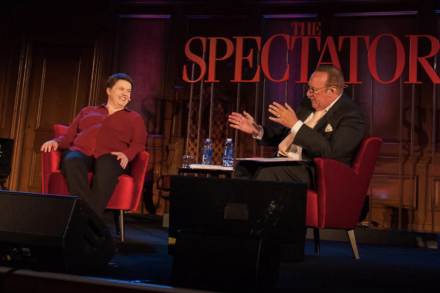
When a politician writes a personal book, it’s normally coded audition for the party leadership. Ruth Davidson launched book, Yes She Can, with a declaration that she didn’t want to be Prime Minister and earlier on this evening she explained why to Andrew Neil. The idea of her as leader was started by David Cameron, she said. When visiting her in Scotland, he was asked who he’d like to succeed him and pointed to her. “I’ve been dogged by that ever since,” she said, “so I thought I’d lay that to rest.” While also laying out her own politics, and the direction she'd like wants the party to take. Why is she unfit for No10? To start with, she said, she's a former journalist.

The new Swedish lesson: populism can be kept at bay by listening to voters

From our UK edition

The world's press was all geared up to write "Rabble-rousing Sweden Democrat breakthrough" but Sweden's voters have not obliged. The populists were aiming for first place, but remain in third place, behind the conservatives. The Christian Democrats (led by Ebba Busch Thor, pictured, above) and the Centre Party gained more seats between them (16) than the Sweden Democrats did (13 seats, to a total of 62). The governing Social Democrats had their worst result for decades, but have still ended up the largest party by far. Swedes woke up to find parliament looking like this:- V: LeftParty (ie, former Communists). S: Social Democrats. MP: Greens. SD: Sweden Democrats (in the middle because no one will enter an alliance with them). L: Liberals. C: Centre Party.

The new Swedish lesson: populism can be kept at bay by listening to voters | 10 September 2018

From our UK edition

The world's press was all geared up to write "Rabble-rousing Sweden Democrat breakthrough" but Sweden's voters have not obliged. The populists were aiming for first place, but remain in third place, behind the conservatives. The Christian Democrats (led by Ebba Busch Thor, pictured, above) and the Centre Party gained more seats between them (16) than the Sweden Democrats did (13 seats, to a total of 62). The governing Social Democrats had their worst result for decades, but have still ended up the largest party by far. Swedes woke up to find parliament looking like this:- V: LeftParty (ie, former Communists). S: Social Democrats. MP: Greens. SD: Sweden Democrats (in the middle because no one will enter an alliance with them). L: Liberals. C: Centre Party.

Sweden leaders’ debate shows how far language over immigration has moved

From our UK edition

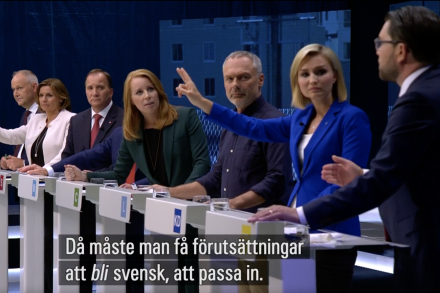
Sweden’s general election campaign ended with the Sweden Democrats in a huff and boycotting SVT, the state broadcaster, because it issued a statement distancing itself from comments made by Jimmie Åkesson in the leaders’ debate that it broadcast. Having a supposedly neutral state broadcaster pass judgement is the perfect gift for Åkesson, who said it demonstrates an establishment stitch-up and institutional bias. But actual debate itself offered a fascinating glimpse into how much the debate has shifted in Sweden - with leaders of all parties offering immigration-related facts that make a British listener gasp. We had seven party leaders, most of whom expressing views that they’d have denounced as racist not so long ago.

Are the Sweden Democrats far-right? Jimmie Akesson interviewed

From our UK edition

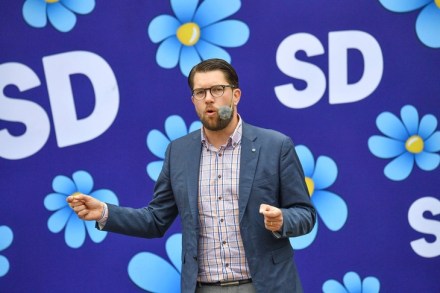
In the newspapers today, there is much talk of Sweden turning to the 'far-right.' The Times has a picture of skinhead nutters on the march, giving the impression that Swedes are about a day away from goose-stepping down Drottninggatan. The myth of Sweden going all Nazi is a myth that’s hard to puncture because no one has a good word to say about the Sweden Democrats, who are hoping to finish first. They'll not end up in government, because no one would enter coalition with them. But their electoral success baffles the outside world. There is no agreed definition of "far-right" and the term is lazily used: dramatic, but serves to cloud understanding of what's happening in Europe.

The pointlessness of banning Bannon

From our UK edition

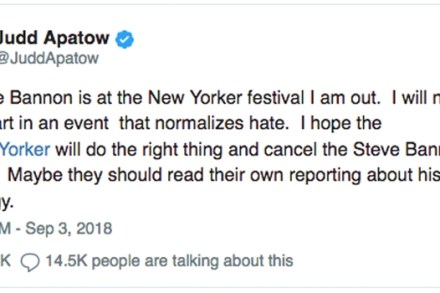
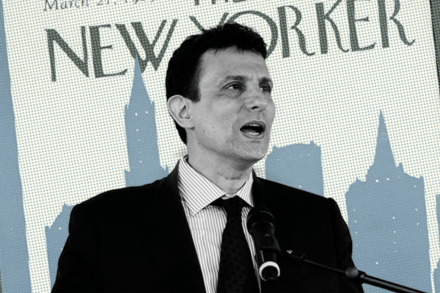
Under David Remnick’s editorship, the New Yorker has become stronger than ever during a period where many titles have collapsed. So you'd think he might be able to fend off the kind of nonsense he's just experienced. The New Yorker has branched out to publish unmissable podcasts, regular emails, blogs and events which combine to push the magazine sales up 10pc. Remnick hasn't torn it up and started again. He managed to keep everything the same, by changing everything: projecting and protecting the magazine’s identity, on and off the page. So when he decided to conduct an interview with Steve Bannon live on stage, as part of the New Yorker Festival, it was a typically gutsy decision.

A parent’s dilemma

From our UK edition

In my study at home stands a small cork board with the names of eight target schools for my ten-year-old son. The state schools are on the left, the private schools on the right. The decision is due soon and I still have no idea what to do. There aren’t many things that Britain genuinely does better than anyone else in the world, but secondary education is one of them. The discerning Russian plutocrat, who could buy anything anywhere, would have his son in England for his teenage years followed by an American Ivy League university. International league tables rank our private schools top of the world — their quality is world famous. But what’s less well-known is that exam results in the best state schools are now just as good.

The pointlessness of banning Bannon | 4 September 2018

From our UK edition

Under David Remnick’s editorship, the New Yorker has become stronger than ever during a period where many titles have collapsed. So you'd think he might be able to fend off the kind of nonsense he's just experienced. The New Yorker has branched out to publish unmissable podcasts, regular emails, blogs and events which combine to push the magazine sales up 10pc. Remnick hasn't torn it up and started again. He managed to keep everything the same, by changing everything: projecting and protecting the magazine’s identity, on and off the page. So when he decided to conduct an interview with Steve Bannon live on stage, as part of the New Yorker Festival, it was a typically gutsy decision.

Conservatism and the radical centre

From our UK edition

Every so often, usually on Twitter, you hear calls for a new centrist party. The Tories have gone Brexit bonkers, runs the argument, and Labour hard-left – surely most people are in the middle? And look at Emmanuel Macron: by sheer self-belief he won the presidency and leads a majority parliamentary party that did not exist three years ago. So don’t we need a new centrist force in Britain? I’m not sure that we do, and I explain why in my Daily Telegraph column today. Let’s look at Macron, and what he’s trying to do. Reject high taxes for the rich, on the pragmatic grounds that they don’t raise revenue.

Sales of The Spectator: 2018 H1

From our UK edition

Sales of The Spectator broke through an all-time high three years ago, and we’ve kept growing ever since. The latest industry figures, for the first half of the year, are out today – and I’m delighted to say that it’s our best-ever start to any year. Our worldwide sales averaged 71,102 in the first half of this year, up 1,939 from the same period last year. I’d also like to share some other figures. Evening Blend, our daily newsletter, has now broken through 40,000 subscribers (you can sign up free to it here) and it’s growing fast, on account of it being the best evening newsletter anywhere. We offer it free to those who register for the website, and reading the Blend every day makes new registrants more likely to subscribe.

Wanted: Director of Digital for The Spectator

From our UK edition

The Spectator’s sales are at a record high and rising, with growth driven by the website. Our model is pretty simple: we offer a few articles for free, then invite people to subscribe if they want more. We’re not seeking to maximise clicks, but are looking to grow our family of readers. We’ve made decent progress on pretty rudimentary tech; we now seek to make a major investment, and need someone to lead this next stage. As with any publication, increasing subscribers will mean publishing good articles, arguments and analysis of a quality not to be found in any other weekly.