Fraser Nelson

Fraser Nelson

Fraser Nelson is a Times columnist and a former editor of The Spectator.

Nigel Farage’s Tory manifesto

From our UK edition

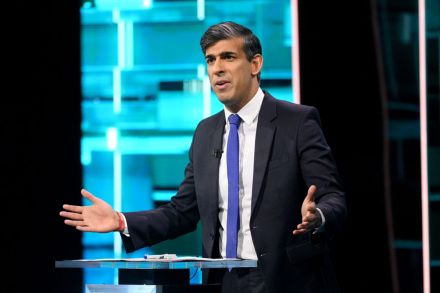
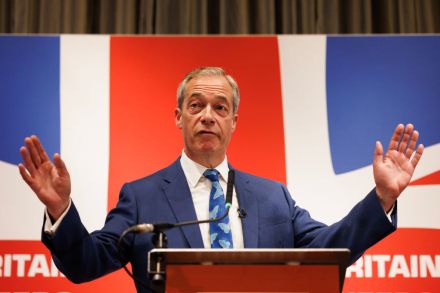
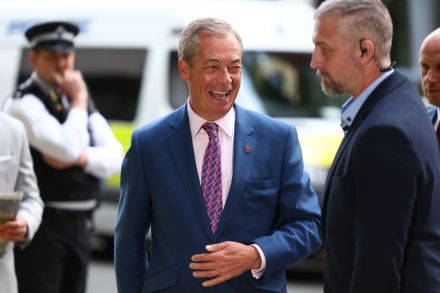
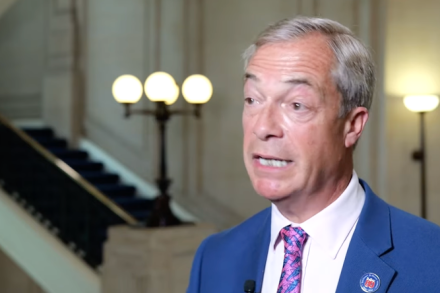
I’d say that Nigel Farage gave the best performance in last night’s debate. You might expect that: he’s a full-time television host, so he talks politics to cameras for a living. But of the seven that were on stage, he’s also the most experienced street fighter. He knew how to use humour and had a sense of insurgency to set himself against the rest. But what struck me wasn’t so much his style, as his message. On every single issue, his message was one of classic Conservatism. I’ve written already about his distasteful suggestion that Rishi Sunak is not patriotic. In my Daily Telegraph column I also point out how a Reform surge in the Westminster voting system will win Farage three MPs at most, so fewer seats than Sinn Fein.
Farage is wrong to question Sunak’s patriotism

From our UK edition

It didn’t take long for Nigel Farage to weaponise Sunak's D-Day debacle. 'Rishi Sunak pops into Normandy but omits to go to the big international commemoration,' he says in a pre-debate warmup video. 'He doesn’t really care about our history. He doesn't really care, frankly, about our culture…This man is not patriotic. Doesn’t believe in the country, its people, its history or frankly even its culture. If you’re a patriotic voter, don’t vote for Rishi Sunak.' Jeremy Corbyn was frequently attacked for being unpatriotic but that’s more to do with his links with Sinn Fein and taking the non-British side in a few too many international disputes.

On Sunak’s maths, Tories will lift taxes by £3,000 per household

From our UK edition

My colleague Ross Clark has shown how the Tories cooked up that £2,000 figure. They worked out the total cost of what they think Labour will do, using standard HM Treasury costings. Then, they divided that by the number of in-work households (18.4 million). This is a subset of the 21.4 million total UK households, so no pensioners or workless households. By choosing a smaller denominator, you concentrate the increase and conjure up a scarier figure. Then they quadruple-counted. So they took each year's estimate for tax rise and then added them together over four years and - presto! - you end up with £2,000. But let’s apply a similar method to the published plans of the Conservative government.

Sunak’s scrappy style worked, but he fought on a false premise

From our UK edition

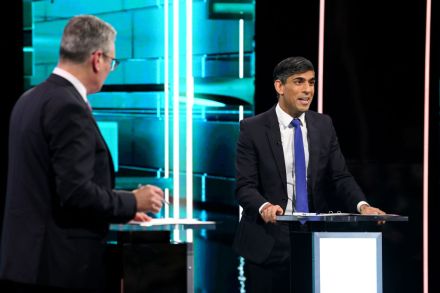
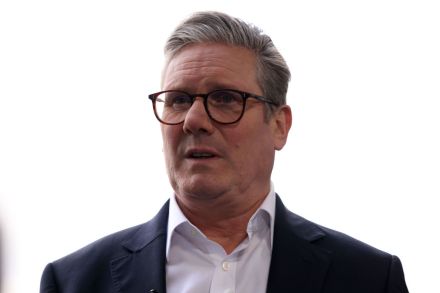
‘Gentlemen, please’, said Julie Etchingham, over and over again, as she chaired this ITV debate. She had given Rishi Sunak and Keir Starmer both 45 seconds for answers and both had far more to say. ITV didn't silence one microphone when the other was speaking so both were able to heckle, further complicating the format. Sunak’s tactic was to turn everything into a question for Starmer: ‘What are you going to do about tax / small boats/ taxing pensioners?' Starmer’s general lack of answers came across, which will have been Sunak's objective. I'd give the debate to Sunak - but it was closer than I thought it would be. And to win, Sunak had to stretch the truth until the elastic snapped. Starmer can be fairly wooden at delivering speeches, but his lawyer training came across.

Are the Tories telling the truth? A look at the data

From our UK edition

A quirk of the UK system is that the requirement to tell the truth in adverts does not apply to politicians. This is, in effect, a license to lie - or, at least, to stretch the truth until the elastic snaps. The Conservatives have given some examples in their first campaign video an indication. It shows the Union Flag flying upside down, often taken as a sign of distress. The gist is that Rishi Sunak ‘is making progress’ with his plan, but when it lists that progress it says much that is - how to say? - at variance with the actualité. All can be checked on The Spectator’s data hub, designed so anyone with a suspicion that they’re not being told the truth can easily check.  ‘Taxes are being cut’, it says.

Could Farage crush the Tories?

From our UK edition

13 min listen

This afternoon a wildcard was thrown into the election – the return of Nigel Farage. He will be standing for the Reform party at Clacton, the one parliamentary seat that Ukip had held. What will this mean for the Conservatives? James Heale talks to Fraser Nelson and Katy Balls. Produced by Oscar Edmondson and Cindy Yu.

Can Keir Starmer control the Labour left?

From our UK edition

18 min listen

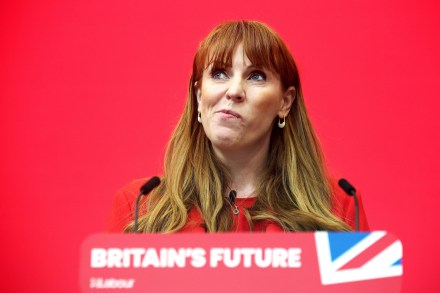
Keir Starmer has began a purge of pre-existing candidates and MPs who risk frustrating their election campaign. There is an ongoing row about whether Diane Abbott, the former shadow home secretary, will be barred from standing. Angela Rayner has now weighed in saying she 'sees no reason why Diane Abbott can't stand for Labour'. Could this become a problem for Keir Starmer? James Heale speaks to Fraser Nelson and Paul Goodman. Produced by Natasha Feroze and Oscar Edmondson.

Does Keir Starmer have enough to say?

From our UK edition

16 min listen

Keir Starmer set out his first major speech to kick of Labour's general election campaign. The Labour leader prioritised national security, a strong economy and the borders. But with a 'policy light' campaign – has he done enough? Kate Andrews speaks to Katy Balls and Fraser Nelson.

Sunak: let’s bring back national service

From our UK edition

17 min listen

The first big new policy announcement of the election campaign is in from the Tories, and it’s likely to be a talker. Where Keir Starmer appears to be opting for a ‘ming vase’ strategy – trying not to rock the boat ahead of polling day – the Tories are leaning towards the opposite. At 20 points behind in the polls, aides believe they need headline-grabbing, bold policies in order to get the public’s attention. The first of which is the return of mandatory national service. What's the thinking behind this one?  Oscar Edmondson speaks to Katy Balls and Fraser Nelson.  Produced by Oscar Edmondson.

What’s behind the Tory exodus?

From our UK edition

11 min listen

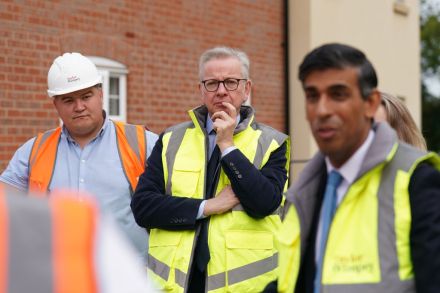
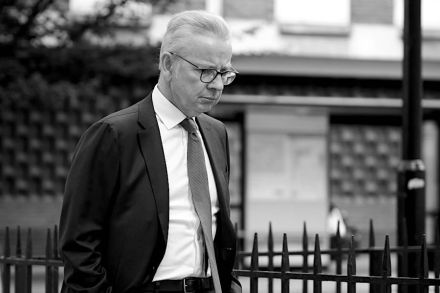
It's day four of the election campaign, and Michael Gove has joined the growing Tory exodus and announced he's standing down at the election. What's behind his decision, and how will it affect Rishi Sunak? Megan McElroy speaks to Fraser Nelson and Katy Balls.  Produced by Megan McElroy.

The glories and blunders of Michael Gove

From our UK edition

On the way to work, I pass a Lidl supermarket that has a new school built on top of it. Parents gather with children in uniforms that didn’t exist a few years ago; teachers who didn’t have jobs a few years ago come together in what’s already one of the best primary schools in the country. And if it wasn’t for Michael Gove, personally, none of this would exist. I can’t think of many more important or meaningful legacies for the political career that, we now learn, will end at the July election. A few weeks ago, Katy and I were at an event that Gove chaired where he asked the audience: what was the most conservative reform of the last 14 years? And the most unconservative? I wondered, at the time, if he asked this because he knew that he was responsible for both.

Is an election about to be called?

From our UK edition

11 min listen

Westminster is awash with rumours today that the Prime Minister is about to call an election. On this episode, Cindy Yu talks to Katy Balls and Fraser Nelson about where this speculation is coming from and how seriously to take them. Produced by Cindy Yu.

Can Hunt answer the Reagan question?

From our UK edition

11 min listen

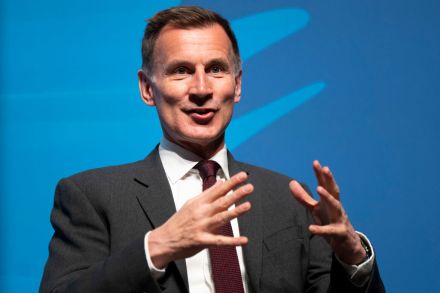
Ronald Reagan famously asked voters: 'are you better off than you were four years ago?' At the next election, the Tories face a public thinking over the last fourteen years. Chancellor Jeremy Hunt gave a speech today defending the UK's record tax levels and attacking Labour's economic plans. But who should we trust more on tax? Fraser Nelson and James Heale join Katy Balls to discuss. Produced by Megan McElroy and Patrick Gibbons.

Will Sunak’s fighting talk work?

From our UK edition

12 min listen

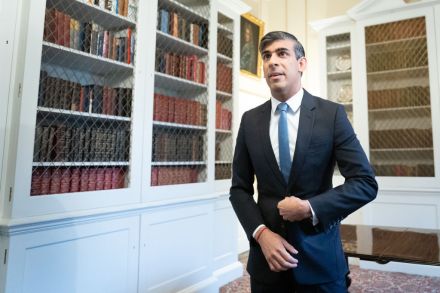
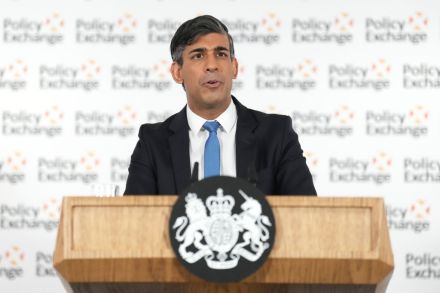
Rishi Sunak delivered a pre-election speech this morning setting out the dividing lines at the next election: security with the Tories or risk with Labour. Will it be enough to shift the dial? And is the Natalie Elphicke defection still haunting Keir Starmer? Natasha Feroze speaks to Katy Balls and Fraser Nelson.

Why Israel is crucial to Eurovision

From our UK edition

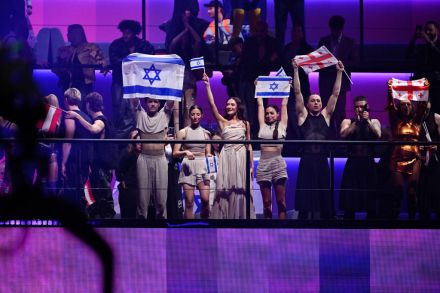
Eden Golan has qualified for the final of tonight’s Eurovision Song Contest and will represent Israel in the world’s most-watched cultural event. How she’ll get there is another issue: the pro-Palestinian crowds outside the venue (including Greta Thunberg) are so formidable that at one point yesterday Golan’s security team said it was not safe for her to leave the hotel. Yet again, the Eurovision final has become a collision of politics, music and culture. To many Brits, Eurovision is a concert of bad musical taste and a festival of camp trash. The BBC, which chooses the UK entry, certainly seems to see it that way which is why our competitors tend to be so bad as to be a passive-aggressive insult to an entire continent*.

Have the Tories avoided a local election catastrophe?

From our UK edition

10 min listen

Rishi Sunak can breathe a (small) sigh of relief. Ben Houchen, the so-called ‘patron saint of the red wall’, has won a third term as Tees Valley mayor. Houchen secured 53.6 per cent of the vote with Labour in second place with 41.3 per cent, despite some polls in advance suggesting it was neck-and-neck between the Tories and Labour. The Conservatives have undeniably had one of their worst nights for a generation, but are there some silver linings?  James Heale speaks to Katy Balls and Fraser Nelson.  Produced by Natasha Feroze and Oscar Edmondson.

Labour triumphs in Blackpool as Tories suffer heavy losses

From our UK edition

14 min listen

It's looking like the worst night for the Conservatives in 40 years. The prediction – that the Tories will lose about half of the council seats they are defending – looks on track so far. Labour comfortably won the Blackpool South by-election with a 26 per cent swing and it has also taken several key councils, including Rushmoor which has been Tory-run for the last 24 years. A Gaza backlash has seen Labour lose Oldham while the Conservatives have suffered a string of council losses, coming within 120 votes being beaten by Reform in Blackpool. Oscar Edmondson speaks to Katy Balls and Fraser Nelson.  Produced by Oscar Edmondson.

Can Humza Yousaf hang on?

From our UK edition

11 min listen

Humza Yousaf faces the biggest crisis of his leadership to date – with his fate in the hands of former SNP leadership rival Ash Regan. Will Humza step down before he is pushed? Or is there a narrow gap through which the First Minister can fight on? Lucy Dunn speaks to Fraser Nelson and Katy Balls.

Is this the beginning of the end for Humza Yousaf?

From our UK edition

15 min listen

After two and a half years in government together, Humza Yousaf has terminated the SNP’s governing pact with the Scottish Greens. The decision was rubber stamped at a hastily arranged meeting of the Scottish cabinet on Thursday morning. It preempts a vote by rank-and-file Green members on whether to walk away from Yousaf’s government after he ditched a key climate target. In response, The Scottish Conservatives have tabled a vote of no confidence vote. And the Yousaf might very well lose it, now the Greens are out of the government. What will this mean for the first minister? Katy Balls speaks to Lucy Dunn, Iain Macwhirter and Fraser Nelson.  Produced by Oscar Edmondson.

Will there be a summer election?

From our UK edition

12 min listen

This morning Rishi Sunak delivered a press conference making the case that the Rwanda Bill should become law today – and the government is ready for when it does. James Heale speaks to Katy Balls and Fraser Nelson about what could be an all-night parliamentary showdown on the Rwanda vote, and whether an early summer election is on the cards. Produced by Natasha Feroze.