Fraser Nelson

Fraser Nelson

Fraser Nelson is a Times columnist and a former editor of The Spectator.

Sunak’s perfect resignation

From our UK edition

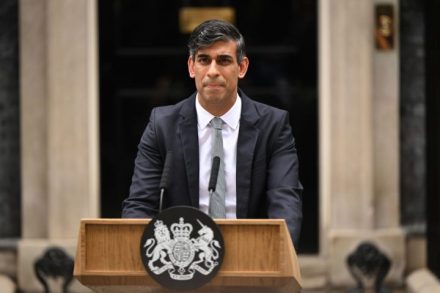
Rishi Sunak’s resignation speech was classy, generous and a model of the British system at its best. He started by taking personal responsibility for the election disaster, saying (as expected) that he’d resign as party leader as well as prime minister. His next move was not back into No. 10 but into the car and to Buckingham Palace to ask the King to accept his resignation and recommend that he appoints Keir Starmer. The contrast to America’s last change of power is striking. It’s time to learn the lessons of the campaign, Sunak said. As he spoke, his wife stood in the background with an umbrella as if to illustrate the point. Sunak made the important point about how little fuss there was that a Hindu prime minister with his Indian wife should enter and exit No.
Labour wins by a landslide

From our UK edition

15 min listen

Where to start with an historic election night. Keir Starmer has got his 1997 moment, winning an enormous majority. Elsewhere, eleven cabinet ministers have lost their seats, including: Grant Shapps, Gillian Keegan and Penny Mordaunt. Former prime minister Liz Truss has lost her seat, as have senior Tories Jacob Rees-Mogg and Miriam Cates. The Lib Dems have made massive gains, the SNP were decimated in Scotland and Nigel Farage is the MP for Clacton.  But it's not a clean sweep for Labour. Two Labour frontbenchers have lost their seats and Starmer will enter government on a vote share of 35 per cent, the lowest of any postwar governing party. Will this hinder him in government? And is this landslide down to the Farage effect?

Labour’s Potemkin landslide

From our UK edition

Something pretty big is missing from Labour’s historic landslide: the voters. Keir Starmer has won 63 per cent of the seats on just 33.8 per cent of the votes, the smallest vote share of any modern PM. Lower than any of the (many) pollsters predicted. So Labour in 2024 managed just 1.6 percentage points higher than the Jeremy Corbyn calamity in 2019 – and less than Corbyn managed in 2017. ‘But for the rise of the Labour party in Scotland,’ says Professor John Curtice, ‘we would be reporting that basically Labour’s vote has not changed from what it was in 2019.’ And that’s on the second-lowest turnout in democratic history. So where, then, is the supposed Starmer tsunami? There certainly has been a Tory meltdown.

Boris and Gove give the perfect Tory requiem

From our UK edition

The high point of the Tory rally last night were the superb speeches from Michael Gove and Boris Johnson. 'Is it not the height of insanity, if these polls are right, that we are about to give Labour a supermajority?' said Johnson. After all, voters 'sent Jeremy Corbyn and his then-disciple Keir Starmer into orbit' in 2019 and then saw the UK develop the vaccine first and has now beaten the 'post-Covid inflation'. Reform UK voters will end up with 'exactly the opposite of what they want' – the 'Kremlin crawlers' who 'make excuses for Putin’s 2022 invasion of Ukraine… don’t let the Putinistas deliver the Corbynistas'. Gove listed Tory achievements: a reformed welfare state, closing a huge school attainment gap between rich and poor.

Has Reform peaked too soon?

From our UK edition

14 min listen

The election campaign was going well for Nigel Farage's Reform... until it wasn't. A series of controversies have been difficult for the party to shake off. Will the distractions cost them votes and MPs? How will it affect their momentum - and who's to blame? Katy Balls speaks to Fraser Nelson and James Heale.

Coffee House Shots live: election special

From our UK edition

58 min listen

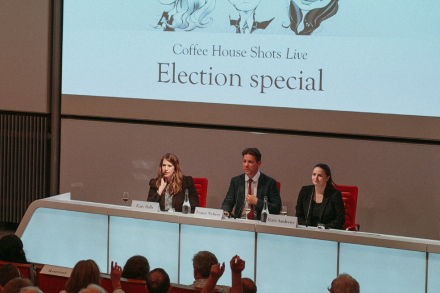
Join Fraser Nelson, Katy Balls and Kate Andrews for this special edition of Coffee House Shots, recorded live ahead of the general election. As election day draws closer, Fraser talks through some myth-busting statistics and the team answer questions from the audience. Could this election increase support for proportional representation? What policy does the panel think has been the most interesting? And was there ever a probable path to victory for Rishi Sunak? Produced by Natasha Feroze and Patrick Gibbons. Check out The Spectator's data hub for more graphs and statistics, updated daily.

Will Biden survive his debate implosion?

From our UK edition

13 min listen

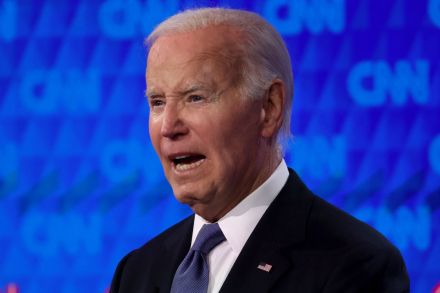
The Democrats wanted and needed a compelling performance from Joe Biden last night: a rebuttal to the concerns about his age and ability. Instead, his performance was disastrous. Is there any way he can survive this performance? Katy Balls speaks to Fraser Nelson and Sarah Elliott, director of the UK-US special relationship unit at the Legatum Institute.

Will Biden survive his debate implosion?

From our UK edition

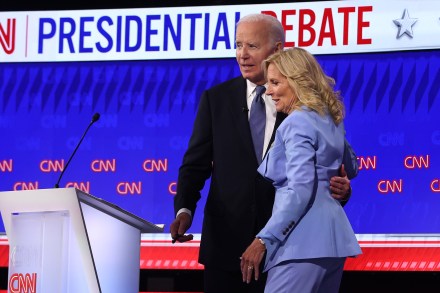
The Democrats wanted and needed a compelling performance from Joe Biden last night: a rebuttal to the concerns about his age and ability. Instead, his performance was disastrous. His voice was hoarse, he rambled, frequently lost his chain of thought and sometimes couldn’t even get to the end of his sentences. Donald Trump was composed (not usual for him) and was as sharp as Biden was weak. When Trump went into his traditional hyperbole, Biden was unable to answer. It was perhaps the worst performance from any Democratic candidate in the television age and has led to panicked discussion about ditching him. Trump was heading for the White House before this debate.

Downfall: how Nigel Farage became the left’s greatest weapon

From our UK edition

44 min listen

This week: Downfall. Our cover piece examines Nigel Farage’s role in the UK general election. Spectator editor Fraser Nelson argues that Farage has become the left’s greatest weapon, but why? How has becoming leader of Reform UK impacted the campaign and could this lead to a fundamental realignment of British politics? Fraser joined the podcast to talk through his theory, with former UKIP MEP Patrick O’Flynn (02:10). Next: Spectator writer Svitlana Morenets has returned to Ukraine to report on the war, which is now well into its third year. How are Ukrainians coping and what is daily life like? Svitlana joined the podcast from Kyiv with Ukrainian author Andrey Kurkov (21:53). And finally: has ‘cancel culture’ been cancelled?

How Nigel Farage became the left’s greatest weapon

From our UK edition

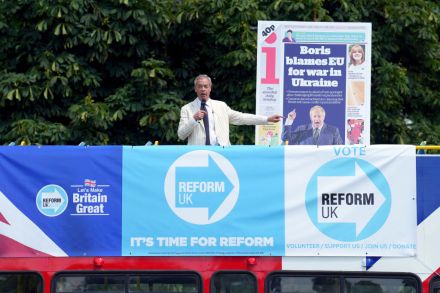
Nigel Farage is about to turn British politics upside-down for a third time. His Ukip insurgency forced the Tories to offer the 2016 referendum on the EU and changed history. When his Brexit party pushed Tories into fifth place in our last-ever European parliament elections in 2019, his victory established him as the most effective Tory-slaying machine ever deployed in political battle. If Keir Starmer or Ed Davey could have had one wish before the election, it would have been for Farage to return and attack the Tories, so they could sit back to watch the right eat itself. ‘Farage has become our patron saint,’ says one Lib Dem strategist So it has proved.

Is Nigel Farage drawing from the Trump playbook?

From our UK edition

12 min listen

In a speech this afternoon, Nigel Farage doubled down on controversial comments he made about the West provoking the war in Ukraine. Is the Reform leader taking inspiration from Trump? And could this be a small win for the Tories who are seeking to claw back Reform votes? Also on the podcast, James Heale speaks to Katy Balls and Fraser Nelson about the latest in the election date betting scandal.

Whose income rose fastest under the Tories?

From our UK edition

‘Handouts from the state do not nurture the same sense of self-reliant dignity as a fair wage,’ says Keir Starmer in an article for the Sunday Telegraph. He’s right. Being in work is the most effective bulwark against poverty. Yet time and time again, government fairness is judged in terms of how it tweaks benefits rather than what was done to get more people into work. It’s a common belief that under the Tories, the lowest-paid were hammered and the best-paid walked away with the most.  When Tories cut benefits, it’s usually to incentivise people to move from welfare into work – and make not just them but society better off overall. That’s the theory, but what’s the results?

The Washington Post has missed out on a great editor

From our UK edition

When Robert Winnett was named the new editor of the Washington Post, it made a lot of sense to me. He’s deputy editor of the Daily Telegraph, perhaps best known for being the driving force behind the MPs’ expenses investigation. His judgment and energy have been pivotal to making the Telegraph such a strong commercial and editorial success in a world that seems full of newspapers in crisis. The Post is fast turning into one of them which is why Jeff Bezos, its owner, turned to former Telegraph editor Will Lewis as CEO. And why Lewis, in turn, headhunted Winnett. But one thing I couldn’t quite work out: why would Rob want to take the job? It’s far from clear that the Post’s crisis is recoverable.

Is Boris back to save the day?

From our UK edition

12 min listen

If you're a Twitter user, you might have seen more of Boris Johnson than usual. He's been making videos to endorse selected candidates from his holiday in Sardinia. Might he make a bigger return to the election campaign? Is he the man that could save the Tories from Farage - and does he want to?  James Heale speaks to Isabel Hardman and Fraser Nelson.

Does Nigel Farage have the cure for Britain?

From our UK edition

10 min listen

Nigel Farage has unveiled Reform UK's manifesto. Except, it's not a manifesto, because he says the word is synonymous in voters’ minds with ‘lies’. It promises a freeze on non-essential immigration, a patriotic curriculum, leaving the European Court on Human Rights, and cutting taxes by £88 billion.  Is this contract more of a wish list? How much damage can Nigel Farage do to the Conservatives? Katy Balls speaks to Fraser Nelson and James Heale.

Will Keir Starmer really hire 6,500 more teachers?

From our UK edition

Perhaps Keir Starmer’s only solid election pledge is to use the money from VAT on private school fees to ‘hire 6,500 more teachers’ over five years. But how solid is this pledge? And what’s the context? There are 530,000 teachers, so if the 6,500 were to be hired tomorrow, it would increase the headcount by just 1.3 per cent. Hardly transformational. But the increase is to be spread over five years - which technically can be honoured by 1,300 a year, upping the headcount by just 0.3 per cent a year. This is so small as to be a rounding error. It’s a third of a teacher per school. But Labour isn’t even promising ‘more’ than 530,000 (ie, it’s not promising to take the number to 536,500 in five years). Starmer means more than there would otherwise be.

What could Starmer’s first year in power look like?

From our UK edition

19 min listen

Picture the scene: it's July 5th and a triumphant Keir Starmer arrives at Downing Street after achieving a supermajority and the Tories have only narrowly prevented the Lib Dems becoming official party of opposition. Whilst this may sound far fetched, it is the likely result when you take an average of the last week's polls. What would those first 100 days of Labour look like? Katy Balls speaks to Fraser Nelson and John McTernan, former political secretary to Tony Blair.  Produced by Oscar Edmondson. The Spectator will be hosting a special Live edition of Coffee House Shots in the aftermath of the election.

Why are Tories talking about a Labour Super Majority?

From our UK edition

12 min listen

Grant Shapps has been speaking to media this morning and warning that a Labour landslide would be 'very bad news' for the country. Is the acknowledgement that Labour could seriously damage the Tories a slip of the tongue, or a new strategy for the Tories? Elsewhere, the interview that Rishi Sunak left D Day commemorations for is airing tonight. In a controversial moment, when asked what he had to go without as a child, he says Sky TV...  Megan McElroy speaks to Fraser Nelson and Katy Balls. Join the Coffee House Shots team for a live recording on Thursday 11 July. Get tickets at spectator.co.uk/live.

The truth about the rise of the ‘far right’ in Europe

From our UK edition

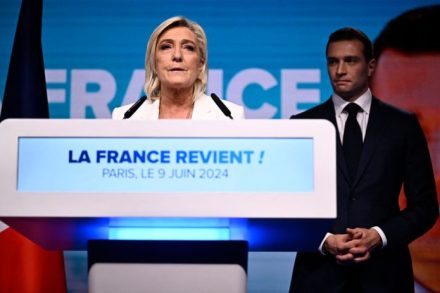
'The rise of nationalists and demagogues is a danger for our nation but also for Europe,' said Emmanuel Macron as he announced his general election. Strong talk, as befits his newly-called general election campaign but is that really what has just happened? Look closely and the results are more nuanced – and more interesting.  If anything, we can see the taming of some populist shrews. In France, Le Pen’s National Rally hit 30 per cent only after her long attempt to detoxify, mellowing her agenda and, recently, kicking the AfD out of her European Parliament grouping. The fresh-faced Jordan Bardella, 28, was the face of Le Pen’s Euro campaign.

Nigel Farage’s Conservative manifesto

From our UK edition

12 min listen

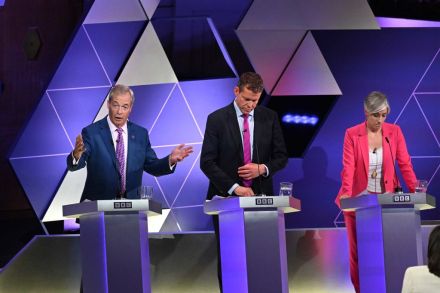
Last night, leaders and senior representatives from seven political parties went head to head in the latest TV debate. But who came out on top? Katy Balls speaks to James Heale and Fraser Nelson.