Fraser Nelson

Fraser Nelson

Fraser Nelson is a Times columnist and a former editor of The Spectator.

Should the Tories try to lose the next election?

From our UK edition

9 min listen

Some Tories want to lose the next election. Conservative policies and ideologies are stale, they say, and the party could do with a period in opposition. Is this really a good idea? And could a Labour, SNP and Liberal Democrat coalition find a way to keep the Tories out of government for decades?'If anyone is thinking that way, they don't deserve to be in power.' – Fraser NelsonKaty Balls speaks to Fraser Nelson and James Forsyth.
Has Boris won back Tory MPs?

From our UK edition

10 min listen

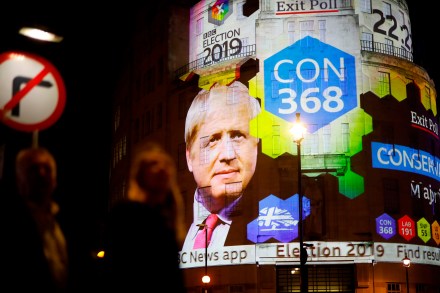
Given that Boris Johnson escaped the latest and final set of party fines from the police yesterday, does this mean partygate is over? Sue Gray's report is still yet to be published, where she intends to name and shame those in her report. Could this take some of the pressure off the Prime Minister?Also on the podcast, there is a growing divide within the Conservative party between those who want a windfall tax and those that don't. But where does Boris stand on this?All to be discussed as Katy Balls speaks to James Forsyth and Fraser Nelson.

Take back control: a plan B for Northern Ireland

From our UK edition

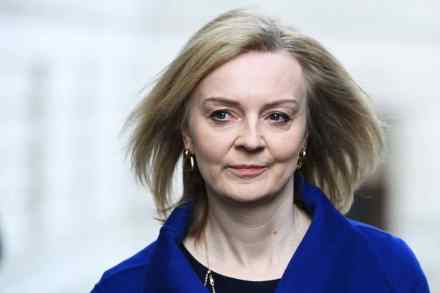
Things are heating up in the battle over Northern Ireland. After his trip to Belfast yesterday, the Prime Minister is releasing a ‘take back control’ Bill that will unilaterally change the terms of the Northern Ireland Protocol. It’s part bluff, part serious – and could very well reopen Brexit wars. Liz Truss’s statement this afternoon followed the gameplan revealed in detail by James Forsyth in a recent cover piece. The Queen’s Speech carries an anodyne-sounding reference to protecting the Good Friday Agreement and ‘supporting’ devolution but (to quote James) ‘these words will be a coded threat to the European Union that the UK is prepared to unilaterally tear up parts of the Brexit deal relating to Northern Ireland’.

What is the future of Nato?

From our UK edition

15 min listen

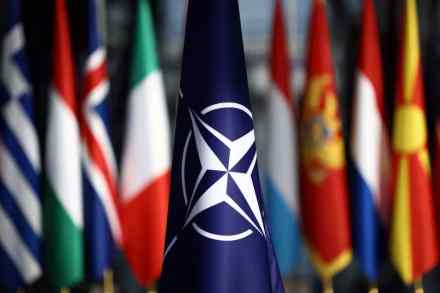
Finland this week has expressed its wish to join Nato and Sweden is expected to follow suit. But with an America more focused on China, an ever aggressive Russia and Turkey with a membership veto card what does the future of this organisation look like?

Why is the government planning to cull the civil service?

From our UK edition

12 min listen

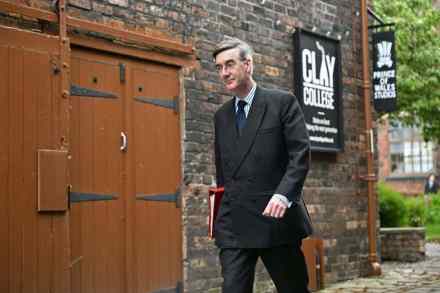
Jacob Rees-Mogg has said that the government plans to axe 91,000 posts within three years from the civil service. The argument for it is that the reduced tax burden will help the public deal with the ever-growing cost of living crisis. But will this have the desired effect and will it be anywhere near enough?Kate Andrews talks to James Forsyth and Fraser Nelson about if the Prime Minister has the right temperament to weather this particular storm.

What’s behind the Swedish security pact?

From our UK edition

15 min listen

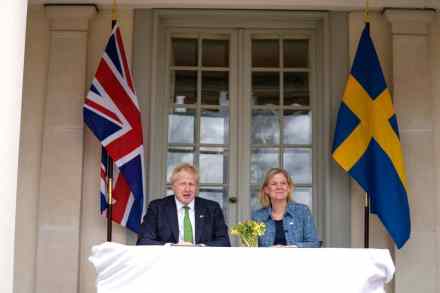
Today Boris Johnson pledged his support to protect Sweden and Finland in a mutual defence pact. As non Nato members, the deal is intended to protect these two countries from unexpected attacks. Will Putin see this as provocative? And how might this deal clash with Macron's view of a European defence bloc?'I think we can see the phrase Global Britain taking some meaningful form now' - Fraser Nelson.All to be discussed as Cindy Yu speaks to Fraser Nelson and James Forsyth.
Why the new Anglo-Swedish pact matters

From our UK edition

Boris Johnson has travelled to Stockholm to sign a mutual defence pact with Sweden to tide the country over until it enters Nato. He'll then travel to Finland to agree similar terms. This is quite significant for a few reasons. To the Prime Minister, the 'global Britain' post-Brexit strategy means signing global new trade and defence relationships: with European and global partners. In other words, showing that Brexit Britain has not turned in on itself but is keen to make new and global alliances - stepping up as an ally at times when even America is reluctant. This is one of those times. In theory, the European Union has a mutual defence clause (Article 42.

Starmer is caught in a web of his own words

From our UK edition

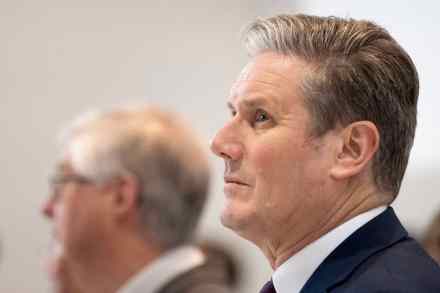
I’ve so far found it hard to get outraged about Keir Starmer’s curry with staffers after a campaigning event in April last year. For the boss to buy in a curry for his local activists during the visit is a decent and human thing to do. I’d not condemn anyone for it. But this is politically tricky for Starmer for three reasons: Starmer was not a voice of moderation on lockdown. He was always calling for an even tougher regime than that which the Tories needlessly imposed. As Opposition leader, I'd say, he had not only the option but the duty to oppose a cruel and draconian policy that gratuitously criminalised harmless, everyday acts.Starmer did not change his mind on lockdown.

Why is it so hard to become a British citizen?

From our UK edition

20 min listen

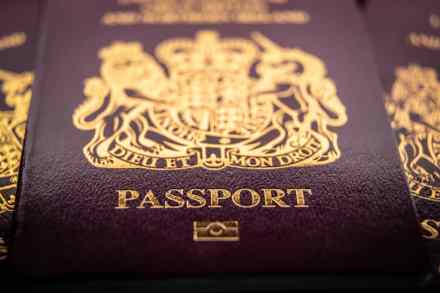
A big congratulations to Linda Nelson who has just become a British citizen. Fraser details the long and taxing journey it took for his wife to reach this point in his Telegraph column this week and asks why as an immigrant nation do we make becoming British so challenging for new arrivals? On the podcast, Fraser talks with Cindy Yu and James Forsyth about this question. And Cindy brings a few questions from the citizenship test, to see if her colleagues would pass.

Is stagflation coming for the UK?

From our UK edition

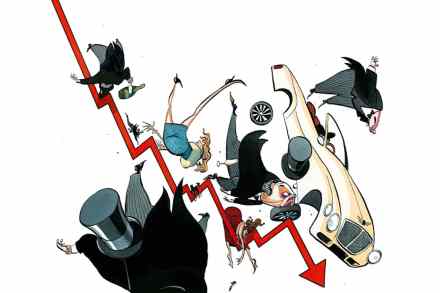
This week, a US economy that had been expected to grow in the first quarter of the year was recorded as having shrunk 0.4 per cent – a stunning fall, raising awkward questions about what might come next. This morning, it emerged that the Eurozone grew by just 0.2 per cent over the same period, with inflation in both the US and Europe topping seven per cent. America is ahead of Britain when it comes to the global economic slowdown For weeks now, investors in America have been spooked by the ‘inverted yield curve’: a technical term, but one which carries certain implications. When this happens (i.e., short-term government bonds become more valuable than long-term ones) recession often follows.

Sleepwalking into censorship: a reply to Nadine Dorries

From our UK edition

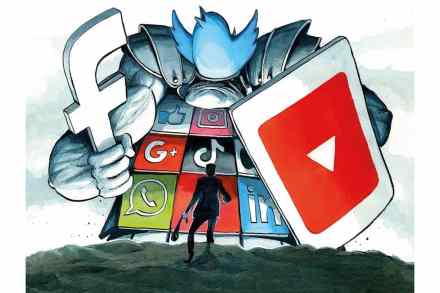
In this week’s magazine I look at the threats posed by the so-called Online Safety Bill now making its way through the House of Commons. It gives sweeping censorship powers by creating a new category of speech that must be censored: 'legal but harmful'. The government will ask social media companies to do the censoring – and threaten them if they do not. The idea is for the UK to fine them up to 10 per cent of global revenue (ie: billions) if they publish 'harmful' content – but harmful is not really defined. So censorship potential is wide open. Nadine Dorries, the Culture Secretary, has suggested that the jokes of the comedian Jimmy Carr would be "harmful".

Can Elon Musk take on the tech censors?

From our UK edition

25 min listen

In this week’s episode: Is Elon Musk heading for a clash with the British Government over free speech?Elon Musk is buying Twitter. But might the Tesla CEO be in for a battle he wasn’t expecting with the UK government? Spectator Editor Fraser Nelson writes about this potential clash in this week’s issue and he joins the podcast to expand on his thesis. (00:49)Also this week: Where is it ever ok to stare at someone? If you’ve been on the tube recently you might have spotted a rather startling sign. This poster warns passengers about intrusive staring on public transport, so as to protect women from feeling intimidated on their commute. But who, we ask, will speak up for those who love staring at people on public transport?

Can Elon Musk take on the tech censors?

From our UK edition

After three centuries of failing to assert power over the printed press, the House of Commons is finding the digital world easier to conquer. The Online Safety Bill now going through parliament will give ministers the power to decide what can and can’t be said online by banning what they regard as ‘harmful’. The word is not very well defined – which, of course, gives sweeping powers to the government regulators who will define it. It will be one of the most ambitious censorship laws that the world has ever seen. Enter Elon Musk. His $44 billion takeover of Twitter is intended, he says, not to make money but to defend free speech.

A vision for the future: Can Britain become a biotech superpower?

From our UK edition

30 min listen

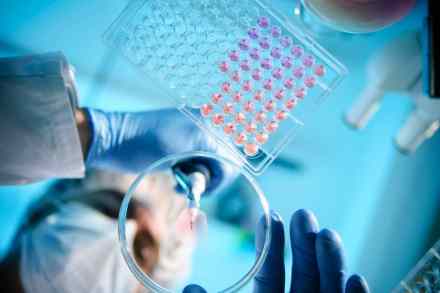
The UK's vaccine programme was hailed by the government as a success story for Global Britain. It became an example of how Britain could speed up regulation, reduce bureaucracy and become a worldwide home for tech and innovation in life sciences.  The government recently published a Life Sciences Vision, but how much vision was there? This podcast will look at the importance of the industry, the hurdles that it faces and its contribution to the government's Global Britain agenda.  Fraser Nelson, the editor of The Spectator is joined by Anthony Browne, Conservative MP for South Cambridgeshire; Zoe Martin, a policy manager at Cancer Research and Samin Saeed who is the medical director & chief scientific officer for Novartis Pharmaceuticals UK Ltd.

Why are most Tory MPs so quiet over partygate?

From our UK edition

18 min listen

At the beginning of the year, letters from Conservative MPs looked to be reaching the 54 threshold needed to trigger a no-confidence vote in Boris Johnson. Most would think a fixed penalty notice from the Met would bring us at least back to those levels. And though there have been some full-throated calls of support and condemnation of his leadership from his parliamentary party, the majority have remained conspicuously quiet. James Forsyth asks Katy Balls and Fraser Nelson why?

Earth Day – and the untold story of environmental progress

From our UK edition

It’s Earth Day today, the anniversary of the 1970 event that kick-started the modern environmentalist movement. in her recent column, my colleague Mary Wakefield wrote how a ‘dark green’ orthodoxy of negativity is being taught in schools with kids being given an unduly gloomy view of the world. But that's perhaps inevitable when the "act or die" message of the original Earth Day is perpetuated even after the arguments behind it have collapsed - without anyone really explaining, or tracking, the new facts.  The premise of the first Earth Day was plausible at the time: that the world's resources would be drained in proportion to population growth so health improvements that cut infant mortality would lead to longer-term disaster.

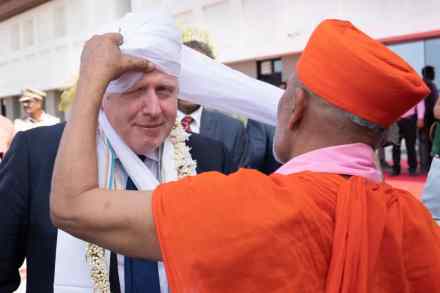
What’s behind Boris’s trip to India?

From our UK edition

9 min listen

Boris Johnson has met his Indian counterpart Narendra Modi to discuss defence, energy and trade ties. Will he be able to secure a trade deal with India?Meanwhile back at home, Boris Johnson faces an investigation by the Commons Committee of Privileges over claims he misled Parliament on partygate.All to be discussed as Katy Balls speaks to James Forsyth and Fraser Nelson.

Will Tory MPs rebel in partygate vote?

From our UK edition

11 min listen

Tomorrow there will be a vote in the Commons where Labour is pushing for an investigation into whether Boris Johnson is in contempt of Parliament over his comments on partygate. Which way will the Tory MPs vote?'Tory MPs are sick to the back teeth of partygate now' - James Forsyth.All to be discussed as Katy Balls speaks to James Forsyth and Fraser Nelson.

Have we hit peak Netflix?

From our UK edition

This time last year, Netflix was fêted as the future of television. Its subscriptions grew by 30 per cent over 2020 as people bought in entertainment during lockdown. Netflix always warned that its growth would slow afterwards and the market seemed to accept that. But its shares have halved since their mid-November peak after a radical reappraisal of its fortunes. What’s going on? Those shares plunged 27 per cent in pre-market trading when Netflix said that, rather than see growth slowing to a mere 2.5 million more subscribers as it had expected for the first three months of this year, it has entered decline – actually losing 200,000 subscribers. A small dent on its 221 million total but it’s the direction of travel that matters.

Boris and Rishi fined: what happens next?

From our UK edition

15 min listen

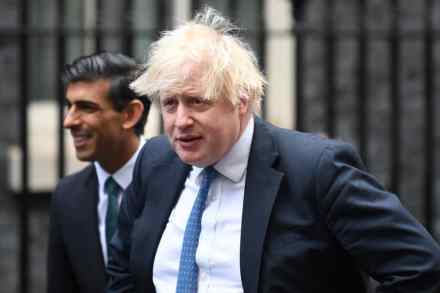
Boris Johnson and Rishi Sunak have been told that they are going to be fixed penalty notices by the Metropolitan Police over parties held in Downing Street. The Chancellor has already had a tough week – might he now resign? Could Tory MPs push the Prime Minister out of No. 10? Isabel Hardman speaks to Fraser Nelson and Katy Balls.