Fraser Nelson

Fraser Nelson

Fraser Nelson is a Times columnist and a former editor of The Spectator.

Why are borrowing costs surging?

From our UK edition

13 min listen

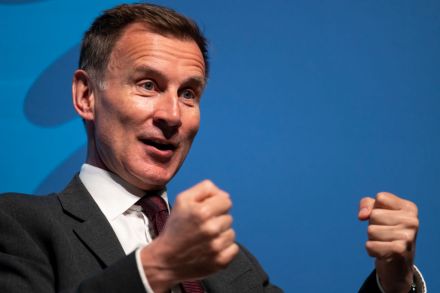
James Heale speaks to Fraser Nelson and Kate Andrews about the news that borrowing costs are back to being the highest since last Autumn. What could this mean for the Chancellor Jeremy Hunt?

Jeremy Clarke, 1957-2023

From our UK edition

Jeremy Clarke, one of the most loved columnists in the history of The Spectator, died this morning at his home in Provence. Catriona, whom he married a few weeks ago, was by his side. He was 66. Everyone who read his column knew this day was coming, but that doesn’t make the news any easier to bear. Our readers have lost not just a columnist but a friend – and he will be mourned as such. He was one of the greatest writers ever to appear in our pages. But he was also so much more. For 23 years his Low Life column proved that any life, no matter how humble, can be riveting if the writing is good enough. He poured his heart and soul into what he wrote; it read effortlessly but was written with incredible thought and effort.

When will the Tories face up to Britain’s benefits scandal?

From our UK edition

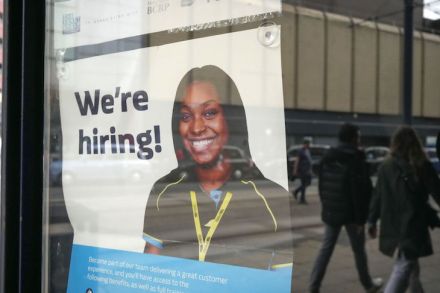
When researching The Spectator cover story last week, we came across a figure so shocking that I felt it had to be wrong: that Manchester, a city where 40,000 job vacancies are currently being offered, has an unemployment rate of 18 per cent. That is to say: almost one in five of the working-age population in the city (excluding children and pensioners) is on some kind of out-of-work benefits, including incapacity benefits. Not salary-tops, not supplementary welfare but benefits given to those who are not in work. In the middle of a worker shortage crisis, it’s quite the scandal. But one you will not have heard of because the figure is not published by the government.

Is Rishi retreating from net zero?

From our UK edition

11 min listen

Immigration and the economy are priorities for Rishi Sunak's government. But under Boris Johnson and Theresa May, net zero was also a major policy focus for Conservative governments. Is Sunak as keen on it as his predecessors were?  James Heale speaks to Fraser and Isabel Hardman.

Is Brexit safe under Keir Starmer?

From our UK edition

9 min listen

James Heale speaks to Isabel Hardman and Fraser Nelson about Rishi Sunak's response to the impending migration figures and what could be in Keir Starmer's plans to 'make Brexit work'.

Migration nation: Brexit has meant more immigration than ever

From our UK edition

Manchester is desperate for workers. There are 40,000 jobs advertised in the city at the moment, at every pay grade. Ann Summers wants a stockroom assistant (£10.70 an hour), or you could invigilate exams at £14 an hour or post videos on TikTok for £20 an hour. Sellcheck Chemicals is offering up to £75,000 a year for a sales manager (‘No biology background needed, no previous experience necessary’). Even the army is offering trainee officers £34,000 after their first year. But ask any employer in the city what it’s like hiring and they’ll tell you: it’s a battle. What’s strange about this is the fact that though all these jobs are on offer, unemployed Mancunians don’t seem to want them.

Why the UK does so badly at Eurovision

From our UK edition

Some 160 million will have watched Britain staging a successful Eurovision Song Contest in Liverpool: the world’s most-watched non-sporting TV event. But our own act, Mae Muller, finished second-last. Had it not been for a generous vote from Ukraine's jury, we'd have been last. It's a familiar trend. With the spectacular exception of Sam Ryder last year, our entries have tended to flop badly – leading to questions like 'Why did the BBC pick another dud act?' and 'Why does everyone hate Britain?' But we struggle at Eurovision for a number of systemic reasons, all of which come down to the way we lazily pick an act and give them none of the practise that other countries have. Every year, our singer is sent naked into battle.

Coffee House Shots Live: Coronation special

From our UK edition

71 min listen

The coronation will commemorate the start of a new era, but what will this mean for the United Kingdom? How will Charles III secure his place in history – and what kind of monarch will he be? From pageantry to the polls: will the coronation distract voters from the Tories’ predicted heavy losses in the local elections? And will Rishi Sunak be able to turn his party’s fortunes around for the general election? Fraser Nelson speaks to Katy Balls and special guests Camilla Tominey and Matthew Goodwin for a special edition of Coffee House Shots Live.

Wanted: researcher for The Spectator’s lunchtime newsletter

From our UK edition

The Spectator is looking for a freelance newsletter assistant for early-morning morning shifts (which can be done at home) for our Lunchtime Espresso newsletter. The lunchtime email goes out to more than 120,000 people: one of our most-read, and one of the most influential newsletters in Britain. It should reflect the same ethos as the magazine, our website, and our broadcast offerings. We’re looking for someone with curiosity, who can separate wheat from chaff, who can work out what’s happening that matters – and summarise it all in a sentence. You provide the first draft: a team then pick up, add, enhance. But the first draft matters a lot. Sounds daunting? Perhaps: but if you have a keen interest in current affairs, you’ll be across the news already.

Local elections: are we heading for a 1997 moment?

From our UK edition

15 min listen

The local election results so far paint a fairly grim picture for the Conservatives, whilst Labour and the Liberal Democrats have made big gains in key areas. With Starmer in the advantage position ahead of the next general election, how will No. 10 respond? Is there a path for the Tories in 2024?  Katy Balls speaks to Fraser Nelson and pollster James Johnson.  Produced by Oscar Edmondson.

Labour bounces back in Brexit-voting wards

From our UK edition

One of the trends Keir Starmer will be looking for is the reversal of the Brexit effect, with Labour heartlands coming back to Labour. A study of 200 seats counted so far – a pretty small fragment – does seem to show a correlation with the swing away from the Tories in the places where the Leave vote was strongest. Will Jennings, a professor at Southampton University, has mapped the election results so the swing is mapped against the strength of Brexit vote. His work, for Sky News, shows a significant correlation so far: This matters because it supports one of the main hypotheses of a Labour victory: that neither Keir Starmer or Rishi Sunak turns out to be an inspiring leader, leaving tribal loyalties to kick in.

Did the Tories ‘kill the dream of homeownership’?

From our UK edition

11 min listen

In today's Prime Minister's Questions, Keir Starmer accused the Prime Minister and his party of having 'killed the dream of homeownership'. With news this week that Rishi Sunak is considering reintroducing 'Help to Buy' while Michael Gove is sued for blocking a new housing development in Kent, does Starmer actually have a point? Katy Balls talks to Kate Andrews and Fraser Nelson. Produced by Cindy Yu.

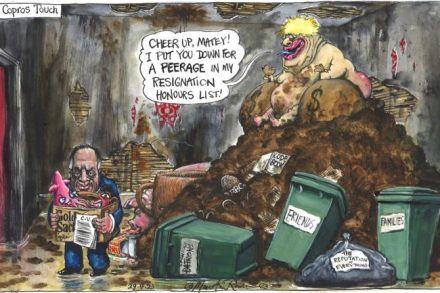
In defence of Martin Rowson

From our UK edition

Being a cartoonist is a high-risk job nowadays. Your job is to satirise and caricature, to exaggerate bodily features. Every week, we do this at The Spectator in our cover art drawn by the peerless Morten Morland. Kim Jong Un is rather short: Morten makes him minuscule. Donald Trump has small hands and feet; Morten shrinks them even further. If someone has a prominent feature, then you exaggerate the feature. It’s the way cartooning works. If the subject has slightly big ears, you make them massive – as we have for the King in our coming coronation cover. It’s comic, teasing and, yes, sometimes brutal. But if you do this to a religious figure or an ethnic minority, you can be easily accused of bigotry. As the Guardian has just found out.

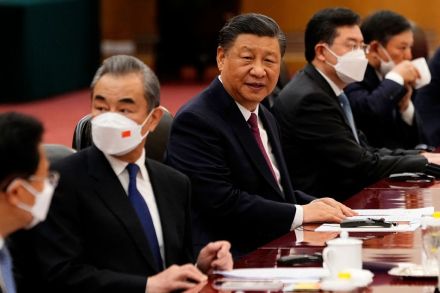
Will Xi really bring peace to Ukraine?

From our UK edition

11 min listen

Xi Jinping said he will send diplomats to help broker peace in Ukraine after he had a phone call with Volodymyr Zelensky. But are China’s aims really as noble as they seem? Fraser Nelson speaks to Isabel Hardman, Svitlana Morenets and Cindy Yu.

How did Beattie miss a £100,000 motorhome?

From our UK edition

10 min listen

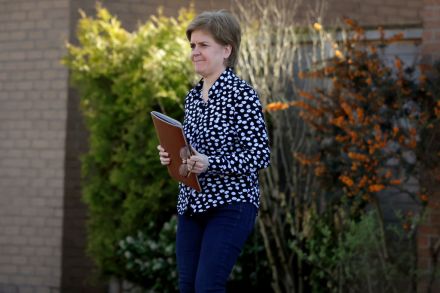
Colin Beattie, the SNP’s former treasurer, said today that he ‘didn't know’ about the party’s purchase of a motorhome worth £100,000, the vehicle at the centre of an ongoing police probe into SNP finances. What’s going on? And as the military begins to evacuate British citizens from Sudan, did the Foreign Office react fast enough?  James Heale speaks to Fraser Nelson and Katy Balls.

Could Diane Abbott return to Labour?

From our UK edition

17 min listen

Katy Balls, Fraser Nelson and Isabel Hardman discuss Diane Abbott's suspension from the Labour party. Given her hasty apology, could Keir Starmer allow such a key figure to Labour's left back into the party? Also on the podcast, what has been the fallout from Dominic Raab's resignation? And how is Rishi Sunak trying to woo business leaders? Produced by Natasha Feroze.

An appeal to academics

From our UK edition

One of Britain’s standout characteristics is the number of world-class universities: we have several top-50 institutions and the Eurozone has none. The brainpower – academics and their students – is a massive national asset. But one that’s not really reflected in our public debate. Whereas American academics are shaping their debate, and often ours, British academics are seldom heard from. This in part a defect in the funding system that incentivises academics to have 'impact' in academic papers but not real-world debate (as opposed to the US, whose universities have far closer links to real-world companies and their research divisions).

Are Suella Braverman’s critics right?

From our UK edition

12 min listen

Home Secretary, Suella Braverman has come under fire from senior Conservatives who have accused her of 'racist rhetoric', but are these accusations fair? Also on the podcast, Katy Balls takes a look at the latest deal on strikes and Natasha Feroze asks Fraser Nelson why he's against voters bringing ID for the May local elections.