Eric Weinberger

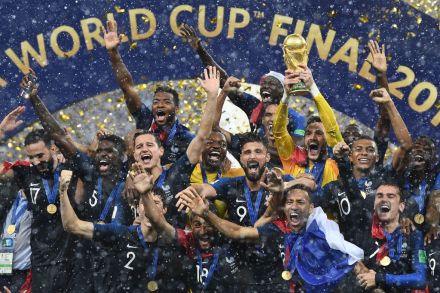
The World Cup is the only football that matters

From our UK edition

Every four years, when the World Cup ends, I make a promise to follow the players I’ve come to know, or the ones I’d forgotten about for four years, until the next tournament; but I never do. It's not that following the Premier League, the Bundesliga, Serie A, La Liga, or Ligue 1 is difficult, even in the United States: matches for all these leagues are on television each week. Instead, I glance briefly at the scores in the Monday papers. When the Champions League reaches the semifinals in spring, I pay slightly more attention, and might look back to see who were the losing quarterfinalists. But when it’s always the same teams by now, who can keep track of whether it’s Juventus or Chelsea that Real Madrid is playing?
‘Taking the knee’ is a flawed form of protest

From our UK edition

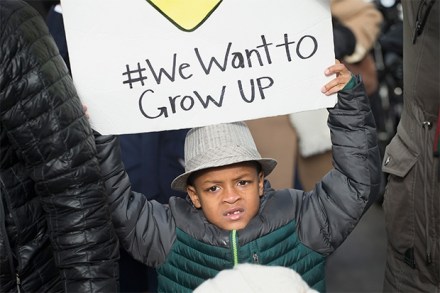
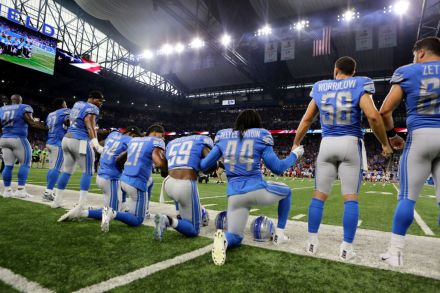
Kneeling, fundamentally an act of humility or deference, doesn’t seem the obvious protest against injustice when the National Anthem plays before a major American sporting event. The quarterback Colin Kaepernick made the gesture famous—and personal, since only he (and sometimes a couple of teammates) did it before his San Francisco 49ers took to the field for games in 2016. But two weeks ago, inflamed by President Trump, dozens of players (mainly black players, who make up around 75 per cent of the National Football League) did it, across the NFL. Their kneeling took different forms, and some contortions seemed to suggest ambivalence, with players kneeling then rising once the music started; others lopsidedly clasped their kneeling neighbour as they remained standing.

In a gun country

From our UK edition

Picking a day at random, ‘an unremarkable Saturday in America’, the Guardian journalist Gary Younge identified ten children and teenagers throughout the United States who were shot dead on 23 November 2013. Whichever day he chose, he knew it would be typical. Determined to investigate each of these deaths, none of which bore much — or any — press coverage even locally, Younge would pore over the internet, visit grim parts of cities far from his Chicago home, locate as many relatives, friends and witnesses as he could and speak to them. His book, Another Day in the Death of America, is as one would imagine it: sad and bleak, an altogether terrible tale. Hopeless, too: no one, certainly not Younge, is under any illusion that this story will get better.

Time trials | 16 June 2016

From our UK edition

What are ‘lost time accidents’, apart from something on building-site signs announcing hours lost to worker injuries? In this novel by the Austrian-American John Wray, the accidents represent time travel, or one family’s century-long, multi-generation, trans-Atlantic obsession and dark joke. ‘Time is our shared disorder,’ says the narrator’s aunt. Waldy Tolliver is that narrator, anxious and infatuated and trapped in a time-pocket from which he lobs the family history in long passages to Mrs Haven, his recent lover. His father Orson is a science fiction writer whose own father, Kaspar, fled occupied Europe for Buffalo, New York.

The trouble with mothers

From our UK edition

For a child, the idea of ‘knowing’ your mother doesn’t compute; she’s merely there. As an adult, there may be the curiosity — who is this person who gave me birth and brought me up? — but also some kind of resignation: you’ll simply never know. Better, even, not to know. So long as she’s alive. Once she’s dead, you will regret it everlastingly; but you also know it could not have been otherwise. It’s a handy argument. Five days in a Manhattan hospital, as a grown woman with children of your own — now you are a mother, too — with your mother sitting across from you, may thus be a gorgeous opportunity, something to savour when everything else about you is shaky.

Staying put

From our UK edition

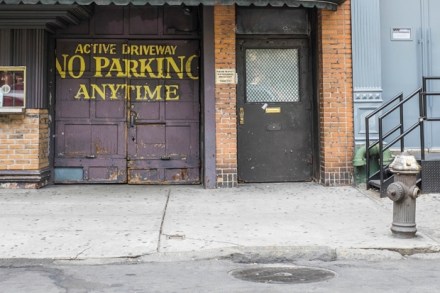
Publishing a ‘New York’ novel in the months after 11 September 2001 is a surefire, if accidental, way to make it immediately out of date. Especially one about parking. There’s certainly a parking novel to be written in the age of global terror and suicide attackers, but it will have a more security-conscious bent than the amusing small novel Calvin Trillin achieved that dreadful autumn, about a diffident late-middle-aged New Yorker looking for a spot to park from which, as the title suggests, Tepper Isn’t Going Out. Bollards and concrete impediments, armed assault teams, helicopters overhead and a discarded parking ticket or Syrian passport in the glove compartment: those are the sorts of details the novel for the new age will bear.

After the trilogy (and the hurricane): the likeable return of Frank Bascombe

From our UK edition

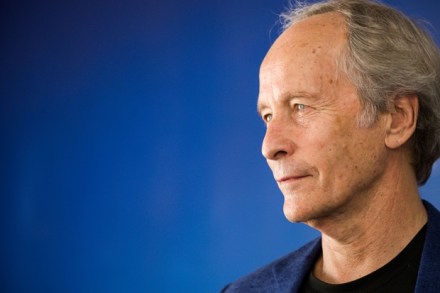
The story of Frank Bascombe, a sports-writer turned estate agent but always a New Jersey homebody, has already taken Richard Ford nearly 30 years and three volumes to tell, totalling 1,300 pages — longer than War and Peace. But for Frank, aged 68 (and for Ford, aged 70), it’s not over. In the autumn of 2012, Hurricane Sandy ravaged the New Jersey shoreline. And though Bascombe is retired from real estate and living safely inland in Haddam (the town where his first-person chronicles began, in 1986, with The Sportswriter) he is not unaffected by the devastation. In the four long stories that comprise this fourth Bascombe volume, he learns that his former beach house has been destroyed. A woman made homeless by Sandy has retreated to Haddam and shows up at Frank’s door.

All That Is, by James Salter- review

From our UK edition

Some authors’ lives are a great deal more interesting than others — James Salter’s, for one. Born in 1925 and educated at West Point, a fighter pilot in Korea and afterwards in Cold War Europe, the chiselled flyboy soon jettisoned this for writing and became a cosmopolitan and a worldly adventurer. He made a film in the Alps with Robert Redford, and climbed at Chamonix to produce what was meant to be another film but became the novel Solo Faces. He had homes in Aspen and the Hamptons, frequented the parlours of Paris and Rome but was always, always, too reticent, and, by his code, too honour-bound to divulge all he had seen. Privacy — his own and others’ — was all.

The waiting-room of life

From our UK edition

The decadence of at least two societies or cultures can be seen in Dave Eggers’ new novel, where some bored Americans wait for weeks in a giant cooled tent in Saudia Arabia for the chance to display the latest innovation in conference IT to King Abdullah at the unbuilt ‘economic city’ that bears his name. Considering current sophisticated video-conferencing and other technology, how vital is it that King Abdullah Economic City (or KAEC, pronounced ‘cake’) be equipped with a hologram device that enables colleagues walking and talking in London to appear to be striding the stage near Jeddah?  But perhaps something similar was said about mobile phones 20 years ago.

What makes Romney run?

From our UK edition

It can be odd to read a biography of a major political figure for whom, every day while one reads it, the story continues. Everything we hear in the news now about Mitt Romney seems to have been the case in 2008, when he first ran for president; or 2002, when after leading the Olympic Games in Salt Lake City he returned to Massachusetts and became governor (still the only election he has won); or even 1994, when his political career began with a race for US Senate against Ted Kennedy, to whom he delivered a few scares before losing comfortably, 41-58. Still the question of authenticity — what does Mitt believe?

Lake Michigan days

From our UK edition

It is probably hard to enjoy this new big novel from America without some understanding of the shortstop’s position on the baseball field. But that is easily remedied, thanks to YouTube, where searching for ‘shortstop, fielding’ arouses multiple videos that compete for attention, with stars of the game in their infield position between second and third base, taking ground balls hit at, near, or even away from them, scooping them up, throwing to first base for the out: something the shortstop does six or more times in a game.

We also do some work

From our UK edition

The narrative trademark — or gimmick — of Joshua Ferris’s first novel, Then We Came to the End, is contained in the title: the book is told in the first person plural, which gives this story of Chicago office workers its initial powerful, even oracular, thrust. ‘We were fractious and overpaid,’ the book begins. ‘Our mornings lacked promise.’ Soon comes a key sentence: ‘Most of us liked most everyone, a few of us hated specific individuals, one or two people loved everyone and everything.

Funny peculiar and ha-ha

From our UK edition

Rumours and published reviews to one side, the new novel by Norman Mailer, called The Castle in the Forest, is not the ‘biography’ of Adolf Hitler or even the story of his youth so much as it is the life of his father Alois Schicklgruber, or Hiedler, finally Hitler. He turns out to be an unusually interesting man, or perhaps a merely ordinary man who, because he is rendered by Mailer’s hand, becomes far more: dangerous, daunting, dutiful (an ever ascendant and honest customs official), sexually rampant and obsessed with bees and bee-keeping. Possibly a product of incest, he continues the family tradition.

The shadow cast by college

From our UK edition

Tom Perrotta’s fourth novel, Little Children, is a book one should read for its last 50 pages, but that means having to read the 300 before to make sense of it. In a book that primarily takes place in a suburban playground, it ends, naturally enough, at the playground, although at a worrisomely late hour, when half the book’s protagonists converge, one by one, as if it were a Midsummer Night’s dream. For some of them it is: a heady, steamy dream of a life elsewhere, with different partners; and part of Perrotta’s irony is that rather than the garden or the wood his idyll is in the endless American suburb.