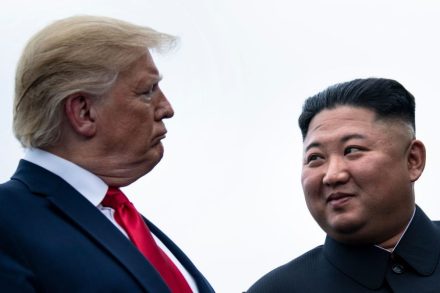
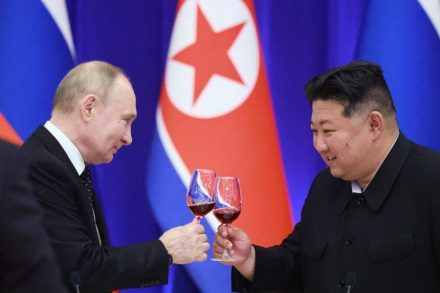
Edward Howell

Edward Howell is a politics lecturer at Oxford. He was involved in launching the BBC World Service in North Korea.

Never has North Korea felt more smug about its nuclear weapons

From our UK edition

If there’s one thing that the ongoing Iran-US conflict is teaching North Korea, it is that nuclear weapons are an invaluable asset in the hermit kingdom’s toolbox. Nearly twenty years ago, Pyongyang conducted its first and far-from-successful nuclear test. Its capabilities have increased substantially since that moment and the overthrow of Saddam Hussein in 2003, that of Libya’s Gaddafi in 2011, and now, Iran’s Ayatollah Ali Khamenei has shown Pyongyang that acquiring what the Kim regime has long-called its ‘treasured sword’ has been its most successful foreign policy decision to date.

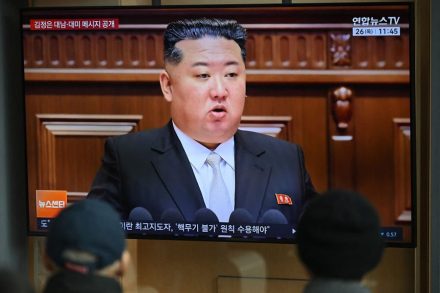
North Korea’s nuclear ambitions know no bounds

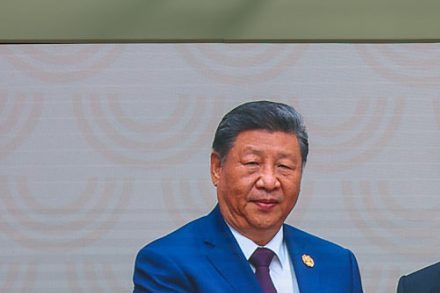
North Korea’s ninth party congress, held this week, was little more than a rubber-stamping exercise. That much was clear when the Chinese premier Xi Jinping congratulated Kim Jong-un on his re-election as the general secretary of the Workers’ party of Korea. But we would be wrong to dismiss this gathering as merely symbolic. The last time North Korea held such a congress, in January 2021, Kim outlined a shopping list of desired weapons and missiles. Since then, North Korea has tested or obtained each item. All this week's congress did was cement North Korea’s self-perceived status as a nuclear-armed state.

What Yoon’s prison sentence means for South Korea

From our UK edition

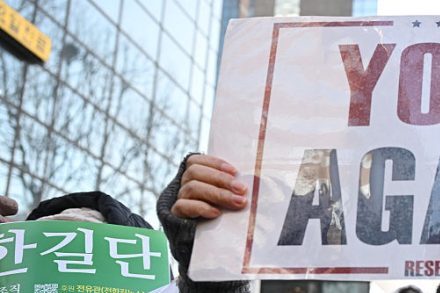
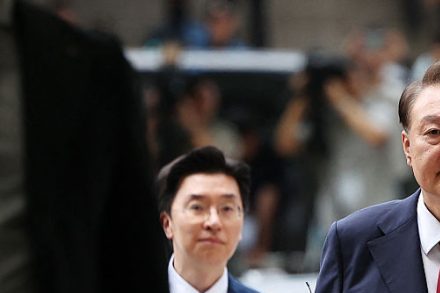
South Korean presidents have gained infamy for meeting untimely fates, whether death, imprisonment or suicide. And now, former president Yoon Suk-yeol is the latest addition to this list. Earlier today, the man whose presidency will go down in history for his abortive declaration of martial law on 3 December 2024 was sentenced to life in prison on account of masterminding an insurrection. Supporters and detractors of South Korea’s thirteenth president gathered outside Seoul’s central district court to hear the fate of the leader they either loved or loathed – a fate which was also broadcast on live television to the Korean nation. This sight – and today’s decision – hammers home the fact that South Korean politics won't become any less polarised anytime soon.

Could this teenage girl be the next leader of North Korea?

From our UK edition

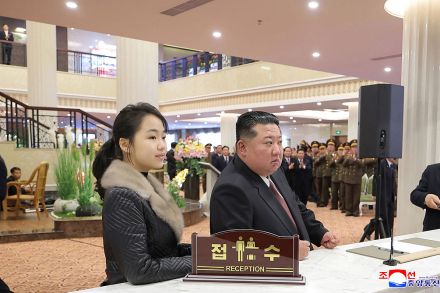
Every authoritarian regime, particularly a dynastic one, at some point has to face the question of succession. North Korea is no exception. And it appears that the Kim regime, now in its third generation under Kim Jong Un, is planning for the future. This week, South Korea’s spy agency confirmed that Kim Jong Un’s teenage daughter, Kim Ju Ae, has been anointed as his successor. It is worth being sceptical about this. Whilst Kim Ju Ae’s rise is not unlikely, the only person who can confirm the truth is the Supreme Leader himself. The 13-to-14-year-old Kim Ju Ae has certainly been very visible over the past year, even accompanying her daddy to a missile launch.

The Chagos deal has cemented Britain’s global decline

From our UK edition

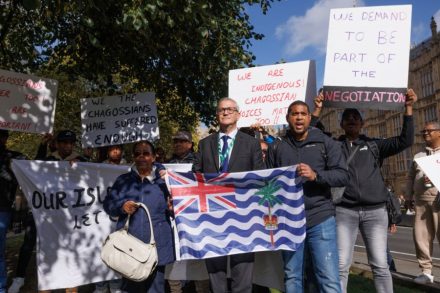
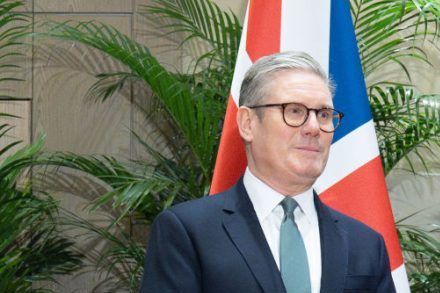
For a moment, it looked as if this tragic inevitability would not happen. But yesterday evening, Donald Trump gave the green light for Sir Keir Starmer’s disastrous Chagos Islands deal following ‘productive discussions’ between the two leaders. As a result, the UK has moved one step closer to realising its greatest strategic blunder in history. The ceding of a vital British sovereign strategic asset to Mauritius, which so many had tirelessly campaigned to avoid, looks set to become a reality. For the US president, his decision to back the deal was a volte face from a fortnight ago when he rightly derided the deal as an ‘act of GREAT STUPIDITY’. Trump’s approval reportedly came after numerous pleas from Starmer and his National Security Advisor, Jonathan Powell.

The Chagos deal risks turning Britain into a vassal of China

From our UK edition

If one is in any doubt as to Great Britain’s decline and fall, look no further than 20 January, when we alienated ourselves from our once-held global status and from our allies and partners. Donald Trump took to social media that morning to declare that Britain's deal to hand over the Chagos Islands to Mauritius was an ‘act of great stupidity’. The US president followed this up by telling Keir Starmer to ‘fix your country’. Never had truer words been spoken. Several hours later, the British government gave the green light for the construction of a new Chinese super-embassy in London. That decision demonstrated not a care in the world for the deleterious security risks this monstrosity would pose.

Putting Yoon Suk Yeol on trial won’t unify South Korea

From our UK edition

Think of the death penalty and North Korea’s executions of individuals convicted of so-called 'anti-state crimes' may spring to mind. The resilient democracy of South Korea, however, probably would not. Nevertheless, this week has seen South Korean prosecutors call for the country's former president, Yoon Suk Yeol, to be handed the most extreme of all punishments for his notorious declaration of martial law on 3 December 2024. At the first of his four trials this morning, the former president was handed a five-year prison sentence for having ‘plunged the country into political crisis’.

Kim and Putin’s growing bromance should make us nervous

From our UK edition

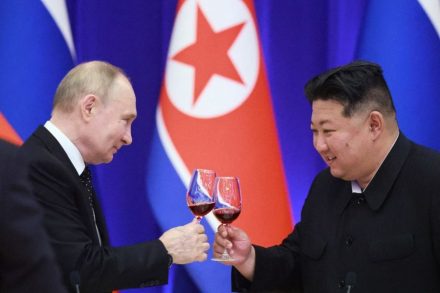
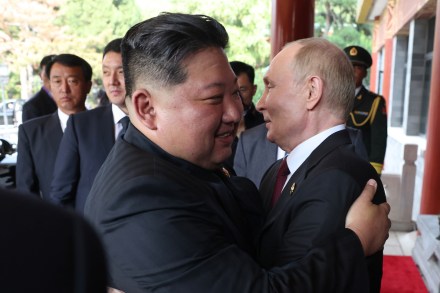
As Kim Jong-un himself announced at a New Year’s Eve event in Pyongyang, 2025 was an 'unforgettable year' for North Korea. During the final weekend of the year, the Supreme Leader supervised a 'nuclear-capable' long-range strategic cruise missile test, which he termed an 'exercise of war deterrence' against the 'security threats' facing Pyongyang. The test followed a week of oily letters between Kim and his new best friend, none other than Vladimir Putin. The Russian leader lauded the 'heroic dispatch' of North Korean troops to assist Russia’s war against Ukraine as an example of the 'militant fraternity' between Pyongyang and Moscow.

What are Ukrainian children doing in North Korea?

The regime of North Korea has continued to exploit the war in Ukraine to spread its propaganda. This week we learned that Ukrainian children, abducted by Russia, are being sent to an infamous North Korean summer camp. The children have reportedly been taught to "destroy Japanese imperialists" and heard from North Korean soldiers who destroyed the USS Pueblo, a spy ship captured and sank by North Korea in 1968.  This Ukrainian children have been at the Songdowon International Children’s Camp, located near the port city of Wonsan on the country’s east coast.

What are Ukrainian children doing in North Korea?

From our UK edition

The regime of North Korea has continued to exploit the war in Ukraine to spread its propaganda. This week we learnt that Ukrainian children, abducted by Russia, are being sent to an infamous North Korean summer camp. The children have reportedly been taught to ‘destroy Japanese imperialists’ and heard from North Korean soldiers who destroyed the USS Pueblo, a spy ship captured and sank by North Korea in 1968.  This Ukrainian children have been at the Songdowon International Children’s Camp, located near the port city of Wonsan on the country’s east coast.

Why Taiwan matters to Japan

From our UK edition

It was only a matter of time before Japan’s Iron Lady would be targeted by China. Prime Minister Sanae Takaichi mentioned how Tokyo might resort to force were Beijing to take military action over Taiwan: 'If there are battleships and the use of force, no matter how you think about it, it could constitute a survival-threatening situation,' she said. In response, China’s consul-general in Osaka, Xue Jian, threatened, on Monday, to ‘cut off’ the Japanese prime minister’s ‘filthy neck…without a moment’s hesitation’. Xue’s vitriolic online reaction, which he subsequently deleted from his X account, underscores how China’s wolf-warrior diplomacy has anything but abated.

China’s South Korean espionage campaign is growing bolder

From our UK edition

It is rare to see Xi Jinping burst into laughter. But something must have tickled China’s Paramount Leader when he met South Korean President Lee Jae-myung on the sidelines of the Asia-Pacific Economic Cooperation (APEC) summit in Gyeongju, South Korea. The summit will largely be remembered this year for Donald Trump’s tête-à-têtes with East Asian leaders, whether Xi Jinping, Lee Jae-myung, or Sanae Takaichi – despite the US president deciding to give the actual summit a miss. Yet, in what was a bumper week for South Korea, the summit’s host, other bilateral meetings must not go unacknowledged. When Lee met Xi Jinping on Saturday, few expected the two leaders to guffaw in unison.

Will Trump meet ‘Little Rocket Man?’

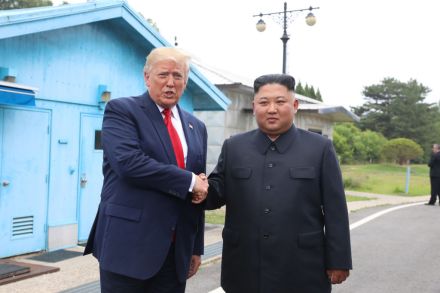
As President Trump sets off on his East Asian tour, all eyes will be on the bilateral summits that the US president will hold. After all, Trump has made no secret of his preference for tête-à-têtes over multilateralism. With a meeting with Xi Jinping scheduled in South Korea, on the sidelines of the Asia-Pacific Economic Cooperation (APEC) summit, the question of whether Trump will meet Little Rocket Man is unsurprisingly pervading, not least given how few details have been revealed as to Trump’s agenda. Although such a meeting, whether at the Demilitarized Zone or otherwise, seems unlikely at a time when US-North Korea relations are poor, nothing can be ruled out. Nevertheless, whilst the first Trump administration taught the world to expect the unexpected, Trump 2.

Kim Jong Un

Kim Jong-un must not be rewarded for his bad behaviour

From our UK edition

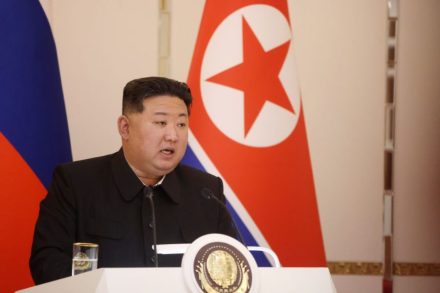
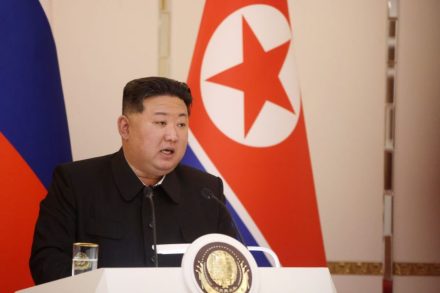
North Korea’s leader, Kim Jong-un, once again declared earlier this wek that he would only welcome peace talks with the United States if Washington dropped its ‘denuclearisation obsession’. Responding several hours later, South Korean president Lee Jae-myung stressed that Seoul would accept a deal between Kim Jong-un and Donald Trump in which Pyongyang agreed to freeze its nuclear programme. Yet, even if Kim and Trump were to eventually enter into negotiations, one look at the hermit kingdom’s past behaviour suggests that any such ‘freeze’ will not mean an abandonment of Kim Jong-un’s ultimate objective: for North Korea to be recognised as a nuclear-armed state.

As Trump wooed Kim Jong-un, he secretly unleashed Navy SEALs

Think of the first Trump administration’s North Korea policy, and the bright lights, photo ops and eventual lack of deals in Singapore and Hanoi come to mind. The first two years of Trump 1.0 saw the then-new US president fluctuate between threatening "fire and fury" on the hermit kingdom to calling Kim Jong-un a "great leader". Yet, the recent and as-of-yet unconfirmed revelations of an abortive US mission in early 2019 – wherein US Navy SEALs sought to intercept communications of Kim Jong-un – may seem to contradict the unusual bromance between Trump and Kim at the time. But in fact, they only emphasize Trump’s desperation for a deal with North Korea at the time.

Nuclear submarine

Kim Jong-un’s alliance with Xi and Putin is growing stronger

From our UK edition

When analysing authoritarian states, not least North Korea, most of the time we have to read between the lines. But on other occasions, things are more obvious. Today, China celebrates eighty years since its victory over Japan in the second world war. Xi Jinping has invited Western and non-Western leaders past and present, but all eyes will be on the guest list’s top two invitees: Vladimir Putin and Kim Jong-un. Marking the first multilateral gathering of all three leaders since the Cold War, today’s spectacle aims to send a clear signal to the West. Xi, Putin, and Kim might have their differences in foreign policy priorities, their relations may fluctuate, and they lack a formalised alliance.

Can Kim Jong-un be persuaded to meet Donald Trump?

From our UK edition

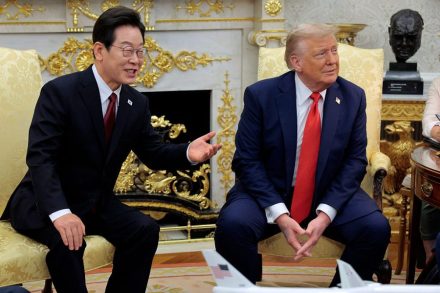
Hours after his first bilateral meeting with Donald Trump earlier this week, the South Korean President Lee Jae-myung admitted that he feared that his one-to-one would become a ‘Zelensky moment’. Although the reality was far from the case, it made for somewhat vomit-inducing listening. As Lee showered Trump with praise for his handling of North Korea during his first term, Trump’s ego ballooned one sentence at a time. Monday’s episode was a clear example of how Trump likes diplomacy to be done, but for all Trump and Lee’s calls for talks with Kim Jong-un, both leaders will face the obstacle of North Korea’s recent affirmations of its lack of interest in dialogue with its Western adversaries.

Trump must not give Kim Jong-un the recognition he craves

From our UK edition

When dealing with rogue states, being pessimistic often means being realistic. The much-anticipated summit between Donald Trump and Vladimir Putin last week allowed the Russian leader to relish the bright Alaskan lights of summitry with Trump, buy the precious commodity of time, all while maintaining his ambition to defeat Ukraine. Amidst this week’s numerous meetings between Trump and Volodymyr Zelenskyy, a resolution to the Ukraine war remains elusive. But we must not forget that hours before Trump and Putin met in Alaska, another high-level meeting took place in Pyongyang between Kim Jong-un and the Chairman of Russia’s state Duma. It was a stark reminder that ending the Ukraine war on the battlefield is not going to end the ties between Pyongyang and Moscow.

Kim Jong-un will be watching the Trump-Putin summit closely

From our UK edition

When Vladimir Putin and Donald Trump meet in Alaska today, it will mark their first encounter since Russia’s invasion of Ukraine on 24 February 2022. Although the talks are likely to be dominated by questions of a ceasefire, possible division of territory, and how the three-year war will conclude, North Korea will likely be more than a small elephant in the room. Amidst amplifying ties between Moscow and Pyongyang, neither Putin nor Kim Jong-un looks likely to abandon the other in the short term, irrespective of whether any piece of paper – however preliminary – emerges from the Last Frontier. On Tuesday, Russian and North Korean state media announced that Vladimir Putin and Kim Jong-un had exchanged a telephone call prior to today’s summit with Trump.

South Korea’s reconciliation plan with the North is doomed to fail

From our UK edition

On both sides of the Demilitarised Zone (DMZ) between North and South Korea, loudspeakers blasting news, music, weather reports, wailing sounds, or anti-DPRK messaging have formed a regular part of life along one of the world’s most militarised borders. Yet the South Korean government’s decision to remove these loudspeakers, which commenced on Monday, sets a worrying precedent for the future. Not only have similar gestures previously failed to ameliorate North Korea’s bad behaviour, but at a time when Pyongyang shows no desire to improve its relations with Seoul and Washington, South Korea should not be naïve in thinking that these actions will be reciprocated in kind.