Ed West

Ed West

Ed West writes the Wrong Side of History substack

Are hipsters the new aristocracy?

From our UK edition

I love Twitter. Just like the historian Dan Snow, I find the social media site to be an overwhelmingly positive experience, and a great place to make friends and acquaintances and share ideas. Sure, most of the friends I’ve made are as politically insane as I am, but that’s the inevitable result of any service that allows for social sorting. However, one point with which I would disagree with Mr Snow is the idea that the site is a force for the ‘revolutionary democratisation of discourse’. In fact one of the great attractions of Twitter is how hierarchical it is, with each individual being measured by the size of his or her following, plus of course whether they have elite blue tick status.

Would the migrant crisis have happened without the EU?

From our UK edition

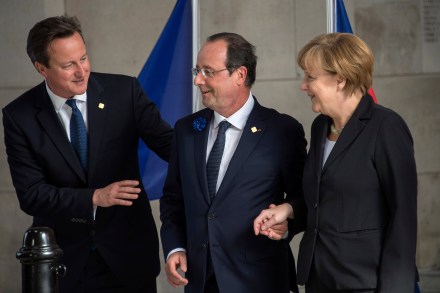
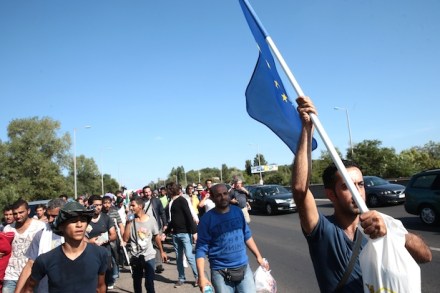
For those people already bored with the interminable European question, Radio 4 might get unbearable over the next few months. Yesterday morning the subject was being discussed, in the context of David Cameron’s ‘deal’, and someone from Brussels was explaining that 'more Europe' was needed to solve the migrant/refugee crisis. She never got to explain further what was meant by this, but isn’t it actually the case that the migrant crisis is related to the EU? For example, would Greece face a wave of 62,000 illegal migrants a month were it just an independent country that had its own borders and a government with responsibility towards its citizens?

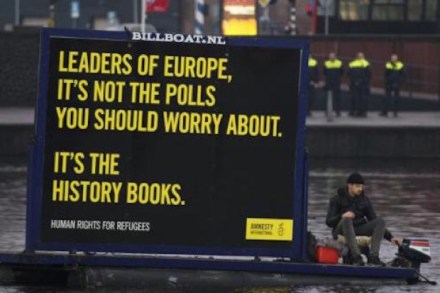
Our leaders should read history books – but not just ones about the Nazis

From our UK edition

If I was in charge of the Home Office I’d employ someone whose sole area of expertise was Hitler’s Germany and whose only job was to keep an eye out for any vague echoes of Nazism, however fatuous, in the working practices of the government or its contractors. This would have avoided Monday’s controversy over asylum seekers being made to wear red wristbands in order to receive free meals, because being asked to wear ID to qualify for things is exactly like being a Jew in Hitler’s Germany. A chilling echo, as many people commented.

Donald Trump is capitalising on America’s declining middle class

From our UK edition

While watching MPs in the House of Commons debate banning a politician they find disagreeable, my first thought was to wonder how this chamber once ruled one-quarter of the globe. If Trump becomes president we could not ban him from visiting; if he doesn’t, he doesn’t matter anyway. Either way, having controversial or even obnoxious opinions does not make someone a danger, and we do not need ‘protection’ from them. It is all the more embarrassing when you consider that this country has hundreds if not thousands of genuinely dangerous extremists living here.

By downplaying social problems, multiculturalists help extremism to flourish

From our UK edition

Ross Douthat’s 10 points about immigration is recommended reading for anyone sitting on the fence or who tends towards the open border position; even if you disagree, you’ll at least have an idea of what the opposition believe. Personally I agree with it all anyway and my opinions on the subject are as frozen in aspic as my musical tastes and haircut. Not that many people are likely to change their minds, of course, this being a subject more of the heart than the head, on both sides of the debate. I’d go as far as to say it that immigration has become a sacred idea, and that many believe multiculturalism to be a moral good in itself, whatever the end result.

There’s nothing wrong with public grieving

From our UK edition

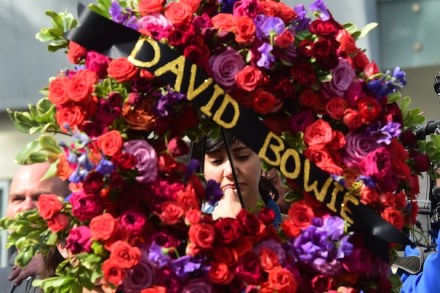
One of the things that repeatedly comes up with David Bowie fans talking about their hero is how much he meant to people living in small towns or suburbs. For adolescents who felt confined by stuffy suburban mores and maybe felt themselves a bit different, Bowie must have felt like a lifeline. Personally I grew up in bohemian west London and many of my parents’ friends were easily as weird as Bowie, if not quite so cool or well-dressed. I liked Bowie when I was 16 and 17, but I can see why for some people he meant a lot. Whenever a celebrity dies there follows a certain outpouring of grief, followed by the contrarian take attacking the grief-mongers; after Julie Burchill’s post here, everyone may as well give up on that genre, because it can’t be bettered.

Modern technology has completely transformed mass migration

From our UK edition

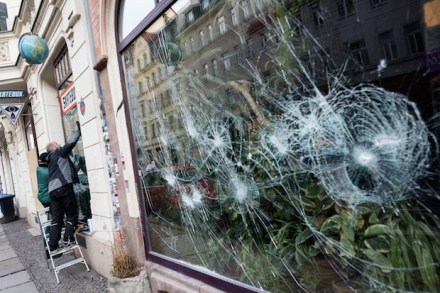
I consider myself to be bad at making predictions, but one of the obvious things about the migrant crisis last year was that public sympathy for the Syrians, spurned in particular by the image of the drowned 3-year-old boy Aylan Kurdi, would soon evaporate. A large number of men from war zones moving into an ageing, peaceful and culturally very liberal society presents lots of ‘challenges’, as the Economist might put it; Sweden’s generous immigration policy has already been blamed for an increase in sex crimes against women, so there was a possibility that #refugeeswelcome might be blamed for problems in Germany.

I love the commercialisation of Christmas

From our UK edition

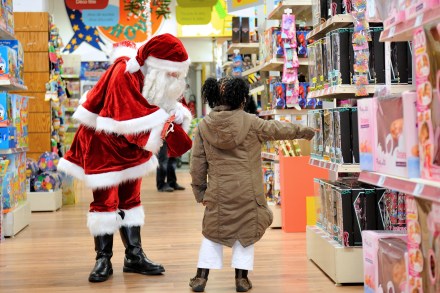
I was in Toys R Us in Brent Cross the other day with my kids, pondering the true miracle of Christmas -- that thanks to capitalism, global poverty has halved in just a generation, and we are now able to feed, clothe and shelter record numbers of people -- and buy them lots of presents. [datawrapper chart="http://static.spectator.co.uk/7PcxR/index.html"] My two-year-old was screaming because he wanted some toy cars, just a handful of fun things among an awesome display of toys that are far better, and cheaper, than they were when I was a child -- and available to more people, not just in Britain but across the world.

There’s one very good reason why space travel isn’t a waste of money

From our UK edition

Why is it that the sight of a huge, thrusting rocket ploughing through virgin space at 25,000 kmph makes me feel so good? As for seeing a real astronaut with a Union Jack on his arm, how can anyone not be moved? Englishman Tim Peake launched into space just after 11 AM yesterday, alongside Russian Yuri Malenchenko and American Tim Kopra, the three men heading for the International Space Station. Peake is the first official UK astronaut, although the seventh Briton in space, the first being Helen Sharman in 1991. There are many people who consider this all a bit of a waste of money; Rev Giles Fraser, for one, was mulling over the expense involved yesterday morning.

European countries are now united by the war against Isis

From our UK edition

If anything positive comes out of the Syrian crisis, and I appreciate it’s like looking for silver linings in the Great Storm of Jupiter, it is that it has brought the European nations together as never before. Perhaps the last time that England, France and Germany fought in a major campaign together was the Third Crusade in the 12th century, a military adventure in the Middle East. Okay, so it ended disastrously, and ended up costing the English treasury about four year’s worth of taxes, but let’s hope history doesn’t repeat itself. Part of me does wonder whether the Germans, having now engaged in military action again, will suddenly find something triggered in their brains. (‘Zis feels gut ja, Gunter?

So governments can control the weather, but not our borders?

From our UK edition

Niall Ferguson wrote a piece recently comparing Europe’s situation to that of the Roman Empire during its late, decadent, sexual pervert days: Here is how Edward Gibbon described the Goths’ sack of Rome in August 410AD: “ … In the hour of savage licence, when every ­passion was inflamed, and every restraint was removed … a cruel slaughter was made of the ­Romans; and … the streets of the city were filled with dead bodies … Whenever the Barbarians were provoked by opposition, they ­extended the promiscuous massacre to the feeble, the innocent, and the helpless…”. Now, does that not describe the scenes we witnessed in Paris on Friday night?

There’s nothing ‘conservative’ about supporting foreign intervention

From our UK edition

These are the Arab countries the Foreign Office currently advises it is safe to visit: Morocco, Saudi Arabia, Bahrain, Kuwait, Qatar, UAE, Oman and Jordan. Call this list A. These are the Arab countries the Foreign Office currently advises avoiding travel to, or to some regions at least: Algeria, Tunisia, Libya, Egypt, Sudan, the Lebanon, Syria and Iraq. Call this list B. Anyone notice a pattern here? Answer at the end. I have to admit to not having a clue whether we should be getting involved in Syria.

I have no sympathy for people who complain about ‘sharia Uber drivers’

From our UK edition

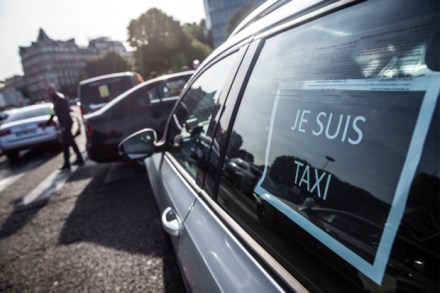
Actress Frances Barber has complained about her taxi driver after a night out in town, tweeting: https://twitter.com/francesbarber13/status/668598758473654272 The man had allegedly told her she was ‘disgustingly dressed’ and that ‘women should not be out at night’. This was after she had remarked about the weather being cold. That’s the problem with liberalising the taxi market to let any random person drive you around – it reduces the level of trust. As Rory Sutherland explained in this magazine a couple of years ago, trust is extremely important to capitalism and that’s why having hurdles such as the Knowledge is necessary: ‘Reciprocation, reputation and pre-commitment are the three big mechanisms which add to trust.

Oldham is a bad omen for Labour, even without the Corbyn effect

From our UK edition

Assuming we haven’t been vaporised by Vlad, the Oldham West and Royton by-election takes place next week, and Labour are seriously worried. Ukip’s odds to take the seat have fallen to 11/4 and as this observation from a campaigner explains, much of this seems down to the Corbyn effect. Labour have huge problems with their working class vote from what I have seen. These results were essentially reflected across the board by the 100 other campaigners over the last 2 weeks. Ukip is more popular than Farage though very few actively dislike him. But Corbyn has completely turned off his vote. Ukip are still going to struggle because near 30% (south east Asian electorate) actively dislike Ukip And are certain to vote Labour if they come out to vote.

The Uber generation won’t stand for the BBC – but it’s still a national treasure

From our UK edition

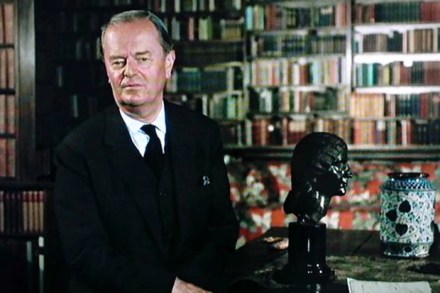
Watching the increasingly bleak and depressing Peep Show the other night I was pleased to note that my on-screen alter ego Mark Corrigan is a big fan of Kenneth Clark’s Civilisation, which is I think my all-time favourite documentary. To me Civilisation, and the then controller of BBC2 who commissioned it, David Attenborough, represent what the BBC should be, and is at its best: a strangely Freudian father figure to the nation, erudite, intelligent, open-minded and very British. The BBC was a product of a strong national culture, but it also helped to further cement it, making events like the Proms or FA Cup final part of our collective experience.

There’s absolutely nothing polite about political correctness

From our UK edition

I hope anyone who sees footage of the two shrieking women at Yale and Missouri will finally concede that political correctness is not ‘all about politeness’. It’s about power, and always has been. The Yale hoo-ha started because the authorities failed to take seriously a letter from the university’s ‘Intercultural Affairs Committee’ warning about Halloween fancy dress costumes being offensive. People wonder how one of the most high-ranking universities in the world can be embarrassed by an argument over adults wearing fancy dress, but that is exactly the point; if the row was over something that mattered, there could be little kudos in winning it. This is about displaying power.

‘Because it’s 2015’ is not a strong line of argument

From our UK edition

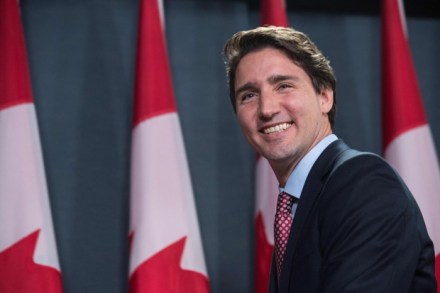
The suspiciously handsome Canadian prime minister Justin Trudeau was asked on Wednesday why it’s important to have a gender balance in the cabinet. As the Times of India reported: 'It's an incredible pleasure for me to be before you here today to present to Canada a cabinet that looks like Canada,' Trudeau told reporters after he was sworn in with his team, which includes immigrants, aboriginals, religious minorities, a quadriplegic and 15 women.  Trudeau, the first son of a prime minister to take office in Canada and the second-youngest in the country's history, has grabbed international attention for his good looks and retail approach to politics. Asked why he felt gender equality in the Cabinet was important, Trudeau said simply: 'Because it is 2015.

Why don’t we replace Remembrance Day with a national Day of the Dead?

From our UK edition

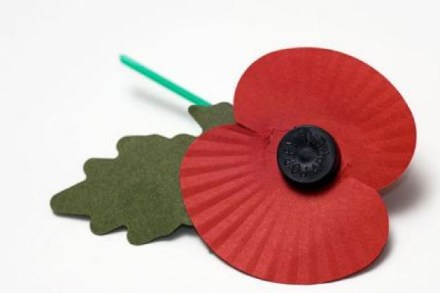
This time of year features my two least favourite festivals, Halloween and Guy Fawkes Night, but the build up to Remembrance Day gives it a run for its money. I don’t mind Halloween being commercial, pagan, fake, foreign and likely to increase diabetes levels, so long as it’s for children; I just don’t know when October 31 turned into International Day of the Idiot. But now Remembrance Day is marred by the silly pressure for people like Jeremy Corbyn to wear poppies. Peter Hitchens is totally correct on this one, when he writes: ‘If you don’t want to wear one, don’t. If you want to wear a White Poppy, then you should be free to do so.

The new East-West divide: multiculturalism vs sovereignty

From our UK edition

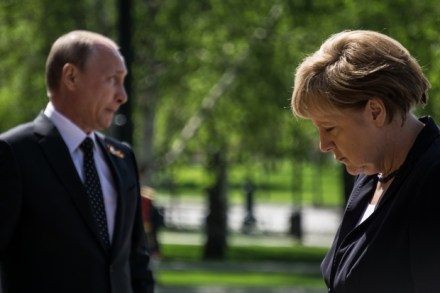
We all know that relations with Russia are at their lowest ebb since 1991, when Boris Yeltsin brought down Communism during one of his alcoholic blackouts. What’s becoming increasingly clear, though, is that there is a new ideological cold war – and I’m not sure we’ll win this one. The German approach to dissent over these past few months has been revealing. Earlier this month, a leading eurocrat chided the Hungarians for refusing to accept that ‘diversity is inevitable’, using that strange Marxist language these people love. Another accused that small central European country of being ‘on the wrong side of history’. Meanwhile Angela Merkel compared those who lock others out to the Communists who once locked their own people in.

So what if grammars don’t help social mobility?

From our UK edition

Is the purpose of education to educate or socially engineer? It was announced yesterday that England is to have its first new grammar school in decades, and the strange thing is that not a single person in the media (that I could see) asked whether this would improve education standards. Instead the entire debate was about whether it improved social mobility. On the Today programme and the New Statesman website, a statistic was quoted showing that grammar schools have a smaller percentage of pupils on free school meals than comprehensives.