Ed West

Ed West

Ed West writes the Wrong Side of History substack

The hypocrisy of pro-Union Brexiteers

From our UK edition

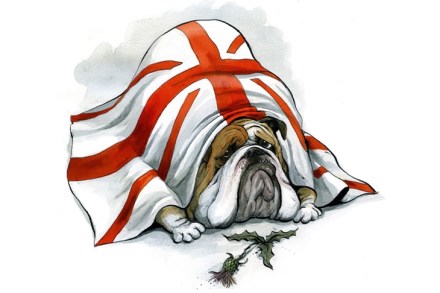
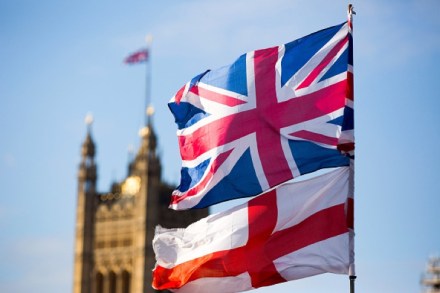
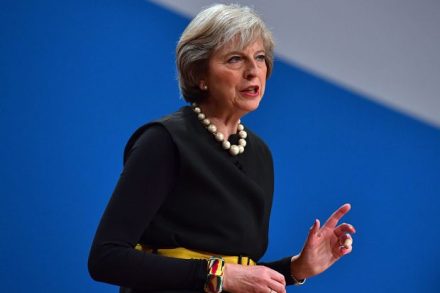
There's something quite romantic about the idea of a real border between Scotland and England, which a government minister warns will be the result of Scottish independence. Maybe we could have an India-Pakistan style daily face-off, but with soldiers dressed as The Jocks and the Geordies. Or an old-fashioned war over the 'debatable lands', which hasn't been seen since the Rough Wooing. As Alex Massie warns in this week's cover story, voters in parts of Britain may soon have to endure yet another referendum, with a considerably weaker unionist case this time around: Neither May nor Sturgeon would choose to make their stands on this kind of terrain. But politics has to be played with the cards you are dealt.

Across the West, working-class voters are abandoning the Left

From our UK edition

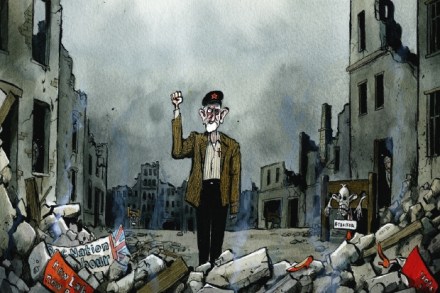
Imagine going back twenty years in a time machine, when a young Tony Blair was about to be swept to power on a wave of optimism, and telling someone* that in 2017, Labour would be on just 16 per cent among working-class voters - and this despite having a leader several octaves to the left of Blair. Not only this, but that a number of Labour seats in the north and the midlands were 'now in Tory sights'.  Imagine then telling them that this was happening while the Conservatives were making spending cuts in areas like education, and that there was an ongoing crisis in health and social care. You then let them know that almost all the government's attention is by necessity focused on leaving the European Union.

Brexit isn’t to blame for the Polish exodus

From our UK edition

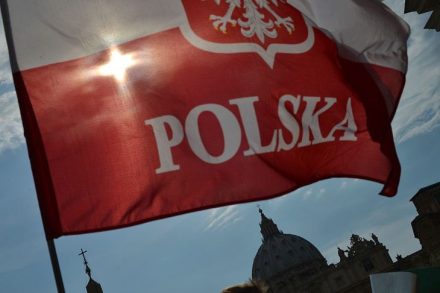
I guess the hate crime epidemic that gripped Britain after Brexit hasn't put that many people off, with new figures showing net migration of 273,000 in the three months to September 2016. That represents a decline of 49,000, of which 12,000 is due to an increase in eastern Europeans heading home (39,000, as opposed to 27,000 the previous year), which I imagine is less to do with any hostile atmosphere in Britain than the booming economy in Poland. No doubt that's the way it will be presented, though - 'Poles fleeing the Brexit terror'.

Ken Loach’s Bafta’s diatribe shows he is stuck in the past

From our UK edition

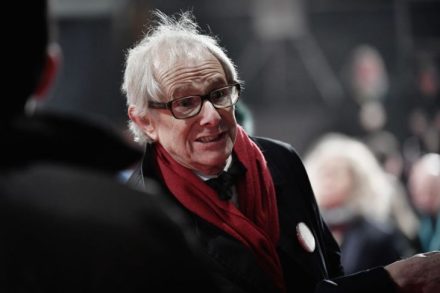
Ken Loach, who seems to defy the rule that you get more right-wing as you get older, used his Bafta acceptance speech last night to attack the Tories. He said that the Government would 'have to be removed' and went on to say:  'In the real world, it’s getting darker. And in the struggle that’s coming between the rich and the powerful...the big corporations and the politicians that speak for them on the one hand, and the rest of us on the other the film-makers know which side they’re on.' To be fair to voters, they seem to be quite set on removing governments, or at least overturning the status quo: first in Britain and then the United States, and this spring perhaps even in France and the Netherlands.

Airbnb relies on discrimination. So why is it so bothered by Trump’s travel ban?

From our UK edition

Much of the fiercest opposition to the Trump regime has come from large corporations. The most recent example is Airbnb, whose Superbowl advert showed a group of people alongside a message saying: 'We believe no matter who you are, where you’re from, who you love or who you worship, we all belong'. It was a clear attack on the president's nationalist policies. We use Airbnb quite a bit, both as hosts and guests, and it is a fantastic business. On top of the extra cash it allows people to earn, it does bring some solid social benefits, perhaps the biggest of which is that, because of online reputations, it encourages people to behave in a very civil and considerate way. It also encourages trade, exchange and interaction with people from different parts of the world.

Has the term ‘British’ lost all meaning?

From our UK edition

We've been filling in our son's school application form this week. Below his name, date of birth and gender - which I'm horrified to see only has two options, despite the form clearly stating that it is indeed 2017 - is 'ethnicity'. I suppose I'm meant to put 'White British' although I dislike the phrase. Nine-times out of ten when I see the W-word used in the media it's as an insult or gripe, usually followed by 'privilege' or - shudder -'feminist'. Of course, there's another term we could use instead: English. According to the Guardian: 'English patriotism is on the rise at the expense of a sense of British identity, with voters in England increasingly likely to describe themselves as solely English, according to research.

A female culture war has begun

From our UK edition

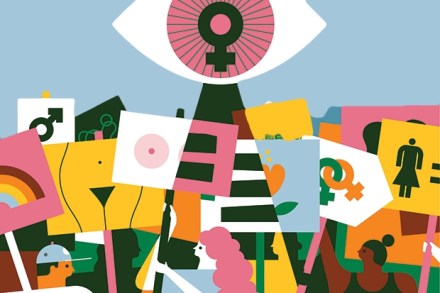
I didn't go on the women's march last weekend, and it's not the kind of thing I'd go to. However, Trump's previous form with regards the female sex is a reasonable cause for at least registering a protest. This is not to deny there are things I wish would be protested more, such as Rotherham, but I accept that's basically whataboutery and no reason to ignore Trump's behaviour. But you'd think, looking at an event like this, that there was a sort of culture war in which women were set in conflict with the patriarchy, represented by the three-times married president. Lots of women were marching for the right to have abortions, for instance, and this came as the new president reversed Obama's policy on funding overseas abortion (as all Republican presidents do).

It’s easy to forget how unnatural it is to tolerate views we disagree with

From our UK edition

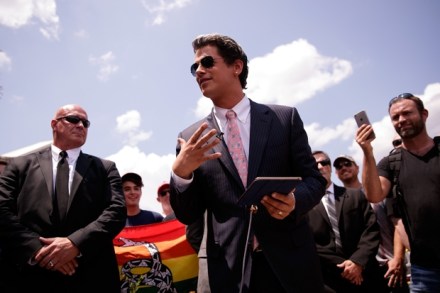
Among the words and phrases I'd be quite happy to never hear of again in 2017 is 'Alt-Right', up there with 'remoaner' and 'liberal elite'. It's partly the extraordinary amount of media attention given to an absolutely tiny fringe of a fringe of a fringe; partly that it's one of those phrases that can mean whatever the user wants it to mean, from paleoconservatism with memes, to neo-Nazism; but also that there are plenty of American conservative intellectuals making logically coherent and often very original critiques of multiculturalism, race and democracy which an open-minded progressive might read - instead the media are interested in Richard Spencer because he holds rallies where his supporters make Nazi salutes.

An ‘Anglican Brexit’ is Britain’s best hope

From our UK edition

One of the many admirable aspects of Japanese culture is that they have developed strong taboos against triumphalism in politics. When one person scores a clear political victory over another there is pressure for him to play down that win and to present the result as a compromise. It's the natural response of an island nation to early modern political turbulence and division, which harbours a desire to never repeat the experience. Likewise with the British, who after the wars of the three kingdoms became adept at creating a political system that rewarded compromise and discouraged extremism. Like many of the good things we've come to grow up with, the downside of political compromise is that we easily forget how unnatural it is, and how it has to be worked at.

The truth behind Germany’s ‘Mein Kampf’ sales boom

From our UK edition

A dead white man called Adolf Hitler has sold nearly 100,000 copies of his memoir, Mein Kampf, since a new edition was published last year in Germany. The book wasn't officially banned in the country, but the copyright was owned by the state of Bavaria which prevented new editions being made. I have to admit to never having read Mein Kampf, largely because I'm quite small-minded and if everyone says a book is terrible I can't be bothered to try it.  Hitler wasn't much of a thinker; even his many detractors would admit he was more of a doer. So what explains the renewed success of his book in Germany? Is this publishing sensation linked to the rise of a new Fascism in Europe? No.

Star Wars is the perfect analogy for the decline of America

From our UK edition

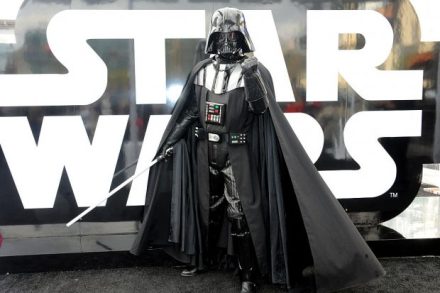
Star Wars is a generational thing and older people think my cohort are mentally subnormal for enjoying it, but it's been such a part of my childhood that I'm prepared to just set aside that voice in my head telling me it's nonsense. So I was sad when I came out of the cinema earlier this week, having watched the best Star Wars film in at least 36 years, to hear that Carrie Fisher had died. Rogue One is an interesting example of my theory of Ottomanism. In the most recent Star Wars films the human rebels have been overtly multiracial while the baddies are almost to a man of northern European appearance (including lots of Brits - I'm pretty sure the original started the craze for English baddies in Hollywood. Before 1977 they tended to be Russian or German).

How the Catholic Church created democracy

From our UK edition

Going to spend Christmas with relatives you don't really like? Well, you can thank God you only have to see them once a year rather than living as an extended family. Or more precisely you can thank the Catholic Church, without whom you'd all still be in the same house as your uncles and aunties and marrying your cousin. It is reasonably well known that the medieval Church's ban on cousin marriage helped to make western Europe less clannish; but according to an interesting new paper from Nottingham University, by doing this the Catholic Church actually laid the foundations of democracy. The author, Jonathan F Schulz, argues: 'The role of the family as one of the most fundamental institution for human society is unquestionable.

Germany is facing a ticking time bomb of rage

From our UK edition

I've learned that it's best not to say anything about a terrorist atrocity on social media, especially not if it confirms one's political prejudices. It just looks crass, or it has when I've done it. Try not to say anything profound either, as it will probably look insipid; also ideally do not make any point about similar atrocities occurring in less well known parts of the world, as people will quite reasonably think you're just scoring points. And best not to bother with the tweets of solidarity, which are superfluous these days surely; France and Belgium and Germany are our close allies, friends and neighbours, and it goes without saying that when one of us is attacked we feel for them.

Why Putin keeps winning the ideological war

From our UK edition

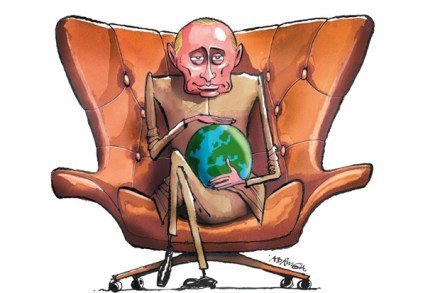
I have no idea whether Russia successfully interfered in the US election; I imagine it's one of those situations where everyone is lying but the Russians are lying twice as much. But there are a couple of questions that no one seems to be asking, which makes me curious. Firstly, how could America have got to a stage where an outside, not very friendly power could influence the course of an election? Would this have been possible in the 1950s or 1980s, for example? It seems extremely unlikely. America's founding fathers were quite vehement on the subject of foreign influence in US politics, which they thought would lead to corruption - and with good reason.

‘British values’ are a load of old codswallop

From our UK edition

Sometimes a combination of news stories crop up that so perfectly sum up the spirit of the age, its absurdities and hypocrisies, that there ought to be a name for it. This week, for instance, I learned that the Home Office had barred three Iraqi and Syrian bishops from entering the country, the same department that quite merrily welcomes some of the most unpleasant hate preachers from the Islamic world. Elsewhere, there was also a report about racial and religious segregation in schools and the need to teach something called 'British values' to children to help them integrate. And finally, the winner of the country's most prestigious art award was announced, beating competition from the other shortlisted works, which included a gigantic anus.

Is democracy in danger?

From our UK edition

Is democracy in danger? This is the belief of a Harvard lecturer called Yascha Mounk whose thesis was profiled in an interesting New York Times piece this week. Mounk began studying the subject after writing a memoir about growing up Jewish in Germany which 'became a broader investigation of how contemporary European nations were struggling to construct new, multicultural national identities'. As the article points out: He concluded that the effort was not going very well. A populist backlash was rising. But was that just a new kind of politics, or a symptom of something deeper? To answer that question, Mr. Mounk teamed up with Roberto Stefan Foa, a political scientist at the University of Melbourne in Australia.

You can be against the ‘elite’ and still be rich and privileged

From our UK edition

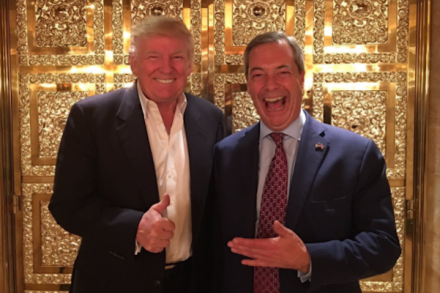
Many people have remarked that the image of Donald Trump and Nigel Farage posing by the former's golden elevator doors epitomises the hypocrisy over populists attacking the 'elites'. Likewise the Guildhall dinner in which Theresa May told an audience dressed in dinner jackets about globalisation and its discontents. These are the 'anti-elitists' who now stand up for the people, they sneer. This is to confuse money with status. As any nouveau riche parvenu has learned, wealth and status are not the same thing, something which has been the subject of some of the most famous novels in the English language. Membership of the 'elite', and many will argue about the definition, is not just about income but a number of markers; chief among these is belief.

Donald Trump played the identity politics game – and won

From our UK edition

I feel a strange sense of schadenfreude mixed with a heavy dose of terror and uncertainty now that the American people have elected someone with no experience whatsoever who tweets things like this: https://twitter.com/realDonaldTrump/status/516382177798680576 On the plus side: LOLs at liberals in my timeline. On the minus: Potential global upheaval/depression/war. So, swings and roundabouts. The BBC were just now asking about Trump's famous plan for a wall with Mexico, still presenting it as a hugely controversial idea. This always struck me as a pretty strange focus; walls and high fences are used all over the world, in Israel, Tunisia, Kenya and India, and they're very effective. Border control is fairly easy, as is stopping the flow of illegal immigration, if the will is there.

Liberal ideology created Donald Trump

From our UK edition

Dear Democrat voters, You are probably the most influential and powerful segment of the human race today. In terms of cultural reach, you are supreme; politically you are masters of the universe; you have the ability to shape our world for good or evil, and for most of the past century you and your forebears have done a pretty good job of it. I'm addressing this to Democrats in particular because in the US, as in Britain, liberalism is the prestige faith; the ratio of Democrats to Republicans in American academia is now five to one, and up to forty to one in some social sciences. Eight of the ten richest zip codes voted Obama in 2012; at Harvard College, 96 per cent of political donations go to the Democratic Party.

The new nostalgia for a pre-Brexit world

From our UK edition

Among its many treasures, Brexit has spawned a new genre of think piece, the nostalgic 'what has happened to the Britain I love' lament in the Guardian. From an Irishwoman here; an Egyptian here; and a German, here. It is sad to see people on the Wrong Side of History clinging to a mythologised, imagined good old days. This must have been a very different Britain to the one I used to read about in the Guardian that was a hot-bed of racism and intolerance.