Duncan Gardham

Duncan Gardham specialises in writing about terrorism, extremism and international security

Why has Southport not been declared a terror attack?

From our UK edition

Axel Rudakubana, the alleged Southport killer, has been accused of possessing a terrorist document, yet the police still insist there is no evidence of a terrorist motive. How can both be the case? The document Rudakubana is accused of downloading is a version of the 180-page 'al-Qaeda training manual'. It is also known as the 'Manchester manual' after it was found for the first time by police on a computer in a flat in Cheetham Hill, Manchester in May 2000, more than a year before 9/11. How can both be the case? Scotland Yard arrested a man called Abu Anas al-Libi, who rented the flat, as part of an investigation with the FBI into the 1998 al-Qaeda truck bomb attacks on US embassies in East Africa that killed more than 200 people.
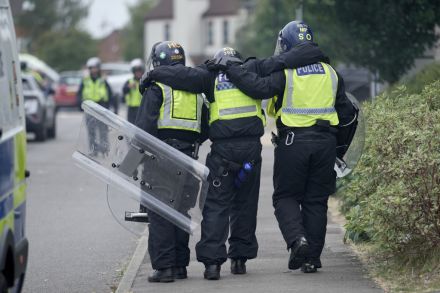
Riot police are often scared for their lives

From our UK edition

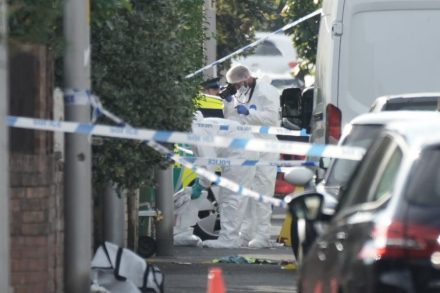
To the rioters, it doesn’t matter that the suspect in the murder of three girls at a holiday dance camp in Southport came from a practicing Christian family, or that he was born in Cardiff and is a British citizen. It meant nothing that his hardworking parents had fled the aftermath of a genocide in Rwanda that led to an estimated 800,000 deaths. That the police had decided there was no political, religious, racial or ideological motive to the killings also meant nothing. There is one bright spot in the disorder. Police get the chance to identify the worst offenders and take them off the streets As soon as his name was released by the courts, Twitter was full of racist comments. The backlash on the streets was also swift.

Anjem Choudary’s attention-seeking became his downfall

From our UK edition

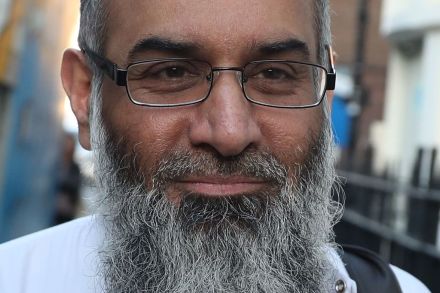
Anjem Choudary thrived on the oxygen of publicity and in the end could not stand being starved of it. He could have retired quietly after serving a five-year sentence for encouraging support for Isis, but as soon as his licence conditions expired, he was courting controversy again. He put out press releases on WhatsApp and Telegram (largely ignored by the media), collected bans from online platforms, and began preaching over the internet to a group of five members of the Islamic Thinkers’ Society in New York. He did not know that two of them were undercover officers from the US. Much of what he said would not have been illegal in the US under their first amendment rights, but laws against encouraging violence are tougher in Britain.

How did security miss the Trump shooter?

From our UK edition

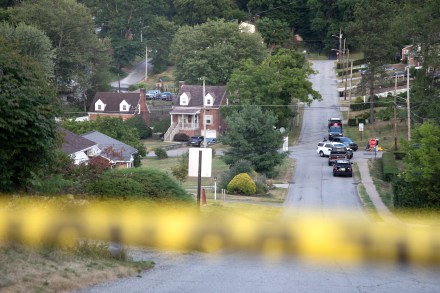
Thomas Matthew Crooks, the 20-year-old shot dead by a secret service sniper following the attempt on former president Trump’s life at Butler, Pennsylvania, had donated $15 to ActBlue, a political action committee which raises money for Democratic causes. State voter records also show that Crooks was a registered Republican. Either way, it is too early to be certain of his motive. At a news conference on Sunday, FBI special agent Kevin Rojek said it was ‘surprising’ that the shooter was able to open fire What we do know is that since 9/11, domestic terror plots have outstripped the threat from al-Qaeda and Isis in the US, accounting for more than half the deaths. Government data reveals that incidents of domestic terrorism increased by 357 per cent between 2013 and 2021.

Did an Iranian hit squad attack a journalist in London?

From our UK edition

Counter-terrorist detectives investigating a stabbing of a dissident Iranian journalist in London have discovered that three suspects left the country within hours of the attack. Pouria Zeraati, 36, a presenter for Iran International, was knifed in the leg outside his home in Wimbledon on Friday. The suspects fled the scene to Heathrow before boarding a flight. Police are keeping an open mind about any potential motivation for the attack but the chief suspects are operatives of the Iranian Revolutionary Guard Corps (IRGC).  Iran has a long history of targeting those they believe are threatening the regime, but the last two years have seen a peak in threats to dissidents living overseas.

Why Islamic State is fixated with Russia

From our UK edition

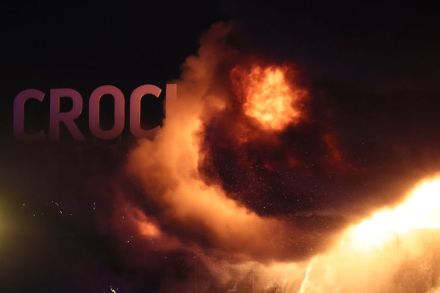
Islamic State (IS) has released a graphic video showing gunmen storming the Crocus concert hall near Moscow in an attack that killed at least 137 people. The footage corroborates the terrorist organisation’s claim of responsibility. The most likely culprit is the organisation's offshoot based in Afghanistan. For years, IS-Khorasan Province (IS-K) – a branch of IS based in Afghanistan – has been fixated with Russia. It holds Moscow responsible for destroying its power base in Syria by backing president Assad, and accuses the Kremlin of having Muslim blood on its hands. President Putin is a regular target in its propaganda. President Putin is a regular target in IS's propaganda IS said it carried out the attack on Friday in order to 'deal a strong blow to Russia'.

Could MI5 have stopped the Manchester Arena bombing?

From our UK edition

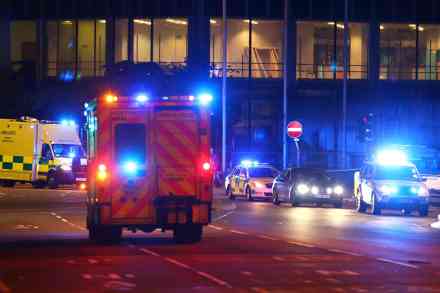
‘I know that what I have revealed, while increasing public knowledge, will raise other questions that I have not been able to answer,’ Sir John Saunders said, in issuing his final report into the Manchester Arena bombing. ‘I did ask the questions, I did get answers, but for the reasons I have given I have not been able to report publicly what those answers were,’ he added. The report gave us a glimpse into the decision-making of MI5, but only a glimpse. Despite the thoroughness with which the chairman approached his task, it does leave unanswered questions. Key among them are the two ‘pieces of intelligence’ that MI5 learned in the months before the bombing and why they didn’t they act on them.

Risk aversion and the failure of our emergency services

From our UK edition

The litany of errors in the emergency services’ response to the Manchester Arena attack has been widely detailed this week, from a senior police officer who failed to pass on crucial information, to a key fire officer who spent an hour driving in from his home, and a specialised paramedic unit that took 44 minutes to arrive from Stockport. The only paramedic to turn up in that three quarters of an hour – because he had ‘self-deployed’ – was supposed to triage patients but forgot his triage cards and never went back to his vehicle to get them. A ‘risk averse’ senior fire officer set off a chain of events that led to a two hour and six minute delay in their arrival to the arena, despite knowing they might be needed to extract patients.

Has MI5 learned its lesson from the Manchester Arena bombing?

From our UK edition

The Manchester Arena Inquiry has adjourned for three weeks as its chairman Sir John Saunders considers the last, and most secret, part of the evidence. It involves the critical issue of why Salman Abedi was investigated by MI5 and found to pose no risk, and why his case was never re-opened. At the centre of the Inquiry is a nugget of information which, MI5 says, cannot be trusted to the public, even five years after the attack. After Abedi's case was closed, two pieces of intelligence were received in the months before the bombing. These were assessed to be 'innocent activity' or 'non-terrorist criminality'.

Will the Taliban’s victory lead to attacks on British soil?

From our UK edition

The security services in Britain have been concerned about the rise of the Taliban for many months. In government briefings they have been telling ministers that it was almost inevitable the Taliban would gain some role in the government of Afghanistan once Western forces withdrew – it was just a question of how much. It is easy to ignore, after the sudden collapse of Afghan forces, the fact that the national army had been losing ground to the Taliban over several years and bloody attacks have remained a constant in the centre of major cities in the country. The Taliban killed 16 people and injured 119 in a suicide bomb attack on a residential compound in the capital just days before the leadership was due to meet President Trump at Camp David in September 2019.

Why were the emergency services so slow responding to the Manchester bombing?

From our UK edition

Claire Booth was put in the impossible position of having to decide whether to care for her sister or her daughter after the Manchester Arena attack. She understandably chose to look after her 12-year-old daughter, Hollie, but the decision still haunts her. More than anything, she wishes that emergency help had arrived quickly, in whatever form, and that the three of them had been taken to hospital for proper care. Kelly Brewster, her bubbly, music-loving sister did not survive the bombing. The speed of the emergency response may not have made a difference to Kelly but it may be that two others among the 22 victims could have been saved – eight-year-old Saffie-Rose Roussos and 28-year-old John Atkinson.

A haunting revelation from the Manchester Arena bombing inquiry

From our UK edition

The path to the Manchester Arena bombing inquiry, which opened in September, has been a long one. It had to wait for the extradition from Libya and trial of the bomber's brother, Hashem Abedi, and then for the first wave of coronavirus. Once underway, it has been a rollercoaster of emotion for the victims' families, many of whom have sat through every day of the hearings. It began with two weeks of truly heart-breaking stories of the 22 lives cut short. The kind of person who attends an Ariana Grande concert is likely to be young and in love with life; that made their stories feel that much more tragic. Subsequent weeks have driven home what it means to kiss your eight-year-old child, or your 14-year-old teenager, or your 29-year-old son goodbye.

It’s time to cut the terrorism red tape

From our UK edition

What you see is not always what you get. When a judge hands down a 16-year terrorism sentence it’s really eight years in custody with the rest on parole. The set-up is a bit of a swindle dating back to the 1960s, backed up by journalists who like a big number for the headline – myself included. In the Queen’s Speech last month, the government promised to extend custodial sentences for terrorists as a reaction to the London Bridge attack on 29 November in which Usman Khan stabbed two criminologists to death just a year after he was released from a '16-year' terrorism sentence halfway through. Boris Johnson and Priti Patel are still not suggesting that what you see will be what you get.

Quiet terror

From our UK edition

They don’t like to use the ‘Q’ word in counter-terrorism. It’s a bit like blurting out the name of the Scottish Play in a theatre. At Christmas parties, members of the security agencies insisted they had never been busier but once the year had turned and they were no longer tempting fate, they were prepared to admit that 2018 was a bit ‘quieter’. There were, for instance, far fewer arrests for ‘attack planning’, as opposed to downloading or sharing instructional and propaganda material. Last year, there were only four foiled attacks and one unsuccessful vehicle attack on Parliament. Right at the last gasp, with three hours to go to New Year, a knifeman in Manchester stabbed a couple and a police officer, but did not kill anyone.