Dr Mark Toshner

Dr Mark Toshner is a lecturer and director of the Translational Biomedical Research Masters programme at the University of Cambridge.

Don’t blame young people for plummeting vaccination rates

From our UK edition

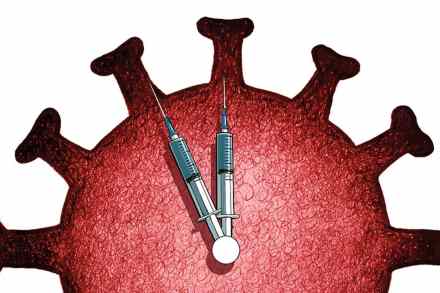
There is a myth in football that you are always most susceptible to letting in a goal after you have just scored one. It’s probably not true but the idea is attractive. At the peak of our achievement we are vulnerable to complacency. Is a similar thing happening with the vaccine programme? The current prevailing narrative is that the declining rates of vaccination are the fault of the under 30s. Government scientists accept that the country is 'close to maximum take-up', with many young people still hesitant about vaccination, the Times reported this week. But is that right? There is probably some truth to the less-than-urgent demand amongst this lower-risk group. But focusing on uptake among young people alone obscures a more obvious issue.
Are we heading for another winter lockdown?

From our UK edition

What do you think the chances are of another national lockdown before the year is out? Are you glass half empty, glass half full, or do you question if there is really a glass at all? I think a lot of people are looking at the same Covid data right now and coming to wildly different conclusions. The pandemic has been characterised by these moments. The days and weeks pass until reality can no longer be ignored, at which point it is usually too late to prevent catastrophe, but in time to mitigate it. For the glass is half-full folk the vaccine roll-out has been a solid success.

What will it take to tackle long Covid?

From our UK edition

With just under 500,000 patients admitted to hospitals in Britain since the start of the pandemic, we need to talk about 'long Covid'. Why? Because while the vaccine rollout is undoubtedly saving many lives, there is going to be a forbidding secondary impact from this virus on the nation’s health, the scale of which is only just becoming apparent.  What does 'long Covid' conjure in your mind? For many, it has become synonymous with fatigue and brain fog, symptoms which are fairly common. But what is less well known is that the impact of Covid-19 on patients can extend far beyond these symptoms alone.

Europe’s vaccine suspensions could come back to bite Britain

From our UK edition

Germany is the latest country to suspend the Oxford-AstraZeneca coronavirus vaccine over concerns about possible side effects. The Netherlands and Ireland have taken similar steps. So too has Denmark, Norway, Bulgaria and Iceland, while Italy and Austria have halted the use of certain batches of the drug as a precautionary measure.  Britain has done many things wrong in its handling of the pandemic, but it has done one thing well: the rollout of the jab. It's the one place where we have useful lessons to teach the world in Covid-19. Europe, in particular, does not appear to be listening. Vaccine programmes as ambitious as the one needed now require joined-up international co-ordination and action.

We could all pay the price for the EU’s foolish vaccine nationalism

From our UK edition

I'm a card carrying, Europe-loving, wishy-washy centre-left liberal. It therefore pains me to point this out: the EU in general, Ursula von der Leyen specifically, and some of the prominent European leaders such as Emmanuel Macron are getting policy and messaging on vaccines badly wrong. They need to urgently ditch the peacock displays of tribal politics. The French president, in particular, who leads one of the most vaccine sceptical western nations, should not have so publicly questioned the efficacy of what has clearly turned out to be a vaccine that is working in the fight against Covid-19. The consequences of their words could well be long-lasting.

Controlling borders is a critical step in the fight against Covid

From our UK edition

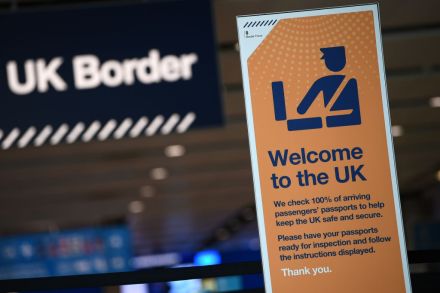
Over the last two months our fight against Covid-19 appears to have changed dramatically. The emergence of novel variants in the UK, South Africa and Brazil has generated plenty of headlines and concern. We shouldn't panic. But one thing is clear: if we don't act now, we could come to regret it. In the UK, for obvious reason we have been most focused on the B.1.1.7 variant. The evidence seems pretty clear that it is more transmissible and potentially more severe. Part of the reason we have such extensive data on virus mutations in the UK is the quite astonishing efforts that have gone into sequencing the viral genomes.

Lockdown was Boris Johnson’s only option

From our UK edition

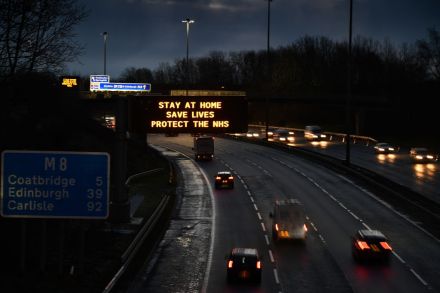
Lockdown is brutal. I don’t want it, you don’t want it, nobody ‘wants’ it. We are, however, at an intensely difficult moment in our fight against Covid-19. The latest wave of the virus is out of control, with the new variant significantly contributing to the huge hike in coronavirus cases. Our healthcare system is reaching the point of no return. This means that there is little choice than for us to face up to the reality that we are in the midst of a crisis – and that Boris Johnson had little choice but to tell us all to 'stay at home' once again. 1,041 deaths from Covid-19 were recorded yesterday, and the high number of those dying from this disease looks set to continue.

Let’s bust some vaccine myths

From our UK edition

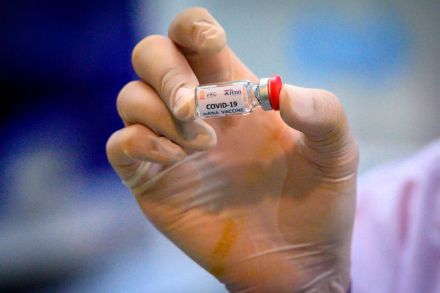
Today is a great day for all of us. The licensing of the ChAdOx vaccine will mean a step change in vaccine deployment and is one of the most significant developments of the year. As is widely known, the vaccine developed is cheap, easy to store and we have enough doses to meaningfully start talking about widespread programmes of vaccination. Now is a good time to address a slow motion and avoidable car crash. Vaccines are not a political issue – don’t let anybody persuade you otherwise. You can see this happening and it affects both our interpretation of vaccine development and, more importantly, the likelihood of having one. The development of vaccines themselves can be appropriated by all political camps.

Don’t panic about the Covid vaccine allergy risk

From our UK edition

In the coming weeks, you are inevitably going to see a slew of stories in the media about side effects from the licensed vaccines. The first one is already with us. Two healthcare staff – who both have a history of allergic reactions – have reportedly had adverse reactions to the Pfizer vaccine. This has lead to a change in advice about who should get the vaccination.  It is going to be difficult to initially ignore these stories but I am going to suggest if you don’t ignore them outright then try to dial down the volume. There are a number of good reasons to do this. Firstly, in the coming weeks and months, we are going to suffer from the most severe form of what is known as 'observer bias'.

The dangers of Covid-19 far outweigh the risks of a vaccine

From our UK edition

For all the good news that has emerged about Covid-19 vaccines in recent weeks, it is clear that we are not doing a particularly good job addressing people’s reasonable concerns about vaccine safety. Before we go on though, it is important for you to know who I am, and who I am not. I am a minor academic in a decent university. I don’t normally work on vaccines, have never had any funding from Big Pharma (or anyone else) for vaccine studies, have no career in vaccines and not much to gain from writing this, other than a spike in trolling. I have never met Bill Gates and have no interest in injecting you with a microchip. As someone on my Twitter feed said, I am shilling for 'Big Staying Alive'. So why listen to me?