Douglas Murray

Douglas Murray

Douglas Murray is associate editor of The Spectator and author of The War on the West: How to Prevail in the Age of Unreason, among other books.

Why should Vikings be diverse?

From our UK edition

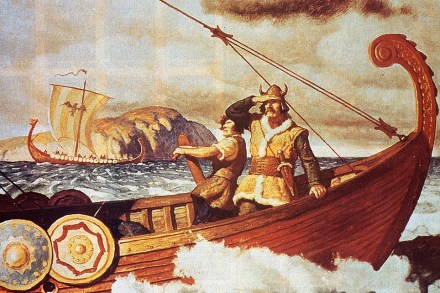
I don’t always watch ‘Strongest Viking’ competitions on cable. But the other day I was channel-hopping and became mesmerised by one. Firstly because I wasn’t previously aware that such banality was possible on television. People really watch men trying to push a stone or pull a rope? This was new data to me. But I also stayed because I was struck by the sheer lack of diversity. The cultural homogeneity of the Strongest Viking competition was appalling When the league tables flashed up, it transpired that the board was led by someone called Hafþór Júlíus Björnsson, otherwise known as ‘the Mountain’ in Game of Thrones. Mr Björnsson is from Iceland, so there was a nice Icelandic flag beside his name. Then I noticed the rest of the league table.
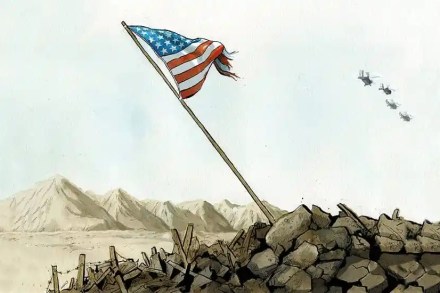
Was I right about Iraq?

From our UK edition

Back in March there was a glut of pieces about the 2003 Iraq war. The 20th anniversary seemed to much of the political and pundit class to be the perfect time to return to this scorched landscape. A number of people asked me to throw in my views and I failed, for two reasons. Firstly because, as some readers will know, I hate anniversaries and the lazy hook they provide to the news cycle. Secondly, because each time I sat down to try to write about those days I found myself unusually conflicted. Those of us who defended the war have spent 20 years filled with ‘if onlys’ The reason partly relates to the wonderful, heroic former Labour MP Ann Clwyd, who died last week at the age of 86. After the war’s height, as the insurgency had begun, I went to Iraq with Ann.

Canada’s assisted dying horror story

From our UK edition

My favourite Martin Amis novel was his 1991 book Time’s Arrow. It is a pyrotechnically brilliant work in which all time goes backwards. On publication it was criticised in some quarters because the novel includes a reverse version of the Holocaust and some thought Amis was using the Holocaust as a literary device. As so often, these transient critics didn’t get the point. It is hard to say anything new about the Holocaust or find any new angle on it. Europe, like Canada, does not believe in the death penalty for criminals. Only for victims But Amis managed, because towards the end of the novel (that is, at the beginning of the Holocaust) one of the characters starts to worry about the bodies that they are bringing out of the crematoria.

Daniel Korski and the lives of others

From our UK edition

The news has been coming so thick and fast of late that every week there are dozens of stories we don’t have time to linger over. Major scandals take up all our attention, only to fizzle out or be replaced by new ones. All the while there are little bits of roadkill that are at least as suggestive. Bear with me as I address one such recent fatality. We seem to expect everybody in public life to have the sexual history of an especially devoted nun Daniel Korski was the deputy head of the No. 10 policy unit when it was David Cameron’s turn to be prime minister. Korski quit politics after the Leave vote and started a tech business. All fine and dandy.

Why Europe riots

From our UK edition

36 min listen

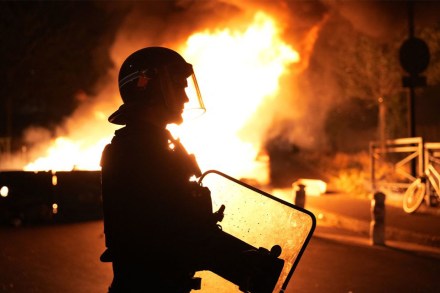
This week: In the magazine we look at the recent protests in France. The Spectator's Douglas Murray argues that racism is not the problem but that a significant chunk of the unintegrated immigrant population is. He is joined by Dr Rakib Ehsan, author of Beyond Grievance: What the Left Gets Wrong about Ethnic Minorities, to investigate why Europe riots. (01:16) Also this week: Journalist Ivo Dawnay and The Spectator’s associate editor Toby Young discuss the plight of 'politically exposed persons' in the magazine this week. This is of course in light of the news that Nigel Farage has had his bank account closed, with many speculating he has been 'debanked' simply because of his political views and associations.

French racism is not the problem

From our UK edition

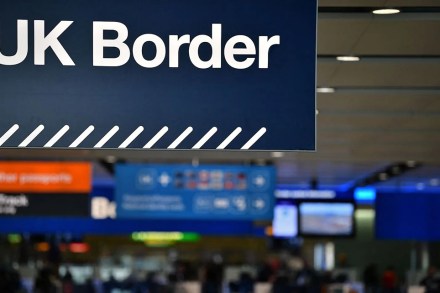
Last week we learned that a woman in a park in Skegness was dragged into the bushes and raped by a 33-year-old male. The man had arrived in the UK illegally on a small boat just 40 days earlier. If you have open borders and no checks on who is arriving, an uptick in crime will inevitably occur Strangely, I can find little anger about this. The story was reported in a couple of papers but there were no fulminating editorials or emergency questions in the House. Jess Phillips hasn’t found room to grandstand about it. Nor have Yvette Cooper, Stella Creasy or any of those other Labour MPs who like to shake their heads in disgust as the Home Secretary explains that the British taxpayers can’t forever foot the hotel bills of illegal migrants.

Joe Biden is not OK

From our UK edition

One of the most reliable standards in international comedy has long been the outstanding ineloquence of American politicians. In this place I recently summoned up the golden memory of Dan Quayle. But if you look at the record, there was similar – far less justified – tittering at Ronald Reagan. Closer to our own time comedians and others had much fun with George W. Bush, Donald Trump and indeed almost everybody who has ever risen to the top of the Republican party. Kamala Harris picks up big subjects then says something simultaneously excitable, unfollowable and banal Something striking about this is that rarely is there any similar tittering over the ineloquence of American politicians of the left.

The diversity trap

From our UK edition

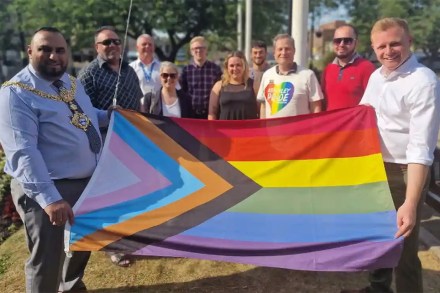
If anyone reading this ever bought shares in the diversity racket, then I would suggest you start dumping them now. Not that I would blame you for having bought them in the first place. ‘Diversity’ has been the great mantra of our age. Like ‘equality’, it is one of those words set up to be impossible to oppose. What even is the opposite of diversity? Enforced sameness? Monotony? It is hard to say. Nevertheless, everyone was encouraged to go along with the diversity racket. It didn’t matter who was in charge – Labour or the Conservatives. Diversity was said to be one of the defining virtues of Britain. Almost the aim of the place, in fact.

It’s been a bad week for former political leaders

From our UK edition

The week of the three downfalls has been an interesting one. Boris Johnson resigning from parliament, Donald Trump going to court to face serious charges, Nicola Sturgeon arrested as part of a probe into SNP finances. I wouldn’t like to prejudge any of these cases, for I am – secretly – a fair-minded person. Of course, had Sturgeon not been involved, various leftist writers would now be penning articles claiming a great linkage between these events. Probably about the downfall of ‘populism’. But since Saint Nicola is involved this will not happen. Because as I have noted here before, our age sees all nationalism as poison, except for the Scottish and Irish varieties, which are inexplicably progressive and just.

The inversion of history

From our UK edition

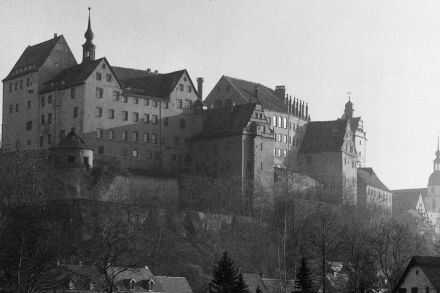
It is 18 years since the last Colditz drama on British television, which apparently means we need a new one. And the times being what they are, it appears that the drama will have to reflect the values of our little cultural-revolutionary period. There is an effort to rip up our own myths while inventing wholly new myths about other groups of people Like most adaptations of already well-known stories, this one will be based on a book by Ben Macintyre. He is a fine popular regurgitator of history who has previously brought to public notice such things as the hitherto untold story of a spy named Kim Philby. The television adaptation of that book, A Spy Among Friends, was well-acted, though marred by having a working-class northern woman as an MI5 officer.

The strange obsession with Phillip Schofield

From our UK edition

As I have noted before, there is always another circle. I thought that last week’s scandal (originally entitled ‘Suellagate’ or ‘speedgate’ by the papers) could not be surpassed for its sheer vacuousness and pointlessness. But then I did not foresee that the next week would be one in which every newspaper and news bulletin would lead with a story about a morning television presenter. Yet here we are, after more than a week of national debate about Phillip Schofield. I first became aware of Schofield when he was presenting children’s television from the BBC’s ‘broom cupboard’ with Gordon the Gopher. I have not followed the career of either character very closely since. Nor, I think, have many other people.

There is such thing as a stupid question

From our UK edition

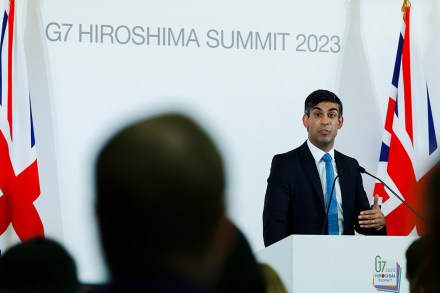
Some people seem to make a career of being ashamed (or at least claiming to be ashamed) of their country. Personally I don’t feel it – apart from when I see journalists from the BBC, ITV or Sky questioning our political leaders while they are abroad. Then a great wave of revulsion and national shame surges within me. It happened last weekend when Rishi Sunak was at the G7 summit in Japan. These meetings of the world’s leading economies are pretty important affairs, so much so that major media organisations fly journalists out to cover them. But as Sunak and his hosts stood to answer questions about the summit, what did the best sleuths from the BBC and ITV see fit to quiz him about? Why, Suella Braverman and her speeding awareness course.

How to fake it till you make it

From our UK edition

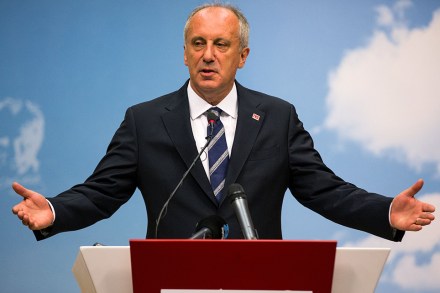
Not to sound too much like Kamala Harris during one of her peregrinations on the nature of time, but the thing about the future is that it catches up with you awfully fast. For a while we have been warned about the dangers of artificial intelligence and the special hazards of ‘deepfakes’. It seemed so futuristic when we saw a deepfake of Barack Obama some years ago, which demonstrated how easy it was to put words into someone’s mouth that they did not say. Well, now we have had an example in real time. Or at least the electorate in Turkey have. Personally I am not persuaded that Turkey’s election was ever likely to be entirely fair and free.

Daniel Penny and the problem with have-a-go heroes

From our UK edition

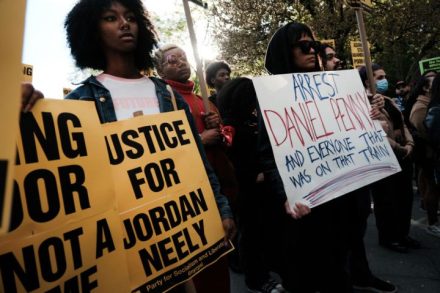
I have always liked the phrase ‘have-a-go hero’. It sums up a certain type of person who can emerge from nowhere and coat their name with honour. One thinks, for instance, of John Smeaton, the baggage handler who was having a fag outside Glasgow airport in 2007 when two jihadis tried to blow the place up. After a couple of explosions, Smeaton, Alex McIlveen and others ran to find out what was up and, finding one of the terrorists on fire, proceeded to kick the guy in the nuts. Indeed, so hard did McIlveen kick the guy that he himself tore a tendon. But Smeaton, McIlveen and others rightly became folk heroes. Smeaton memorably warned off any future terrorists by telling an interviewer ‘Glasgow doesn’t accept this. This is Glasgow. We’ll set about ye’.

The cost of mass migration

From our UK edition

Way back in the long distant 1990s, net migration into this country used to be in the tens of thousands each year. There was no lack of discussion about that, but we were not yet in the ‘dependency’ period of migration: that is, when people routinely said we had to have migration because otherwise who would do the menial jobs that we Brits didn’t want to do? You know, things like work in the NHS, work in restaurants, clean. That sort of thing. The small boats in the Channel are the most visible symbol of the system being broken Then the Blair government came in, sent annual immigration into the hundreds of thousands and everything changed. There is a dispute among partisans over whether that government lost control of immigration or had a deliberate policy to transform the UK.

The pathology of anti-Semitism

From our UK edition

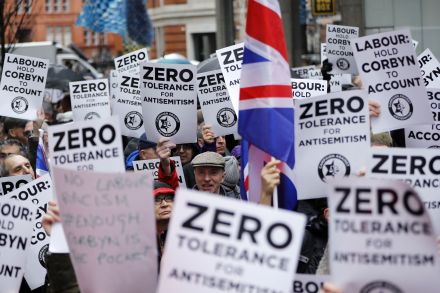
One of the best ways to work out that somebody has not thought deeply about anti-Semitism is if they say that they wish to destroy it once and for all. When in a corner, even Jeremy Corbyn could be found saying that we must end anti-Semitism for good. Though he was of course unable to resist forever adding ‘and all other forms of prejudice’. As though such a day could ever come. Demonstrating that it will not, last week Corbyn’s old ally and motorcycling companion Diane Abbott could be found complaining that black people have always had it worse than other groups, and that while Jews, like gingers and gypsies, might be subject to ‘prejudice’, only black people can be subjected to ‘racism’.

Why are the Troubles being glorified now?

From our UK edition

As world leaders gathered to mark the 25th anniversary of the Good Friday Agreement, is violence glorified when it comes to remembering the Troubles? John Connolly speaks to Spectator columnist Douglas Murray and former DUP leader Arlene Foster. This episode can be watched in full on Spectator TV's Week in 60 Minutes.

Ireland’s violent men of peace

From our UK edition

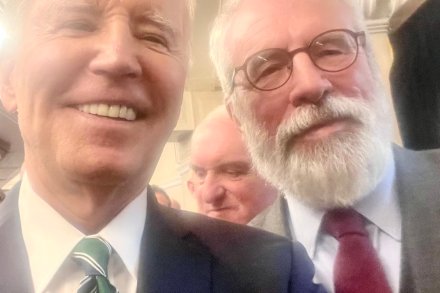
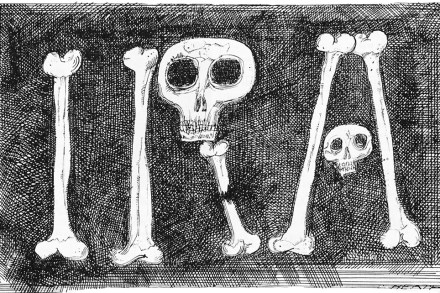
It was from the Northern Ireland conflict that I first learned how language – like everything else – can be warped utterly. Take the late Martin McGuinness, not to mention his still-living, libel-hungry comrades. For almost three decades they put bombs in public places, shot random people in the head and tortured others to death. After 30 years of this they received a wonderful career-end bonus. They became ‘men of peace’. Suddenly McGuinness and co were not to be criticised. Instead they were applauded for laying down their weapons. Before long they were travelling the world talking about ‘conflict resolution’. They won elections by pushing aside all those who had been against shooting people in the head from the start.

In defence of Picasso

From our UK edition

‘Well, they can’t cancel Picasso.’ That was my optimistic take some months ago when a friend in the art world said: ‘Watch out, they’re coming for him next.’ It doesn’t really matter that, like Paul Johnson – late of this parish – I don’t feel unadulterated admiration for Pablo Picasso’s work. The late period seems to me a commercial art factory that would have made Andy Warhol blush. But the fact he was a cast-iron genius is beyond doubt, proven by the fact that no one who came after him could go around him. Like Stravinsky in music, you couldn’t continue afterwards as though nothing had happened; Picasso had happened, and for a long time that was that.

The lost shepherds

From our UK edition

40 min listen

On the podcast this week: In his cover piece for the magazine, journalist Dan Hitchens examines whether Archbishop Justin Welby and Pope Francis can heal the divisions threatening to tear apart the Church of England and the Catholic Church. He is joined by Telegraph columnist Tim Stanley to ask whether these two men – once heralded as great unifiers by their respective Churches – can keep their flocks in order. (01:05)  Also this week:  In his column, The Spectator’s associate editor Douglas Murray questions whether the English countryside can be considered exclusionary, after the news that the green and pleasant land will be studied by ‘hate crime’ experts. He is joined by the explorer and broadcaster Dwayne Fields to ask is the countryside racist?