Douglas Murray

Douglas Murray

Douglas Murray is associate editor of The Spectator and author of The War on the West: How to Prevail in the Age of Unreason, among other books.

The UN vs Israel

From our UK edition

There’s an old joke about the United Nations having a football team. ‘But who would they play?’ it goes. ‘Why, Israel of course.’ There may not be much humour in it, but there’s plenty of truth. Despite Israel being set up by UN vote, it has been the world’s premier forum for Israel-bashing, particularly since the country won wars of self-defence in 1967 and 1973. Perhaps the most notorious moment was the ‘Zionism is racism’ resolution in 1975, when the foundations of the Jewish state were suddenly under assault. On that occasion the late great Democrat Daniel Patrick Moynihan gave one of the best counter-blast speeches ever given on the floor of the UN. As did Chaim Herzog, the father of Israel’s current president.

When it comes to Palestine, the kids aren’t all right

From our UK edition

Does anyone remember ‘Free Tibet’? Way back when, in the olden days of about the 1990s, if you knew nothing much about the world or politics but wanted to show you generally had the right outlook on things it was normal that you might have a sticker or a poster, or even go on a protest saying ‘Free Tibet’. It didn’t do any good, of course. Tibet remains doggedly unfree. For it turns out that the Chinese Communist party is not especially interested in the opinions of a few Devon-based sandal-wearers. The CCP occupies Tibet still, and continues to torture, repress and kill anyone there who stands against its brutal occupation.

Why don’t celebrities care about the Israeli hostages?

From our UK edition

My mind keeps going back almost ten years, to Nigeria in 2014. As some readers will remember, on the night of 14 April, 276 mainly Christian schoolgirls were abducted by terrorists from the Boko Haram group. It happened at a school in a town called Chibok in Borno State. In some ways it is obvious why there was such international outrage at the incident. After all, this was 276 schoolgirls, kidnapped by an Islamic terrorist group. Even a world that had seen the Beslan school siege in 2004 and was starting to see the workings of Isis still had the capacity to be shocked. The Chibok schoolgirls story caught on, and in short order almost every celebrity in the world got on board And yet the international reaction was also surprising.

Are you a creative or a destructive?

From our UK edition

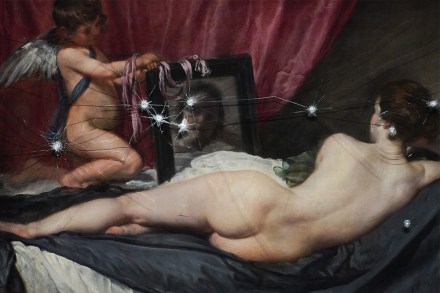
There is a stage direction in The Glass Menagerie in which Tennessee Williams describes a tune that will recur through the play. Like a piece of delicately spun glass, he says, it should summon the thought of ‘How beautiful it is and how easily it can be broken’. The cleverer young people want to live lives of hope, not demanding solutions, but finding them I think of that line often. Not least this week when two young protestors from Just Stop Oil took their hammers to the ‘Rokeby Venus’ of Velázquez at the National Gallery. Last year their cohorts threw soup over Van Gogh’s ‘Sunflowers’. Others glued themselves to the frame of another Van Gogh and others still to the frame of Constable’s ‘The Hay Wain’.

It’s time to cut our ties with Qatar

From our UK edition

A friend of mine was recently doing business with the Qataris. Nothing strange there: a lot of people have in recent years. But of course Qatar is one of the main funders – and the main international host – of the terrorist group Hamas. The Gulf state has form in the area. In the decade before the Taliban seized back – or were gifted – Afghanistan, they had a lovely office in the safety of Qatar. Because while the Qataris would hate an Afghan situation in their own fiefdom, they are happy to play the role of supporting such extremists elsewhere. The UK is arguably not just flush with Qatari cash but deeply, widely compromised by it In any case, for more than a decade, Qatar has played host to Hamas, allowing it to operate out of Doha.

Does the Met know what jihad means?

From our UK edition

Ever since the atrocities in Israel more than two weeks ago, I have had one main thought. Yes, Israel has its problems. But we also have ours. Subsequent weeks have borne that instinct out. For years I have noticed that in all the wars and exchanges involving Israel – no matter the actual size or scale of the conflict – the reaction at home grows worse each time, not least in our institutions. Last weekend there were massive demonstrations against Israel in London, as in cities across the West. And I say ‘against Israel’ with care. These protests have not been dedicated to finding a compromise between the Israelis and the Palestinians. Few acknowledged Hamas’s massacre. Still the crowds just turn up, as they are expected to again this Saturday.

Why do we allow protests that glorify slaughter?

From our UK edition

There are times when you wonder how history happened. And other times when you realise how it did. The past two weeks have been one such time. The inconsistencies, naturally, have been legion. People who label everything as aggression, including microaggressions, who believe that speech is violence and that misgendering a trans person is ‘literal genocide’ are the same people who have spent the past fortnight with nothing to say, or have adopted an ‘it’s complicated’ stance, when Jews are slaughtered in their hundreds. All those people who filled the streets when a Minnesotan cop killed George Floyd seemed to have no solidarity left when Hamas came for the Jews.

What Shakespeare can teach us about cancel culture

From our UK edition

The following is an edited excerpt from Douglas Murray’s lecture at the Sheldonian Theatre earlier tonight, in honour of Sir Roger Scruton. It features the actor Kevin Spacey reciting a scene from William Shakespeare’s Timon of Athens. By the last year of his life Roger had finally been not just honoured in his own country but given a position by a Conservative government to advise on that most pressing of issues – how to try to build beautiful housing in a country desperately in need of housing and even more desperately in need of beautiful housing. Roger was engaged in his researches when a young snake of a man came to interview him and misrepresented what he had said.

‘You are not alone’: A message to the Jewish people

From our UK edition

I'm not Jewish myself, but most of my best friends are Jews. The reason I mention this is that, all my adult life, I've been surrounded by, or chosen to be surrounded by, Jews. And why should that be? In my secular moments, I'd say it's been luck or good fortune. In my more religious moments, I'd say it's a signal of God's grace, of the wild grace of God. Because for me, these friendships and what I've learned from them, have been among the greatest blessings of my life. I've known Ashkenazi Jews and Sephardic Jews. I've known secular Jews, Orthodox Jews, ultra-orthodox Jews, Chabadnik Jews and even some Reform Jews. All of these differences are of great importance to many of you, and to all of the people who argue them.

Britain must stand up against those who support Hamas

From our UK edition

It was 7 a.m. when the ‘peace rave’ outside of Re’im was reaching its peak. Outside the kibbutz, five miles from the Gaza border, the participants of the dance festival were ‘coming up’ at just the moment that the terrorists of Hamas started to come down. They arrived on motorised paragliders, with machine-guns in position, like something from Mad Max. They came by motorbike and in trucks bearing the marks of Hamas. Rockets had already started firing across Israel from Gaza, but here the twenty- and thirty-something rave attendees were soon running in every direction across the Negev desert – hunted down. At the time of writing, 260 bodies have been recovered from the site. This is just one of the many simultaneous massacres across Israel in the areas nearest to Gaza.

Do I have a ‘work addiction’?

From our UK edition

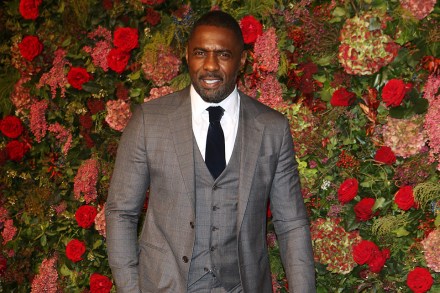
What follows may suggest that I require an ‘intervention’. Readers might even interpret this column as a cry for help. Please let me assure you that it is not. But I have just learned of a new addiction, and it is possible that I suffer from it. It is not an addiction to crack cocaine. Nor is it an addiction to alcohol, though I like to think I do my bit. No – it is an addiction I have just learned about thanks to Idris Elba: ‘Work addiction.’ The actor, who you doubtless know from The Wire, Luther and other dramas, gave an interview this week in which he said he has been in therapy for the past year because he is a ‘workaholic’. After seeing a therapist he has realised his addiction to work is ‘unhealthy’.

At least Britain isn’t that corrupt

From our UK edition

Long-time readers may recall that I take a special interest in the art of corruption. And this week America has thrown up a delicious example. Democrat Senator Robert Menendez was indicted last week on bribery charges. This follows a raid on the New Jersey Senator’s home in which federal agents found more than $480,000 hidden in clothing and piled up in his closets. The agents also found 13 gold bars. You have to go back to the 1990s for the last time that parliament was seriously accused of being ‘up for sale’ Menendez denies the charges and said on Monday that it has simply been his habit, for some years, to take thousands of dollars in cash from his personal savings account and store it around the house.

Politicians can’t win on illegal migration

From our UK edition

It is eight years now since The Spectator sent me to Lampedusa to see the boats coming in. That was at the start of the 2015 migrant crisis. The island, which is home to just 6,000 locals, had just buckled under the weight of another 1,300 arrivals. I followed them to Sicily and then on up and across the continent. If I may be self-referential for a moment, it was on Lampedusa that I realised the scale of the problem and got the opening lines of my resulting book, The Strange Death of Europe: ‘Europe is committing suicide. Or at least its leaders have decided to commit suicide. Whether the European people choose to go along with this is, naturally, another matter.

How to buy influence in Britain

From our UK edition

Like all hacks, I sometimes wonder whether I should just screw my self-esteem, do a Jonathan Freedland and start writing trashy novels for cash. As I fill the pages with every cliché, I can at least console myself by thinking of the wonderful piles of lucre about to come my way. It is very sensible of China to gather information on those who might be critical of it Were I to make this career change, my first ‘shocker’ would involve a Chinese spy called Fang Fang. She would be a sexy, enormously seductive femme fatale. As she works her way through the American political scene, she would entrap male members of Congress with startling ease, finding out juicy secrets along the way which she then reports back to Beijing.

Broken Britain: what went wrong?

From our UK edition

34 min listen

On the podcast:  In her cover piece for the magazine, The Spectator’s economics editor Kate Andrews writes that political short termism has broken Britain. She joins the podcast alongside Giles Wilkes, former number 10 advisor and senior fellow at the Institute for Government, to ask what went wrong? (01:12) Also this week:  In his column Douglas Murray writes about Burning Man, the festival which has left Silicon Valley’s finest stuck in the mud. He is joined by David Willis, who has been covering the festival this year for the BBC, to discuss the schadenfreude of Burning Man.

The delicious schadenfreude of Burning Man

From our UK edition

If any readers are having those September, back-to-work blues perhaps I might offer them a sure-fire palliative? Just go online and watch videos of this year’s Burning Man. For anyone who doesn’t know, Burning Man is a week-long festival of music and ‘self-expression’ which takes place in the Nevada desert. It is especially popular among libertarians and Silicon Valley types. Think Glastonbury, if you must. Like the Somerset atrocity, it is a place where people pay huge sums of money to take drugs and imagine that they have had some unique insight into the world. Often they come away believing that if only all of life could be like this, the world would be cleaner and kindlier.

George Osborne’s midlife crisis

From our UK edition

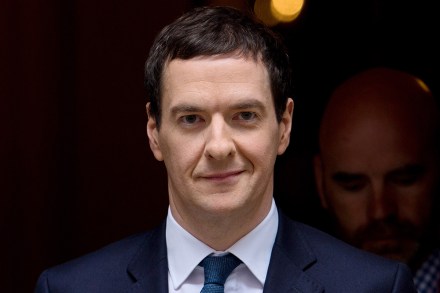
There should be a term in anthropology for what happens to a certain type of Tory male in middle age. The type who after decades of espousing often unpopular causes suddenly attempts to ingratiate himself with the masses. Ordinarily this breakdown expresses itself in a desire to legalise drugs, but it can take other forms. If you become the chairman of the British Museum, there is one rather obvious way to try to please people Anyway, the moment that George Osborne was made chairman of the British Museum I expected what has come to pass. Osborne has long been a prime candidate for a Tory midlife crisis. He always had too much of the ‘pleaser’ about his personality, despite not being remotely pleasing.

Trumpvision: he’s making America watch again

From our UK edition

27 min listen

On the podcast this week:  In his cover piece for the magazine, The Spectator’s deputy editor Freddy Gray says that he was hardly surprised that Donald Trump chose not to participate in last night’s Republican candidates debate. He argues that Trump no longer needs the TV networks and joins the podcast alongside Douglas Murray, who profiles the no-hoper Republican candidates looking to pip Trump to the nomination in his column. (01:21) Also this week:  Mark Millar, the comic book writer and producer behind Hollywood hits such as Kingsman, Kick Ass and a host of Marvel films, writes The Spectator’s notebook.

Why everyone thinks they could be President

From our UK edition

Who is Perry Johnson? It is a question not many American voters can answer. He has a grand total of 16,000 followers on Twitter and recently pulled in precisely zero votes in a poll in Des Moines, Iowa. He describes himself as a ‘self-made businessman, problem-solver and quality expert from Michigan’. Nevertheless, this slightly cadaverous-looking businessman has joined the running to be the Republican party’s candidate for president. There have been so many upsets in American politics of late that almost everybody thinks they have a chance Does he stand a chance? Nope. The main way through he has found so far is by buying up advertisements on the right-wing channel Newsmax.

Prince Charming is cancelled

From our UK edition

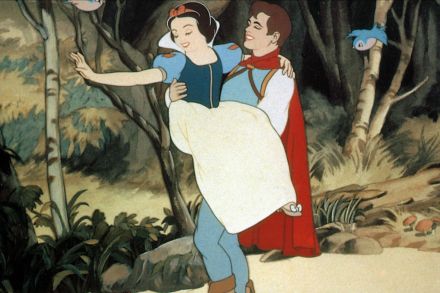
The only strikes I really enjoy are actors’ strikes. Teachers’ strikes leave me cold. Train strikes get me into a cold fury. But there are few more enjoyable spectacles in life than members of the acting profession making demands which – if left unmet – will see them refuse to work. Why should girls dream of being something like a deputy under-secretary at the United Nations? My first urge is always to clasp my head in my hands and in my best South Park voice scream: ‘You mean no movies with Susan Sarandon for six months? Nooooo.’ Then there’s the fact that most of the strikers haven’t seen work in years. Last month there was an actors’ picket line in New York, one of the leaders of which was someone best remembered for appearing in a musical almost 30 years ago.