Dot Wordsworth

What’s good for the goose is bad for the proverb

From our UK edition

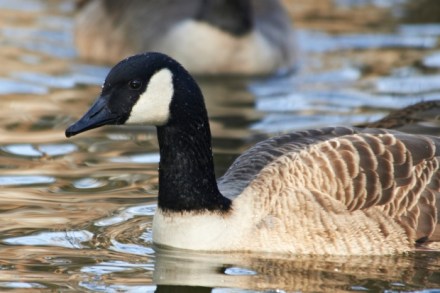
‘Goosey, goosey gander,’ my husband shouted at the television, like someone from Gogglebox. It’s not so much that he thinks the television real as that he thinks himself an unreal part of the television. The cause of his outburst was something that had caught my attention, too. Someone had said: ‘What’s good for the goose is good for the gander.’ We both thought this a mere garbling of the proverb: ‘What’s sauce for the goose is sauce for the gander.’ It is not the benefit of either the goose or the gander that is under consideration but the delectation of their flesh. Certainly, the oldest books of proverbs mention sauce. Chief among these is John Ray’s collection from 1670. What a labour it must have been to compile.

The fascinating history of dullness

From our UK edition

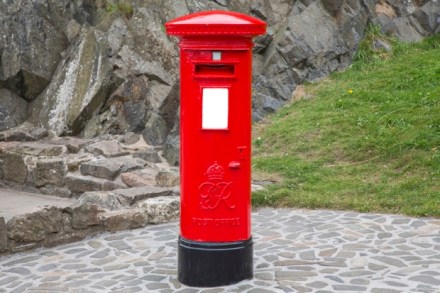
At least I’ve got my husband’s Christmas present sorted out: the Dull Men of Great Britain calendar. It is no doubt intended ironically, as travelling the country photographing old pillar-boxes, for example, does not strike me as being in the least bit dull. I had thought that dull, in reference to people, was a metaphor from dull in the sense of ‘unshiny’. ‘Dieu de batailles!’ as the Constable of France in Henry V exclaims of the English, ‘where have they this mettle?/ Is not their climate foggy, raw and dull?’ But I was quite wrong, as so often. It started off (in the form dol) meaning ‘foolish’. In English almost as old as you could care to have it, the author of The Seafarer declares: Dol bith se the him his dryhten ne ondrædeth; cymeth him se death unthinged.

How did Mark Reckless get his surname?

From our UK edition

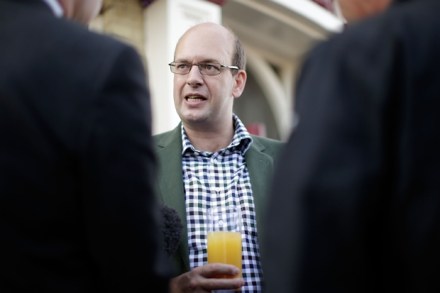
When I first heard ‘Wonderwall’ being played in a public house, in 1995 I suppose, I thought it was some unreleased Beatles record that had been just been discovered. The song appeared on an album, (What’s the Story) Morning Glory?, which has on the cover a picture showing two men about to pass in a very empty Berwick Street in Soho. It must have been daybreak. In the middle distance a magenta doorway indicates the location of a shop called Reckless Records. It’s a good name for a second-hand record shop. Is Reckless such a good name for an MP? I was surprised by how many people made a little joke about Mark Reckless’s name after he defected to Ukip at the weekend. Do they think he is descended (all paternity being regular) from someone who was reckless and thus earned the name?

Dot Wordsworth on language: Why do we call it ‘Islamic State’?

From our UK edition

I’m puzzled by the dropping of the one part of the name of the Islamic State that seems certain. That it is Islamic, many dispute. That it is a state is just as unclear. But calling it the does not bestow honour upon it, any more than referring to the Third Reich meant agreement with its behaviour. But there’s all the difference between the Queen and Queen. The Islamic State is grammatically like the Irish Free State, the Orange Free State or the Bluegrass State (Kentucky). And yet the BBC commonly speaks of ‘Islamic State’ without the definite article, like Sinn Fein or Sheffield Wednesday. In June I wrote here about the jihadist group’s good fortune in landing the English acronym Isis — easy to pronounce and remember.

The rhetorical power of ‘never’, from Ian Paisley to King Lear

From our UK edition

He won’t be remembered as Lord Bannside, but Ian Paisley will be remembered for shouting: ‘Never, never, never, never.’ The fourth never was hardly a shout, by his standards, but merged into the roar of the crowd. Never is a useful word for rhetoric. In our mind’s ear we remember how Churchill stressed the word and paused as he said: ‘Never in the field of human conflict.’ That auditory memory is something of an illusion, for Churchill made his great speech about the ‘Few’ in the Commons, in 1940, and proceedings were not recorded in sound. What we have heard is the version he delivered again for a recording in 1951. If Paisley managed four nevers, Lear outdid him in that moving line: ‘O, thou wilt come no more.

Knee-jerkers vs knee-tremblers

From our UK edition

A little joke by Paddy, Lord Ashdown of Norton-sub-Hamdon, turned upon something to be shunned. Conservative ministers, he said, had ‘indulged in a spasm of knee-jerking which would have made even St Vitus feel concerned’. He has, I think, got his spasms in a twist. Apart from saying ‘Aaah’, the cartoon task for a patient at the doctor’s is to cross a leg for it to be hit with a little hammer. ‘Striking the tendon below the patella gives rise to a sudden extension of the leg, known as the knee-jerk,’ wrote the physiologist Sir Michael Foster in 1890. He was a busy man, sitting on committees to rid Victorian England of evils linked to malaria, sewage, tuberculosis and the University of London. But he didn’t object to knee-jerks.

‘Escalate’: an exciting new way to say ‘pass the buck’

From our UK edition

Shaun Wright, the police and crime commissioner for South Yorkshire, spoke to Sky television last week about how little he knew of sexual exploitation of young people in the area. ‘This report demonstrates that lots of information was not escalated up to political level or indeed senior management level,’ he said. ‘For that I am hugely shocked and hugely sorry.’ He did not apologise for having used the word escalated, no doubt because he thinks it is a fine and proper thing for a man in his position to use the word escalate. Mr Wright uses escalate in a different sense from the escalation reported in the papers last week of violence in the Middle East.

A bitter struggle with the dictionary

From our UK edition

‘Don’t mind if I do,’ is one of husband’s stock phrases — jokes he would think them — in this case trotted out if anyone says, of the weather, ‘Bitter’. (The joke must come from Colonel Chinstrap in ITMA, even though my husband wasn’t born then.) Mr Verdant Green, notionally at Oxford in the mid 19th-century, called drinking bitter beer ‘doing bitters’, a bit of slang he picked up from Mr Bouncer. We don’t say that any more, but we still enjoy bitter beer, despite the Oxford English Dictionary defining the adjective as ‘causing “the proper pain of taste” (Bain)’. By ‘Bain’ it means Alexander Bain (1818–1903), as if that were obvious.

What’s humanitarian about a humanitarian crisis?

From our UK edition

‘Our first priority,’ David Cameron said this week, ‘has of course been to deal with the acute humanitarian crisis in Iraq.’ One knows what he means, but isn’t humanitarian an odd way of putting it? If it had been a vegetarian crisis or a disestablishmentarian crisis, it would be one either caused or suffered by people who professed either of those schools of thought. Humanitarians used to be people who followed the teachings of Pierre Leroux (1797–1871), who believed in the spontaneous perfectibility of the human race. He’d soaked up the ideas of Saint-Simon and squeezed them out over Auguste Comte and George Sand. The dogma-free religion of humanity was all fairly transparent tosh, and very popular in its time.

Is Boris Johnson standing for Parliament — or running for it?

From our UK edition

‘Boris Johnson broke cover yesterday to declare that he will run for parliament,’ the Times reported last week. The Mirror had him running too. The Independent and the Guardian had him standing for Parliament. The Express said rather oddly that he would ‘stand as an MP’, as did the Evening Standard, though the latter made amends by speculating that Zac Goldsmith was being urged ‘to stand as the Tory candidate for Mayor of London’. There is no doubt that running for election was originally an American phrase, though it hardly blew in yesterday. Andrew Hamilton, a founding father of the United States, wrote in a letter that ‘either Governor Clinton, or Mr Burr... is to be run in this quarter as Vice President in opposition to Mr Adams’.

Should you be prejudiced against ‘pre-’?

From our UK edition

‘Pre-diabetes is an artificial category with virtually zero clinical relevance,’ said an American professor in the Times. A friend of mine has even been told by the vet that her little cat is in a pre-diabetic condition, being a little over the norm on the feline body mass index. I began to think that pre-diabetes was like the countryman’s hills: if you can see them it’s going to rain. (If you can’t, it’s raining — you’ve got diabetes.) But then I did something sensible. I looked up the term in the dictionary. It is no neologism. The first example in the OED comes from more than 100 years ago.

Does pre-diabetes really exist?

From our UK edition

Pre-diabetes is an artificial category with virtually zero clinical relevance,’ said an American professor in the Times. A friend of mine has even been told by the vet that her little cat is in a pre-diabetic condition, being a little over the norm on the feline body mass index. I began to think that pre-diabetes was like the countryman’s hills: if you can see them it’s going to rain. (If you can’t, it’s raining — you’ve got diabetes.) But then I did something sensible. I looked up the term in the dictionary. It is no neologism. The first example in the OED comes from more than 100 years ago.

The mystery of the missing Mrs

From our UK edition

I don’t much care for being called Wordsworth. Oh, the name is rather distinguished, though it came from my husband, but I mean that I don’t like to be referred to as ‘Wordsworth’ without the Mrs. It makes me sound like a convicted criminal. I don’t even like Jane Austen being referred to as ‘Austen’. I know it sounds prissy nowadays to call her ‘Miss Austen’, but we don’t hesitate to refer to Mrs Thrale (though she became Mrs Piozzi) or to Mrs Patrick Campbell, though she married George Cornwallis-West in 1914. (After he was divorced from Winston Churchill’s mother in that year, she reverted to ‘Lady Randolph Churchill’, which must have taken some force of character.

Does ‘autonomy’ mean anything any more?

From our UK edition

My husband is constantly amused by talk of patient autonomy — for people who want to have a limb lopped off to solve their feeling of body dysmorphia and so on. I suppose he is amused because that is his nature, rather than that these things are inherently funny. In any case, as I have told him more than once, he is himself an example of impatient autonomy. There was great talk of autonomy in the debate on Lord Falconer’s Assisted Dying Bill. The learned Lord Brennan pointed out that, if it is passed, ‘Litigants will say to the court, “I want to exercise my autonomy and my choice. Why is it restricted to the terminally ill?

Origins of the toe-rag

From our UK edition

‘I am glad to say that I have never seen a toe-rag,’ said my husband, assuming, as unconvincingly as one would expect, the demeanour of Gwendolen from The Importance of Being Earnest. ‘It is obvious that our social spheres have been widely different.’ I had been mentioning the perverse tendency of the human race to defend their own amateur etymological theories, even when convicted of gross error. A vigorous example at the moment is tow-rag, a catachrestic version of toe-rag, a term of abuse taken from the practice of wrapping rags round the toes. ‘Stockings being unknown,’ wrote J.F.

Just how old-fashioned is Labour’s ‘cost of living’ campaign?

From our UK edition

Labour’s appeal to the cost of living has a rather old-fashioned feel to it: as if the whole nation still heated water with a geyser over the bath and darned (or got me to darn) its socks of an evening. ‘Till recent years the phrase “Cost of Living” was only used loosely by economists when the balance between movements of wages and prices was in question,’ the Encyclopædia Britannica remarked in 1922. ‘In popular parlance it has since become a recognised economic problem.’ That was when Sidney and Beatrice Webb were busy with their blue books and squared paper, before discovering a ‘New Civilisation’ in Soviet Russia. The next big step was the construction of an index to the cost of living.

Diffuse, defuse and the damnably confused

From our UK edition

It’s funny how people hardly know what they are saying. I read recently of diplomats going to Riyadh ‘to diffuse tensions over anti-Islamic stickers’. Did the writer mean defuse? Probably. He was trying to say ‘reduce’ tensions and just reached for the nearest dead metaphor from the shelf. Still, it doesn’t do to be too snooty about origins of words, as I have often told my husband, who responds by becoming narrower, shriller, louder and much snootier. What happens if you bother to look up diffuse in the 20-volume Oxford English Dictionary? You find the first entry quotes from old John Florio’s World of Words from 1598, which spells it defuse.

The bloody battle for the name Isis

From our UK edition

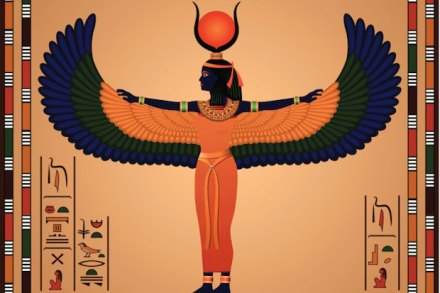
‘This’ll make you laugh,’ said my husband, looking up from the Daily Telegraph. For once he was right. It was a letter from the Pagan Federation complaining that the acronym Isis ‘is likely to form an inadvertent association in the minds of hearers between Sunni jihadists and followers of the goddess Isis’. These ‘may be caught up in unintended fallout’. They are not the only ones. Apart from the army of bloodthirsty Islamists, Isis is a centre for scientific research at Harwell, near Oxford; a group of schools teaching English; an ‘end to end’ professional photographic service in Clerkenwell; a private equity investor; and a seven-seater from Toyota.

Terrorists still can’t ‘execute’ anyone

From our UK edition

During the sudden advances of ISIS in Iraq, one visual image stood for their brutality. As the Daily Mail reported it, there was ‘a propaganda video depicting appalling scenes including a businessman being dragged from his car and executed at the roadside with a pistol to the back of his head’. I’ve heard from friends in the press, though not at the Daily Mail, that this description enraged readers. It wasn’t the fact, but the use of the word executed. This, they pointed out, meant the commission of a sentence imposed by a court, which was certainly not the case here. To execute, as the Oxford English Dictionary defines it, is ‘to carry into effect ministerially a judicial sentence.

Why would a Danish queen say ‘basta’?

From our UK edition

My husband heard me in the kitchen exclaim: ‘What would I do without you?’ He curiously imagined I was referring to him. But it was of you, dear readers, that I spoke, and in particular Elizabeth Maynard from Oxford, who wrote explaining the use of the Italian word basta by Danes. Well, how was I to know? I’d supposed that Queen Alexandra, who used the word in 1901 (Mind your language, 24 May), had picked it up from the Italian opera. Not at all, Mrs Maynard tells me, since her own Danish mother’s elder sister — born in 1893 — used it too. She would rap the table, to end arguments among the youngsters, and say sternly: ‘Og dermed basta’ (‘And with that basta’). Professor M.J.