Dot Wordsworth

Where’s the ‘mystery’ in mystery plays?

From our UK edition

In The Archers, Ambridge put on its own set of mystery plays dramatising the Nativity and Passion. BBC Radio 4 broadcast them separately from the soap opera, in which the village policeman has been driven to conversion by playing Jesus. My husband, commenting on all this, said that ‘of course’ the word mystery meant a trade or craft, as the medieval plays were performed by companies of trade guilds. He might have been reading the website of the Chester Mystery Plays, due for their five-yearly performance in 2023: ‘The word mystery comes from the French mystère meaning “craft”, and apprentices joined the guilds to learn their mystery or craft. When the guildsmen began dramatising the Bible stories, their plays thus became known as Mysteries.

When did ‘pikey’ become offensive?

From our UK edition

A policeman sent a colleague who was house-sitting for him a WhatsApp message: ‘Keep the pikeys out.’ He was sacked and last month failed in his appeal. A reader wrote to me saying he came across the word pikeys in the 1970s in Oxfordshire and ‘understood it to mean dishonest low-life characters, though not necessarily of a specific group like gypsy or other travellers’. He also remembered as a teenager in Cheshire coming across a hayfork being called a pikel, and wonders if the terms are related. They are, but not straightforwardly. Pikey dates from the second third of the 19th century as pikey-man, meaning a traveller who has come into the locality on the pike or turnpike road.

What does ice cream have to do with ‘late capitalism’?

From our UK edition

‘More to my taste is Trockenbeerenkapitalismus,’ said my husband with an intonation that indicated a joke. The joke was a play on the German Spätkapitalismus, ‘late capitalism’. There is also a German wine category called Spätlese, ‘late harvest’, and another, when the grapes are exposed to noble rot and allowed to wither on the vine, called Trockenbeerenauslese. Hence the joke. I do not encourage this sort of thing. But late capitalism deserves no encouragement either. It is generally used to mean anything thought unpleasant about life in western society.

What’s so funny about ‘helpmeet’?

From our UK edition

‘What’s so funny?’ asked my husband, accusingly, as I made an amused noise while relaxing with a copy of the Summa Theologiae. There aren’t all that many jokes in Thomas Aquinas’s survey for beginners in the field of theology. As it’s such a large field, his summary runs to 1,800,000 words. (Incidentally, just as Dan Brown went wrong in his book title by referring to Leonardo as ‘Da Vinci’, so it would be against preferred usage to call the theologian ‘Aquinas’ rather than Thomas.) Anyway, it always makes me smile to think of Thomas’s exasperation with a 13th-century university teacher, David of Dinant, who stultissime posuit Deum esse materiam primam, ‘most stupidly made out God to be prime matter’.

The French have made a hash of the hashtag

"So my poor wife rose by five o’clock in the morning, before day, and went to market and bought fowls and many other things for dinner, with which I was highly pleased,” wrote Samuel Pepys on January 13, 1667. They were eight. “I had for them, after oysters, at first course, a hash of rabbits, a lamb and a rare chine of beef. Next a great dish of roasted fowl, cost me about 30 shillings, and a tart, and then fruit and cheese. My dinner was noble and enough.” My husband said he liked the sound of this and asked if I might manage something similar out of doors, for six, duly distanced. I noticed he had doodled in the margin of his Times #rabbits. Hash sign shares an origin with rabbit hash, both being related to the French hacher, “cut in pieces.

hash

Is the Duke of York’s title really ‘untenable’?

From our UK edition

‘Nurse! The tenaculum!’ exclaimed my husband in the manner of James Robertson Justice playing the surgeon Sir Lancelot Spratt. I’m not sure I should describe the work of the tenaculum, in case you’re having breakfast, but be sure it holds as fast as a Staffordshire terrier. The motive for my husband’s outburst was the declaration by yet another politician that Boris Johnson’s position was untenable. Yet there seems to be no end of people who keep hold of a position declared by others to be untenable. The other day, Rachael Maskell, the Labour MP for York, tweeted: ‘It’s untenable for the Duke of York to cling on to his title another day longer.’ Anybody would think he was Perkin Warbeck.

The elementary misuse of ‘alumni’

From our UK edition

My husband is forever being sent magazines from his Oxford college inviting him to give it money. I suggest he should ask it to give us money, since it has much more than we do. But the clever men at Oxford, as Mr Toad called them in his song, seem to have lost the use of their wits. The rot became apparent in 1988, with the publication of the university magazine: ‘This is the first appearance of the university alumni magazine, Oxford Today.’ What did they mean by alumni magazine? Of course they knew that alumni is the plural of alumnus. But why tack a plural noun on to magazine? If it had been a student or graduate magazine, the noun used attributively (student, graduate) would remain in the singular. That is how English works.

The mechanics of ‘backlash’

From our UK edition

‘Lashings of ginger beer?’ asked my husband when I mentioned backlash. He thought the phrase came from Enid Blyton, though it occurred only in the television parody Five Go Mad in Dorset, first shown in 1982 — 40 years ago, for heaven’s sake. Backlash, now in vogue, is often misused. The Guardian wrote about ‘the mass protests in the light of the George Floyd murder and the backlash to this movement’. That usage seems correct. But when it said that Chanel ‘recently faced a backlash online for the contents of their Christmas advent calendar’, backlash was the wrong word. The metaphor backlash comes from mechanics. It is pretty much a dead metaphor, since some who use it think it has to do with lashing a back.

The language of the victimhood war

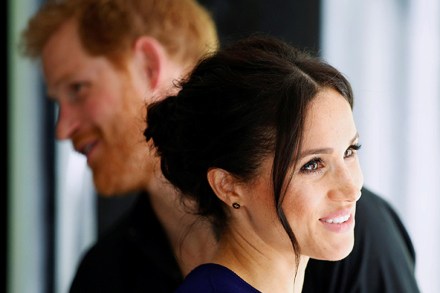
Language is used in a weird way in the victimhood war, where those who see themselves without agency bravely speak their truth to power. Their truth cannot be negated merely by examining the evidence, for it derives from lived experience. The powerful are axiomatically guilty, and must be called out for their behavior, or behaviors, as the new usage puts it. They must then own or take ownership of the issue. The Duke and Duchess of Sussex found themselves victims without agency in the racist world of the royal family. During their interview with Oprah Winfrey, they spoke of conversations between the Duke and a member of the family about their unborn son Archie and what color his skin might be.

own

2021’s word of the year: ‘cis’

From our UK edition

The newspapers came out on Christmas Day in the middle of the 19th century and listed in columns of small type all the pantomimes for the next day. Among them in 1856 was Paul Pry on Horseback, or, Harlequin and the Magic Horse-shoe, a ‘grand comic equestrian pantomime’. For it was at Astley’s, which presented all its entertainments on horseback. Since Astley’s, like many theatres, had burnt down on several occasions, it was bold to include in this panto a ‘Fire Horse’ and a ‘Chariot of Fire’. That year it survived the risk. Astley’s Theatre stood at the south end of Westminster Bridge, opposite today’s modern part of St Thomas’ Hospital.

What do Millwall supporters and internet alt-righters have in common?

From our UK edition

My grown-up friends don’t use based in its new slangy sense, so I asked Veronica (whom I still think of as a child) what it meant. ‘It’s a Millwall thing,’ she said, chanting: ‘No one likes us. No one likes us. No one likes us. We don’t care.’ I’m not talking about the established sense, as in based on fact (generally meaning ‘fictional’) or evidence-based (which entails choosing your facts), but about a usage that has jumped in the past decade from the hippity-hoppity world of Lil B to the fringe reality of the alt-right.

The six ways to pronounce ‘Omicron’

From our UK edition

‘There once was a curate of Kew, / Who kept a young cat in a pew,’ began my husband when the news bulletin on the wireless mentioned the omicron variant of coronavirus. The naming of the variant has caused much dissension. Old-fashioned speakers of English object to the BBC’s preference for the pronunciation ommi-cron, with the stress on the first syllable, and insist it should be oh-my-cron, with the stress on the second. The Oxford English Dictionary provides six pronunciations, four in British English (the ones mentioned and two more that depend on whether the last vowel is indeterminate: -cruhn). American speakers of English seem not to entertain the possibility of pronouncing the middle syllable as -my-, though they are perfectly happy to do so in the word micron.

Should we ramp down ramping down?

From our UK edition

Language change outdoes nonsense, just as misbehaviour outdoes satire. In Through the Looking-Glass Alice mentions to the Gnat that, where she comes from, they have butterflies. ‘“Crawling at your feet,” the Gnat said, “you may observe a Bread-and-Butterfly. Its wings are thin slices of bread-and-butter, its body is a crust, and its head is a lump of sugar. It lives on weak tea with cream in it.” “Supposing it couldn’t find any?” Alice asked. “Then it would die, of course,” the Gnat replied. “But that must happen very often,” Alice remarked thoughtfully. “It always happens,” said the Gnat.

How are you meant to pronounce Uranus?

From our UK edition

I had thought there were two pronunciations of Uranus. My husband, still capable of distinguishing the anatomical from the planetary, puts the stress on the first syllable. The question arose because Lord Bragg on his radio oasis of sense In Our Time was discussing William Herschel, in 1781 the first man to discover a planet. Herschel at first called it Georgium Sidus, the ‘Georgian planet’. This was to thank his patron George III, who allowed him £200 a year to live near Windsor and show guests the sky’s wonders with the 7ft reflector telescope he had polished into existence, the best in the world. The Georgian name did not catch on among European astronomers.

Has Boris Johnson really ‘trashed’ parliament’s reputation?

From our UK edition

‘When they posted the closing-night notice for his first Broadway play, Comes a Day, he went into a drunken rage, threw his fist through a glass window and played the last act bleeding into a rubber glove before being forced into a hospital where he required 22 stitches.’ So said the New York Times in a profile of George C. Scott in 1970, 12 years after the event. Scott’s infatuation with alcohol saw him through five marriages. My husband admires his screen performances, naturally. In another profile of the actor, in 1971, the Times in London said of the incident: ‘Backstage at Comes a Day he got drunk and trashed his dressing room.’ It was among the first times that trash had been used like that in England.

The real ‘scallop’ war: how do you pronounce it?

From our UK edition

‘You say scallops and I say scallops,’ sang my husband in his best Ginger Rogers accents. Since we both pronounce the bivalve to rhyme with dollop, there was a certain lack of contrast. There has been a scallop war with France in past days. Though both French and English enjoy them on the plate, it is the French in the 15th century who provided us with the name, escalope. We just knocked the beginning off the word. Our cockle too, from at least a century earlier, is from the French word that gives them coquilles St Jacques. (Mussel is from Latin musculus, ‘muscle’, which also gave the word mus, ‘mouse’, from the obvious resemblance.) The scallop shell was an ideal emblem, easy to find at Santiago de Compostela, for pilgrims to pin on their coats.

Can men be witches?

From our UK edition

‘No, darling, I certainly wouldn’t call you a witch,’ said my husband. ‘You’re not thin enough.’ The Oxford English Dictionary has just published a new entry for witch. It is less dismissive of old women. The former version spoke of a ‘repulsive-looking old woman’. Now it is ‘a term of abuse or contempt for a woman, especially one regarded as old, malevolent, or unattractive’. In that sense it is still definitely a woman. But what has lexicographers in a ferment of excitement is the decision to undo the division of the main entry for witch into male and female. Before the Conquest it had only been formally distinguishable in the nominative singular: wicca (masculine) and wicce (feminine).

Can a criminal really be ‘prolific’?

From our UK edition

The BBC made a documentary about a man sent to prison for being the ‘most prolific rapist in British legal history’, in the words of Ian Rushton, the deputy chief crown prosecutor for North West England. To my ears, it sounds weird to call a rapist ‘prolific’. It sounds no better to refer to ‘one of the country’s most prolific serial killers’ as the Sun did last weekend. The difficulty is that the word still carries connotations of its Latin origin prolificus, ‘capable of producing offspring’. The Latin word was in use in Britain from the 14th century, and the English form developed only in the 17th century.

The rational meaning of ‘surd’

Lewis Carroll, in his Phantasmagoria, and Other Poems (1869), constructed a poem that yielded a double acrostic, with the first and last letters of 13 words that were suggested by the 13 stanzas spelling out ‘quasi-insanity commemoration’, a reference to an Oxford commemoration ball. The first stanza, which yields the word quadratic, goes: ‘Yet what are all such gaieties to me/ Whose thoughts are full of indices and surds? x2 + 7x + 53 = 11 / 3.’ What, though, is the solution to the equation? I have seen it said that there is none, unless a minus sign is placed before the 53. But then it wouldn’t scan, and Lewis Carroll liked regular scansion: 11 / 3 is to be pronounced ‘eleven thirds’, not ‘eleven over three’.

surd

The ground rules, from coffee to marriage

From our UK edition

There’s a rude gesture in Pickwick that I don’t quite understand. Mr Jackson, a young lawyer’s clerk in conversation with Mr Pickwick, ‘applying his left thumb to the tip of his nose, worked a visionary coffee-mill with his right hand, thereby performing a very graceful piece of pantomime (then much in vogue, but now, unhappily, almost obsolete) which was familiarly denominated “taking a grinder”’. When I asked my husband he said, ‘Something sexual’, which I think unlikely. I’d contemplated grinding while trying to find out whether coffee grounds are so called because they are ground-up coffee or because they are like earthy ground fallen to the bottom of the cup.