Deborah Ross

Deborah Ross is the chief film critic of The Spectator

Why do movies always have to bash the ‘burbs?

From our UK edition

Mothers’ Instinct is a psychological thriller starring Anne Hathaway and Jessica Chastain and it is one of those over-ripe, camp melodramas that, back in the day, would have almost certainly starred Joan Crawford and Bette Davis. Or Tippi Hedren and Kim Novak, if we are going to be Hitchcockian about it. Either way, it’s a face-off between two world-class actresses and while it throws plausibility to the winds at the end, it is a delicious ride. And I’ve saved the best news for last: it’s all done and dusted in 95 minutes. Not an ounce of fat here. It is directed by Benoît Delhomme and is a remake of Olivier Masset-Depasse’s 2018 French-language film which, in turn, is an adaptation of the novel by Barbara Abel.

Readers, I welled up! At a cartoon! Robot Dreams reviewed

From our UK edition

Robot Dreams is an animated film from the Spanish writer-director Pablo Berger and while it doesn’t have the production values of something by Pixar or Disney or DreamWorks, it will capture your heart. Sweet, charming, deeply moving.... Readers, I welled up! At a cartoon! This is something we need never speak of again. It is based on the graphic novel by Sara Varon and stars absolutely no one, as there are no voices to voice. There is sound but no dialogue, like Mr Bean, although the similarity ends there. It is set in the 1980s in a New York populated by anthropomorphic animals. Hail a taxi and your driver may be a Sikh elephant, or your FedEx delivery guy may be a bull, and look at this warthog washing his car while swinging his big old bottom to mambo music from the radio.

Affecting, heartfelt and cleverly constructed: Monster reviewed

From our UK edition

Hirokazu Kore-eda’s Monster is a drama based on misunderstandings, which, when it comes to annoying narratives, is up at the very top, surely. I have been known to throw a shoe at the screen when the plot device stops anyone uttering the few words that will clear everything up in one minute flat, allowing us all to go home. (This afflicts 96 per cent of romcoms, I would estimate.) But Kore-eda, who has films such as Shoplifters on his CV – and also Broker and Like Father, Like Son, among other wonderfully human dramas – can get away with it and does. The upshot is that this affecting, heartfelt, cleverly constructed tale didn’t make me want to throw anything at the screen.

John Galliano shows the cancelled can be uncancelled

From our UK edition

Kevin Macdonald’s documentary High & Low: John Galliano charts the highs and (spectacular) low of the British fashion designer who was fired as creative director of Dior after a number of anti-Semitic tirades came to light. I went into the cinema wanting to hear what Galliano had to say about it all. Why Jews, John? Why not Buddhists? What was going on? But the film never properly gets to the bottom of it. (‘I have no memory of that’ is his favourite reply.) As to whether the ‘cancelled’ can be ‘uncancelled’, there is a clear answer: yes. He is now riding high and appears to have been forgiven by the fashion world. But whether he’s been forgiven by me is another matter entirely.

All I kept thinking was how the sand must get everywhere: Dune – Part Two reviewed

From our UK edition

Dune: Part Two is not a sequel but a continuation of Dune, so picks up exactly at the point you’d started to wonder if it would ever end. All I can remember from the first film is sand, sand, so much sand, and it must get everywhere, and into your sandwiches. But it is set in a massive desert so it goes without saying there would be a lot of sand. I don’t blame the sand especially.

It should be boring – but it never is: Perfect Days reviewed

From our UK edition

Wim Wenders’s Perfect Days is a film about a Tokyo public toilet cleaner and if the gentle, meditative narrative doesn’t grab you, the toilets almost certainly will. (Trust me. They’re incredible.) It stars Koji Yakusho and, as much as it is set in Tokyo, it is also set on Yakusho’s face, which is so expressive and open that it’s capable of conveying depths of emotion even when in repose. It could be boring, this film, except it’s impossible to get bored of that face. And Wenders knows what he has and rarely strays from it. It stars Koji Yakusho and, as much as it is set in Tokyo, it is also set on Yakusho’s face Yakusho plays Hirayama, a middle-aged man who says very little – barely a word for the first 40 minutes. He lets his face do the talking.

Sensuous, languorous, soothing and rich: The Taste of Things reviewed

From our UK edition

The Taste of Things, which is this year’s French entry for best international film at the Oscars, is a gastro-film but it is not of the ‘Angry Male Chef’ genre. It’s not Boiling Point or The Menu or The Bear. It is not stressful or adrenaline-filled. No one swears or screams ‘Yes, chef!’ Instead, it is sensuous, languorous, soothing and as rich and deep as (I now know) a consommé should be. It will also force you to reappraise vol-au-vents which, in the right, tenderly loving hands, need not be the mean little bullety things that were served here in the seventies. (My mother, I remember, bought them frozen from Bejam. But only for special occasions.

An endurance test that I constantly failed: Occupied City reviewed

From our UK edition

Occupied City is Steve McQueen’s meditative essay on Amsterdam during Nazi occupation, with a running time of four hours and 22 minutes. There is no archive footage. There are no witness testimonies. It’s not The Sorrow and the Pity. It is not half-a-Shoah. Instead, this visits 130 addresses and details what happened there between 1940 and 1945 while showing the building or space as it is today. It should have its own power – what ghosts reside here? What was life like for the Jews who were deported from this square and perished at Auschwitz? – but I watched it from home via a link, as I had Covid, and after the first hour started to wonder: if I die will it be from the virus? Or the boredom? After the first hour I started to wonder: if I die, will it be from Covid?

It’ll haunt you forever: The Zone of Interest reviewed

From our UK edition

I don’t know if it’s a Jewish thing, but I’m certainly always bracing myself for the latest Holocaust film. There have been some horribly dim ones, such as The Reader or The Boy in the Striped Pyjamas, both of which invite you to sympathise with the perpetrators and you know what? I won’t if it’s all the same to you. (Don’t get me started on Schindler’s List; we’ll be here forever.) But Jonathan Glazer’s The Zone of Interest dispenses with the usual conventions. There is no humanising or even dehumanising. There is no pretence at insight. It was what it was; look at how ordinary these mass murderers were. Treated like this, it’s somehow more horrifying and terrifying than Nazis stomping all over the place being evil.

Mesmerising: All of Us Strangers reviewed

From our UK edition

Andrew Haigh’s All of Us Strangers is an aching tale of grief, loss and loneliness starring Andrew Scott and Paul Mescal, so I probably don’t need to tell you the acting is off the scale but I will anyway: the acting is off the scale. Scott, in particular, infuses his character with such vulnerability that you’ll want to reach into the screen and comfort him. And while it does feature ghosts, don’t let that put you off. They’re the doable kind rather than the walking-through-walls, ‘wooOOO-wooOOO’ kind. (Huge relief all round.) Haigh makes complex, intimate, single-protagonist films (Weekend, 45 Years, Lean on Pete) and this is no exception.

Sincere, heartfelt, true: The Holdovers reviewed

From our UK edition

The first thing to say about Alexander Payne’s latest, The Holdovers, is that it’s not so much an inspirational teacher film as an uninspirational teacher film. You should know that before attending the cinema otherwise you might sit throughout in the brace position, fearing it could go all Dead Poets Society at any moment. It doesn’t. No one plunders Tennyson for motivational slogans even once. Instead, it feels sincere, heartfelt, true. You may even come away wishing  you’d had an uninspirational teacher when you were at school. The year is 1970 and it’s filmed as if it had been made in 1970 with static on the soundtrack, desaturated colours and retro titles.

Poor Things is weird and wonderful – but not so weird I had to Google it afterwards

From our UK edition

I’ve heard a few people say that, based on the trailer, Yorgos Lanthimos’s latest film, Poor Things, looks too weird for their tastes. To be honest, the trailer made me think this ‘gender-bending Frankenstein’, as it’s being sold, looked too weird for my tastes. But let’s be brave. It is Lanthimos after all (The Lobster, The Favourite), and it is the wonderful Emma Stone, whom we are always here for, so let’s not be too afraid. It is weird, no doubt. But it is the sort of weird we can do. And not so weird that I had to Google it afterwards. It has a simple narrative – a journey of self-discovery – that’s not a headscratcher at all. (I saw Studio Ghibli’s The Boy and the Heron over Christmas and I’ve been scratching my head ever since.

It’ll make you cry despite being very ordinary: One Life reviewed

From our UK edition

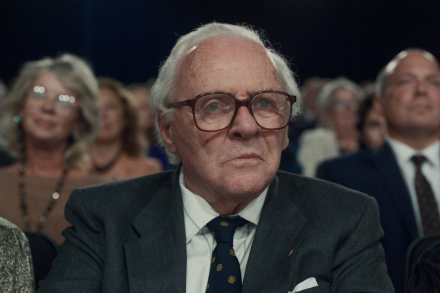
One Life is the story of Nicholas Winton (Anthony Hopkins), the British stockbroker who arranged the Kindertransport that saved hundreds of children from almost certain death in the Holocaust and be warned: you will need one tissue, if not two – maybe 12. Which isn’t to say it’s a great film. It’s fine, in its workmanlike way. But the story is so inherently powerful and moving and there is so much goodness and decency at work it will set you off. Take a whole box of tissues if you want to play it safe and would rather not deploy your sleeve. Hopkins’s performance is quiet, patient, masterly and as understated as the man himself Directed by James Hawes with a screenplay by Lucinda Coxon and Nick Drake, the film opens in 1988 with Winton’s appearance on That’s Life.

Fine for the kiddies, given they’re clueless: Chicken Run: Dawn of the Nugget reviewed

From our UK edition

The original Chicken Run (2000), which is generally considered the best riff on The Great Escape ever made starring stop-motion poultry, did not require a sequel – but here it is anyway. Now you’ll probably expect me to say that Chicken Run: Dawn of the Nugget isn’t a patch on the original so I will: it isn’t. It’s not bad-bad. It’s definitely something you can stick the kids in front of, given they don’t know any better. But it’s not nearly as inventive or funny or affecting and, while Aardman films have always looked and sounded like no other, this has a generic rather than a quirky, handmade feel. Chances are you’ve had bigger disappointments in life, but it is a disappointment all the same.

Kaurismaki is the business: Fallen Leaves reviewed

From our UK edition

Even though Aki Kaurismaki has won every award going and is a household name in his native Finland, where he is treated like a god, it may be that you’ve never heard of him. He is the business. He specialises in understated dramas about deadpan losers whose hopes are often crushed, but who somehow find comfort. If that doesn’t sell it, try this: he is so briskly clear-eyed that his films never outstay their welcome and his latest, Fallen Leaves, runs to just 81 minutes. Could we love him more? Might he not be our favourite auteur of all time?

A bit too short: Napoleon reviewed

From our UK edition

Ridley Scott’s Napoleon, starring Joaquin Phoenix, has a running time of two hours and 40 minutes, which is scant by today’s standards, but don’t worry: a four hour-plus director’s cut is on its way. So this is Scott’s Napoleon Abridged, you could say, and it does have the feel of a film that’s been scissored to death. The battle sequences are spectacular but the jackhammer cutting-style – hang on, how did he get from there to here? – means the storytelling is hurried and confusing. I’m not too sure about this Napoleon either. Did you know one of the greatest military leaders in world history was essentially a man-child? Phoenix, always a strong, intense screen presence, plays Napoleon as petulant rather than as a brilliant strategist.

Fearless and intoxicating: Saltburn reviewed

From our UK edition

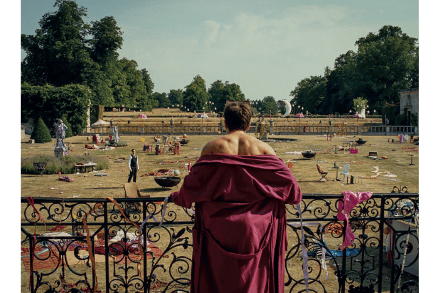
Even if you are suffering from eat-the-rich fatigue (see The Menu, Triangle of Sadness, The Lesson, Parasite, Bait, The White Lotus, Succession etc.) and can no longer work up much of an appetite for wealthy folk being dreadful you must make an exception for the psychological thriller Saltburn. It’s by Emerald Fennell and it’s not so much the story that will blow you away as her audacity. ‘Emerald, you’ve gone too far’ isn’t something she would ever be willing to hear. Her first film, Promising Young Woman, was unafraid, perverse and thrilling and it’s the same with Saltburn. It’s Brideshead gone evil, some have said, with Tom Ripley vibes, and it is that – but Fennell is more daring than even Waugh or Highsmith.

Entertaining. Mostly: Dream Scenario reviewed

From our UK edition

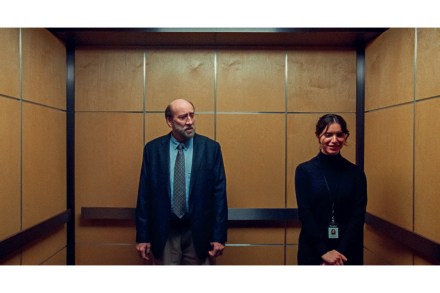
Dream Scenario is a high-concept dark comedy about celebrity and cancel culture. It stars our old pal Nicolas Cage who, blame it on what you will – tax bills, divorce bills, the price of butter – has appeared in some abominable dreck down the years but has never turned in a boring performance. Mad, yes. Reckless, yes. Maximalist, always. But boring? Never. And he is wonderfully not-boring here. It’s certainly the most Nicolas Cage film since the last Nicolas Cage film, whenever that was. Plus it is entertaining. Mostly. The film is directed by Kristoffer Borgli (Sick of Myself, also a satire on social-media fame) and stars Cage as Paul Matthews even if, when I first glanced at the poster, I thought it starred Paul Giamatti.

Outstanding and eye-opening doc about North Korea: Beyond Utopia review

From our UK edition

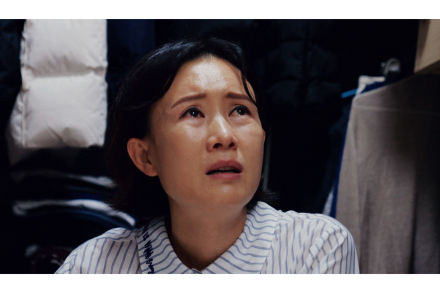
The documentary Beyond Utopia follows various families as they attempt to flee North Korea. It is eye-opening and outstanding. In essence, it is a life-or-death thriller told in real time where the stakes could not be higher. I watched at home, via a screening link, with a twenty-something who did not look at her phone once. Could there be a higher recommendation? The film has been assembled by the American director Madeleine Gavin who employed  a camera crew when it was safe to do so but otherwise made use of secret smuggled footage. Her way in is via Kim Seungeun, a South Korean minister who has bravely devoted himself – for reasons that become apparent – to helping North Koreans escape.

Basic, plodding and lacking any actual horror: Doctor Jekyll reviewed

From our UK edition

Tis the season of horror, as it’s Halloween, which we celebrate in this house by turning off all the lights and pretending not to be in. (We look forward to it every year. It’s nice occasionally to go bed at around 5 p.m. and pretend not to be in.) But I thought I’d show willing by at least reviewing a horror film so it’s Doctor Jekyll, starring Eddie Izzard. It’s the latest from Hammer, which you didn’t know was still around, but is. I have a fondness for these films as they were always on TV during my teenage years, with Peter Cushing creeping around some crypt, hammy and campy – ‘Good heavens, man! The lady you saw has been dead for 300 years!’ – rather than terrifying.