Deborah Ross

Deborah Ross is the chief film critic of The Spectator

A self-regarding take on I’m-not-sure-what: Bergman Island reviewed

From our UK edition

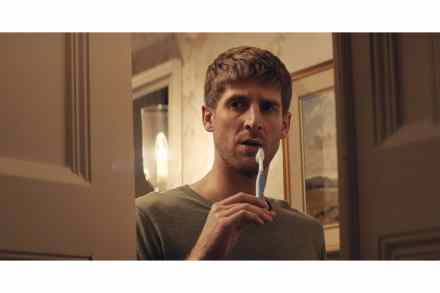
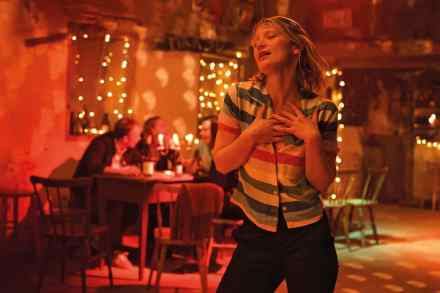
Bergman Island sounds, on first acquaintance, like a theme-park attraction. Roll up, roll up! Let us speed you through the shed where Max von Sydow is weeping and then plunge you downwards until you come face to face with a priest struggling with his faith. Then you’ll twist hard left – hold on! – to encounter Liv Ullmann suffering from a series of nightmares in which God appears graceless and indifferent. Or is God dead? To be fair, I’d probably go on such a ride. It may be more exciting than this, and over more quickly. That’s possibly too harsh, but this film is certainly most self-regarding. Written and directed by Mia Hansen-Love, it is a meandering, literary, dreamy, inconclusive take on I’m-not-sure-what. It’s not wholly unbeguiling.

You certainly don’t watch Top Gun for the script

From our UK edition

Top Gun is back, nearly 40 years after the original, with reprised roles for Tom Cruise (59) and Val Kilmer (62) but nothing for Meg Ryan (60) or Kelly McGillis (64) although I can’t work out why. The first film is iconic and will likely remain that way unless you are stupid enough to rewatch it (I was stupid enough, and it hasn’t dated well; bland and corny). The sequel also hits its marks as if following a guide entitled How To Write a Blockbuster in Not That Many Steps With a Ton of Colossal Planes, but it is better done. Just. Maybe. The deal is: here’s a bad thing. Now go kill it Even if you find Cruise a little creepy, as I do, you can’t deny he has an aura, as if he were the Last Great Movie Star.

Quietly devastating: Benediction reviewed

From our UK edition

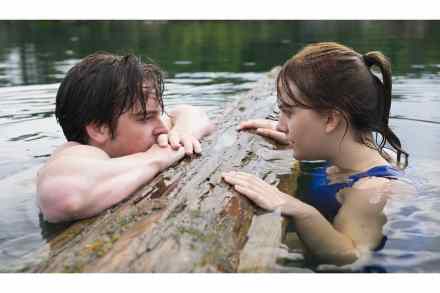
Terence Davies’s Benediction is a biopic of the first world war poet Siegfried Sassoon told with great feeling and tenderness. The result is quietly powerful, quietly devastating and, happily, is not afflicted by the usual clichés that afflict this genre. Sassoon never, for example, crumples what he’s just written and throws it across the room. For this we must be grateful, and are. The film juggles two timelines, with the young Siegfried played by Jack Lowden – once a rising star, it is probably now fair to say he has fully risen; he is wonderful here – and the old Siegfried played by Peter Capaldi.

Fellowes fluffs it: Downton Abbey – A New Era reviewed

From our UK edition

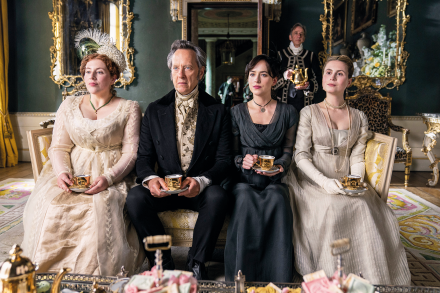
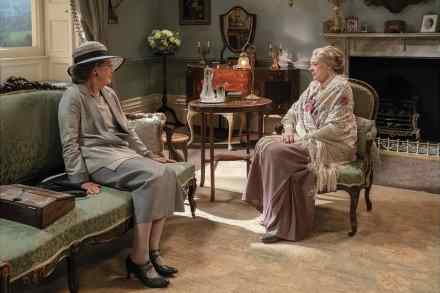
Downton Abbey: A New Era is the second film spin-off from the TV series and, like the first, it doesn’t have to try especially hard if at all. It could be two hours of Mrs Hughes darning socks or two hours of Mrs Patmore concocting something disgusting (kidney soufflé?) or two hours of Lady Grantham requesting tea in bed and fans would still love it to the tune of whatever the last film made. (Millions.) That said, I have always had a bit of a soft spot for it. As the theme music starts up and we get that first sweeping vista of the estate, it feels reassuring and familiar, like putting on a pair of old slippers. On the other hand, old slippers can become highly embarrassing in time, so there is also that.

A hoot: The Unbearable Weight of Massive Talent reviewed

From our UK edition

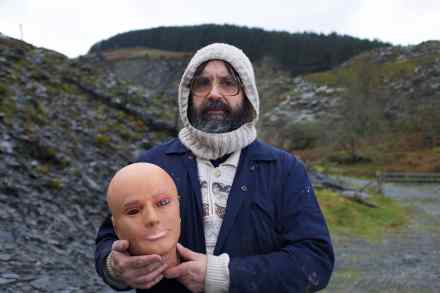
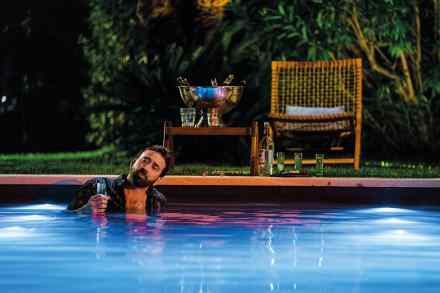
The Unbearable Weight of Massive Talent stars Nicolas Cage playing a version of Nicolas Cage, in a parody of Nicolas Cage and the many, many films of Nicolas Cage. This couldn’t, you will have already surmised, be more Nicolas Cage, and if you are wondering how much Nicolas Cage is too much Nicolas Cage you could say any amount of Nicolas Cage is always too much Nicolas Cage. But that’s exactly what this film is playing with and it’s a hoot. Cage fans will want to fill their boots. My own face hurt by the end It is directed by Tom Gormican, who co-wrote the film with Kevin Etten, and Nicolas Cage plays ‘Nick Cage’, a Hollywood movie star famed for his unique, unhinged intensity – why does that sound familiar?

Mostly gripping – and boasts not one but two Mr Darcys: Operation Mincemeat reviewed

From our UK edition

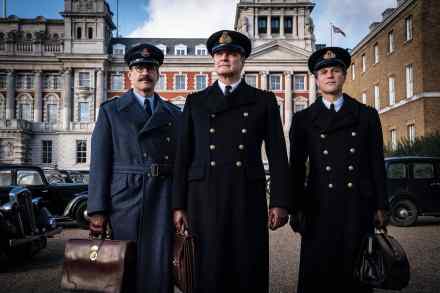
Operation Mincemeat is based on the book by Ben Macintyre, which in turn is based on what Sir Hugh Trevor-Roper called ‘the most spectacular single episode in the history of deception’. It is so spectacular that the film doesn’t have to do much aside from tell it, and that’s what it does, straightforwardly, plainly, no bells and whistles. It’s a classic tale of British second world war derring-do and the sort of film you’ll watch with your dad on a Sunday afternoon, before or after Ice Cold in Alex. Plus it has a terrific cast that includes not one but two Mr Darcys (Colin Firth and Matthew Macfadyen).

Will put you in mind of Lost in Translation: Compartment No. 6 reviewed

From our UK edition

Compartment No. 6 is set aboard a long train journey across Russia, a country we don’t hear much of these days (I wish!). It has won multiple awards, including the Grand Prix at Cannes, and is by the Finnish filmmaker Juho Kuosmanen, who has said of his films: ‘Basically, they are boring.’ It’s true, this is not eventful, even if the restaurant car does run out of hot food at one point. This is a character-as-plot film and if that isn’t your style it is going to feel like a very long journey indeed. The trip is from Moscow to Murmansk, which is way up north. It is days long and you may even feel it in real time. (But I didn’t, just to be clear.

Didn’t deserve an Oscar: Coda reviewed

From our UK edition

This year the Oscar for best film went to the drama Coda – ‘Child of Deaf Adults’ – but the ceremony will now probably only be remembered for Wsscrfmhw (‘Will Smith Slapping Chris Rock For Mocking His Wife’). And we thought that mix-up over envelopes was exciting! But back to the film, which beat the favourite, The Power of the Dog, although Jane Campion did win best director, making her the third woman ever to do so. That’s three women in 93 years of the awards. If we carry on at that rate, by the turn of the next century it may even be five. Coda is only viewable on Apple TV+, the first streaming service to scoop the big prize.

You will feel nothing: The Worst Person in the World reviewed

From our UK edition

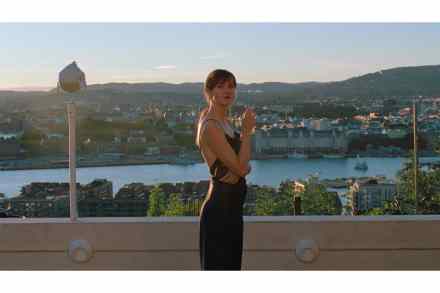
The Worst Person in the World is a Norwegian film that has made a big splash. To date, its star (Renate Reinsve) has won Best Actress at Cannes and it has been nominated for two Oscars (Best Original Screenplay and Best International Feature Film). It has also attracted rave reviews. I can now only conclude: I must be the Hardest to Please Person in the World as I can’t fathom what all the fuss is about. It’s not atrocious. It’s not Batman. But it’s nothing special. And until I read that it is a ‘romantic comedy’ I hadn’t realised it was a comedy at all. Perhaps I am also afflicted with the Worst Sense of Humour in the World?

Fun, good-natured and schmaltzy: Phantom of the Open reviewed

From our UK edition

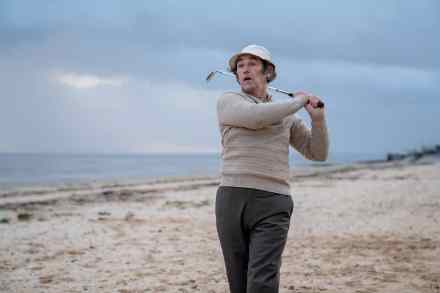
Phantom of the Open is a comedy-drama telling a true story that would have to be true as no one would believe it. The subject is Maurice Flitcroft, a crane operator who took up golf at 46 after seeing it on the telly and entered the British Open in 1976, achieving the highest score ever. (‘Does that mean he’s won?’, asked his wife.) Dubbed ‘the world’s worst golfer’, he then hoaxed his way into further Opens, much to the incandescent rage of the snobbish authorities, and you’ll be rooting for him, of course. This is a British underdog film like The Duke – but with some Eddie the Eagle mixed in – and it’s fun and enjoyable and good-natured even if it does play it safe and waltz off into Hallmark schmaltz at the end.

Humourless and stale: The Batman reviewed

From our UK edition

The latest Batman film, The Batman, may be a reboot, or even a reboot of a rebooted reboot that’s been rebooted. Hard to tell any more. Tracey Ullman once joked that her mother had served leftovers for so long that no one could recall the original dish and this feels like that. What was the original dish? Was it Tim Burton’s version from 1989 starring Michael Keaton? I don’t know. All I know is that you hope each time for something fresh and surprising and entertaining but every film since has simply attempted to out-film noir the last. We can go darker still! Bruce Wayne, more traumatised by his childhood than ever before! I should also warn you that it’s three hours long having been cut down from four. (Holy cow, Batman!

Perfection: The Duke reviewed

From our UK edition

The Duke is an old-fashioned British comedy caper that is plainly lovely and a joy. Based on a true story, it’s an account of the 1961 theft of a Goya painting from the National Gallery, stars Jim Broadbent and Helen Mirren, and is directed by Roger Michell (of Notting Hill fame). Many films have all their ducks in a row yet are somehow disappointing, but this is perfect, capturing the spirit and joie de vivre of the old Ealing comedies. I could probably watch it all day every day for the rest of my life. Broadbent plays Kempton Bunton, a 57-year-old, working-class Newcastle taxi driver — although he has trouble holding down any kind of job — who has aspirations to be a playwright. We first meet him putting his latest play in the post to the BBC.

May put you off Chaplin for ever: The Real Charlie Chaplin reviewed

From our UK edition

Charlie Chaplin is one of the most famous movie stars ever and is certainly the most famous movie star with a little toothbrush moustache. He was around when I was growing up as his films were often on television, particularly, if I recall rightly, on Saturday mornings. My sisters and I resented that as we wanted to watch The Partridge Family (or The Brady Bunch) on the other side but my father loved him, and I do remember being struck by his childlike innocence, as well as all the falling over. (Chaplin’s, not my father’s.) I now regret watching this documentary. Not because it’s bad (it isn’t) but because I know things about him that I wish I didn’t. It may even have put me off Chaplin for ever.

Staggeringly confident and powerful: After Love reviewed

From our UK edition

As there are no stand-out films this week aside from Kenneth Branagh’s adaptation of Death on the Nile — is that the one where they all did it? Or is that the train one? — I thought I’d alert you to a film that may have slipped under your radar: After Love. It was released last year. It’s a small film, tiny. I don’t know what the budget was but it wasn’t $90 million. Yet it’s already won many awards, rightly, and has just been nominated for three Baftas and is staggeringly confident and powerful. I guess we’ll now never know who did it on that boat. Unless they all did it? This is a first feature from English-Pakistani filmmaker Aleem Khan.

Sounds ghastly but it’s somehow riveting: The Souvenir – Part II reviewed

From our UK edition

The Souvenir: Part II is Joanna Hogg’s follow-up to The Souvenir (2019) but it’s not your regular sequel. It’s not Sing 2, for instance. It’s not the exploitation of a franchise. And it’s not as if the industry has run out of original ideas for autobiographical films about becoming a film-maker in London in the 1980s. The two were always conceived as a pair telling the one story — and they would have been made back-to-back had Hogg not run out of money. So it’s the one story with a wait in-between which, admittedly, has been a trial. Did Julie make her graduation film about working-class kids in Sunderland? Which sounded like the worst idea ever. Also: has she moved on from Anthony?

Unpredictable, delicious and flamboyantly stunning: Parallel Mothers reviewed

From our UK edition

Pedro Almodovar’s latest is a film about identity, secrets, lies, buried skeletons, real and metaphorical. But what you mainly need to know is: it is wonderful and delicious and blissfully styled — Almodovar doesn’t do ‘neutrals’ or Uggs — and constantly surprising. With most films you know exactly what you’ll be getting within the first ten minutes. Oh, it’s that film. But here we’ve often no idea what direction it’s going to take and although the focus shifts it never feels fragmented. Instead, it all adds up to an immensely rich, satisfying whole.

Manipulative and sentimental but also affectionate: Belfast reviewed

From our UK edition

After Artemis Fowl and Murder on the Orient Express you may have had concerns about Kenneth Branagh ever helming a film again — keep away, Ken, keep away! — but Belfast is plainly a different prospect. It is an autobiographical account of his earliest years growing up in Belfast during the Troubles, and it is heartfelt, warm and authentic even if it does sometimes tip into the overly sentimental and nostalgic. That said, it was good to see Omo washing powder once again. (It added ‘brightness to whiteness’, you may remember.) This presses buttons so deftly I welled up exactly as I was supposed to.

I won’t ever look at cows the same way again: Andrea Arnold’s Cow reviewed

From our UK edition

The latest film from Andrea Arnold (Red Road, Fish Tank, American Honey) is a feature-length documentary about a cow, starring a cow, with almost nothing else in it, apart from this cow. It feels like a test. Can I watch a cow for 93 minutes? What does this cow do that’s so interesting? I see cows all the time from the train and they just sort of lounge about, ruminating, don’t they? But this wants you to look, really look, at what it is to be a cow. And you do and you will invest. (Oh, Luma.) Arnold spent four years, off and on, filming Luma, a cow at a dairy farm in Kent. Luma looms from the dark background of one of the film’s stills like a Rembrandt. You’d look, really look, if she were hanging in the Rijksmuseum, Arnold seems to be saying.

Stephen Graham drives this terrific, relentless, one-take film: Boiling Point reviewed

From our UK edition

Boiling Point is a single-take drama set during a busy service at a London restaurant and it has to be the most stressful film of the year. I realise it’s early days, but if a more stressful film comes along I would be most surprised. If this film were a recipe, the first instruction would read: ‘Nerves, shred.’ Followed by: ‘Put in pressure cooker and whack the temperature up.’ It is brilliantly executed but also one of those films you can find compelling and engrossing while praying for it to be over. It stars Stephen Graham, that little powerhouse of a fella, who now serves as a kitemark, surely. (Has he ever been in anything bad? Did you see him in Time?

The Spectator’s best films of 2021

From our UK edition

The Power of the Dog: Cumberbatch is spectacular https://www.youtube.com/watch?v=LRDPo0CHrko Jane Campion’s The Power of the Dog could also be called The Power of Benedict Cumberbatch, as he’s so spectacular. He plays a ruggedly masculine cowboy with an inner life that isn’t written, but that we somehow still see. It is also clearly Campion’s best film since The Piano. Read the full review here. The Lost Daughter: entirely gripping https://www.youtube.com/watch?v=xNq9YOfL0Zs The Lost Daughter is an adaptation of the Elena Ferrante novel about motherhood that says, quite ferociously: it’s complicated. And: mothers aren’t necessarily motherly, and can feel ambivalence.