David Sexton

Radio 3 Unwind is music for the morgue

From our UK edition

Soon after the launch of Classic FM in 1992, the then controller of Radio 3, Nicholas Kenyon, asserted that his high-minded station was not in any competition with its commercial rival and certainly not lurching into ‘some ghastly descent into populism’, even as he hired Classic FM’s presenters and fiddled with the programming to create ‘access points’ for novice listeners. Classical music once had a higher calling than to be this subdued That argument is now over, the pretence dropped. The current controller of Radio 3, Sam Jackson – appointed last year – was previously the actual boss of Classic FM, as well as Smooth and Gold.

Heartbreaking scenes: Annihilation, by Michel Houellebecq, reviewed

From our UK edition

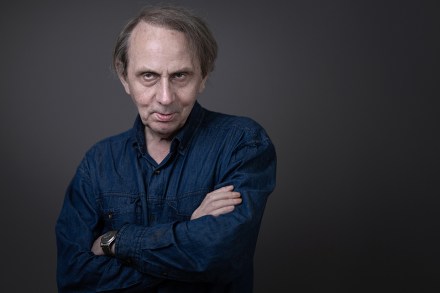
Michel Houellebecq’s ninth and longest novel, anéantir, was published in France at the beginning of January 2022 with an initial print run of 300,000 copies. Translations into Italian, German and Spanish appeared a few weeks later. Only now, though, is it available in English, a belatedness all the more regrettable because, like several of Houellebecq’s novels, it is set a little in the future (Submission, for example, foreseeing the islamisation of France, was published in 2015 and set in 2022). Houellebecq has always maintained an absolute faith that love alone saves Annihilation looks forward to the presidential election of 2027, correctly assuming that Emmanuel Macron, never named but clearly referenced, would have won a second term in 2022.

Enemy of the Disaster: Selected Political Writings of Renaud Camus, reviewed

From our UK edition

Everybody who knows nothing else about the French writer Renaud Camus knows that – as Wikipedia immediately asserts and as therefore is repeated every time he is mentioned in the press – he is ‘the inventor of the Great Replacement, a far-right conspiracy theory’. Until now, actually reading Camus has not been possible in English, so thoroughly has he been shunned by the mainstream media. Here, at last, are some of his core political essays in translation, published by a small press in America, that will make such dishonesty blatant in future. It is in that way, for good or ill, an essential publication, as few can genuinely be said to be. These are not the writings of Camus that I myself enjoy the most.

The exquisite pottery of Lucie Rie

From our UK edition

Lucie Rie had no time for high-flown talk about the art of ceramics. ‘I like to make pots – but I do not like to talk about them,’ she’d say. ‘I am not a thinker, I am not an art historian, I just do.’ It was her profession, she would maintain. Rie’s work is astonishingly self-sufficient. She belonged to no school and left none Her distaste for people preening about her craft went a bit further too. ‘I don’t like pots, I just like a few pots,’ she stated. When I interviewed her for the Sunday Telegraph back in 1988, she even said: ‘It’s extraordinary but I hardly like any potters – Hans Coper and then finish.’ She was absolute about her inferiority to Coper, whom, unlike herself, she considered an artist. ‘I have colours and I have easier shapes.

The exquisite pottery of Richard Batterham

From our UK edition

Richard Batterham died last September at the age of 85. He had worked in his pottery in the village of Durweston near Blandford Forum in Dorset for 60 years continuously. It was, in its own way, an heroic life. Batterham took an astonishingly pure, austere approach to his work. Quite simply, he undertook every part of the process of making himself. He made his own stoneware clay bodies, arguing that those who used bought-in clay missed out on the beginning of the whole process and were mistaken to think that they could just inject their artistry at a later stage. He threw his pots on an archaic kick-wheel. He did not decorate them, save by working the clay itself by incision, flutings and chatterings, to shape the piece and catch and display the glaze.

Michel Houellebecq may be honoured by the French establishment, but he’s no fan of Europe

From our UK edition

For many years, Michel Houellebecq was patronised by the French literary establishment as an upstart, what with his background in agronomy rather than literature, his miserable demeanour, his predilection for science fiction and his gift for unyieldingly saying the unsayable, especially about relations between the sexes. That’s all changed now. He won the Prix Goncourt in 2010 for The Map and the Territory and in 2019 was elevated to the Légion d’Honneur. The Nobel cannot be long delayed, the committee after all having honoured the equally ornery V.S. Naipaul and J.M. Coetzee.

A Jack Reacher travesty: The Sentinel, by Lee Child and Andrew Child, reviewed

From our UK edition

So upsetting it would have been, for those of us who rate Lee Child’s Jack Reacher thrillers so highly, if handing them over to another author had made no discernible difference in quality. After all, we value Child as a writer, not as a production line. So here’s the good news: it makes all the difference. The Sentinel, the 25th Jack Reacher novel, is a travesty. At 65, Child has finally carried out his long-held plan to retire. Andy Martin, his academic disciple, ended a second reverential study of his idol, With Child, by quoting Child saying to him: ‘Somebody else can do it for me... What about you?’, apparently in the hope it might really happen.

Down – if not out – in Paris

From our UK edition

Virginie Despentes remains best known in this country for her 1993 debut novel, Baise-Moi, about two abused young women who set off on an orgiastically murderous road-trip round France. In 2000, she became notorious when she collaborated on the hardcore film of the book, which ran into certification problems, with Alexander Walker fulminating about the complete collapse of public decency. Despentes has now published some 15 novels altogether, celebrated in France as grunge or ‘trash’ fiction — and a polemical, erratically feminist, memoir, King Kong Theory, describing her own experience of rape and prostitution, and calling for a new aggression in female sexuality.

The really shocking thing about Michel Houllebecq’s Soumission — he rather likes Islam

From our UK edition

Michel Houellebecq’s sixth novel, imagining an Islamic government taking power in France in 2022, has been widely assumed to be an act of pure provocation. He is, after all, the author who faced legal trouble after having said in an interview in 2001: ‘La religion la plus con, c’est quand même l’islam.’ Soumission (Submission) was announced quite suddenly by Flammarion in December for the first week of the New Year, with an initial print run of 150,000 copies. So keen was the interest that it was pirated online before publication. It’s an event — but a literary event, it turns out. For Soumission is a fine, deeply literary work, not a prank.

One Leg Too Few may be one biography too many

From our UK edition

It’s no joke, writing about comedians. Their work is funny, their lives are not. Rightly honouring the former while accurately relaying the disasters of the latter is a challenge few writers can well meet. Peter Cook and Dudley Moore have been extensively studied before. Harry Thompson published his excellent biography of Cook in 1997, Barbara Paskin her authorised biography of Moore the same year; Alexander Games’s joint biography Pete & Dud followed in 1999. There have been memoirs of Peter Cook by his first and second wives, Wendy and Judy, and his third wife, Lin, has edited Something Like Fire: Peter Cook Remembered. What’s to add?

Bitter Experience Has Taught Me, by Nicholas Lezard – review

From our UK edition

What, really, is a literary education for? What’s the point of it? How, precisely, does it help when you’re another day older and deeper in debt? These are questions that after a while begin to present themselves with uncomfortable force and persistence to those of us who have believed from our earliest youth that if literature will not save us, it will,  surely, at least do us some small, perceptible good. What answer can we make, surveying the ruins? Nicholas Lezard is useful here, as a test case, a case tested to destruction even. Not only does he have a thoroughly literary turn of mind, he is, as he says, probably the last remaining person in the world who makes ‘what could loosely be called a living from reviewing books’.

Here and Now, by Paul Auster and J.M. Coetzee – review

From our UK edition

In love, there is always one who kisses and one who offers the cheek. So too in the luckless genre of letters artificially exchanged for the purposes of publication. There’s been a little spate of these lately, the most interesting and unbalanced having been Public Enemies, in which Michel Houellebecq brilliantly began the exchange by telling Bernard Henri-Levy that what they had in common was that they were both a bit contemptible, a bond from which BHL tried unsuccessfully to extract himself for the rest of their collaboration. Paul Auster and J.M. Coetzee had read each other’s work for years but only met for the first time in February 2008, when they were both in their sixties.

The revised version

From our UK edition

The narrator of Julian Barnes’s novella has failed disastrously to understand his first love. David Sexton admires this skilful story, but finds something missing Julian Barnes once said that the only time he had ever threatened to throw a guest out of his house was not because the churl had disparaged his food or insulted his wife but because he had disputed the greatness of Ford Madox Ford’s novel The Good Soldier.

Dreaming of cowsheds

From our UK edition

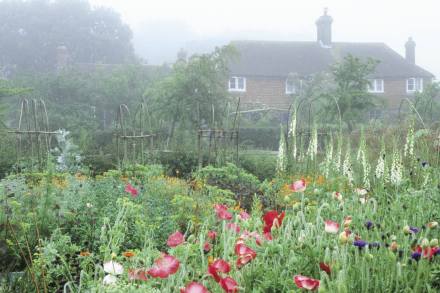
In 1999, Adam Nicolson published a very good book called Perch Hill: A New Life, about his escape from London and a break-down, after his divorce and a nasty mugging, to a farm in the Sussex Weald, close to Kipling’s house, Batemans. In 1999, Adam Nicolson published a very good book called Perch Hill: A New Life, about his escape from London and a break-down, after his divorce and a nasty mugging, to a farm in the Sussex Weald, close to Kipling’s house, Batemans. It’s one of the great descriptions of what embedding yourself deep in a patch of the countryside is like, truthful about both its solaces and its frustrations. ‘The Weald has found its Thoreau,’ said Richard Mabey.

From red giant to white dwarf

From our UK edition

Richard Cohen, who was a publishing director of Hutchinson and Hodder before moving to New York where he now teaches Creative Writing, is the author of one previous book: By the Sword: Gladiators, Musketeers, Samurai, Swashbucklers and Olympic Champions (2002). This comprehensive history drew on his deep, personal knowledge of the subject, for Cohen was five times the British national sabre champion, selected for the Olympic team every time between 1972 and 1984. Its illustrations include a superb shot of the author flying through the air sideways, executing a ‘horizontal fleche’ against Dom Philip Jebb at Downside Abbey. Chasing the Sun is even more ambitious.

Change, decay and success

From our UK edition

After having for so long been treated with such disdain by the French literary establishment, Michel Houellebecq has at last been embraced by it. Last week La carte et le territoire, his fifth novel, was awarded the Prix Goncourt, a distinction any of his previous novels might just as well have merited. Perhaps it has been possible to do him this belated justice because La carte et le territoire is less explicitly scandalous than its predecessors, more conventionally substantial even. If his previous novels have insolently portrayed life in our faithless, free-market world as a race between sex and death, here that race is over. There is almost no sex in this book.

A strict, controlling vision

From our UK edition

Thoughtful Gardening, twice as long as the first two, beautifully produced in Germany, is a summation of the Lane Fox gardening doctrine, this time mixing more or less practical advice on particular plants — Later Clematis, Sociable Deutzias, Desirable Dahlias, the Etna Broom — with more discursive essays, recalling great gardeners, visiting gardens from Texas to Odessa, all these pieces, which are organised seasonally, being deftly linked to make an easy continuous read.

Ruling the planet

From our UK edition

‘Facebook’, says the excitable author of this hero-gram, ‘may be the fastest-growing company of any type in history.’ ‘Facebook’, says the excitable author of this hero-gram, ‘may be the fastest-growing company of any type in history.’ ‘Thefacebook.com’ went live on 4 February 2004, as an on-line directory for students at Harvard, inviting them to upload a picture of themselves and some basic info, such as their ‘relationship status’, favourite books, music, movies and a quotation. Once they had set up their own profiles, they could ask others to be their ‘friend’ and direct a jokey ‘poke’ (never defined) at them.

The houseguest from hell

From our UK edition

Once upon a time, an untrustworthy story- teller seemed rather an enterprising creation — and some great books were written this way, like Lolita and The Good Soldier (from which Blake Morrison takes an epigraph). But nowadays having a fibber as compère seems painfully predictable. Only if our dodgy raconteur is strikingly engaging or funny do we, as readers, feel inclined to stay the course, to have it confirmed that our guide is actually a fraud, or killer, and his life a hollow sham. The trick can still be pulled off. John Lanchester did it in The Debt to Pleasure, and Sebastian Faulks in Engleby, a book made interesting by the way it seems to be Faulks’s nightmare about how wrong everything could have gone for him in another life.

The whirlwind and the saint

From our UK edition

Dave Eggers is the very model of the engaged writer. Since publishing his first book, the memoir A Heartbreaking Work of Staggering Genius, he has branched out into all kinds of philanthropic literary activity. His organisation, McSweeney’s, has become a major imprint, championing emerging writers. In San Francisco, he has set up a community writing project, called 826 Valencia, which now has branches in six other cities. In 2004, he created Voice of Witness, ‘a series of books that use oral history to illuminate human rights crises around the world’.