David Kynaston

The ups and downs of high-rise living

From our UK edition

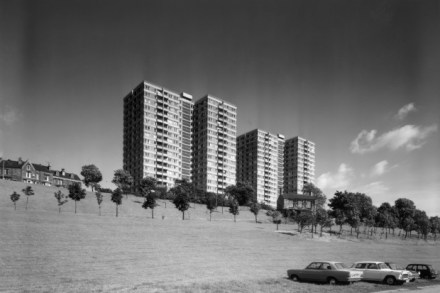
‘On BBC 2 last Monday,’ noted the Sunday Telegraph’s TV critic Trevor Grove in February 1979, ‘the return of Fawlty Towers was immediately followed by a programme about faulty towers.’ He went on: This was odd, but on close examination turned out to be without significance. After all, what connection could there possibly be between

Was the closure of the grammar schools really such a tragedy?

From our UK edition

In 1959, the public (i.e. private) schools were responsible for 55 per cent of the Oxbridge intake. By 1967 they were down to 38 per cent, with the majority of places going instead to the grammar schools. Four years later Anthony Sampson welcomed how ‘the trickle of grammar school boys to Oxbridge has turned into

Were the Sixties really so liberated?

From our UK edition

Lolita, the Lady Chatterley trial, the pill, Christine Keeler, ‘(I Can’t Get No) Satisfaction’, love-ins, Oh! Calcutta!, the Oz trial — sex, even more than usual, was on people’s minds in the 1960s, that semi-mythical decade which, to stretch a point, lasted from the late 1950s to the early 1970s. That, anyway, is the plausible

Social mobility has become a meaningless mantra

From our UK edition

‘Whatever your background,’ Margaret Thatcher told the Sun’s readers in 1983, she was determined that ‘you have a chance to climb to the top’. So, too, Tony Blair in 2004 (‘I want to see social mobility a dominant factor of British life’), David Cameron in 2015 (‘Britain has the lowest social mobility in the developed

Ever decreasing circles

From our UK edition

‘The area’s isolation has given it a strong sense of community and independence,’ runs the Wikipedia entry on New Addington. The presence of the library, youth clubs, leisure centre, shops, churches and street market enables locals to lead full lives in many ways. The Addington Community Association has provided an important hub for the community.