David Horspool

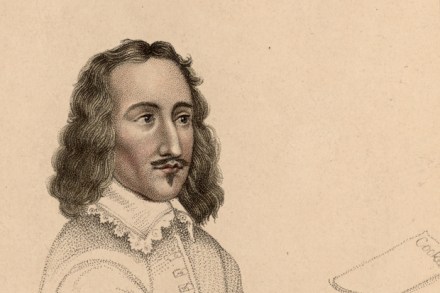
The tale of John Tom, the Cornish rebel with the Messiah complex

From our UK edition

When was the last battle fought on English soil? The traditional answer, still sanctioned by Wikipedia, is Sedgemoor, in 1685, when the Duke of Monmouth’s rebellion was defeated and more than 1,000 combatants were killed. But there are other candidates, such as the Jacobite encounters at Preston and Clifton Moor in 1715 and 1745, reminders

Death and glory: the politics of the World Cup

From our UK edition

World Cup fever is a strange affliction. It’s more contagious and unavoidable than Covid, and more widespread too: each new World Cup, as Simon Kuper writes, ‘becomes the biggest media event in history’, which ‘occupies the thoughts of billions of people’. It also produces a cluster of sometimes contradictory symptoms, physical as well as mental.

Stop calling rugby ‘child abuse’

From our UK edition

The look on the doctor’s face as he showed my parents the X-ray of my skull was quizzical but reassuring. ‘We were a bit worried by this line on the left,’ he indicated a very thin line from the top of the cranium, straight down. ‘But we saw that there is a line exactly similar

The poet and the polymath: two 16th-century Portuguese travellers

From our UK edition

In 1866, Dante Gabriel Rossetti visited a London print shop to buy a large canvas of a Renaissance street. He recognised that the bustling scene – black-robed clerics, bargaining merchants, black porters and children teasing a monkey, played out on a wide boulevard in front of a colonnaded row of slightly rickety houses – was

A five-ring fiasco

From our UK edition

The ambitions of the founding father of the modern Olympic Games, the Frenchman Baron Pierre de Coubertin — that they should be ‘the free trade of the future’ and provide ‘the cause of peace’ with a ‘new and mighty stay’ — were at once wildly optimistic and strangely prescient. Considering that they were first conceived

How Charles II sought to obliterate a decade of British history

From our UK edition

When the Restoration of the Stuart monarchy, in the person of that ‘lovely black boy’ Charles II, was announced in May 1660 it was with a flourish of public amnesia. Charles had, it was declared, already been king for 11 years, from the moment in January 1649 when his father had been unlawfully executed. Such

Those fearless men, but few

From our UK edition

While reading this book in a London café, I was politely buttonholed by an Irishman: ‘Sorry to disturb you, but I saw what you were reading and wondered how far back it went.’ I answered that, as it was a group biography of the men who led the Dublin Easter Rising of 1916, it began

Was Josiah Wedgwood really a radical?

From our UK edition

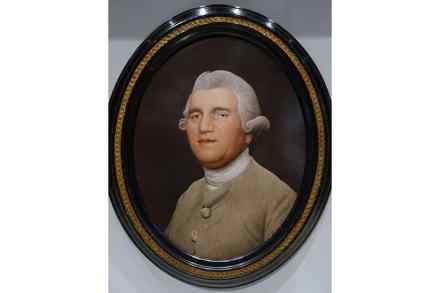
No wonder Josiah Wedgwood, the 18th-century master potter, was a darling of the Victorians. From W.E. Gladstone to Samuel Smiles of Self-Help fame, they admired this industrious, inventive, uxorious and religious man as a harbinger of their own age. It surely helped that his story, if not exactly one of rags to riches, was certainly

The great agitator

From our UK edition

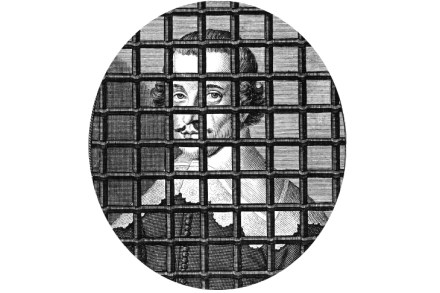
John Lilburne was only 43 when he died in 1657, an early death even for the time. But in many ways it was remarkable that he lived so long. He not only dodged Royalist bullets when fighting for Parliament in the civil war as Lieutenant Colonel Lilburne, but managed to avoid the noose or firing

Power to the people | 5 January 2017

From our UK edition

Jeremy Corbyn will probably enjoy this book — which doesn’t mean you won’t. Asked to name the historical figure he most admired when first standing for the Labour leadership, Corbyn answered that in English history a very interesting character is John Lilburne.Very interesting character, because of the way he managed to develop the whole debate

A lively, rebellious boy

From our UK edition

It is one of the great set-pieces of high drama in English history. The king, shamed by his part in the murder of his one-time friend turned implacable enemy, the Archbishop of Canterbury, agrees to come as a penitent to the holy site of the archbishop’s death to seek forgiveness and, in a conspicuously unkingly

Who was then the gentleman?

From our UK edition

Considering that it was, as Melvyn Bragg rightly puts it, ‘the biggest popular uprising ever experienced in England’, the Peasants’ Revolt of 1381 hasn’t proved particularly attractive to writers of historical fiction. Pierce Egan, better known for his essays on boxing, wrote an interminable novel called Wat Tyler in 1841, and Robert Southey produced a

Best shot

From our UK edition

I have learnt to be wary of proselytising about football. The last time I tried was the final of the World Cup in South Africa, Spain versus the Netherlands, two teams with a reputation for skilful, attacking play and thoughtful rather than hopeful passing. These two sides, I explained to people whom football fans like

Ready to rebel? You are part of a glorious tradition

From our UK edition

Angry disenchantment with the political and financial establishment has rarely been deeper. David Horspool says that the English rebel — culturally affronted rather than ideologically left-wing — is an honourable archetype of our nation’s history G.K. Chesterton’s famous line in The Secret People, ‘We are the people of England, that never have spoken yet’, still