David Crane

Why does Max Hastings have such a hatred for the British military?

From our UK edition

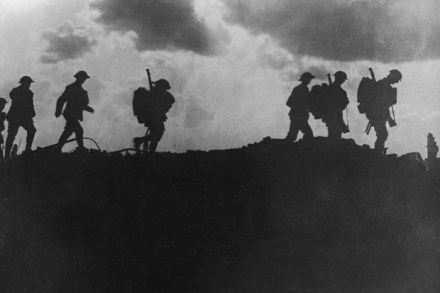
One of the great problems for any historian writing of 1914 and the slide into conflict is that everyone knows the causes of the first world war and those of us who don’t still imagine that we do. It is clear that no historian can simply ignore the causes and get straight down to the fighting, but with the best will in the world it is hard not to feel like some poor Easyjet passenger, stranded on a Gatwick runway and sadly watching the precious take-off slot slipping further into the distance while the cabin crew go though the familiar old pre-flight safety instructions that they know perfectly well nobody is listening to.
Byron’s War, by Roderick Beaton – review

From our UK edition

On 16 July 1823 a round-bottomed, bluff-bowed, dull-sailing collier-built tub of 120 tons called the Hercules made its slow, log-like way out of the port of Genoa. Roderick Beaton writes: Aboard were a British peer, who happened to be one of the most famous writers of the day, a Cornish adventurer, an Italian count, a Greek count, a doctor and a secretary (both Italian), half a dozen servants of several nationalities, five horses, two dogs and a prodigious amount of money in silver coin and bills of exchange. The Hercules was not the most glamorous vessel to carry Lord Byron towards Greece and immortality, nor was the ship’s company the most bellicose to have sailed to a ‘seat of war’, but then little about Byron’s last days has ever corresponded with legend.

The Young Titan, by Michael Shelden; Churchill’s First War, by Con Coughlin – review

From our UK edition

One evening in 1906, shortly after the election that brought Campbell-Bannerman’s Liberals into power, an understandably nervous Eddie Marsh, a middle-ranking civil servant in the Colonial Office, paid a social call on the Dowager Countess of Lytton.  The previous day Marsh had gone through a tricky first meeting with the new number two in the department, and it had been a surprise to him on going into the office that morning to hear that he was wanted as his private secretary.  ‘Desperate, Marsh begged the dowager countess for guidance,’ writes Michael Shelden in his Young Titan: She had known Winston and Jennie for many years... She had also been acquainted with Lord Randolph.

‘1913: The World Beforethe Great War’, by Charles Emmerson

From our UK edition

In May 1913 a British delegation visited the United States to discuss plans for celebrating 100 years of Anglo-American peace. At their final meeting in New York’s Plaza Hotel, the representatives of both sides had just agreed on a five-minute silence to be observed across the English-speaking world on 17 February 1915, when Professor Hugo Munsterberg of Harvard interrupted proceedings. Did the delegates realise, he wanted to know, that there was widespread belief that Britain and America were getting together to join a war against Germany? Charles Peabody, a member of the New York committee, quietened him down.  Neither country was contemplating war, he said. Indeed, he continued, all nations could be part of a universal bond of brotherhood which would abolish it.

‘Deserter: The Last Untold Story of the Second World War’, by Charles Glass – review

From our UK edition

On the morning of 31 January 1945, a private soldier in the United States army, a minor ex-con with a juvenile record for theft, called Eddie Slovik was put to death ‘by musketry’ for desertion at the village of Sainte Marie-aux-Mines in France. There had been no execution of an American soldier for desertion since the Civil War in 1865, but what made Slovik’s death so peculiar was that, in a war that had seen 50,000 American servicemen and 100,000 British desert, his was the only sentence that was carried out. Before his death he said: They’re not shooting me for deserting; thousands of guys have done that. They just need to make an example out of somebody and I’m it ...

Carve their names with pride

From our UK edition

On a ridge high above the River Ancre, four miles to the north of the town of Albert, stands the greatest of all Britain’s memorials to its dead. For some curious reason the Thiepval Arch has never touched the imagination in the same way as Blomfield’s Menin Gate, but as an evocation of the pity and horror of war, Lutyens’s astonishing pyramid of arches, rising high above the old battlefields of the Somme on the site of one of its bloodiest sectors, has no equal. It is the Marabar Cave of war memorials, the negation of every concept of honour or glory or fame that ever sent a soldier to his death, and on its walls are inscribed the ‘intolerably nameless names’ of the ‘Missing of the Somme’.

Another doomed youth

From our UK edition

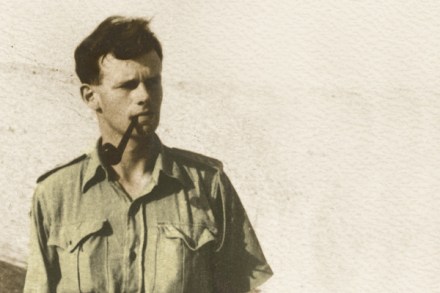
It is very possible that unless you are a Bulgarian or a Wykehamist or an SOE buff or ideally all three you will not have heard of Frank Thompson. Somewhere outside Sofia there is a railway station and a kinder-gartern named after him, but apart from one touching but derivative poem, printed in the Times on VJ Day 1945 and regularly anthologised since, Peter Conradi’s ‘very English hero’ is hardly known here at all. William Frank Thompson was born in Darjeeling in 1920, the son of a Methodist missionary and the grandson and great-grandson on his mother’s side of a formidable dynasty of American Presbyterian missionaries to Syria.

Against all odds

From our UK edition

For more than 40 years now Clive Brittain has enjoyed a unique position in British racing. There are plenty of other trainers who could match his record in top races, but has there ever been anyone in the history of the sport who has tilted at so many unlikely windmills and so consistently hit them? Vedvyas at 33/1 for his first-ever winner, Julio Mariner at 28s for his first classic, Rajeem at 50s for the 2006 Falmouth and, most ludicrous of all, that old slow-boat of Lady Beaverbrook’s, Terimon, who slouched along at the back of Nashwan’s Derby before plugging on into a distant second at the absurd starting price of 500/1.

If only …

From our UK edition

In the early summer of 1910, a naval officer, bound for the Antarctic, paid a visit to the office of Thomas Marlowe, the editor of the Daily Mail. He had come in search of some badly needed funds for his expedition, but just as he was leaving he paused to ask Marlowe when he thought war with Germany would break out. ‘I can only tell you,’ came the reply, ‘that there is a well-informed belief that Germany will be ready to strike in the summer of 1914 and it is thought that she may do so.’ The officer mulled this over, doing his calculations. ‘The summer of 1914 will suit me very well,’ he said, ‘By that time I shall be entitled to command a battle cruiser of the Invincible class.

Titanic mistakes

From our UK edition

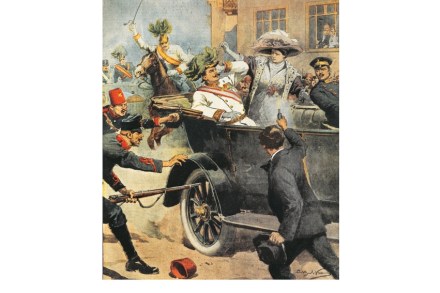
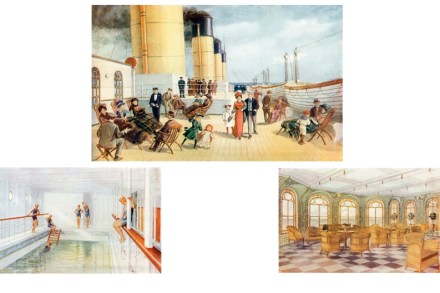
There is nothing quite like a good centenary to remind us how surprising it is that anyone got out of the 20th century in one piece. In the space of a few weeks this spring will be the 100th anniversaries of the Titanic and Captain Scott’s death, and from then on it’s going to be pretty much downhill all the way — the Balkans in 2013, Sarajevo in 2014, the Armenian massacre in 2015, Jutland and the Somme in 2016, the Russian Revolution, Spanish flu, Amritsar, civil war in Ireland, the rise of the dictators ... until before we know where we are it will be 2080 and — light at the end of the tunnel at last — the centenary of the birth of John Terry.

His own best biographer

From our UK edition

Byron in Love, by Edna O’Brien ‘We would entreat him to believe that a certain portion of liveliness, somewhat of fancy, is necessary to constitute a poem,’ wrote Henry Brougham in the Edinburgh Review, when the young Byron was unwise enough to expose his first, dismal book of juvenilia to the gaze of ‘Citizen Mob’, ‘and that a poem in the present day, to be read, must contain at least one thought, either in a little degree different from the ideas of former writers or differently expressed’. It is as well for a lot of us that there seem to be different standards for biographers ,because there can be even less to be said for a new book about Byron than there is for most literary retreads.

Ugly old Europe

From our UK edition

There are moments and places in history that one would have paid good money to avoid, and wartime Lisbon was one of them. For those rich enough to afford the Pan Am flying ‘Clipper’ to New York it at least offered a route of escape, but for those thousands of refugees from Nazi Europe left waiting for months or years before they could beg or borrow a passage to America or Palestine it was more likely to be just one last chance to savour old Europe at its unlovable, venal, extortionate and anti-Semitic best. Not that there was anything narrowly discriminatory in Lisbon’s attitude to its refugees — the Cidade da Luz was as happy to relieve an Austrian monarchist of his money as a Zionist Jew — and war delivered opportunities by the bucket-load.

An intemperate zone

From our UK edition

Two years before the outbreak of the first world war, a Royal Navy officer, addressing an Admiralty enquiry into the disturbing question of lower-deck commissions, ventured the cautionary opinion that it took three generations to make a gentleman. It is hard to know exactly what he meant by that endlessly morphing concept, but if it bore any resemblance to the historical compound of avarice, bad faith, dynastic ambition and family selfishness that dominates the pages of Adam Nicolson’s dazzling narrative, then the one consoling mercy is that it has always taken a good deal less than three to unmake one.

What was it like at the time?

From our UK edition

At midday on Thursday, 8 June 1933 — Erik Larson is very keen on his times — the newly elected President Franklin D. Roosevelt had a call put through to the history department at the University of Chicago. At midday on Thursday, 8 June 1933 — Erik Larson is very keen on his times — the newly elected President Franklin D. Roosevelt had a call put through to the history department at the University of Chicago. Since taking office in early March Roosevelt had been trying to fill the post of ambassador to Berlin, and with none of the usual suspects prepared to take on the job and Congress on the point of adjourning for the summer recess, time was fast running out.

The price of victory

From our UK edition

In the patriotic mythology of British arms 1759 may be the one true annus mirabilis, the ‘year of victories’, the year of Minden, Quebec and Quiberon Bay, but has there ever been a year comparable to 1918? In that year 20,000 British soldiers surrendered on a single day, 31 March, and yet within six months Britain and her allies had recaptured all the territory lost since 1914, destroyed Austrian and Bulgarian resistance in Italy and Macedonia, encircled a Turkish army in Palestine, mastered the submarine menace at sea, and fought the German army to the brink of disintegration and the German empire to the point of revolt.

Consummate con artist

From our UK edition

‘Taylor, I dreamt of your lecture last night,’ the polar explorer Captain Scott was once heard to exclaim, after sitting through a paper on icebergs by the expedition physiographer, Griffith Taylor, that had reduced even its author to the edge of catalepsy: ‘How could I live so long in the world and not know something of so fascinating a subject!’ The True Story of Titanic Thompson is not going to be everyone’s book, but for those who can get beyond the child-brides and casual killings, Kevin Cook’s biography of a great American hustler might well provoke the same sense of wonderment.

A lore unto himself

From our UK edition

Barry Hills has never been an easy man to love but I don’t suppose he would have it any other way. Barry Hills has never been an easy man to love but I don’t suppose he would have it any other way. There are certain trainers who capture the public imagination and affection, but the same crowds who regularly dissolve into tears at the sight of a Henry Cecil winner would no more dream of intruding on Barry Hills than would a punter dare ignore a horse of his at the Chester May meeting. Respect, admiration, a certain wary apprehension, these are what ‘Mr Grumpy’ has always demanded of the world, and ‘hard’, ‘brave’, ‘professional’, ‘exacting’ and ‘combustible’ the terms in which he is most often described.

Thoroughly hooked

From our UK edition

On the southern edge of Kensal Green cemetery, beneath the wall that separates the graves from the Grand Union Canal, is a memorial inscription that would stop a Duns Scotus in his tracks. At the top of the heart-shaped marble there is a fading photograph of a man in his middle years, and then beneath some touching messages of love and regret, a single, enigmatic line of inscrutable theological subtlety ‘FROM ODDS ON TO ODDS AGAINST.’ It is hard to know what to make of that — ‘From certainty to doubt?’ ‘From scant rewards to a last, triumphant pay-out?’ — but for any self-respecting angler still on the other side of that wall this is the very definition of Heaven.

Behind the white face

From our UK edition

Has there ever been a more compelling period in London’s history than the first years of the 19th century? Has there ever been a more compelling period in London’s history than the first years of the 19th century? There is, I suppose, a case to be made for the London of Shakespeare, but any city that can boast a Byron to look after its poetry, Sheridan its drinking, Hazlitt its journalism, Nash its architecture and Brummell the cut of its coat would certainly edge it for fun. There was admittedly no Lancelot Andrewes to preach it into sobriety — it would have to make do with Sydney Smith — and no great statesman after the deaths of Fox and Pitt, but this lack of spiritual and political authority only added to the brew.

The spice of danger

From our UK edition

From the Front Line: Family Letters & Diaries, 1900 to the Falklands & Afghanistan, by Hew Pike ‘Every man thinks meanly of himself for not having been a soldier,’ reckoned Dr Johnson, and certainly every soldier thinks the less of himself for not having seen action. For four generations the extended Pike family has written movingly of the miseries of partings and of the ‘noise, violence indignity and death’ of the battlefield, but give any of them the choice between a cushy command at Catterick and the Normandy beaches and it is no contest. ‘Peace,’ writes the wonderful Reggie Tompson, back in England recovering from a bad wound on 24 December — ‘Peace Sunday’ — 1916, ‘Peace be blowed!