David Blackburn

Coalition is the making of Cameron

From our UK edition

It’s all going swimmingly. David Cameron is almost as popular as Gordon Brown was in August 2007. A worrying omen perhaps, but for the moment the government’s honeymoon is in full swing. It’s quite a bash, and many of the coalition’s initial detractors admit to being pleasantly surprised by Cameron and Clegg. Iain Martin is positive, though he maintains a learned scepticism. Fraser Nelson can see a possible re-alignment of British party politics, and today Martin Kettle gushes about Cameron the ‘man of grace’. I'm not sure what a 'man of grace' is, but Cameron’s languid charm and opportunism are effective. Kettle writes: ‘[Cameron] recognises that he is delivering a deal, not a sell-out.

Balls the victim

From our UK edition

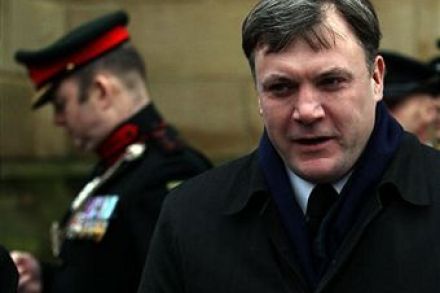
Ed Balls has been on the phone to Mehdi Hasan of the New Statesman. ‘Nothing to do with me Guv,’ is his response to the Independent’s story about briefings against Andy Burnham. Balls has gone to great lengths to re-invent himself. Ever since the Damian McBride scandal, the former Education Secretary has tried to banish the bully-boy reputation he built as Gordon Brown’s protégé. Masks barely obscure the face; but, to be fair to Balls, his opponents benefit from recalling his unpalatable past. During the New Statesman’s leadership debate, Ed Miliband said: “It’s just like being back in the Treasury, Ed!” So it’s plausible that the anti-Burnham briefings may have been aimed at two targets. Balls thinks so.

Gary McKinnon should convert to radical Islam

From our UK edition

The European Court of Human Rights is an essential check on executive excess, but today it has perverted justice. It has halted Abu Hamza’s extradition to the US, where he was to be tried for colluding with al Qaeda. Its view was that Hamza would likely be subject to inhumane and degrading incarceration. In other words, the ECHR has decided that the US prison system is not compatible with the standards agreed by signatories to the European Convention on Human Rights. Fine. Except, of course, it has not. There is a pernicious double standard at work here. Gary McKinnon, the aspergers sufferer who hacked into the Pentagon’s computer systems, is to be deported to the US.

Burnham cries for help

From our UK edition

At last! There’s a bit of British spunk about the Labour leadership contest. Andy Burnham has accused his rivals of smearing him. The finger of suspicion points at Ed Balls - given past form and his natural proclivities. Burnham and Balls are fighting for a similar constituency – both are running broadly ‘traditional’ tickets. Both are struggling. Balls has 5 Constituency Labour Party nominations to Burnham’s 8: the Milibands have 80 between them. Balls’ team, staffed by the saintly Tom Watson and Charlie Whelan, probably is briefing against Burnham; and it was probably Balls who introduced the rumour that the Milibands were smearing one another.

Cameron’s intervention causes uproar

From our UK edition

Iain Dale has news of fresh ruptures in the Tories’ controversial European grouping. Here are the details: This is an intriguing development. Perhaps the combination of being in government, the balance of the coalition and Cameron’s markedly improved relations with Merkel and Sarkozy (whose parties are aligned with the EPP) brings the need for fresh European alliances? Most of the controversy surrounding the CRG is unfounded but it certainly damaged Cameron at home and abroad. I’m told that the Tories have no intention of shifting allegiance, and that the original plan was for Kirkhope and Kaminski to share the chairmanship if possible.

Concentration not capitulation

From our UK edition

There is a difference between a withdrawal and a retreat. Through no fault of its own, the British army was defeated in Basra and retreated. British troops will withdraw from Sangin in October to be re-deployed to bolster Britain’s main presence in central Afghanistan. Any attempt to present this decision as politically motivated, heralding the start of a British retreat from Afghanistan, should be rejected. British forces have not ‘lost’ in Sangin, or been deemed too ‘soft’ for the task. This is a military decision, inaugurating the surge’s next phase. The logic is flawless. Troops in Helmand have been spread to thin; the Americans and British are concentrating their forces under their own leadership.

PMQs Live-blog | 7 July 2010

From our UK edition

11:45: Stay tuned for live coverage from 12:00. 12:03: Cameron opens by marking the victims of 7/7. For the second week running, Cameron has not read the butcher's bill from Afghanistan. 12:05: Labour backbencher Alan Michael praises Somiland's recent fair and democratic election. Cameron seconds that. 12:06: Here's Harman. She begins with a tribute to the victims of 7/7. Now she's off with domestic violence and segues into Ken Clarke's sentencing review which is likely to reduce short-term sentences. Will wife-beaters be immune? 12:08: Cameron assures her it won't - Clarke's review will not 'favour the recividist'. 12:09: Harman's rather perky, saying that Clarke looks down in the dumps and urges Cameron to listen to his mother, not his new partner.

That’ll learn ‘em

From our UK edition

At last, some will cry, teachers are to be given increased disciplinary powers to moderate unruly children’s behaviour. Rather than tear up the statute book, the measures aim to change perceptions and practices and redress the balance of rights in favour of the teacher. Force can be used to restrain pupils at present, but teachers rarely resort to force for fear of prosecution. The government will lessen what it terms ‘vilification’ by protecting teachers’ anonymity against complaints unless a criminal prosecution is brought. Search and confiscation powers will be extended and summary penalties imposed on transgressors. Currently, schools have to write to parents and give 24 hours notice to detain a pupil.

Is efficiency a luxury?

From our UK edition

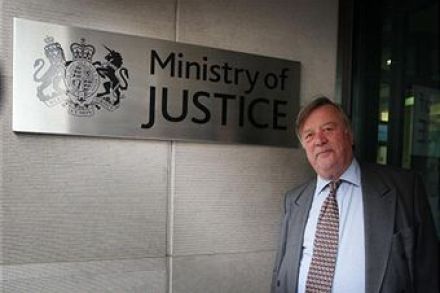
The Ministry of Justice is owed £1.3bn in fines, confiscations and compensation orders, according to the National Audit Office. That is more than a tenth of its £10.1bn primary budget, and the department faces cuts probably in excess of 25 percent. The NAO’s report is damning - the MoJ is hopelessly disorganised. To summarise, there is no consistent approach to how the department manages its regional diversity and finances. The MoJ’s rushed creation meant that its remit was never properly defined. Therefore, it is has not integrated its financial systems and processes - hence the missing £1.3bn. Naturally, the cost of enforcement may exceed the dividends.

The lawyers are salivating

From our UK edition

Francis Maude and Mark Serwotka (the Public Commercial Service Union’s General Secretary) are in the opening steps of a soon to be furious jive. Maude hopes to slash ‘untenable’ civil service redundancy packages and will legislate to introduce caps at one year's pay for compulsory redundancies and 15 months salary for voluntary redundancies. Maude’s logic is unanswerable: the public sector must contribute to redressing the deficit. The public sector doesn’t agree and has the common law behind it. On 22nd June, the High Court found in favour of the PCS on this very issue: the government can only change the redundancy scheme with the agreement of the union, which is unforthcoming at present.

In the name of God go

From our UK edition

If you think your life’s an unremitting tragedy, pity the proof reader at Gordon Brown’s publisher. The late and unlamented Prime Minister has been out of office for 58 days, typing 10,000 words a day. That’s 580,000 words already. Tolstoy took 4 years and 460,000 words to write War and Peace, Cervantes needed 10 years and nearly 500,000 words to write Don Quixote, and the Bible is 783,000 words. 580,000 words typed by a partially sighted man with maybe 30 years to live. Suddenly, life is beautiful. Gordon Brown’s absenteeism is a clear cut case: it’s simply not on. If Brown is ill or can’t be bothered he should resign his seat. At last it looks like he might.

Boris is keeping the faith

From our UK edition

Both Tim Montgomerie and Bernard Jenkin report that Boris has not lost the faith: the Mayor of London is opposed to ditching first past the post. This runs contrary to what was reported in the Times this morning. It makes sense: Johnson’s contempt for coalition government is open - it is highly unlikely that he’d advocate a reform that might entrench it. It also adds to the growing narrative of Boris Johnson protector of the traditional right. Cameron’s position on voting reform is intriguing. As Iain Martin notes it’s as clear as mud, and deliberately so. The preservation of the coalition is everything. Cameron is far too canny to campaign against reform, no matter how deep his convictions (and even they aren’t crystal).

If the BBC won’t cut costs, then Hunt must

From our UK edition

From a completely selfish standpoint, I’m pleased that the BBC has saved 6Music. The decision does, however, raise a pertinent question: why is one of the public sector’s mammoth institutions seemingly impervious to spending cuts? Never mind DfID and the NHS, ring-fencing Sue Barker is simply inadmissible. Mark Thompson, the Director General, has identified the barest modicum of cuts. The BBC’s ‘gold-plated’ pension scheme might be limited (subject to union agreement), which will save roughly £50million. But the BBC has awarded 70 percent of its employees a £475 annual pay rise. Few companies in the private sector, especially broadcasters, can afford such generosity. It’s that same with presenters’ pay.

Hague is an administrative revolutionary, not the second Canning

From our UK edition

For a man of such rhetorical talents, William Hague’s foreign policy speech was strikingly bland. His eloquence escaped him and he sounded like David Miliband - earnest, conscientious and often unintelligible. The similarity didn't end there. Hague was very pleased with his observation that a multi-lateral world requires bi-lateral relationships; but even David Miliband had grasped that – who could forget his stable shin-dig in India? Hague’s speech was dominated by the expression ‘network world’ and he said that Britain’s diplomacy must address new strategic needs. In fact, Hague said very little that was new.

A new foreign policy?

From our UK edition

An inventive article from Ben Brogan this morning, arguing that a new vigorously Tory foreign policy is emerging. I can be a little slow sometimes, but I haven’t noticed anything new or Tory about Britain’s foreign policy. Brogan records that the Prime Minister has let it be known that British troops will withdraw from Afghanistan by 2015. Cameron said nothing of the sort; he said he wanted British troops out of Afghanistan by 2015, something quite different. Contrary to expectations, relations with Europe are flourishing under the coalition, as pragmatic government has superseded bellicose opposition. William Hague hopes to influence the EU closely.

PMQs Live blog | 30 June 2010

From our UK edition

11:50: Stay tuned for live coverage from 12:00 12:02: Labour MP Kevin Brennan attacks Ken Clarke's criminal justice prison reform: cuts or tackling re-offending. Cameron return fire by citing the need for a new approach to tackling re-offended. 12: 03: Here's Harman with Larry Elliott's scoop on the Budget. Cameron responds by citing the OBR's transparency. The figures, Cameron argues, show unemployment falling year-on-year thanks to the two-year public sector pay freeze, and 2.5million new jobs in the private sector. Cameron says that 70,000 public sector jobs would have been lost under Labour's plan, in tune with Alistair Darling's prediction that public sector employment would 'inevitably fall'.

The rookie gambler turns pro

From our UK edition

George Osborne is an enigma. For many, his politics and personality are defined by a photograph of him sneering in the Bullingdon’s clashing colours. The determined face that presented the Budget contradicted that stereotype; it suggested that Osborne was coming of age.    Paul Goodman was part of Osborne’s Shadow Treasury team and one of the 'Gang of Four' who prepared IDS and Michael Howard for PMQs, along with Boris, Cameron and Osborne. He has written an extensive appraisal of Osborne the man and politician. Read the piece: it’s enthralling, a detailed account of Osborne’s political adolescence through the years of defeat and a candid analysis of his tactical expertise. Two of Goodman’s observations stand out.

War of words | 28 June 2010

From our UK edition

Yvette Cooper has condemned IDS’ ‘nasty’ rhetoric this morning and claimed that the government’s proposals are about ideological cuts, not welfare reform. It’s simple, but effective. IDS’ reforms are both radical and necessary. The plan is to incentivise movement out of areas of welfare dependency with regional tax breaks and housing guarantees. There is a clear link between this policy and the non-EU migrant cap, which will protect at least some low skilled or unskilled jobs. A policy that encourages fairness, aspiration and a first chance in life for those condemned to worklessness by accident of birth. But the coalition is losing the rhetorical argument.

Smashing the welfare ghettos

From our UK edition

There’s nothing quiet about Iain Duncan Smith this morning. Echoing Norman Tebbitt’s infamous ‘On yer Bike’ comments of 1981, Duncan Smith has vowed to obliterate ‘welfare ghettos’. For once I agree with Ed Balls: Duncan Smith is going further than Tebbitt, much further. The government is planning to move the long-term unemployed out of sink estates and into other areas, possibly hundreds of miles away, where unemployment is negative. Incentives for work and promises of low regional taxes in Northern England, Wales and Scotland were included in the Budget to this effect. This may be manna from Heaven for Balls - the traditional candidate in the Labour leadership contest can evoke the spectre of Thatcher and ‘give us a job’.