David Blackburn

Making the peace is a risky business

From our UK edition

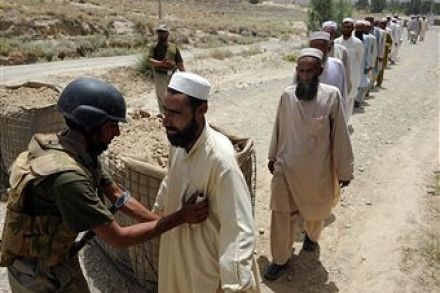
The UN has lifted sanctions on 14 Taliban leaders, the strongest indication yet that the international community is opening a negotiated settlement with elements of the Afghan insurgency. Indeed, Germany’s UN ambassador said the move “sends a strong signal: the Security Council and the international community support the efforts of the Afghan government to engage reconciled Taliban in a political dialogue in order to achieve peace and security in Afghanistan.” There are serious concerns about engaging with the insurgency, which, though amorphous, shares common ground in its unreconstructed religious extremism. Renowned war correspondent Dexter Filkins has written of the resilient Taliban’s mounting aggression.
Inadequate stress test inspires anti-EU sentiment across Europe

From our UK edition

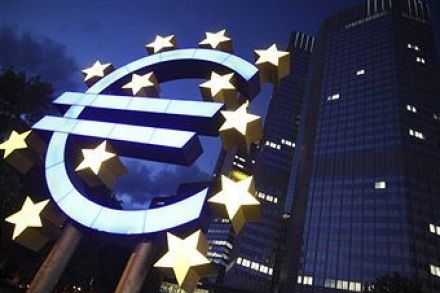
Yesterday’s European Banking Authority (EBA) stress test was supposed to restore confidence in the euro and Europe’s beleaguered financial institutions; it has had the opposite effect. Investors and market analysts are preparing for ‘Black Monday’ after only 8 banks failed the test and must now raise £2.2 billion between them to stave off ruin. A respected estimate by Goldman Sachs expected at least 15 banks to fail, requiring £29 billion to recapitalise. As the Spectator’s business blog reported yesterday, analysts feared that the EBA’s test would not be sufficiently stringent, and so it came to pass.

From the archives: When Gordon loved Rupert

From our UK edition

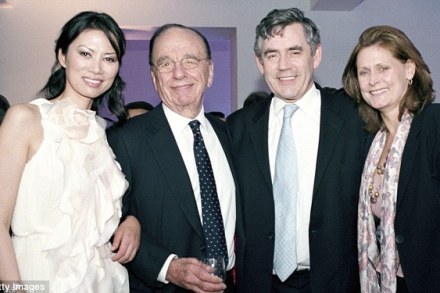
Gordon Brown graced the political stage with a rare cameo this week – if half an hour of deluded invective masquerading as reasoned piety qualifies as a cameo. Brown would have you believe that he had nothing to do with Rupert Murdoch. This following piece by Peter Oborne says otherwise.   The murderous intent of Gordon Brown, Peter Oborne, 20 April 2002 This Friday a triumphant Gordon Brown flies to New York for a business conference. The Chancellor and his colleagues perhaps see the trip as a well-earned break.   In No.10 Downing Street there is a temptation to take a more jaundiced view, and interpret it as a quick exit.

Murdoch atones

From our UK edition

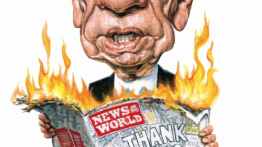
Sky News reports that Rupert Murdoch is set to apologise for the activities of the News of the World in a newspaper advert to be run tomorrow. It will read: ‘We are sorry. The News of the World was in the business of holding others to account. It failed when it came to itself. We are sorry for the serious wrongdoing that occurred. We are deeply sorry for the hurt suffered by the individuals affected. We regret not acting faster to sort things out. I realise that simply apologising is not enough. Our business was founded on the idea that a free and open press should be a positive force in society. We need to live up to this.

Testing times | 15 July 2011

From our UK edition

Suffice to say, rather a lot is riding on the European Banking Authority’s (EBA) annual stress test, undertaken today. Finance ministers and creditors will be indulging all their superstitions in the hope that the tests restore confidence in Europe’s beleaguered financial institutions and the single currency. More than a year’s preparation and politicking has gone into this moment of economic theatre. The Committee of European Banking Supervisors was wound up and replaced with the EBA. It was given a more stringent remit and the EBA has vowed to be on guard against hubris and over-optimism.

Boris’s star turn

From our UK edition

By rights, Labour ought to walk next year’s mayoral election. But all is not going to plan. The latest polls put Boris ahead; one conducted at the end of last month even had him 7 points clear. Labour's problem is Ken Livingstone. As Jonathan found recently, a full fifth of Labour voters in London say they would prefer Boris to be mayor rather than Ken, an extraordinary statistic. Livingstone is also seen as dishonest in comparison to Boris. His opportunism often contributes to that perception — for instance, his attempt to tar Boris with the filthy Murdoch brush earlier this week was the most transparent piece of hypocrisy. Andrew Gilligan has more news on that front; news that illustrates why Boris also leads Ken in the charisma stakes.

Murdoch prepares to fillet Brown

From our UK edition

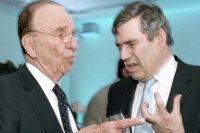
“He got it entirely wrong.” That is Rupert Murdoch's response to Gordon Brown’s singular account of his relationship with the Murdoch press. "The Browns were always friends of ours,” Murdoch added in an interview with the Wall Street Journal, in which he promised to set the record straight on the “lies uttered in parliament” when he appears before a select committee next Tuesday. It is going to be a moment of the most gripping political theatre. Murdoch also uses the interview to defend News Corp’s handling of the phone hacking crisis. He concedes that ‘minor mistakes’ have been made, but, fundamentally, all is well with the Kingdom.

Italy and the US battle debt crises

From our UK edition

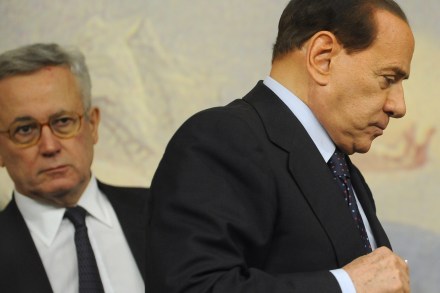
The Italian senate passed the government’s emergency budget cuts earlier in the day by a margin of 161 votes to 135. The budget will reduce spending by the equivalent of £42 billion over three years, which is supposed to reduce the deficit to zero by 2014 according Finance Minister Guilo Tremonti’s calculations.   Brussels will be hoping that this quells the disquiet about Italy’s ability to service its very substantial debts. Early indications suggest that investors have regained a modicum of confidence in Rome: 8.570 billion euros were bid for a bond auction a few hours ago, although necessity forced the government to offer higher yields to ensure that the bonds sold.

It was the Times wot won it

From our UK edition

The latest issue of the Spectator features an article in qualified defence of Rupert Murdoch by William Shawcross, author of Murdoch: the Making of a Media Empire. In it, Shawcross writes: ‘Simon Jenkins, now a Guardian columnist, wrote before the current horrors that Murdoch ‘is the best thing that ever happened to the British media and they hate it.’ He was right. There are obviously many things wrong with Murdoch’s group, but without his epic victory over the print unions in the 1980s, there would be far fewer papers in Britain today. Murdoch means pluralism…Who else would have subsidised the huge losses of the Times, an excellent paper, for so long?

Toibin on teaching

From our UK edition

As a coda to Michael Amherst's recent piece on the value of creative writing courses, here is Colm Toibin, the new(ish) professor of Creative Writing at Manchester University, talking to Sky Arts' book show about teaching creative writing.

Coalition’s crime worries ease, but concerns remain

From our UK edition

The British Crime Survey is published today and the Home Office had prepared for the worst. For months now, figures close to Theresa May have been expressing their fear that the combination of Ken Clarke’s liberal prisons policy and economic hardship would cause a rise in crime for which the Home Office, graveyard for so many political careers, would be blamed. Today’s figures will have eased their disquiet somewhat, insulating them from Labour’s critique that police cuts are endangering society. The headline is that crime in England and Wales has remained stable over the last year, except for a 14 per cent spike in domestic burglaries according to the British Crime Survey and an alarming 35 per cent increase in domestic violence.

Humanity is an exhibit at the atrocity exhibition

From our UK edition

An old girlfriend once gave me J.G. Ballard’s Crash for my birthday – a sign, perhaps, that all was not well in the kingdom of Denmark. She told me that the cashier put the book in a carrier bag and then said very primly: “You won’t enjoy it.” Crash is short enough to read in one sitting, but I couldn’t manage it. I was gripped, but had to keep putting it down. I finished Ishiguro’s Never Let Me Go, Hemingway’s collected stories and the shortlist for the Orwell Prize, while taking small shots of Ballard’s most disquieting and transgressive book. Crash is surrounded by legend. Famously, a proof reader at Jonathan Cape described Ballard as ‘beyond psychiatric help’ and advised against publishing the book.

Might Gaddafi shunt Murdoch from the front pages?

From our UK edition

Loyal Tories and government types are hoping that the media will soon move on from Murdoch. And the unusually heavy briefings emanating from George Osborne’s office last night were perhaps an attempt to shift the spotlight. But it will take a very gripping story to displace the phone hacking saga, especially if yet more has-been politicians shuffle back into public life to settle old scores with Murdoch. With the British press immersed in this tempestuous revenge drama and the whirl of hypocrisy that surrounds it, you wouldn’t guess that the euro has embarked on a 72 hour ordeal that may decide its future.   But, Rupert Murdoch’s mugshots could yet be superseded by those of Colonel Gaddafi.

The life and times of Lord Rees-Mogg

From our UK edition

William Lord Rees-Mogg is an institution. The former editor of the Times is renowned, revered and, I’m afraid, ridiculed in equal measure. His weekly column in the Times has always been outspoken, sometimes to its detriment. In the aftermath of the Tory collapse in 1997, he argued that the party need a dextrous and popular leader to counter Tony Blair’s affable charisma. It was an astute observation, especially given what the Tories contrived thereafter. But his recommendation that Alan Clark be appointed met with derision. Thereafter, famous Clubland wits, among whom Ress-Mogg walked, dubbed him 'Mystic Mogg'. Even, if not especially, Mogg’s proprietor Rupert Murdoch was not above puncturing his editor’s ego.

Livingstone’s double standard over Murdoch

From our UK edition

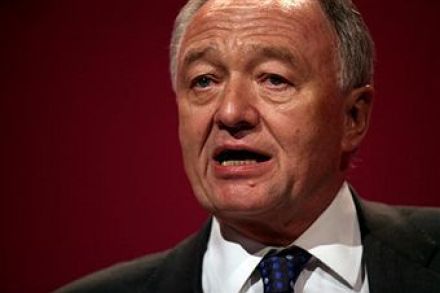
As soon as the recent phone hacking scandals broke, Ken Livingstone lost no time in castigating Boris Johnson’s ‘dire judgement’ in dismissing the original claims as ‘codswallop cooked up by Labour’. Livingstone also said that Boris ‘had at least two meals with Rebekah Brooks, one dinner and one lunch with James Murdoch, and one dinner with Rupert Murdoch [when he was] trying to keep the lid on this story.’ Livingstone was at it again on the Today programme this morning, saying the ‘scandal goes right to the heart of the establishment’. Certainly, it was rash to describe the claims as ‘codswallop’, but is dinner such a crime?

Across the literary pages | 11 July 2011

From our UK edition

A long lost book of tributes to Byron has surfaced at a Church bazaar. The Guardian reports: ‘Inscribed "to the immortal and illustrious fame of Lord Byron, the first poet of the age in which he lived", the memorial book contains accolades to the writer by famous figures of the day, from the American author Washington Irving to the Irish poet Tom Moore and future president of the US Martin Van Buren. It was placed at Byron's family vault in Nottinghamshire where the poet's body was buried after its return from Greece in 1824, and was filled with eulogies from more than 800 people by 1834.’ The Telegraph’s Helen Brown visits the Secret Garden.

The wheels come off the BSkyB deal

From our UK edition

The BBC reports that Jeremy Hunt has written to Ofcom and the Office of Fair Trading about Rupert Murdoch’s proposed takeover of BskyB. Hunt asks the regulators if they now have any ‘additional concerns in respect of plurality over and above those raised in your initial report to me on this matter received on 31 December 2010.’ Hunt concentrates on Murdoch’s provisions about maintaining the independence of Sky News. His concern with plurality is ironic given that the British media has become much more plural following the demise of the News of the World. This favours Murdoch’s takeover bid, on the face of it at least. Hunt also touches on the ‘fit and proper persons tests’ with regard to the deal.

Boehner’s concession exposes the GOP’s divisions

From our UK edition

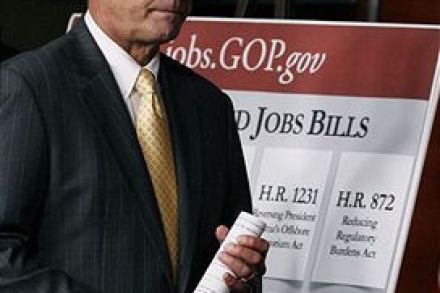
The New York Times reports that House Speaker John Boehner has urged his colleagues to reach a deal with President Obama over raising the ceiling on the national debt. So far, Republicans have been resisting Obama, fearful that tax rises and compromise would damage the party’s chances in next year’s election, which is expected to hinge on restoring America’s public finances. Boehner’s retreat has incited the presidential candidates, who have been campaigning this weekend. The New York Times has the full details, but here's a brief summary. Michelle Bachmann and Tim Pawlenty averred their opposition to raising the debt ceiling; a stance designed to court the party’s purists. Predictably, Mitt Romney adopted a more conciliatory position.

Huhne pooh-poohs rising energy bills as ‘nonsense’

From our UK edition

Chris Huhne was on the Andrew Marr show this morning. As you might expect on a day when the Sunday Telegraph broke the news that fuel bills will boom by 30 per cent as a result of green taxes, the Energy Secretary was asked to ruminate at length on all matters Murdoch. Eventually, though, Huhne had to answer searching questions pertaining to his brief. Confronted with the Sunday Telegraph’s story, Huhne described it as ‘nonsense’ because it did not take potential savings into account. Huhne also pledged to introduce more competition to shatter the grip that the ‘Big Six’ utility companies have on 90 per cent of the UK's energy market. Greater competition should, theoretically, lower bills.