David Blackburn

Bitter Turkish delights

From our UK edition

Turkish accession to the EU is apparently no more than a dream of those who desire it at present, but it remains a point of contention across Europe. The British government, for instance, are in favour of enlargement, believing Turkey’s economy to be essential to Europe’s continued economic strength. Accession would also hamper the goal of political integration in the EU, which is expedient to Britain. Not everyone in Britain shares the government’s unqualified enthusiasm for Turkey. The Home Affairs Committee has issued a report this morning, criticising aspects of the government’s policy and insisting on careful management of accession.
Rengotiating the loan with Ireland

From our UK edition

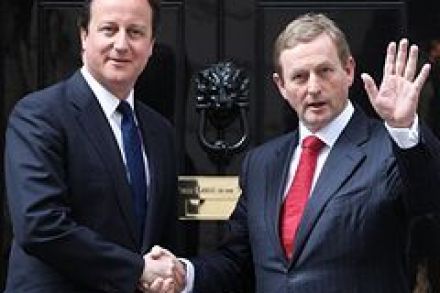
All eyes were on Greece at last week’s crisis summit in Brussels, but other indebted countries took advantage of Angela Merkel’s generous mood. In line with concessions made to Greece, the Irish secured a substantial cut in interest repayments on its bailout loan: the rate has fallen from 6 per cent to somewhere between 3.5 per cent and 4 per cent, and the loan period has been extended from seven to 15 years. This was a long-term goal of Enda Kenny’s government and the renegotiations are being heralded as a major victory. But the matter does not end there.

No ordinary book learning

From our UK edition

It’s a rare life to be a Classics don, and now you can try your hand at it. The process is remarkably simple: go to Oxford University’s Ancient Lives website, where the university’s enormous archive of ancient manuscripts has been stored, and take a very quick tutorial. After that, you will be presented with an untranslated fragment. You can read the letters or hieroglyphs by matching them up with those contained in a transliteration tool situated beneath the fragment; you can also measure papyri using a simple scrolling tool. The aim is to discover if the document has been translated by an academic.

GDP grew by 0.2 per cent in Q2

From our UK edition

Growth in the 2nd quarter was an anaemic 0.2 per cent, in line with recent predictions. Another headline is that manufacturing fell by 0.4 per cent, in line with global slowdown in the sector. Also, the ONS says that growth would have been 0.7 per cent if it weren't for the Bank Holidays, the fine weather and external economic factors. Now the political fun starts.

More questions for Murdoch?

From our UK edition

Much though most readers probably want it to, the phone hacking saga just won’t do the decent thing and die. Today brings fresh revelations. Colin Myler and Tom Crone, respectively former editor and head of legal affairs at the News of the World, have said that they sent an email to James Murdoch that supposedly undermines Murdoch’s testimony to the Culture, Media and Sport Committee. The Guardian reports that the email, “known as ‘for Neville’, because of its link to the paper's former chief reporter Neville Thurlbeck, is thought to have been critical in News International's decision to pay out around £700,000 to Taylor in an out-of-court settlement after he threatened to sue the paper.

Long-term problems

From our UK edition

It is fashionable to say that the nation is divided: the North and South, the haves and have nots, the politically engaged and the apathetic. Educational attainment has been added to that list, following yesterday’s apocalyptic report from the University and College Union (UCU), which found that there are more people without qualifications in one impoverished part of the East Midlands than there are in ten other affluent constituencies across the country. The report concludes that those from the poorest backgrounds have been “short-changed for generations”. What’s so striking about this report is that it follows hot on the heels of an OECD investigation into grade inflation under the previous government.

Bomb blast near the Norwegian Prime Minister’s office

From our UK edition

  A reportedly enormous bomb blast has shaken the PM's office and the oil ministry in Oslo, the Norwegian police confirm. Reports have confirmed that the Norwegian Prime Minister is safe, but it's not clear if he's un-injured. Early reports suggested that this might be a gas explosion, but those were discounted because there is no mains gas supply in Oslo. Norway's state broadcaster has confirmed that one person has died, with more than 8 injured. Fortunately, it is the height of Norway's holiday season and there were few people about. The Norwegian police, however, warn that there are other casualties being treated. Details remain vague.

Fiona Millar to the Commons…

From our UK edition

Richard Kay’s column in the Mail contains the news, as expected, that Fiona Millar (AKA Mrs Alistair Campbell) is a shoo-in to replace Glenda Jackson as Labour’s candidate for the Hampstead and Kilburn constituency. The seat is very marginal: Jackson scraped in by just 42 votes last time round. But, if Millar were to win the nomination and subsequent election, she’s being tipped for immediate promotion. Kay reports that a ‘senior party figure’ told him that Millar would become Education Secretary ‘within a year’, assuming Labour was in government.

Is Merkel getting her way?

From our UK edition

Below, courtesy of the Telegraph, is a leaked copy of the draft proposals on managing the Greek debt crisis.There are no measures to reduce Greece's debts to sustainable levels; subsidy is the preferred route. This will presumably hit German taxpayers the hardest, but Merkel has managed to obtain private sector involvement, a clear German objective in these discussions.  However, this course is likely to lead to Greece’s selective default as creditors buy back bonds. The European Central Bank has declared that it is happy to allow this and will continue to accept government bonds in the event of sovereign default.

Loyal Clegg’s slippery tongue

From our UK edition

Oddly, David Cameron’s most voluble supporter throughout the phone-hacking psychodrama has been Nick Clegg. The deputy prime minister took to the airwaves when no Tory dared or wanted to. Earlier today, Clegg gave a speech-cum-press conference and he defended the prime minister again, saying that he had very little to add to Cameron’s statement yesterday. He also defended Cameron over unanswered questions about Rupert Murdoch’s purchase of BskyB; Clegg said that Cameron had “nothing to do” with the deal, although he added that Vince Cable’s reservations had been vindicated. Clegg then elaborated on media regulation. Unsurprisingly, he insisted that the status quo must change.

Summer reading | 21 July 2011

From our UK edition

It’s a tradition of the British summer. A Tory MP produces a summer reading list of weighty and worthy tomes to co-incide with the summer recess. This year, Keith Simpson has compiled the list, and as you can see it's long as your arm. Spectator Book Blog contributor Nik Darlington has made a few selections from the list. And of course, we'd like CoffeeHousers' recommendations too. Diary: Alastair Campbell, Diaries Vol. II: Power and the People and Diaries Vol. III: Power & Responsibility. Peter Catterall (editor), The Macmillan Diaries Vol. II: Prime Minister and After, 1957-1966. Earl Ferrers, Whatever Next? Reminiscences of a journey through life.

Common Franco-German position on Greek debt

From our UK edition

As I wrote earlier this morning, rumours of a ‘common Franco-German position’ on Greek debt were circulating in the early hours. Details are now emerging. Nicolas Sarkozy has dropped plans to impose a 0.0025 per cent levy on Eurozone bank assets, which was opposed by Angela Merkel for being much too cumbersome. In return, it seems that Merkel is prepared to consider the French-led plan of bond rollover. Merkel is also keen that private sector holders of Greek bonds pay their share of this second bailout. According to the FT, she favours a bond-swap deal, whereby bonds that will mature in the next eight years are swapped for new 30 year bonds paying a lower rate of interest.

Getting a grip of the crisis

From our UK edition

“I’m very worried, this building [the Treasury] is very worried and this government is very worried,” said George Osborne of the unfolding crisis in the Eurozone. In an interview with the FT, the chancellor goes on to say that he is in constant contact with his continental counterparts and urges them once again to “get a grip”. Eurozone leaders are meeting today to discuss further loans to Greece. Three options are being considered: first, an extension of the European Financial Stability Facility; second, private sector creditors re-lend money for a longer period and at a lower rate; third, impose a tax on banks to secure revenue for Greece.

Cameron’s letter to Watson

From our UK edition

Tom Watson fired a barb at David Cameron during the oral questions following the prime minister’s statement. He referred to a letter about allegations against Andy Coulson he had sent to Cameron on 4th October 2010. The letter had gone unanswered and Watson wanted to know why. After struggling to answer for a while, Cameron eventually said he would respond, forgetting that he appears already to have done so. Here is his letter, just released by Downing Street: '1O DOWNING STREET LONDON SW1A 2AA 20 October 2010 Mr Tom Watson MP Thank you for your letter of 4 October. The Standards and Privileges Committee and the Home Affairs Committee have both announced inquiries. The Home Secretary has made an oral statement to the House.

A truly British indulgence

From our UK edition

The blackly comic Pickerskill Reports have returned to Radio Four, in a news series starring Ian McDiarmid. Here's an exclusive video of McDiarmid introducing the new series and the quintessentially British character at its heart.

Gearing up for another European drama

From our UK edition

Away from the amateur dramatics in parliament this afternoon, the government is fighting yet another battle with the European Commission over banking reform. European leaders will vote later today on proposals to introduce the rubric of Basel III across European financial institutions. Led by EU Finance Commissioner Michel Barnier and ECB Vice-President Jean-Claude Trichet, these proposals would insist that minimal and maximum capital requirements are imposed on banks. The terms dictate that banks hold 7 per cent of their top-class assets in reserve. Britain opposes the scheme, not because the requirements are too steep: the UK’s Banking Commission has suggested that banks hold 10 per cent of their assets in reserve.