David Blackburn

“It started in Germany…”

From our UK edition

Bugger the Bundesbank — that seems to be ECB President Jean-Claude Trichet’s current raison d’être. The ECB, together with other global central banks, yesterday agreed to provide dollar funding to ease the mounting liquidity crisis in European banks, largely caused by American banks curtailing interbank lending in anticipation of another crisis. This unorthodox action runs contrary to the wishes of the German Bundesbank, adding to the pre-existing strain between the ECB and the German establishment over bond purchasing, tension that was epitomised by the resignation of Jurgen Stark last weekend. Obviously, central banks do not take this action every day and it is yet another indication that crisis is now impending.

The last of England

From our UK edition

Martin Vander Weyer's column in the latest issue of the magazine is essential reading. It features five current stories from the business world. The Vickers report, Martin says, will merely offer the same poor service for consumers at a greater cost. Martin also notes, as he did two weeks ago, that American banks are winding down their lending to European counterparts in anticipation of a crash, and adds that American politicians are keen to paint Europe as the bogeyman for their financial ills, conveniently ignoring the failure of Obama's hugely expensive stimulus. Martin also touches on unemployment and the Eurozone crisis. His final vignette is a parable for our troubled times and I reproduce it below:  The last of England My pub of the week.

Sarko and Dave go to Tripoli

From our UK edition

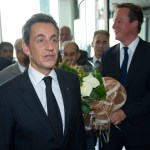
"This is your revolution," said David Cameron to the mass of rapturous Libyans who welcomed both him and Nicolas Sarkozy in Tripoli this morning. Obviously this is a PR coup for the two leaders, who both face difficulties at home. But, although these were scenes of jubilation, both leaders were keen to say that the situation in Libya is still delicate. Gaddafi is still at large and there are reports that his supporters have drifted into the desert, where they are conducting a guerrilla campaign against rebel targets. This is of great concern to the National Transitional Council and its allies, who want to reopen Libya's remote oil industry to ensure that the country’s economic recovery can begin. Sarkozy and Cameron pledged their assistance to the NTC.

Merkel & Sarkozy have only words

From our UK edition

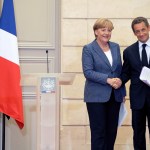
It was something of a mystery. Emergency conference calls about the future of the Eurozone were being made yesterday, but there was no news of those discussions. As it turned out, this was for the best of all possible reasons: there was no news to report. Angela Merkel and Nicolas Sarkozy announced no new measures to alleviate the sovereign debt crisis; rather, they merely declared “solidarity” with Greece and assured the markets that Greece would not be forced from the single currency. Their words seem to have assuaged the markets for the moment, but only the most brazen optimist would bet on the rally being long lived.

PMQs Live-blog | 14 September 2011

From our UK edition

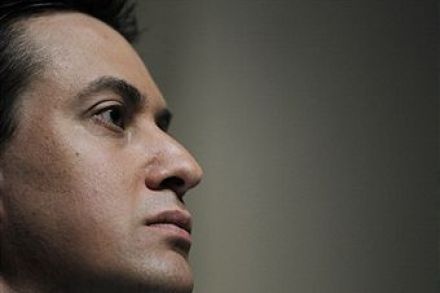
VERDICT: The 80,000 rise in unemployment announced today gave Ed Miliband an immediate tactical advantage and he made the most of it, damning the government's economic policy and painting the coalition as uncaring Conservatives. He even cracked the odd risqué joke, such was his confidence. Cameron defended as best he could and he managed to avoid looking evasive, but the session was Miliband's. However, despite this defeat and the dire economic outlook, Cameron need not panic yet. Miliband is still very weak on the economy: he is yet to provide any strategic direction on how to repair the public finances and promote sustainable growth.

Britain’s Palestinian statehood question

From our UK edition

The Palestinians are seeking United Nations recognition as a state and a vote is apparently imminent. The Guardian's Jonathan Freedland has a useful account of the diplomatic arithmetic and explains how the possible vote could be decided by European countries and by Britain in particular. ‘Barack Obama has already said the US will vote against any Palestinian move towards statehood at the UN general assembly now gathering in New York. Large swaths of Latin America, Africa, Asia and the Middle East plan to vote for it. Which leaves Europe as the diplomatic battleground. If the leading European powers side with the US, the Palestinian initiative will be seen as a failure.

The Euro-crisis heats up

From our UK edition

Angela Merkel, Nicolas Sarkozy and George Papandreou are in crisis talks about Greek debt. There are rumours that they are preparing an "orderly default" for Greece. But, officially, Merkel is still pressing ahead with implementing the existing Greek debt deals. This meeting also has a domestic context for Merkel. According to the FT, she is determined to stamp on the growing disquiet within her governing coalition over the Eurozone crisis and is pleading for calm resolve. It remains to be seen if she succeeds.  The danger of contagion within the Eurozone remains and concerns about the exposure of French banks persist, which is doubly worrying for Nicolas Sarkozy given the proximity of French banks to the French state.

A report to worry the two Eds?

From our UK edition

The Institute for Fiscal Studies enjoys quasi-divine status in Westminster: chancellors and their shadows bother it for its blessing, and Budget Day is never complete until its judgment has been passed. Both parties have bent a suppliant knee before the institute in the past, but the IFS became particularly important to Labour after it declared last autumn that George Osborne’s policies to be ‘regressive'. This is why the IFS report on the tax system, released today, is important. The review, conducted by Sir James Mirrlees, is a damning indictment on tax system that has fallen from 5th to 95th in the World Economic Forum’s tax competitiveness rankings.

Miliband: We can’t spend our way to a new economy

From our UK edition

David Cameron and IDS have been promoting the Work Programme this afternoon and they reiterated that jobseekers must learn English to claim benefits if their language difficulties are hampering their job applications. It’s another indication of the government’s radical approach to welfare reform. Aside from that, the main event in Westminster today was Ed Miliband’s speech to the TUC. Miliband was widely heckled by the Brothers, especially when he told them: “Let me just tell you about my experience of academies as I’ve got two academies in my own constituency. They have made a big difference to educational standards in my constituency and that is my local experience of that.

James Murdoch recalled by parliament

From our UK edition

The Culture, Media and Sport committee has recalled James Murdoch to give further evidence into phone hacking and James Murdoch's people are briefing journalists that he is happy to appear. Sophy Ridge reports that the committee had a long discussion about who to recall, but were largely in agreement and there was no vote. In truth, their decision was virtually inevitable after Tom Crone said he was certain that he and Colin Myler had spoken to Murdoch about the ‘For Neville’ email, which suggested that hacking was widespread. Myler has corroborated Crone's claims.  Committee chairman John Whittingdale has said that Murdoch will be asked to clarify this and other questions.

Miliband versus the Brothers

From our UK edition

Ed Miliband is the Brothers’ man, or so the popular myth relates. Miliband has been trying to shake that perception ever since his election was secured by the union vote. He will make his most visible show of defiance yet in a speech to the TUC conference today. Miliband will refuse to countenance the proposed general strike over public sector pensions and instead urge the unions to change their ways. The Guardian reports that he will say: ‘The challenge for unions is this: to recognise that Britain needs to raise its game if we are to meet the challenges of the future and to get private sector employers in the new economy to recognise that you are relevant to that future.

Osborne lays out his support for Vickers

From our UK edition

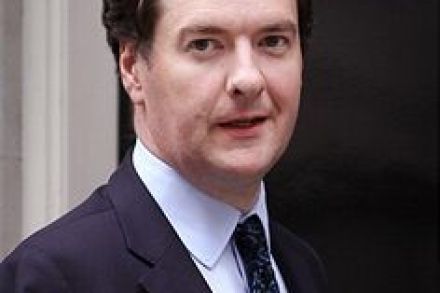
George Osborne made a firm statement on the Vickers report this afternoon; if he felt uneasy about the proposed abolition of his seat or Natalie Rowe’s latest sally against him it didn’t show. As expected, he accepted Vickers’ proposals "in principle", giving himself and his coalition partners enough room to manoeuvre within an agreed timetable that is equitable to both parties. Osborne also said that the annual £7 billion burden of Vickers’ capital requirements “should fall on shareholders and the wholesale debt holders, not small depositors or taxpayers.” Politically, it’s imperative that he achieves that objective. There is yet uncertainty on the subject and Barclays sought a clarification earlier this afternoon.

Across the literary pages | 12 September 2011

From our UK edition

After a short break in service, normal posting will now resume on the books blog. The Booker shortlist has been announced and there is no room for Alan Hollinghurst, Sebastian Barry, D.J. Taylor or Patrick McGuiness. Here are the books that superseded them: Julian Barnes, The Sense of an Ending Carol Birch, Jamrach’s Menagerie  Patrick de Witt, The Sisters Brothers Esi Edugyan, Half Blood Blues Stephen Kelman, Pigeon English A D Miller, Snowdrops Christopher Hitchens ponders writing and language in the ten years after 9/11.

Bernard Hogan-Howe named as new Met commissioner

From our UK edition

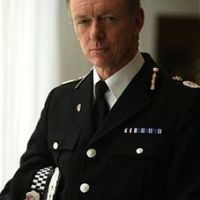
Theresa May has named Bernard Hogan-Howe as the new Metropolitan Police Commissioner. Hogan-Howe was the early front-runner and a finalist for the role last time round. He is apparently highly respected within the police force and has been a successful chief constable in Merseyside. His appointment has come earlier than was expected: the talk at the end of July was of completing the process later in the autumn. This suggests that the government is keen to repair the damage to its relationship with the Met and the reputation of the police caused by the phone hacking scandal and the riots. This will be essential if the coalition is to deliver its ambitious police reforms.

Boundary review leaked

From our UK edition

The Boundary review, which was embargoed, has been leaked. Here are some immediate headlines from the proposals: George Osborne’s Tatton seat appears to have been abolished, though you imagine he’ll have little difficulty in finding anohter. After much speculation that his Twickenham seat would be subsumed, Vince Cable may have survived. The new seat covers what appears cover to be a fair tranche of his current area, but it's not exactly clear. Either way, Cable is someone you'd expect to find another berth if necessary.  Zac Goldsmith’s Richmond Park seat has been reworked, inheriting some wards from Lib Dem held Twickenham, and may now be a tougher proposition to hold.

Vice girl Rowe takes another hit at Osborne

From our UK edition

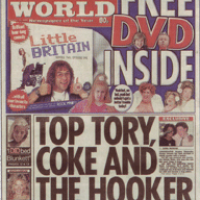
“I said to George [Osborne] jokingly that when you're prime minister one day I'll have all the dirty goods on you, and he laughed and took a big fat line of cocaine,” says Natalie Rowe, a former madam of the Black Beauties escort agency, in an interview with ABC’s PM programme. She adds, "It's been said in the newspapers that he was at university. He wasn't. At the time he was working for [former Tory leader now foreign secretary] William Hague...I remember that vividly because he called William Hague insipid." This is not the first time that Rowe has made these allegations against Osborne, as the above picture attests. The chancellor has always vehemently denied her claims and at no point have they been substantiated.

Vickers provides the best of both worlds for George and Vince

From our UK edition

It’s the moment of the truth for Britain’s banking sector: the publication of the Vickers report. The headline is as expected: the Commission recommends the imposition of a ringfence on banks' ‘core operations’ (such as consumer deposits and small business lending) from the riskier elements of their business. According to the FT (£), the banks will have discretion over where the ringfence will fall, giving lenders and users a degree of flexibility, which suggests that Vickers is not recommending the full separation of retail and investment banking, as some had hoped.

EU bans Syrian oil imports

From our UK edition

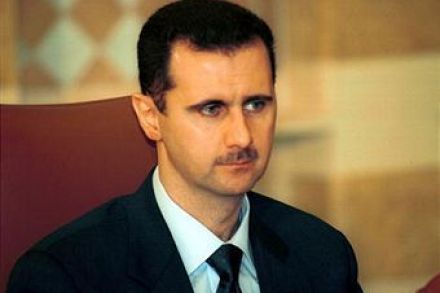
The EU has banned imports of crude oil from Syria. This is being touted as a major success for the EU, displaying the ability of governments to act collectively. Oil sanctions on Syria should, theoretically, impede President Assad: 95 per cent of Syria’s oil is exported to Europe, worth roughly £3bn a year. Germany and Italy are the premier destinations. This is a welcome move against a brutal tyranny, but the embargo is not the total success that it might have been. Italy was stalling earlier in the week, trying to defer the deal’s implementation until 30th November 2011, when existing contracts expired.