David Abulafia

David Abulafia

David Abulafia is emeritus professor of Mediterranean history at the University of Cambridge.

The Rosetta Stone does not belong in Egypt

From our UK edition

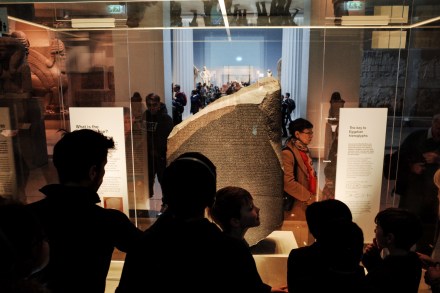
It was inevitable that the Grand Egyptian Museum outside Cairo would accompany its much-delayed opening with demands for the restitution of several of the most famous objects that have survived from the days of the Pharaohs. It was inevitable too that this effort would be fronted by the irrepressible Zahi Hawass, formerly the government minister in charge of antiquities, and now one of the most voluble ambassadors for ancient Egyptian civilization. The history of the Rosetta Stone is not simply an Egyptian history Fortunately he is not asking for the return of everything. If he was, the largest museum of Egyptian antiquities outside of Egypt, in Turin, would be left completely empty.
Michael Simmons, Kapil Komireddi, Margaret Mitchell, David Abulafia and Melissa Kite

From our UK edition

27 min listen

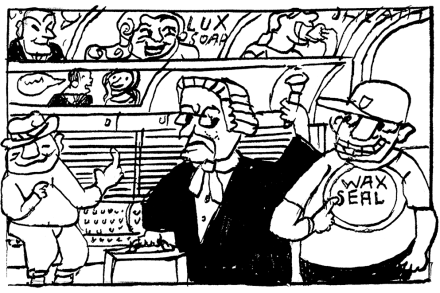
On this week’s Spectator Out Loud: Michael Simmons argues that Trump is winning the tariff war with China; Kapil Komireddi reviews Robert Ivermee’s Glorious Failure: The Forgotten History of French Imperialism in India; Margaret Mitchell watches a Channel 4 documentary on Bonnie Blue and provides a warning to parents; David Abulafia provides his notes on wax seals; and, Melissa Kite says that her B&B is the opposite of organic. Produced and presented by Patrick Gibbons.

The power of wax seals has never waned

From our UK edition

In our electronic age it hardly comes as a surprise that Pat MacFadden’s Cabinet Office intends to do away with the use of seals on most official documents, such as grants of patents to inventors. Old-fashioned wax seals, hanging from the bottom of parchment documents, may be seen as cumbersome, but most sealings nowadays consist of an embossed impression on a thin wax wafer. I used to seal documents myself when I occupied the ancient office of ‘Registrary’ in my Cambridge college. Most memorable was the sale of land the college had owned in Rickmansworth since the 16th century – by now a muddy private road thought too costly to maintain.

Is Angela Davis’s keffiyeh appropriate for a Cambridge University ceremony?

From our UK edition

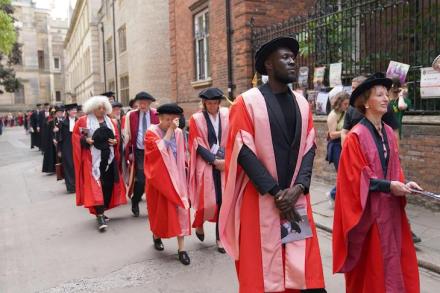
Cambridge University's decision to honour the rap artist Stormzy with an honorary doctorate seemed odd. New universities, rather than our ancient ones, like to parade icons of popular culture. When the decision was announced a few months ago, I was asked by a national newspaper to write a piece questioning his nomination. I demurred, because Stormzy was being rewarded for generous benefactions that aimed to bring disadvantaged black schoolchildren to Cambridge University – despite my doubts about reserving scholarships for particular ethnic groups. Stormzy's honorary doctorate dominated the headlines – and so, none of us really noticed who else was on the list.

The strange attempt to find Muslim Vikings

From our UK edition

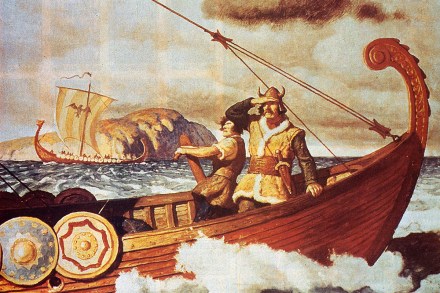
A charity called the Brilliant Club offers support to disadvantaged pupils in non-selective state schools to enable them to aim high and gain places at leading universities. No one can quarrel with that. But guidance provided to the charity’s tutors raises concern about the way the scholars are being taught. They are being encouraged to believe that the Vikings were very diverse, were not all white northern Europeans, and that some of them were quite probably practising Muslims. Decolonising the Vikings is, admittedly, a difficult task. They were very good at colonising other people’s lands Decolonising the Vikings is, admittedly, a difficult task.

Round the world in a vast, unlovely barge

From our UK edition

Ships change not just their location but their identity throughout their lives. Medieval trading vessels became warships at royal command. The Queen Mary was a troop ship during the second world war. Ian Kumekawa, of Harvard University, has had the clever idea of following a modern ship through its metamorphoses and asking how these changes in use reflect the economic conditions of our time. But this ship is no Queen Mary. He calls it the Vessel, because it changes its name and owner so many times. Without its superstructure, no one would give it a second glance. It has neither an engine nor a rudder. It had to be mounted on a heavy-lift ship or towed to reach it destination.

The weakening case against museum restitution

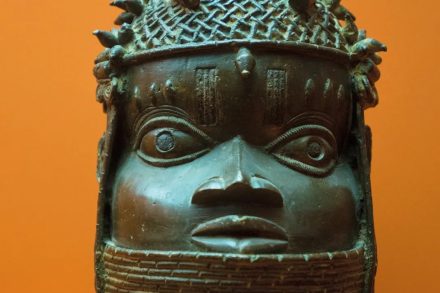
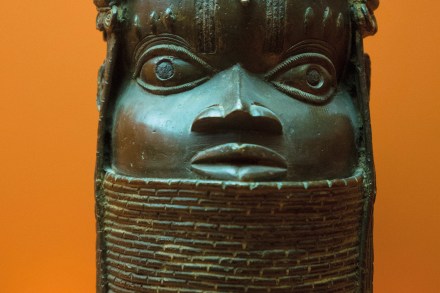
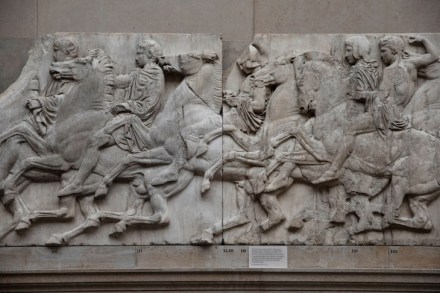
When passions are aroused, all of us are liable to overstate our case. Dan Hicks, a curator at Oxford’s extraordinary Aladdin’s Cave of anthropology, the Pitt-Rivers Museum, is perhaps a case in point. A Swedish academic, Staffan Lunden, has convincingly argued that Hicks is guilty of "distortion" when writing about the British raid on Benin in 1897, which brought several thousand objects, including finely wrought brass statuettes, to museums across the world. Hicks published his uncompromising views in 2020 in a prize-winning book, The Brutish Museums: The Benin Bronzes, Colonial Violence and Cultural Restitution.

restitution

The great explorers of the past dismissed as mercenary opportunists

From our UK edition

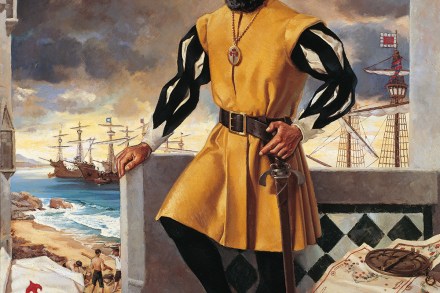
Ceremonial cannibalism was not a European invention but a regular feature of South American societies Simon Park, who teaches Portuguese history and literature at Oxford University, aims to recast the early period of European exploration as a story of disasters rather than successes. His target is the notion that those who led the first European expeditions across the Atlantic or into the Indian Ocean were ‘heroes who pushed forward boundaries of knowledge’. An obvious case is Christopher Columbus, who refused to his dying day to recognise that he had failed to reach the outlying islands of China. He was already the butt of bitter criticism during his lifetime.

Cambridge’s Palestine vandals must be expelled

From our UK edition

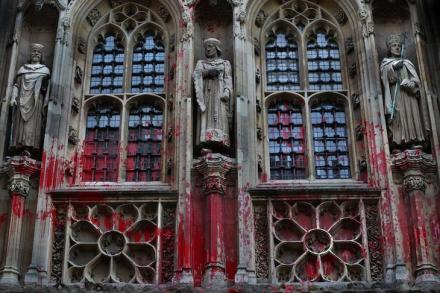
Frustrated by a High Court injunction that prohibits protestors from occupying University buildings in Cambridge so as to block a degree ceremony on 1 March, ‘Palestine Action’ has resorted to violence (for that is what it is) to make its point. The fifteenth-century gateway to the Old Schools, the administrative headquarters of the University, has been sprayed with red paint, and the slogan ‘Divest’ has been written in red on the adjoining walls.

Is the tide turning on restitution? 

From our UK edition

When passions are aroused, all of us are liable to overstate our case. Dan Hicks, a curator at Oxford’s extraordinary Aladdin’s Cave of anthropology, the Pitt-Rivers Museum, is perhaps a case in point. A Swedish academic, Staffan Lunden, has convincingly argued that Hicks is guilty of ‘distortion’ when writing about the British raid on Benin in 1897, which brought several thousand objects, including finely wrought brass statuettes, to museums across the world. Hicks published his uncompromising views in 2020 in a prize-winning book, The Brutish Museums: The Benin Bronzes, Colonial Violence and Cultural Restitution.

The British Museum doesn’t need a slavery gallery

From our UK edition

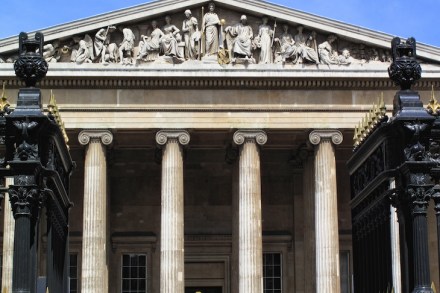
The British Museum is beginning to think about the possibility of embarking on a massive programme of refurbishment, repairs and the reorganisation of its galleries, now that the building is showing its age. At the same time, many groups would like to use this opportunity to change the very character of the museum. One such group is The World Reimagined. Its co-founder Michelle Gayle takes the view that this is a chance for the British Museum ‘to look its past in the eye’. She has the active support of Jolyon Maugham’s Good Law Project, which embraces a whole catalogue of campaigns about issues such as puberty blockers and keeping GB News ‘in check’. It too wants to reimagine the world from a stridently far-left perspective.

Why is Labour ignoring Jewish academics over the Free Speech Act?

From our UK edition

It is difficult to complain about the sentiments expressed by Bridget Phillipson, the Secretary of State for Education, in her article entitled ‘We will give teachers the resources to root out anti-Semitism for good’, published in the Telegraph on the anniversary of the Hamas pogrom in southern Israel. Universities have turned a blind eye to some atrocious behaviour by students who vocally support the call of Hamas for a ‘free Palestine’ stretching across the entire length and breadth of Israel. ‘Free’, if you look at Hamas propaganda, means free of Jews, though some Hamas leaders think it would be a good idea to keep science professors alive if Israel is destroyed, as their talents could prove very useful.

Why are the sailors who first braved the Atlantic so often ignored?

From our UK edition

It is easy to assume that there is not much to be said about the history of the Atlantic before 12 October 1492, when Christopher Columbus reached the Bahamas. In 2005, the Harvard historian Bernard Bailyn published a little book entitled Atlantic History: Concept and Contours which said absolutely nothing about what happened before Columbus, whom he barely mentioned. Atlantic history meant for Bailyn, and the growing mass of Atlantic historians, the story of modern contacts between the four continents that face the Atlantic, especially the nefarious slave trade linking Africa to the Americas.

Labour’s outrageous attack on academic free speech

From our UK edition

In an extraordinary outburst, a government source has described the new Higher Education (Freedom of Speech) Act, introduced by the Conservatives, as a ‘hate-speech charter’. This is an outrageous distortion of the new laws that aim to guarantee free speech within universities. The best that can be said about that phrase is that, so long as we retain free speech, people are free to describe it that way. But doing so raises worrying doubts about what the new government thinks free speech means.   Universities have a special role in the promotion of free speech. They are, or should be, places where those teaching and those taught can try out ideas, some of which may on closer examination turn out to be misconceived.

Should this Anglo-Saxon drama have a diverse cast?

From our UK edition

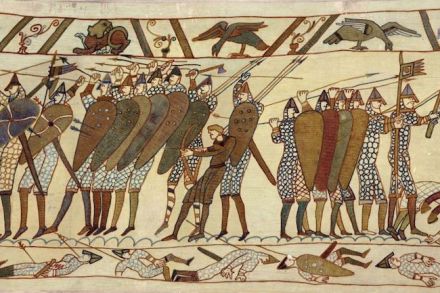
A new eight-part TV series co-produced by the BBC about England in 1066, entitled King and Conqueror, has diverse actors playing Anglo-Saxons. Elander Moore will reportedly play the real historical role of Morcar, an Earl of Northumbria who fought against Viking and Norman invaders. At first sight there might be plausible precedents for the choice of black actors to play leading parts in this kind of historical drama. But looking more closely you have to wonder whether ‘my truth’ is taking over from ‘the truth’ and generating false views of the past.

The British Museum shouldn’t make foreigners pay

From our UK edition

The interim director of the British Museum, Mark Jones, has broached the idea that our national museums should charge foreign visitors for entry, though not British visitors. On the surface it may seem an attractive idea. Our national museums are major attractions – not just in London but in Edinburgh and elsewhere, drawing in millions of people from across the world. The temptation to follow the almost universal practice of charging for entry is understandable. Museums can always do with more money, even if it is sometimes spent badly on worthless ‘decolonisation’ projects promoted by the likes of the Museums Association. The Metropolitan Museum in New York charges $30, though you can opt to give less, so long as it is something. You can even (if you dare) pay just one cent.

Why won’t this museum let women see its Igbo mask?

From our UK edition

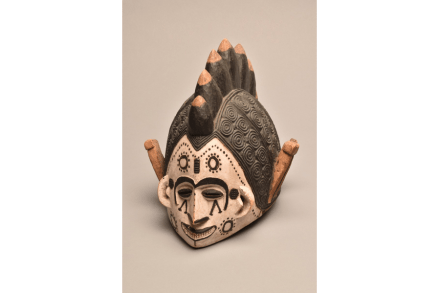
The Pitt-Rivers Museum in Oxford has won a reputation for its energetic programme of ‘decolonisation’. Its director, Laura van Broekhoven, is an expert on the Amazon. Nonetheless, on the museum website she actually begins her account of her academic work with the words ‘Laura’s current research interests include repatriation and redress, with a focus on the importance of collaboration, inclusivity and reflexive inquiry.’ She is keen on titles. Not only is she grandly described on the museum website as ‘Professor Dr Laura van Broekhoven’, she is also ‘Professor of Museum Studies, Ethics and Material Culture’ at the University of Oxford. That is quite a combination.

Are all great civilisations doomed?

From our UK edition

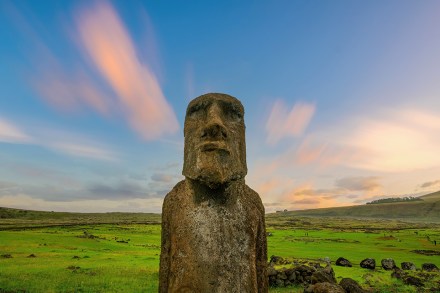
To quote Private Frazer in Dad’s Army, ‘We’re doomed, doomed!’ That seems to be the message of Paul Cooper’s eminently readable series of essays about how and why 14 civilisations rose to greatness and then collapsed. He begins with the Sumerians in the fourth millennium BC, at the northern tip of the Persian Gulf, and he finishes with Easter Island in the 18th century. He then concludes with dark prophecies about how a few centuries from now an overheated planet will look in a simpler post-industrial age. The style is informal, based on a series of popular podcasts, and one can almost hear the spoken word as one reads.

Trinity College Cambridge has rushed to judgement on Captain Cook

From our UK edition

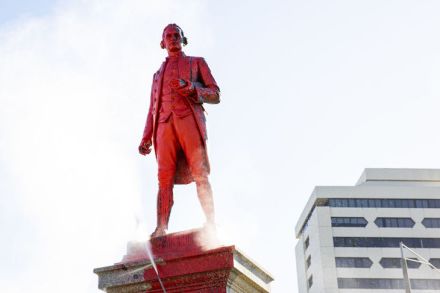
Cambridge has made a mistake in returning to the tribe that made them some spears collected by Captain Cook’s men in 1770. It is always dispiriting to write something and then discover that no one with the power to act has paid any attention. Last year, I complained on Coffee House that Trinity College, Cambridge and the Cambridge University Museum of Archaeology and Anthropology were about to make an ill-conceived mistake by repatriating these spears. It seems no one was listening. The truth is that these spears – which were presented to Trinity in 1771 – would not have survived had they not been kept safe in Cambridge.

A wealth of knowledge salvaged from shipwrecks

From our UK edition

The flow of histories of the world, or parts of it, in a bundle of items never ceases, 12 years after Neil MacGregor presented world history through 100 objects from the British Museum. Many of these were of unknown provenance and therefore disconnected from their original context. By contrast, world history built around shipwrecks offers the opportunity to seize precise moments in time – most often when a sudden emergency has taken a ship to the bottom of the sea in the midst of everyday activities. In many ways, shipwrecks bring one nearer to daily life than almost any other archaeological sites. They are only surpassed by the remains of Pompeii and other cities overwhelmed by volcanic eruptions.