Daniel Korski

The Dame departs

From our UK edition

Pauline Neville-Jones was a first. She was one of the first women in the Foreign Office to climb the department's male-dominated ladder, serving as Lord Tugendhat's chef de cabinet at the European Commission, obtaining the coveted post of Political Director and eventually becoming JIC Chairman. She led the British delegation at the Dayton Peace Accords and she probably thought she would be the first British National Security Adviser. But it was not to be. Her usefulness to the Prime Minister seems to have been mainly in opposition, where she could add a voice of knowledge to a Shadow Cabinet with very little governmental experience. The Tory Green Paper on National Security was all the more serious for her drafting it. But it was not always easy.
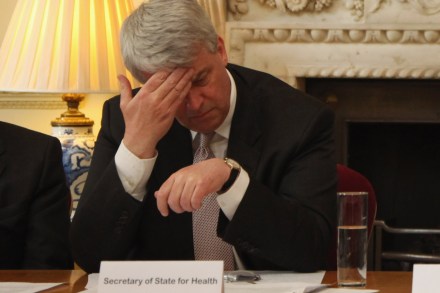
Can Lansley stay?

From our UK edition

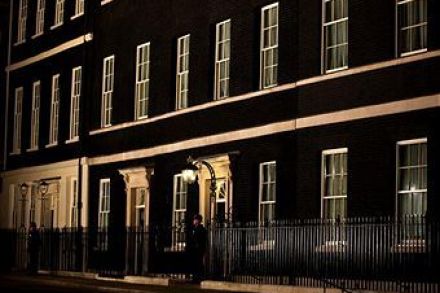
The Prime Minister, it seems, is now finally accepting what everyone else has been saying for a long time: that the NHS reforms were dangerous and would hurt the government. If Nick Clegg forced a re-think — even one that is supported by many Tories — then he may, in the end, play a greater part in delivering the next election for Cameron's party than many triumphalist right-wingers now realise. For CameronCare was badly-timed, poorly-delivered and strikes at the heart of the PM's message that the Conservative Party can be trusted. Large-scale reforms need time. Time for people to accept a problem. Time for people to accept the solution.

Is Chris Huhne proving coalitions don’t work?

From our UK edition

This country's not used to coalitions. So when we got one we were sceptical. When it worked, we remained sceptical. When it worked really well, taking decisions that a majority Labour government dared not take, we began to come around to the idea. Most people seemed to accept that they could live with a coalition; that it had a certain utility. Now, we don't know what to think following the spat between George Osborne and Chris Huhne. Is this proof that the coalition cannot work or merely an example of the way coalitions work? There are certainly worse examples of inter-coalition war in countries that often have coalition governments.

Bin Laden died in Cairo<br />

From our UK edition

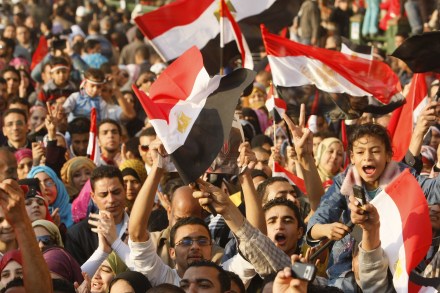
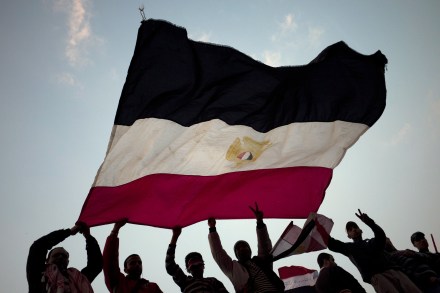
The world’s most wanted terrorist, Osama Bin Laden, was shot Sunday morning in Pakistan by US special forces. But in reality he had died months ago. On the 25 of January 2011 to be exact. Or that is at least when Bin Laden’s power ended. For on that day millions of protesters — predominantly young Muslims — took to the streets of Cairo and demanded the overthrow of the regime of Egyptian President Hosni Mubarak, and succeeded. With this act, they gave, for the first time since 9/1 and arguably for three decades, the Muslim world a more easily-understood and persuasive narrative than the one of anti-US resistance Al Qaeda had so successfully provided. After that, Bin Laden could carry out more attacks. He could kill more people.

A model for the Duke and Duchess of Cambridge

From our UK edition

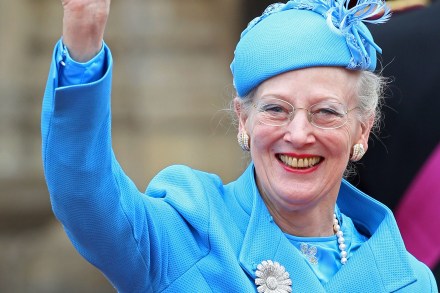
With the newspapers still full of Royal Wedding pictures, I thought I’d draw CoffeeHousers' attention to something remarkable: a visit by Queen Margrethe II of Denmark (pictured, left, at Westminster Abbey last Friday) to Helmand Province. That’s right, the 71-year old Danish monarch visited the her country's troops in late March this year, accompanied by the defence minister. Crown Prince Fredrik persuaded her mother to visit the troops after his own previous trip to the region. In this YouTube clip recorded in Helmand, Queen Margrethe talks to the camera (sorry, it is in Danish) about her experiences in the war-torn province. She pays tribute to the two British soldiers who died while she was visiting, saying the loss is also her loss.

Street party … in Tirana

From our UK edition

Wedding-themed street parties are underway not only in Britain, but wherever Brits are living. I'm in Tirana in Albania where the British Embassy is hosting a street party at the Ambassador's Residence. Union Jacks deck the tables, flowers are everywhere and the raffle table, with wedding-themed presents, is overflowing (profits will go to the Sue Ryder charity). Large TV screens are beaming that kiss to expats, diplomats and locals. Speaking to a range of people last night, it became apparent what an asset the royal family is. Everyone in Tirana was talking about the wedding. People were saying they intended watch the ceremony and even visit Britain. I'm a non-practising republican and will remain one for a while after this fantastic pageantry.

Why Gitmo ought to be closed

From our UK edition

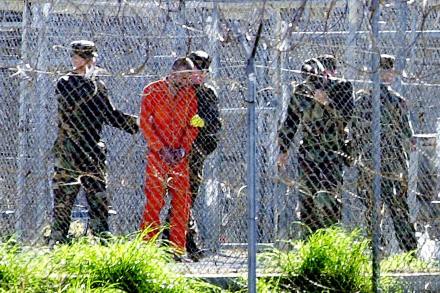
It is hard to feel anything but nauseous when reading the Guardian's continuing special report on Guantanamo Bay, which started yesterday. The paper has released hundreds of classified files which were obtained last year by Wikileaks, including detainee assessments prepared between 2002 and 2009 to summarise what the government knew about each detainee — and they do not paint a pretty picture. Some detainees are clearly guilty as sin. But others seem to have been caught in the crosshairs of conflict. One example seems to be Abdul Badr Mannan, who was arrested in Pakistan and turned over to US forces in the belief that he was affiliated with al-Qaeda.

The Tory-Lib Dem row could lead to a DPM’s department

From our UK edition

I have for a long time been sceptical of the idea that the AV referendum will damage the work of the coalition — even once the recriminations start to fly. Having seen it up close, I know how much effort both Tory and Lib Dem ministers actually put in to keep each other informed of their work and policies. Tory-led Departments often consult Lib Dems. And the PM and the DPM seem to have a better relationship than most of their predecessors had. They are certainly more ideologically aligned than Tony Blair was with John Prescott. Now Sam Coates says in The Times (£) that things are hitting the skids, with Tories deliberately blocking Lib Dems from gaining access to key documents and briefings. I don't doubt that this happens.

Eyes turn to Syria

From our UK edition

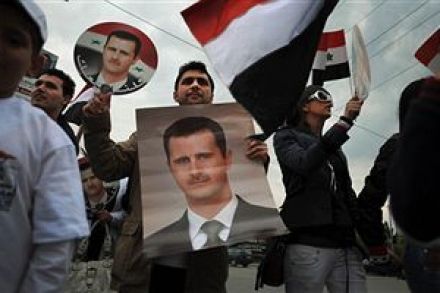
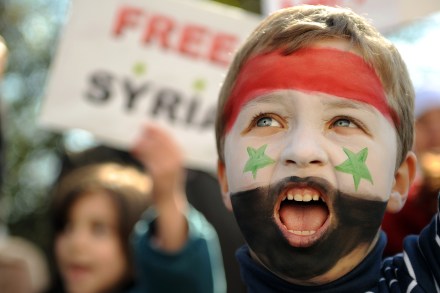
The situation in Syria seems to be on a knife's edge. Perhaps 80 protesters were killed by security forces during massive demonstrations yesterday. Checkpoints have gone up around all major cities, including Aleppo, Homs and Hama and of course Damascus. A friend who has been visiting the country this week says the situation is "pretty tense with police all around and no one, I mean almost no one on the streets. Taxis are not operating and there are no buses between cities." The road south from Damascus to Deraa is heavily guarded to prevent the protesters moving from one city to the next. The key problem for Bashri al-Assad's regime is that the protests have now spread to the middle classes and the government is constantly one step behind.

Reasons for optimism in the Middle East | 22 April 2011

From our UK edition

As the Libya crisis drags out, and Bashar al-Assad orders a crackdown in Syria, many have begun to doubt whether the changes seen in Tunisia and Egypt will actually spread to the rest of the Middle East. One former British ambassador recently suggested that perhaps the peoples of the Middle East preferred a mixture of authoritarianism and democracy — and that Britain should accept this; not impose its values and views.   But there is plenty of reason for optimism. The first is to look at the countries that have transformed themselves over the course of the last fifty years. Powerhouses like India and Brazil, but also smaller countries such as Vietnam, were mired in poverty, maladministration and the consequences of war.

The Libyan intervention needs to be stepped up

From our UK edition

The government is rightly proud of the Libya intervention. Not only did it save thousands of lives in Benghazi but it was conducted in way that learnt the lessons of the past. The Foreign Secretary took pains to get a UN resolution, making the mission legal, and kept the shape-shifting Arab League committed throughout. But unless the government is now  willing to unlearn the lessons of the past, and act both more unilaterally and even illegally, its multilateral, UN-sanctioned action may have been for nothing. For Misrata is now getting the punishment that had been planned for Benghazi. The town is being destroyed in a seige that looks like the shelling of Sarajevo.

The systematised madness of AV

From our UK edition

This morning on BBC Breakfast Nick Clegg made his key argument for AV: it will make politicians work harder for the vote, he said. The point is that politicians will have to court the votes not only of their natural supporters, but reach out to people who would not traditionally back them. This, however, is an argument for a poorer kind of politics. It will force politicians not to take principled positions but try to triangulate, Blair-style, in order to get as many different kind of factions to vote for them. What should I give the Lib Dem voters? How can I get the BNP voter’s second, or even third, preferences? These are the kind of questions MPs will ponder. Sure, to a degree that already happens — but AV will systematise the madness.

Is Syria next?

From our UK edition

I used to think that Syria was some way off a revolution. The protests were geographically limited; Bashar al-Assad was willing to use Libyan-style violence against them and the West seemed uncharacteristically mute. What's more, demands for the Syrian president to go were limited. And then there's the real fear that Syria, made up of so many different sectarian groups, would collapse into a vortex of internecine violence akin to the Lebanese civil war. But these arguments may be losing their weight. The current unrest is the most serious challenge facing Bashar al-Assad and his Alawite regime. And nothing the Syrian dictator has done so far has made a difference. Not lifting the emergency laws. Not shooting protesters.

Crimes committed in a just cause

From our UK edition

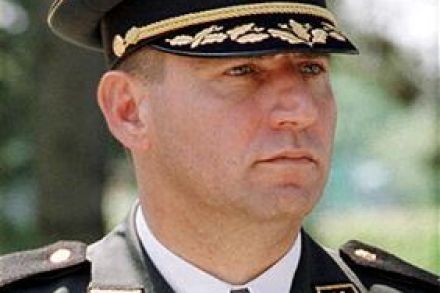
Last week, the International Criminal Tribunal for the Former Yugoslavia (ICTY) found former Croatian General Ante Gotovina and a fellow officer, Mladen Markac, guilty of war crimes during the Yugoslav Wars. The news has been greeted with dismay in Croatia. Tens of thousands of war veterans and citizens rallied under the slogan "For the Country" in Zagreb's main square, Trg Bana Jelacica, over the weekend to express their outrage against the verdicts. The Croatian government has followed suit, calling the verdict "unacceptable" and vowing to "do everything in our power to change it." The verdicts are understandably difficult for some Croats to bear.

Should the West negotiate with Gaddafi?

From our UK edition

This week, former Foreign Secretary David Miliband gave a speech in the United States about Afghanistan, proposing the hand over of responsibility for building a political solution to the UN, headed by a Muslim mediator capable of negotiating with the Taliban as well as partners throughout the region. Last week, also saw former US negotiator Daniel Serwer make an interesting parallel to his time negotiating peace in Bosnia: ‘In my experience, there is nothing like staring a military commander in the face, asking him what his war objective is, and discussing alternative means to achieve it.  I asked the commander of the Bosnian Army that question in 1995, having been told by both the State Department and the U.S.

Hague’s return

From our UK edition

William Hague has had a good war. He began poorly, as the FCO struggled to evacuate Britons from Libya. But since then, the Foreign Secretary has showed deft diplomatic skill and leadership. The FCO has been focused on Libya and every able-bodied person has been drafted into duty, with diplomats now running the operation in No 10, and the Cabinet Office. On the Today programme, the Foreign Secretary batted away the idea, much loved by realists and pessimists, that because Britain did not know, with forensic detail, how exactly the intervention would end, it should not have become involved. There are many mountains still to climb.

Another one bites the dust | 12 April 2011

From our UK edition

The conflict in the Ivory Coast looks as though it is now coming to and end. Former president Laurent Gbagbo was arrested yesterday by French officials supporting President Alassane Ouattara, after weeks of violent fighting. Gbagbo lost re-election last November to Ouattara but refused to give up power. Gbagbo, who was in office for more than a decade, will now be investigated for possible war crimes and crimes against humanity. This is a momentous event. The continent's post-independence "big men" had, over decades, become accustomed to permanent power. If they lost an election, they simply threatened (or encouraged) violence until a power-sharing deal was cobbled together which allowed them to stay in office. For examples see Kenya and Zimbabwe.

Can Nato cope in Libya?

From our UK edition

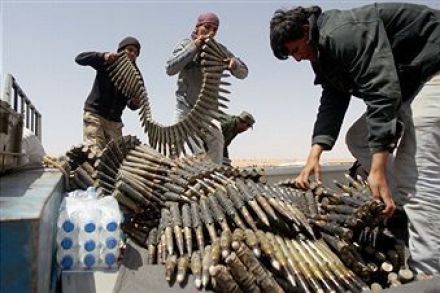
Just because Nicolas Sarkozy believes something does not make it untrue. The French president was adamant that Nato shouldn't take over the Libya campaign. He preferred to run an ad hoc coalition of the willing. Britain, however, was keen for the alliance to take control of a mission that seemed too loosely-organised. Once the United States decided to fade into the background of the military operation, the impetus for a switch to Nato grew. A few weeks into the transfer, people are beginning to wonder whether President Sarkozy was right in the first place. According to yesterday's Sunday Times, Nato is doing what it did in Bosnia: blocking the rebels from arming themselves.

Unite chief blames MI5 for protest violence

From our UK edition

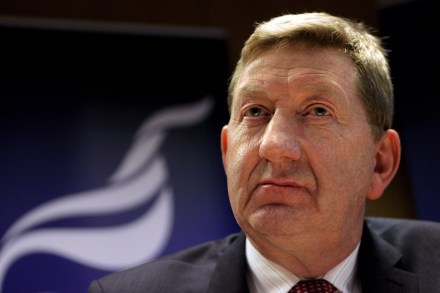
Sometimes, just when you think that the craziest left-wing ideologues have gone off to tend to their gardens, up one pops. Meet Len McCluskey, the head of Unite, who tells The Times's Rachel Sylvester (£) that Fidel Castro has been a "heroic" leader of his people. That would be the same Cuban dictator who jails journalists and trade unionists. Odd choice of hero. But it gets better. McCluskey seems to think that MI5 encouraged violence at the last anti-cuts protest. I kid you not: "Mr McCluskey believes that the secret services, in particular MI5, may have been working under cover to encourage the violence as part of a conspiracy to undermine the peaceful message of the march.

Libya: winning the stalemate

From our UK edition

Author Alison Pargeter picks up the debate about Libya and al Qaeda in this morning's Times (£), dismissing the idea that a new "jihadist hotspot" is being created. As I wrote some time ago, it is difficult even for people who have travelled in eastern Libya to know anything for sure. I hear from sources in Benghazi that the Islamists number among some of the better troops - having had training and experience in fighting. They offer what one person called "small unit cohesion", in contrast to poorly-organised rebel force. But they do not seem to run or even hold sway over the movement. The bigger question in Libya right now, however, seems to be this: who can survive a stalemate - Colonel Ghaddafi or the rebels? Both face serious problems.