Daniel Korski

Turning the Russian tap

From our UK edition

Russian gas, and the power it gives Moscow, has become one of the main issues in international politics. Last year, Moscow used its ability to control Ukraine’s gas supply to interfere in Kiev politics. As European leaders huffed and puffed over Russia’s invasion of Georgia, the threat of having gas supplies cut off to parts of Europe explained the EU’s failure to develop a common policy approach towards Moscow. And now, Russia is leading Iran and Qatar – the world's two biggest holders of natural gas after Russia – to form a "gas OPEC," an organization modeled after the oil cartel.
America has done its bit, now it’s Europe’s turn

From our UK edition

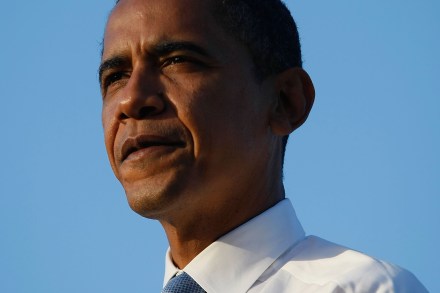
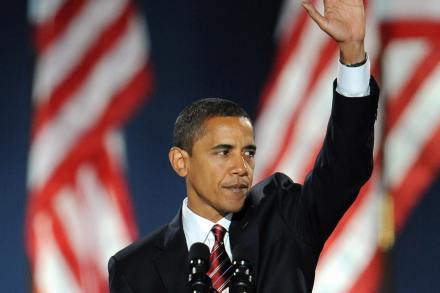
Barack Obama’s win yesterday signals, like nothing else could, that “America is back” – and back to deal with many of the world’s foreign policy challenges. After eight years of trying relations with the Bush administration, many European leaders have been looking forward to this day. However, these expectations carry significant risks.  Many – mostly, but not exclusively, in Europe – see the election of Senator Obama as an opportunity to get all the things that George Bush did not agree with back on the table. But the President Elect will not dissolve the laws of international relations or abandon US interests. Take climate change. Mr.

Congo surprise

From our UK edition

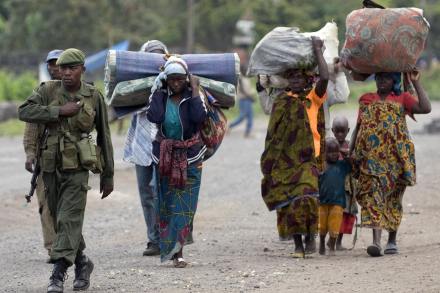
Every time the world seems a little more predictable – and even the most intractable conflicts develop a recognisable if horrifying humdrum – something explodes onto our TV screens to shock and surprise even the most hard-nosed conflict-watchers. That is what happened when fighting resumed in North Kivu province on October 25 between the Congolese forces (FARDC) and the militia known as the National Congress for the Defence of the People (CNDP), led by former General Laurent Nkunda. Within only a few days, an estimated 50,000 people have fled from North Kivu's Rutshuru territory, of which between 20,000 to 25,000 are children. Thousands have arrived in the Kibati refugee camp just north of Goma and are squatting in and around the camps.

From Motherwell to Malawi – but to do what?

From our UK edition

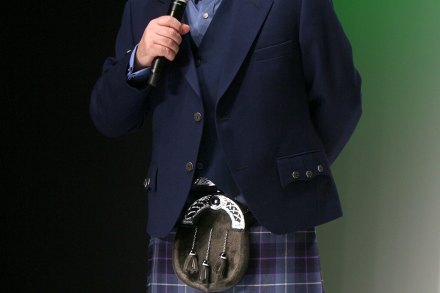
A few weeks ago, Gordon Brown appointed former first minister, Jack McConnell MSP, as a Special Envoy for Conflict Resolution – provoking accusations that the move was "blatant political manipulation" to avoid the possibility of a by-election defeat in McConnell's Motherwell and Wishaw seat. The idea had originally been to appoint McConnell as the High Commissioner in Malawi - which would have sparked a by-election. Instead, the Scottish politician will have a non-resident, part-time role as a special envoy for the Prime Minister. But what his exact job will be apparently remains unclear and the subject of some debate across Whitehall. There is no reference to the appointment – or Mr. McConnell’s terms of reference – on the No. 10 website.

What next in Afghanistan?

From our UK edition

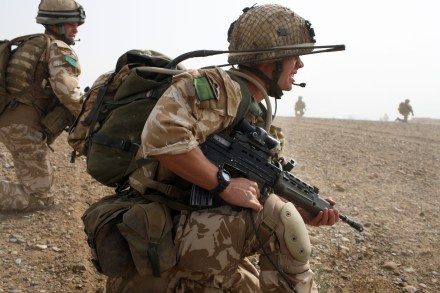
The news coming out of Afghanistan has gone from bad to worse. Now General Sir Michael Rose, ex-SAS chief and the former commander of UN forces during the Bosnian War, believes NATO forces in Afghanistan have "reached their limit". Though he believes the insurgency can be held back by the international military campaign, NATO needs, in the ex-soldier’s view, to help form Afghan tribal militias to aid western forces and the Afghan army. "By winning the support of the Pashtun tribes who live on both sides of the border and by developing a sympathetic understanding of their complex tribal systems, it should be possible to achieve security in the key eastern and southern areas of Afghanistan," he says.

Obama’s Cabinet

From our UK edition

With an Obama administration almost statistically inevitable, attention is turning to the post-election struggle for positions and power.  His current aides include Gregory Craig, Scott Gration, Ben Rhodes, Richard Danzig, Samantha Power, Tony Lake, and Susan Rice - a team which is said to funnel through Denis McDonough, an Obama confidante, who briefs the senator. But when it comes to populating the administration’s key slots, many of these aides may have to take a back seat in favour of more well-known and politically-connected candidates. Joe Biden has warned that an Obama administration would face an international challenge in its first six months.

Hague’s Bosnia paradox

From our UK edition

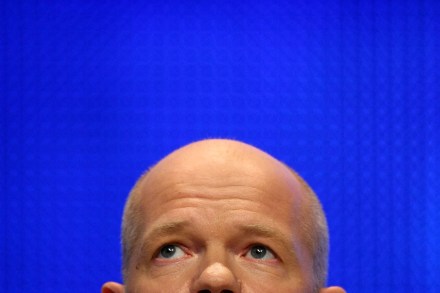
This week William Hague is visiting Bosnia, trying to highlight the problems in the country 13 years after the Bosnian War that saw 100, 000 civilian die. His visit provides welcome attention to the country’s slide towards conflict; while he can helpfully distance the Tory party from the dastardly Conservative policy at the time, which saw Douglas Hurd argue against aiding the Bosnian Muslims. So what is happening in Bosnia? A lot – but hardly any of it is particularly positive. Bosnian Serb Prime Minister Milorad Dodik, a moderate-turned nationalist, has adopted a secessionist agenda. His long-term policy seems clear, the peaceful secession of the Serb province as Milo Djukanovic did it in Montenegro.

Generally good

From our UK edition

The appointment of Sir General David Richards as head of the British army, effective from August 2009, is the government’s first inspired military appointment for a long time. A former Nato commander in Afghanistan and the “Saviour of Sierra Leone”, General Richards will bring to the job a keen understanding of the military’s new tasks and, from his last assignment as Commander-in-Chief Land Forces, insight into the real state of the British army. Richards is probably the closest thing the British army has to David Petraeus – a soldier with an appreciation of politics, an eye for a good photo opportunity, but also someone who can develop a strategic vision.

We shouldn’t have to make Mandelson a Lord

From our UK edition

Peter Mandelson is to take his seat in the House of Lords on Monday following his surprise return to the cabinet. But for one week he held the job of Secretary of State for Business, Enterprise & Regulatory Reform without having a seat in either the Commons or the Lords. He was presumably allowed to take the job by the rule-keepers because he is a member of the Privy Council. Many traditionalists will say that the constitutional anomaly will be corrected once Mandelson is made a peer and the Business Sectary can be held to proper account. But scrutiny of ministers in Parliament is becoming increasingly lax. PMQs is a merry-go-round of insults, planted questions and parried queries.

The new defence agenda

From our UK edition

The appointment of a new Defence Secretary is one of the best things in Gordon Brown’s reshuffle. Des Browne had grown tired at the MoD, struggling to maintain the respect of the rank and file, battling to oversee two ministerial portfolios and failing to manage crises, like the Iranian capture of British sailors. John Hutton’s appointment is a chance for new thinking. So what should the new defence secretary do in his first 100 days? Here are five ideas. 1) As Charlie Edwards says over on Global Dashboard, John Hutton needs to get himself to Iraq and Afghanistan and take the measure of both campaigns.

Blog-crowing

From our UK edition

I don’t know if it’s a word, but it should be: Blog-crow  intr.v. blog-crowed, blog-crow•ing, blog-crows 1. To exult loudly, as when a blogpost is proven right or prescient. First George Osborne picked up on CoffeeHouse’s proposal of a tax stop. On 19th August 2008 we wrote that a tax freeze “would bridge the gap between the tax-cutting instincts of the Conservative base and the concerns of deficit hawks who worry about creating a financial black hole.” This week, the Shadow Chancellor proposed a council tax freeze. But demonstrating that good ideas can find a home anywhere, the Prime Minister has adopted the idea we floated in July of appointing a Secretary of State for Climate Change.

Who, and what, should follow Sir Ian Blair?

From our UK edition

With the departure of a Commissioner who is seen as an intellectual New Labour-style cop, there will be a desire for a copper’s copper at the head of the Met: someone who has risen up through the ranks, commands respect on the beat and is seen as focused on crime, not convention.  But the Commissioner’s job has become very political, requiring not only the support of one’s Bobbies but of a range of ‘stakeholders’. There are, of course, serious inside candidates who fit this bill - like Northern Ireland’s Hugh Orde or the Met’s own Paul Stephenson - and outsiders such as David Veness, who used to work for the Met and is shortly leaving his job as the UN’s security chief.

Brown on back foot in Europe

From our UK edition

Gordon Brown likes to think of himself as above anyone else when it comes to dealing with world of finance. A few years ago, he was late for a meeting with policy wonks in the Treasury and chortled condescendingly that he had just come off the phone with the fifth French Finance Minister in five years. The point was clear: while the French have no stability at their financial top, Labour had in Britain guaranteed a better way of economic management. All the more interesting, therefore, that as the financial markets tumble down it is France, not Britain, which has taken the lead in calling for a financial crisis summit on how to reform the financial system.

Consultants be gone

From our UK edition

One of the Tory’s main plans is to cut the number of consultants working for various government departments. Without it, it is doubtful that a Conservative government would enable local authorities to freeze council tax (a policy that incidentally makes this blogger think the Shadow Chancellor reads Coffee House). The desire to cut the cost of consultants is understandable. Spending on consultants across the public sector reached to a whopping £3bn in 2006, according to the National Audit Office. The cost has probably gone up since then. The Conservatives think they can save a total of £500 million in the first full year of government, and by £1 billion in all subsequent years (although this also includes government advertising).

Cold War in Georgia

From our UK edition

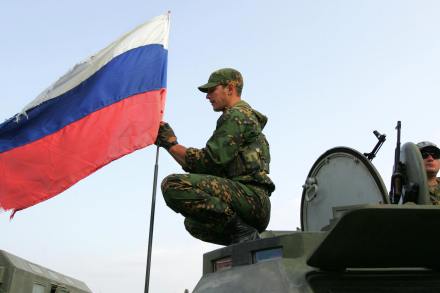
The crisis in Georgia is now moving into the next phase, with the European Union about to deploy a team of unarmed monitors to police the EU-brokered agreement reached between Georgia and Russia. Further talks are expected to start up in Geneva in a month’s time between the parties, under the stewardship of French EU envoy Pierre Morel.   Against past practice, the EU looks set to get its monitoring mission off the ground quickly, having received promises of personnel and kit from the 27 EU member states. The mere fact of its deployment on 1 October will, in one sense, achieve a primary objective: triggering the beginning of the withdrawal of Russian troops. But nobody knows what will happen afterwards.

Tense times for Ukraine

From our UK edition

After months of squabbling and years of tension, Ukraine's ruling pro-Western coalition has officially collapsed. The country’s scar-faced President Viktor Yushchenko could no longer work with his photogenic Prime Minister, Yulia Tymoshenko. Tensions have been running high between the two leaders of the Orange Revolution for years and have recently been exacerbated by Russia’s war in Georgia and the countdown to the 2010 presidential election. Yushchenko has accused  Tymoshenko of keeping quiet about Russia’s invasion of Georgia in return for Moscow’s support in a campaign to supplant him as president.

Ashdown: What I told Gordon Brown about Afghanistan

From our UK edition

Tonight at a fringe meeting at the Liberal Democrat conference, Paddy Ashdown gave a talk about Afghanistan. In the speech he quoted from a confidential memo he provided Gordon Brown in March when it looked like he would become the UN chief in Kabul. We do not have enough troops, aid or international will to make Afghanistan much different from what it has been for the last 1000 years – a society in which the gun drugs and tribalism have always played a part. In a sobering statement, the soldier-politician says: On the military side we also need to understand that we probably cannot defeat the Taliban – only the Afghan people can do this. And at present, especially in the South, they do not seem ready to do so. Nor can we force them.

The future of Tory foreign policy  

From our UK edition

David Cameron’s recent visit to Afghanistan and Pakistan received relatively little press attention; showing just how exceptional the amount of coverage that Cameron’s statements on Georgia and trip there garnered were. In his address in Pakistan, Cameron once more set out his ‘liberal conservative’ agenda. Here’s the key passage of the speech: “A liberal Conservative approach…recognises that democracy must be built around the institutions, habits and culture of each country. Democracy should be the work of patient craftsmanship and not of a uniform mass production line, if the final product is to be of a quality that endures.” In other words, states are not built; they develop over time.

The real war

From our UK edition

A few days after the EU summit to discuss Russia’s aggression in Georgia, debate across Europe is dividing into two camps. Not between those who back Russia and those who are baying for conflict, although this dividing line exists and is well-reported. The real division is over the meaning of the war for the future of European politics – and it’s likely to be even more aggressively contested.

Trans-Atlantic tension will remain

From our UK edition

On both sides of the Atlantic, foreign policy types are busy drawing up wish-lists of what they want the other to do once a new U.S. President is elected. More troops for Nato's Afghan mission, says Barack Obama. No, retorts John McCain, support for sanctions against Iran is more important.  Progress on Kyoto, say some Europeans. Others want the US and Europe to concentrate on reforming institutions like the UN, World Bank and the IMF. Whilst it’s better than the fraught trans-Atlantic relations of the last eight years, this outbreak of list-writing nonetheless threatens to ultimately disappoint both parties.