Daniel Korski

Balkan business

From our UK edition

Catherine Ashton is visiting the Western Balkans this week on her first foreign trip as the EU's top diplomat. Though she has come in for criticism for not going somewhere more foreign, like the Middle East, her visit to the region is, in fact, timely and should be welcomed. The region has a few hurdles to clear on its journey away from the misery of the past and towards a more stable future. What can Ashton do to help that process along?  Well, her job is best described with historian Richard Neustadt's moniker "Persuader-in-Chief". She can cajole member-states, put issues on the EU's agenda and suggest ideas. That is probably it.

Sunny side up?

From our UK edition

Earlier this week I asked what Obama's experience could teach a Cameron government. At the same time, there has been a well-argued debate in The Times about whether the Tories should go negative or not. There is one point where the two issues converge - and that is in how a newly-elected government should deal with the country's economic legacy. Once in power, a Tory government will be tempted to be optimistic, to point to the sunny uplands. General Colin Powell said "positive thinking is a force multiplier" and the Cameron team come across as natural adherents to this viewpoint. There is also the fact that the modern Tory agenda - of decentralisation and trust in people - is at heart a positive philosophy of government, not a mistrustful statist one.

Mossad’s suspected actions in Dubai may be a crime, but will they help Israel?

From our UK edition

One of Israel's most potent weapons has been the mixture of awe and fear with which its spy services are held. Now that Mossad is suspected of killing Mahmoud al-Mabhouh in Dubai, and using fraudulent British passports in the process, newspapers will dredge up stories about the Entebbe Raid, the killing of Black September by Mossad agents and other daring-do acts. The other reaction to the suspected assasination of the arm-smuggling Hamas official will be indignation about the extra-judicial nature of Israel's action. But these made-for-Hollywood stories and the West's moral indignation mask some uncomfortable truths. That Mossad, its domestic equivalent Shin Bet and Israeli commandoes are bureaucratic organisations. Like all public bodies, sometimes they succeed, sometimes they fail.

What can Cameron learn from Obama’s situation?

From our UK edition

President Obama was going to be different. He was going to learn from Jimmy Carter's failures. He was going to avoid Bill Clinton’s fate. Like his well-run campaign, Obama's tenure in the White House was going to be cool, calm and effective. If Clinton failed by sending an over-cooked healthcare reform to Congress, Obama would succeed by leaving the details to lawmakers. If McCain's campaign was psychodrama, Obama's administration was going to be all collegiality.    It did not work out that way and now the knives are out for Obama's team. First there was Ed Luce's piece in the Financial Times. Now Leslie H. Gelb, a veteran DC insider, comes out and says it: the President must change key personnel now.

The new AfPak strategy in action – decapitation, reintegration and reconciliation (DRR)

From our UK edition

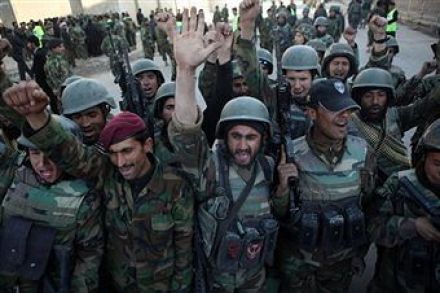
It’s not quite the “we got him” moment, as when US soldiers unearthed the fugitive Iraqi dictator. But the capture of Mullah Abdul Ghani Baradar, a top militant commander who is said to be second in command to elusive Afghan Taliban chief Mullah Mohhamad Omar, may be even more significant. By the time Saddam Hussein had been caught, the US was fighting a different enemy, though the Pentagon leadership had not realised yet. Baradar, who was in charge of the insurgency’s day-to-day operations on behalf of the so-called Quetta Shura, the Taliban’s leadership council, is very much today’s enemy - and his seizure should not be underestimated.

It’s what comes after Operation Moshtarak that matters

From our UK edition

Fighting is now well under way in southern Afghanistan, as NATO forces are executing Operation Moshtarak. The plan is aimed at shoring up security around Kandahar city and recapturing the remaining Taliban strongholds in Chah-e-Anjir, Western Babaji, Trek Narwa and Marjah in Helmand province, though the latter is getting all the publicity. The operation has been billed as "NATO's biggest" and a "test" of the new counter-insurgency policy, designed to first eradicate militants and, then, follow up re-establish government control and civil services. These claims may have been exaggerated for effect.

The End of Charlie Wilson’s War

From our UK edition

Rarely are obituaries so full of parties, history-changing events and personal contradictions as those of ex-Congressman and rebel-armer Charlie Wilson, who died last night aged 76. War will mix with cocaine. Burqa-clad women will mingle with strippers. "Good Time" Charlie's life was genuinely remarkable. Described as "one the most distinctive" congressmen, he spent most of his time partying until he found the cause of a lifetime: ejecting the Soviets from Afghanistan. As detailed in the book and film "Charlie Wilson's War", the Texan politician used his contacts and seat on a powerful Congress committee to arm the Afghan rebels. And he did it in style - all buttoned-down, white-collared shirts, college ties and striped suits that would make Gordon Gekko envious.

Yanukovych wins Ukrainian election – but that may not be all bad

From our UK edition

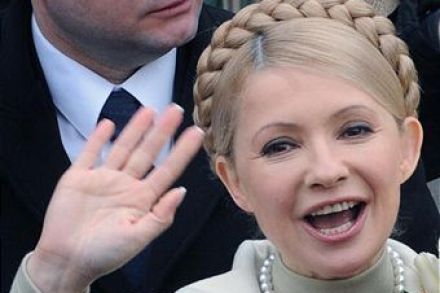
With just over 2% of votes still to be counted, Ukraine’s pantomime villain, Viktor Yanukovych, is coasting for victory in the country’s presidential election. Yulia Tymoshenko, the current prime minister and one of the leaders of the pro-Western ‘Orange Revolution' in 2004 has yet to accept her loss, but with the EU praising the “impressive display of democratic elections” it will be hard for her to do anything but concede. So is this game, set and match for Vladimir Putin, who has done everything in his power to snuff out the ‘Orange Revolution'? “Revolutions devour their own children”, the saying goes, and this has certainly been true of the 2004 events that swept Yulia Tymoshenko and Viktor Yushchenko to power.

Which UN figures show 600,000 Iraqi deaths?

From our UK edition

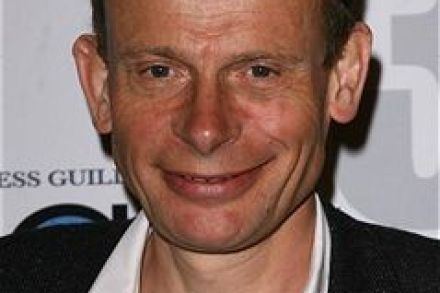
While skewering Alistair Campbell on his show, Andrew Marr said the Iraq War had killed 600.000 people. Blair’s former spin-doctor was on the ropes at the time and so did not contest the count, which Marr claimed were “internationally-accepted UN figures”. But I’m curious to find out where Marr got this count from. Finding out how many people have died is difficult, as no Iraqi or Coalition government office regularly releases publically available statistics on Iraqi civilian deaths. I have not been able to find the supposedly authoritative UN figure Marr quoted. But the Iraqi Body Count, the world’s largest public database of violent civilian deaths during and since the 2003 invasion, puts the figure between 95,309 – 103,982 deaths.

Post-election Entene Cordiale?

From our UK edition

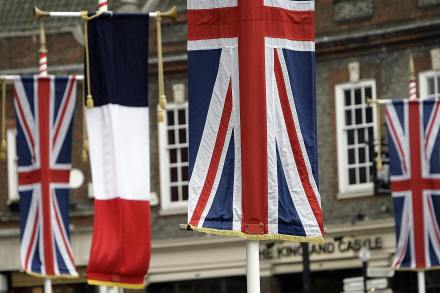
If there is a strategic thought lurking inside the Tories' grab bag of foreign policy ideas, it seems to be closer cooperation with France, particularly on defence matters. Should William Hague become Foreign Secretary after the election, he might end up working with a new French counterpart, as rumours persist about Bernard Kouchner's imminent departure (knowing this, he apparently even floated his own name for the Kabul UN job). A new Parisian counterpart for Hague - for example, the current French Agriculture Minister, Bruno Le Marie - could make a new Entente Cordiale easier. But, even then, would the French be up for closer links with the UK? Angela Merkel and Nicolas Sarkozy have just unveiled a new 10-year plan, including 80 projects designed to improve Franco-German cooperation.

The Iraq War may or may not have been a crime – but was it in the national interest?

From our UK edition

If you read the press after Clare Short’s testimony to the Iraq inquiry you would be forgiven for believing that there are only two ways to judge the Iraq War – whether it was legal or not, and whether Tony Blair lied. But while these are important issues, they get in the way of another key question: was it in Britain’s interests? There are many problems with looking simply on the issue of legality. First of all, international law is not domestic law. It is a framework without an overarching "sovereign", so "enforcement" of international law is different than in the domestic context. International law is also based, at least in part, on norms. But norms change – thus changing what the law means.

Not yet a post-American Europe

From our UK edition

I'm in Brussels where the only news is Obama's cancellation of a trip to Madrid to join an annual EU-US confab.  The FT's Gideon Rachman explains the anxiety caused by the decision: 'There is no doubt that the Spanish government, which currently holds the rotating presidency of the EU (You thought it had been abolished? Fooled you!), will treat this as a bitter blow. The Spanish prime minister Jose Luis Zapatero was royally snubbed by George W. Bush and so it was really important to him to underline that he has a great relationship with the sainted Obama. (...) The Spanish are not the only Europeans feeling snubbed by Obama.

Leaked MoD report says, well, nothing really

From our UK edition

What is the difference between a sieve and the Ministry of Defence? If you think of good punch-line send it in; in the meantime, suffice it to say that department seems to be leaking any and every sensitive document in its possession. Ministry of Defence staff have apparently leaked secret information onto social-networking sites sixteen times in 18 months. Over the week-end, it happened again: Sky News obtained a paper, which will form the basis of the forthcoming Strategic Defence Review. I have not seen the paper, but judging from the Sky reports there is not much to get excited about. Everyone accepts that the nature of warfare is changing, that traditional battle-lines are being re-drawn and that a new form of warrior will be required for future conflicts.

Could Jacques Chirac add to the Chilcot inquiry?

From our UK edition

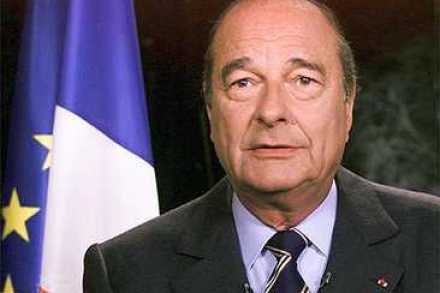
The Iraq inquiry is making the political weather, much more than Gordon Brown expected. By the time of the general election, every key diplomat, soldier and politician involved in the war will have given evidence. But there are people that have played pivotal roles who should be given the chance to put their views across - not about the war as such but about Britain's diplomatic and war record. I'm thinking of senior US officials, from President Bush down the hiearchy but also then-French President  Jacques Chirac, former UN chief Kofi Annan and so on. I'm not suggesting Sir John Chilcot broaden his inquiry to nor that 'W' would come to give evidence.

Negotiate, Negotiate, Negotiate

From our UK edition

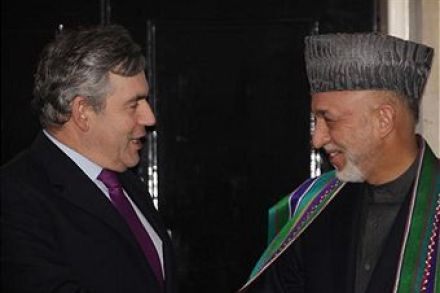
Whitehall has turned into the lobby of the UN General Assembly, as dignitaries gather to give NATO’s Afghan campaign renewed impetus. Will it all amount to much? It depends. In this piece for the magazine E!Sharp I set out my stall: '[if the conference] is to achieve anything more than fill out the evening news, the gathering must have only one aim: to help Hamid Karzai begin reaching out to insurgents and fence-sitters, drawing them into a negotiation that can drain the insurgency of all but the religiously-committed warriors.' Part of this will involve giving money, jobs and security guarantees to foot-soldiers, as I recommended in a report back in 2008. But now this will probably not be enough.

The Eikenberry cables: today’s Ellsberg papers

From our UK edition

Sometimes government leaks tell the public what they did not know. But sometimes leaks just confirm what everyone knew. The view held by the US ambassador in Kabul that President Hamid Karzai “is not an adequate strategic partner” and “continues to shun responsibility for any sovereign burden,” will come as no surprise to anyone. But the timing of the leak of Ambassador Eikenberry’s cables in The New York Times will nonetheless be quite explosive. Does it matter? Not really. Hamid Kazrai has in most people’s minds joined Anastasio Somoza García, Ngo Dinh Diem, even for a while Saddam Hussein as the West’s, well, what was that phrase used by FDR? He is what there is. Period.

Kabul needs a big UN beast

From our UK edition

The London Afghanistan conference is meant to appoint a civilian NATO coordinator to help align the counter-insurgency effort. The well-respected British ambassador in Kabul, Mark Sedwell, is a front-runner (as, incidentally, was Geoff Hoon until he plotted against Gordon Brown). If the press just publish the news, many questions will go unanswered. That's not right. For the new post means that a two-year effort to make the UN the main aid coordinator has failed, and the appointee is likely to produce little unless individual NATO allies award him some spending power - a very unlikely scenario. There is nothing easier than to add a job to solve a problem, and sometimes it is the right thing to do.

Cutting drugs

From our UK edition

On Wednesday, Baroness Kinnock told the Lords that a number of Foreign Office departments had been hit been hit by an estimated £110 million budget shortfall, and that an anti-drug program in Kabul has been cut.  Coming after British dismay at President Karzai's desire to put Afghanistan's former (and widely-discredited) Interior Minister, Zarar Ahmad Moqbel, in charge of the country's anti-drug effort, the cuts are bound to cause concern. Afghanistan is the world's leading supplier of opiates, trafficked as opium, morphine and heroin. Over 90 percent of the heroin on the UK's streets originates from Afghanistan. Though cuts to counterterrorism programs are probably ill-advised, there is less reason to worry about the impact on any anti-drug efforts.

David Miliband’s big idea: an Af-Pak-India Council

From our UK edition

An idea that has received little media attention in Britain, but is giving Foreign Office diplomats sleepless nights, is David Miliband’s push for a "regional stabilisation council" involving Pakistan, India and Afghanistan, to be unveiled at the international conference scheduled for January 28. The idea is seen as an innovate way to bring the three countries together, while at the same time allowing the Foreign Secretary, who will formally host the conference, to show leadership and initiative. The pretender to the post-election Labour throne needs something to get rid of his “Banana Boy” epithet. So far, however, the idea is not meeting with local support.

Deadly attack in Kabul = Taliban on the defensive

From our UK edition

Many will claim that the Taliban’s recent attack in Kabul shows how powerful the insurgency has become. No doubt the psychological impact – the real aim of all terrorists - will be felt for some time. Faroshga market, one of the city’s most popular shopping malls, lay in ruins and the normally bustling streets of Kabul emptied. But the attack was an operational failure. All seven militants died in the attack; five were gunned down and two killed themselves. Three soldiers and two civilians — including one child — were killed. Seventy-one others were injured, including 35 civilians, but the majority are only slightly wounded. Such a toll must frustrate the Taliban’s leaders, watching the event from afar.