Damian Thompson

Damian Thompson

Damian Thompson is an associate editor of The Spectator

The knives are out for Christian faith schools

From our UK edition

Today's Holy Smoke podcast responds to rumours that the Government is planning to betray parents who want to send their children to faith schools. As The Sunday Times reported: Ministers are expected to drop plans to allow Christian, Jewish and Muslim state schools to admit all their pupils from one faith after warnings that the move could heighten community divisions in Britain. A U-turn would jeopardise dozens of new free schools planned by faith groups, some to cope with the influx of Catholic families from Poland and other east European countries. Catholics said this weekend they would not open new state schools if they had to reserve half their places for children of other faiths, raising new school funding problems for the government.

Beethoven: Missa solemnis

From our UK edition

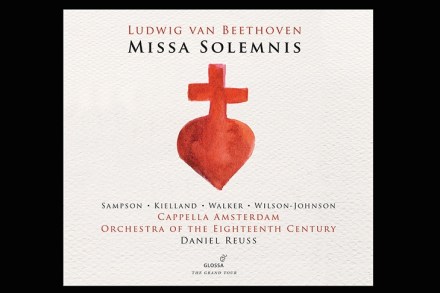
When you first encounter it, Beethoven’s Missa solemnis can sound like the Ninth Symphony with more singing but no tunes. But the more I listen to it, the more I agree with the composer that it’s his greatest work — or, at least, up there with the last two piano sonatas and his String Quartet Op. 131, my other nominees. Despite its titanic scale, the Missa solemnis inhabits their intimate sound world: it is built from the harmonically ambiguous motifs of Beethoven’s ‘third style’. Nothing in it is as catchy as the ‘Ode to Joy’.

Pope Francis is behaving like a Latin American dictator – but the liberal media aren’t interested

From our UK edition

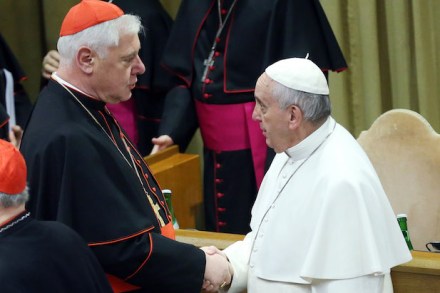
At the end of June, Pope Francis dismissed Cardinal Gerhard Müller from his position as Prefect of the Congregation for the Doctrine of the Faith (CDF) – arguably the most important position in the Catholic Church after that of the Pope himself, since the CDF is in charge of doctrine. Müller was given no notice that the Pope was breaking from tradition by not renewing his five-year mandate – and no explanation. A few days later, on July 4, he explained what had happened in a long phone call to his friend Cardinal Joachim Meisner, one of four cardinals who had challenged Francis on the question of Communion for divorced and remarried Catholics. Meisner was horrified to hear the details of Müller's humiliation.

Cardinal Pell returns to Australia ‘to clear his name’. But what are his chances of a fair trial?

From our UK edition

Cardinal George Pell, the head of the Vatican's finances, has been charged with historic sex offences in his native Australia. He is returning there 'to clear his name'. 'I look forward to my day in court', he said at a press conference in Rome this morning. If I were in his shoes, I wouldn't be looking forward to it. I believe – on the basis of the very sketchy evidence we've seen so far, and also my personal encounters with him – that the Cardinal is innocent of these charges. But what are his chances of a fair trial in Australia? Let me quote at length from an article by Angela Shanahan in The Australian, published on June 11. It seems to be behind a paywall, but this is what she had to say: Pell can never receive a fair trial.

Is the British government about to be held hostage by head-banging biblical fundamentalists?

From our UK edition

Forgive the inflammatory headline, but that's the conclusion that millions of Britons have drawn from media descriptions of the DUP. Mainland commentators seem unable to make any distinction between the Democratic Unionist Party, founded by the late Ian Paisley, and his small Free Presbyterian sect, which is indeed influenced by American fundamentalism. We know the DUP is against abortion and gay marriage. But are its members also creationists who think the world was created 6,000 years ago? In this week's Holy Smoke podcast, Cristina Odone and I talk to Jon Anderson, a Northern Irish writer specialising in religious and political sectarianism. He lays some myths to rest. For example, the DUP is not the main party of the Orange Order.

Kissin in action

From our UK edition

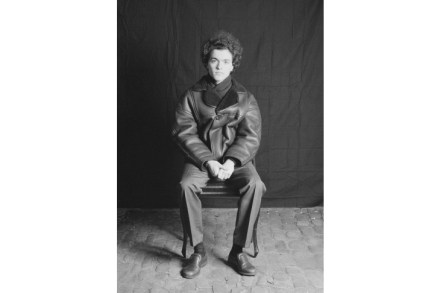
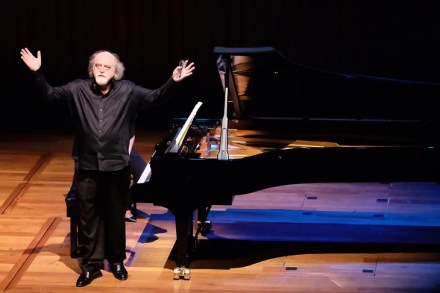
Is Evgeny Kissin, born in Moscow in 1971, the most famous concert pianist in the world? Probably not, if you stretch the definition of ‘concert pianist’ to encompass the circus antics of Lang Lang, the 34-year-old Chinese virtuoso who — in the words of a lesser-known but outstandingly gifted colleague — ‘can play well but chooses not to’. But you could certainly argue that Kissin has been the world’s most enigmatic great pianist since the death of Sviatoslav Richter in 1997 – though, unlike the promiscuously gay Richter, his overwhelming concern with privacy does not conceal any exotic secrets. He has recently married for the first time, but chooses not to publicise the fact.

The Christian views of Theresa May and Tim Farron are way below the radar. And that’s how they like it

From our UK edition

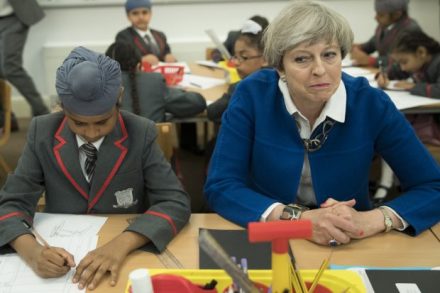
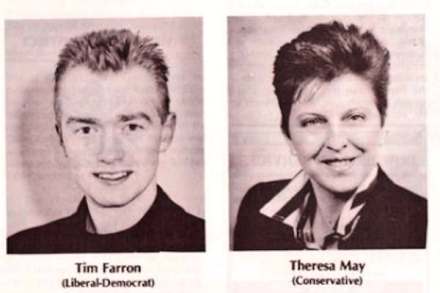
There's a mischievous, not to say malicious, Twitter photograph of Theresa May circulating this morning. It shows her sporting shoulder pads and severely slicked-backed boyish hair, campaigning in the 1987 general election. On top of it someone has added the words: 'Curbing the promotion of lesbianism in Merton's schools starts with girls having male role models in their lives'. Did she say it? No one can source the quote. But Mrs May, then as now a weekly churchgoing Anglican, did vote against the repeal of Section 28 in 2000. In those days she was an opponent of same-sex marriage, as was Tim Farron, also a weekly churchgoer. Both the Prime Minister and the Lib Dem leader held this view for religious reasons, though they preferred not to be drawn into theological debate.

Period drama

From our UK edition

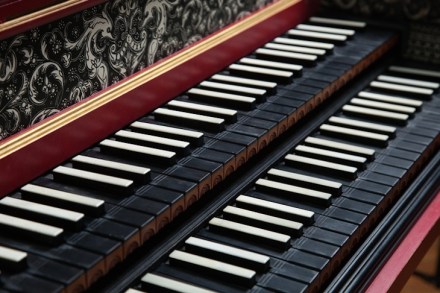
Harpsichordists are supposed to make love, not war: Sir Thomas Beecham famously compared the sound they make to ‘two skeletons copulating on a tin roof’. But now two masters of the instrument, the Iranian-American Mahan Esfahani and the German Andreas Staier, are locked in mortal combat. For connoisseurs of finely tuned insults, it’s riveting stuff. For their colleagues it’s a wretched business, because one of the two musicians is setting fire to his own reputation. Also, a third harpsichordist — a gifted young Frenchman, Jean Rondeau — has been cruelly dragged into the feud. It goes without saying in period instrument circles that Esfahani picked the fight.

Pope Francis’s liberal fan club visibly upset after he hits it off with Trump

From our UK edition

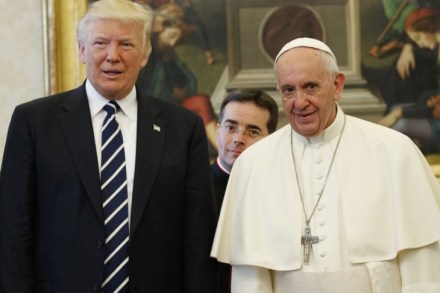
Pope Francis met President Trump this morning and they appear to have hit it off. After a 30-minute meeting in the Vatican, the president emerged beaming, describing the private audience as 'the honour of a lifetime'. The Pope, too, was described as 'grinning from ear to ear'. We don't know if the two men discussed global warming, on which they famously disagree. Francis did give Trump a copy of Laudato Si', his encyclical on the environment – but as Christoper Lamb, Rome correspondent of the left-wing Tablet, glumly tweeted: 'No mention of climate change in Vatican statement'. Lamb is not a happy bunny today.

Britain’s loss of religious faith: how should we interpret shocking new statistics?

From our UK edition

Just 30 per cent of Britons feel that their religion or faith is important to them, according to the 2017 Ipsos MORI survey of global trends. That puts us at the bottom of the international table: only Swedes (29 per cent), Belgians (27 per cent) and the Japanese (22 per cent) are more secular than we are, according to this poll. The global average, meanwhile, is 53 per cent. Muslim Indonesia heads the list with 93 per cent. Christian America is on 68 per cent, despite a recent slump in church attendance. (I'm always a bit suspicious of what Americans tell pollsters about their faith.) Even Australia – hardly a nation that flaunts its piety – is on 42 per cent.

Mission impossible?

From our UK edition

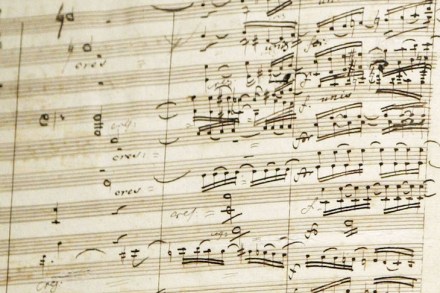
Just before Peter Donohoe played the last of Alexander Scriabin’s ten piano sonatas at the Guildhall’s Milton Court on Sunday, the autograph score of the piece was beamed on to the wall behind him. It was just a glimpse —- but enough to show us that Scriabin had the most beautiful musical calligraphy of any composer since Bach. On the face of it, that’s surprising. You would expect the Cantor of St Thomas’s to inscribe neatly — and indeed baroque musicians often play Bach straight from his own manuscripts, preening as they do so. But Scriabin is often regarded as a messy composer, in thrall to the mystical fads of pre-revolutionary Russia. So you might envisage a scrawl covered in ink blots and frenzied crossings-out.

Pope is planning to retire, say allies – but only once he’s appointed enough liberal cardinals

From our UK edition

Allies of Pope Francis are saying that he's planning to follow the example of Benedict XVI and retire. But he'll only do so once he's appointed enough liberal cardinals to make sure that the next conclave doesn't elected a conservative who will interpret Catholic doctrine more strictly than he does. This, at least, is what allies of the Pope have been telling colleagues – claiming that they've heard it from the pontiff himself. (Francis himself is a notorious chatterbox and so are some of the cardinals close to him.) The Pope, now 80, apparently wants to hold three more consistories at which he will bestow the red hat on bishops who share his vision of reform (whatever that may be: the details are still sketchy, four years in).

Egypt’s Palm Sunday massacre is an attack on Christianity

From our UK edition

At 9.30 this morning, during Mass at St George's Church in Tanto, north of Cairo, Coptic Christians were celebrating the joyful entry of Jesus into Jerusalem on Palm Sunday. And then, in the twinkling of an eye, He was welcoming at least 25 of them into His kingdom, as a bomb went off inside the church. That, at least, is what hundreds of millions of Christians believe; as Holy Week begins. They will be praying for the slaughtered men, women and children of St Mark's – and also for the victims of a suicide bombing outside St Mark's Cathedral, Alexandria, soon afterwards. As I write, the death toll from the second attack is reported to have risen to 18.

Are you scared to talk about your faith at work?

From our UK edition

Religious believers feel nervous about expressing their faith at work – either by wearing symbols or talking about religion. They're worried they'll be mocked by secular bullies. And employers aren't aware of the situation. Or don't care. That's the implication of a new ComRes report, which I'm discussing on this week's Holy Smoke with my new co-presenter Cristina Odone. As you'll hear, we don't agree. She thinks religion is becoming the love that dare not speak its name in the workplace. I think we're in danger of being dragged into a PC grievance culture. There are also some very sharp observations from Henry Dimbleby, co-founder of the Leon restaurant chain. Anyway, here's our argumentative podcast. Don't miss it – and subscribe on iTunes!

Persecuted Iraqi Christians ‘supported Trump 100 per cent’ because they felt betrayed by Obama

From our UK edition

There's an extraordinary moment in this week's Holy Smoke podcast when the aid official supervising the resettlement of 12,000 Iraqi Christians says that the latter supported Donald Trump '100 per cent' in the US elections because they felt betrayed by the Obama administration. Stephen Rasche, legal counsel and head of resettlement programmes for the Chaldean Catholics of northern Iraq, confirms that this community – now on the verge of extinction, and due to run out of medicine in 45 days – has received no help from US aid agencies or the United Nations. We recorded the episode on Friday, the day after Rasche had addressed MPs and peers in Parliament. One hopes they listened carefully, having themselves just been the targets of an Islamist attack.

All’s well that ends well | 23 March 2017

From our UK edition

There’s a moment in the finale of Beethoven’s Appassionata sonata when the frenzied piano writing turns unexpectedly jolly. The late Antony Hopkins described it as a bit of an anticlimax, ‘a little too near to the traditional Gypsy Dance that appears so often in the less probable 19th-century opera’. I’m not sure whether I agree — but one thing I can tell you is that this is the perfect moment to tap the Uber icon on your phone if you want to be whisked away during the first burst of applause, before the pianist has had the chance to play an encore. That’s the effect Maurizio Pollini’s playing has on me.

The plot against the Pope | 12 March 2017

From our UK edition

On the first Saturday in February, the people of Rome awoke to find the city covered in peculiar posters depicting a scowling Pope Francis. Underneath were written the words: Ah, Francis, you have intervened in Congregations, removed priests, decapitated the Order of Malta and the Franciscans of the Immaculate, ignored Cardinals… but where is your mercy? The reference to mercy was a jibe that any Catholic could understand. Francis had just concluded his ‘Year of Mercy’, during which the church was instructed to reach out to sinners in a spirit of radical forgiveness. But it was also a year in which the Argentinian pontiff continued his policy of squashing his critics with theatrical contempt.

Are Christian MPs being silenced by the ‘secular inquisition’?

From our UK edition

The BBC and the secular establishment don’t make life easy for Christian MPs. When Carol Monaghan, a Catholic Scottish Nationalist MP, turned up to a Parliamentary committee last week with an Ash Wednesday cross on her forehead, both her colleagues and the Beeb treated her as if she was wearing a Halloween costume. My colleague Stephen Daisley wrote about the incident for Coffee House, reflecting on the ‘secular inquisition’ that ostensibly Christian politicians must now face if they openly profess their faith. But do they even want to? Many Christian MPs are as reluctant as Tony Blair to ‘do God’ if the media are listening.

The plot against the Pope

From our UK edition

On the first Saturday in February, the people of Rome awoke to find the city covered in peculiar posters depicting a scowling Pope Francis. Underneath were written the words: Ah, Francis, you have intervened in Congregations, removed priests, decapitated the Order of Malta and the Franciscans of the Immaculate, ignored Cardinals… but where is your mercy? The reference to mercy was a jibe that any Catholic could understand. Francis had just concluded his ‘Year of Mercy’, during which the church was instructed to reach out to sinners in a spirit of radical forgiveness. But it was also a year in which the Argentinian pontiff continued his policy of squashing his critics with theatrical contempt.

The Queen is a true Christian leader. But what about Prince Charles, who seems more interested in worshipping himself?

From our UK edition

Every time I suggest on social media that the Queen is Britain's most inspiring Christian leader, there's a chorus of agreement – with Catholic voices among the loudest, interestingly. Churchgoers in this country have noticed that Her Majesty is quietly uncompromising about her beliefs; her Christmas message doesn't skate over the teaching that the infant Jesus is God incarnate: typically, it affirms it without qualification. But, as of this month, the Queen has been reigning for 65 years. Attention is inevitably focussing on the next Supreme Governor of the Church of England, presumably Prince Charles. And here the same people who recognise his mother as a Christian exemplar tend to roll their eyes.