Damian Thompson

Damian Thompson

Damian Thompson is an associate editor of The Spectator

Why didn’t Beethoven go to Mass?

From our UK edition

38 min listen

Ludwig van Beethoven had a profound faith in God. He was born and raised a Catholic and on his deathbed he asked to receive the Last Rites. He told the priest, 'I thank you, ghostly sir – you have brought me comfort.' One of his closest friends, Archduke Rudolf of Austria, was made a cardinal (before being ordained priest and bishop, something inconceivable today). To mark Rudolf's enthronement as Archbishop of Olomouc in 1819, Beethoven wrote a great Mass, and took such trouble over the setting of the Latin words that he delivered the work three years late. Yet, so far as we know, not once did the adult Beethoven actually attend a church service. Why?

The battle over female Catholic priests has just begun

From our UK edition

16 min listen

This week we heard the unfamiliar sound of one of the Catholic Church's most influential cardinals turning the handle of a door that has remained firmly shut for 2,000 years. It's marked 'Catholic women priests', a development – such is the pace of chaotic change under this pontificate – that is now a real long-term possibility. Pope Francis says he's against this innovation, but he relentlessly promotes bishops who favour it. Until now, they've been discreet about their views. Now, to use a fashionable cliché, they're saying the quiet bit out loud. As I point out in this episode of Holy Smoke, Catholic conservatives are confident that women will not – indeed, cannot – be ordained to the Catholic priesthood.

How to lose friends and ghost people

From our UK edition

In Elizabeth Day’s new book about the fragility of friendships, annoyingly but memorably entitled Friendaholic, there’s a gripping chapter on ‘ghosting’, the process of turning a friend into an ex-friend without explaining why. It culminates in the act of cutting them dead in public. I’ve always found it a haunting experience when someone does it to me, and I hope my ex-friends feel the same way when I do it to them. It can be a difficult trick to pull off, especially at a big party. I worry that the person hasn’t noticed that he or she is dead to me, and so after my initial snub I move awkwardlyaround the room, glaring at them from multiple directions. By the end of the evening they’re sighing with relief that they’ve been dropped by a loony.

Is Abu Dhabi’s multi-faith ‘Abrahamic Family House’ a beacon of hope or a creepy PR exercise?

From our UK edition

19 min listen

The Abrahamic Family House is the name for three giant concrete cubes – a church, a mosque and a synagogue – that have just officially opened their doors in Abu Dhabi. The project is the fruit of a controversial agreement signed there in 2019 by Pope Francis and the Grand Imam of Al-Azhar, Ahmad Al-Tayyeb, that disturbed many Christians with its statement that the existence of separate religions is God's will. But it's a spectacular coup for the government of the United Arab Emirates and will no doubt reassure expats that there's freedom of religion in the UAE. In fact, I wonder how many of them are even aware that 'apostasy' – for example, a Muslim converting to Christianity – remains a capital offence in the Emirates.  But is this sort of carping justified?

Why does everyone hate Max Reger?

From our UK edition

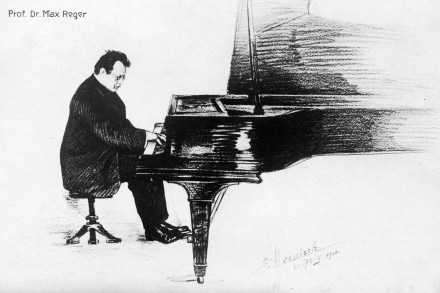
The German composer Max Reger, born 150 years ago next week, is mostly remembered today for countless elephantine fugues and one piece of lavatory humour. When he was savaged by the Munich critic Rudolf Louis, he wrote back to him: ‘Sir, I am sitting in the smallest room of my house. I have your review before me. In a moment it will be behind me.’ The quip was probably borrowed from Voltaire, but since no one can find it in his writings the credit has gone to Reger. Max Reger was probably the most technically accomplished writer of large-scale fugues since Bach But let’s not dwell on the image of the morbidly obese composer taking his revenge. What’s interesting is that Reger was hated by so many critics.

The war over the Latin Mass escalates as the Vatican slides into chaos

From our UK edition

31 min listen

Cardinal Arthur Roche, the Pope's famously ambitious liturgy chief, has stepped up his campaign against the Traditional Latin Mass, which he's been trying to suppress ever since he was Bishop of Leeds 15 years ago. This week he persuaded Francis to back his ruling that the ancient Mass can only be celebrated in parish churches with his permission – thus taking the decision out of the hands of the world's bishops, many of whom are furious at being undermined in this way.  Traditionalists are in despair; they aren't optimistic, to put it mildly, that 'Uncle Arthur' will grant permission and they fear there is worse to come. In this week's Holy Smoke I talk to moral theologian and parish priest Fr Alexander Lucie-Smith about the mounting chaos in the Vatican.

The unknown German composer championed by Mahler

From our UK edition

I was sceptical when the lady on the bus to Reading town centre told me that her father knew Liszt. Who wouldn’t be? This was a long time ago, mind: probably 1980, and I was on my way into school. I think our conversation started because I was reading a book about music. She was old and tiny, wearing a luxuriant wig. She introduced herself as Mrs Ball but her accent was unmistakably German. Even so, Liszt had been dead for nearly a century. Could it be true? ‘Oh, my father knew everyone,’ she said. ‘Richard Strauss was a great friend. And dear Bruno Walter. He lived in our house, you know. They were wonderful days – we were surrounded by the finest music.

Cardinal Pell’s righteous fury at the Vatican’s theological direction

From our UK edition

Cardinal Pell, a former head of Vatican finances, does not criticise Pope Francis directly in the piece he’s written for The Spectator. But it was the latter who instituted this ‘synodal way’ which, according to Pell, ‘has neglected, indeed downgraded the Transcendent, covered up the centrality of Christ with appeals to the Holy Spirit and encouraged resentment, especially among participants’. Pell states quite plainly that the whole process – which began with a ‘consultation’ of the laity in which only a minuscule proportion of the world’s Catholics took part – is in the process of being rigged. The synod’s participants will not be allowed to vote and the organising committee’s views will be passed on to Pope Francis ‘for him to do as he decides’.

Why Catholics are torn between the Church of Benedict and the Church of Francis

From our UK edition

16 min listen

The fallout from the death of Benedict XVI has been unexpectedly dramatic. Pope Francis’s behaviour at his predecessor’s Requiem on Thursday struck many observers as graceless. The liberal Catholic journalist Robert Mickens, a long-time opponent of many of Benedict’s policies, wrote that Francis ‘looked unpleasant throughout the liturgy and, surprisingly (shockingly, some would say), he did not attend the interment of Benedict’s body in the crypt after the Mass. The Vatican did not observe a single day of mourning... There are many of us who were never particularly enamoured of Joseph Ratzinger. But the man was the Bishop of Rome for nearly eight years. And for that alone, he deserved better than this.

Why children need proper Christmas carols, not hideous agitprop

From our UK edition

27 min listen

It's time for the Holy Smoke Christmas episode! The studio is decorated like a Dolly Parton festive special c. 1977, and my guest is the fearless and feisty Anglican church organist Lois Letts. Our theme is the urgent need to save children from the agitprop 'worship songs' that crop up in nativity and carol services even in Church of England primary schools, all of which make even Miss Parton's cheesiest numbers sound like Handel's Messiah. But be warned: Lois illustrates her point by singing one of them...

How ‘cancelled’ conservative Catholic priests are fighting to clear their names

From our UK edition

47 min listen

In this episode of Holy Smoke, I interview Fr John Lovell, who is one of a growing number of American Catholic priests who claim to have been suspended from ministry simply because their conservative views offend their bishops. Fr Lovell's Coalition for Cancelled Priests is gathering support among US traditionalists – which is hardly surprising given the Kafkaesque experiences of some priests at the hands of the authorities.  But there’s a problem: some of the coalition's supporters believe in far-right conspiracy theories that hand ammunition to left wing bishops and their allies in the liberal Catholic media.

What are Church of England services really like?

From our UK edition

33 min listen

Last week, out of a mixture of curiosity and boredom, I ended up watching an online Church of England Eucharist from a parish church in Hereford. The text of the liturgy was almost identical to that of the Catholic Mass I had attended the night before. We'd even sung the same hymn, and the celebrant’s vestments were indistinguishable from those of a Roman Catholic priest. But the person wearing them was a woman, and it reminded me that since that particular battle ended nearly 30 years ago I had been present at only one C of E Sunday Eucharist. So in this episode of Holy Smoke I ask William Moore, The Spectator’s features editor, what it’s like to attend Anglican services outside London, as he does weekly with his young family in Sussex.

Cardinal Zen’s conviction shows that no one is safe in Hong Kong

From our UK edition

Cardinal Joseph Zen Ze-kiun, the 90-year-old retired bishop of Hong Kong, has been convicted of failing to register a humanitarian relief fund and fined 4,000 Hong Kong dollars (about £400) after being punished for supporting pro-democracy demonstrators during the mass protests in Hong Kong. The fine may seem small, but this is Beijing’s way of saying that even a frail and saintly cleric who walks with the aid of a stick is not safe to endorse democracy. No one is. All Beijing has done is decided not to proceed with charges that Zen colluded with a foreign power.

Carries the whiff of a hotel-lounge pianist: Vikingur Olafsson’s From Afar reviewed

From our UK edition

Grade: B+ The 38-year-old Icelandic pianist Vikingur Olafsson has an almost unique ability to make counterpoint sing, as his astonishing 2018 Bach recital for DG revealed. But his Proms debut last year in Mozart’s Piano Concerto K491 seemed over-thought, verging on the fussy. Now he’s been allowed the luxury of a concept double album, From Afar, in which he plays an eccentrically curated mixture of small pieces twice, once on a Steinway grand and once on an upright. It’s a revelation, though not perhaps the one Olafsson intended. He says the two instruments call for different approaches to his menu of Bach transcriptions, Schumann, Brahms and snippets of Bartok, Kurtag and Adès.

Midterm madness

From our UK edition

37 min listen

On the podcast: In his cover piece for the magazine, The Spectator's deputy editor Freddy Gray says the only clear winner from the US midterms is paranoia. He is joined by The Spectator's economics editor Kate Andrews to discuss whether the American political system is broken (00:52). Also this week: Isabel Hardman writes that Ed Miliband is the power behind Kier Starmer's Labour. She is joined by former Labour advisor Lord Stewart Wood of Anfield, to consider whether Starmer is wise to lend his ear to the former Leader of the Opposition (12:48). And finally: King Charles III is known for his love of classical music, and Damian Thompson writes in this week's arts lead that he is the most musical monarch since Queen Victoria.

King Charles III’s love of classical music

From our UK edition

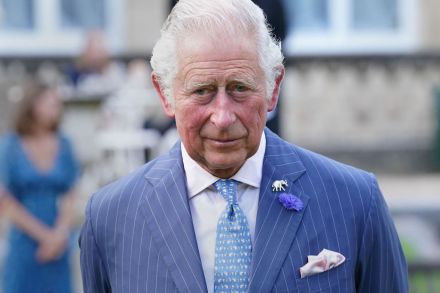
The musical tastes of King Charles III are more sophisticated than those of our late Queen. That’s not being rude: it’s just a fact. Her favourite musician appears to have been George Formby, whose chirpy songs she knew by heart. No doubt she relished their double entendres – but the hint of smut meant that, to her regret, she had to decline the presidency of the George Formby Society. Our new monarch, by contrast, adores the Piano Concerto in E flat major by Julius Benedict (1804-85). He recommended it in an interview a couple of years ago. I’d never heard of the piece, which existed only in manuscript until Howard Shelley and the Tasmanian Symphony Orchestra recorded it for Hyperion in 2008.

Vatican II has always been seriously misunderstood

From our UK edition

People no longer moan about most of the things that bothered them during my childhood. You don’t hear old folk at bus stops ridiculing the ‘new pence’ of decimal currency. Students no longer care about Vietnam. Retired wing commanders have finally stopped writing to the newspapers about the misuse of that fine old English word ‘gay’. But there is one topic that still attracts world-class windbags. It’s worthy of inclusion in the fictional world boring championships described by the Daily Telegraph’s Peter Simple column, right up there with ‘A history of plywood’ and ‘Parking problems in Wolverhampton’. We’re talking about the Second Vatican Council, whose first session was held 60 years ago last month.

Papal bull: the shame of the Vatican’s dealings with China

From our UK edition

This week Cardinal Joseph Zen Ze-kiun, the 90-year-old retired bishop of Hong Kong, went on trial in Kowloon Magistrates Court as a punishment for supporting pro-democracy demonstrators during the mass protests in Hong Kong. He was arrested in May and, along with four other trustees of a humanitarian relief fund, charged with failing to register the organisation properly. The chances that he will be acquitted are slim, to put it mildly. This is Beijing’s way of confirming that Hong Kong is now a police state. Even a frail and saintly cleric who walks with the aid of a stick is not safe to endorse democracy. No one is.

Sixty years on, Vatican II turns nasty

From our UK edition

14 min listen

Ten years ago the Catholic Church happily celebrated the 50th anniversary of the opening of the Second Vatican Council. Most people thought it was a good thing – and those who had their doubts were careful to express them diplomatically. Sixty years on, by contrast, Vatican II is the source of rancorous division in a collapsing Church. Liberals, describing themselves as 'The People of God', are invoking it to propose surreal changes to the doctrine that would have scandalised the Council fathers. They like to portray the forthcoming two Synods on Synodality – whose consultations attracted only a minuscule number of lay Catholics – as the fulfilment of Vatican II. Even, in some circles, as a sort of Vatican III.

The Catholic Church is falling apart at the seams

From our UK edition

20 min listen

This headline may seem sensational, but the evidence is overwhelming. The Catholic Church is experiencing a bewildering range of crises, some of them long-term and familiar, such as demographic collapse and the continuing scandal of sex abuse. Others are being manufactured by a Pope who is allowing a faction of Catholic boomers to push an incoherent 'New Age' agenda. Whether Francis truly supports their ideas is anyone's guess – but he's increasingly willing to spout their inanities. On Saturday the Pope's official Twitter account told the faithful:'The plant paradigm takes a different approach to earth and environment. Plants cooperate with all the surroundings [sic] environment; even when they compete, they cooperate for the good of the ecosystem.