Damian Thompson

Damian Thompson

Damian Thompson is an associate editor of The Spectator

One year of Pope Leo – a promising start?

37 min listen

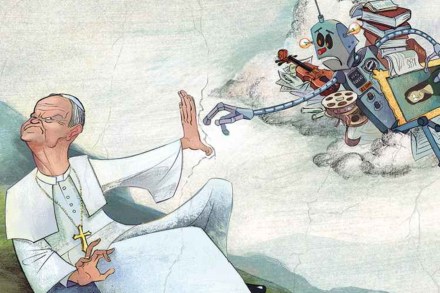
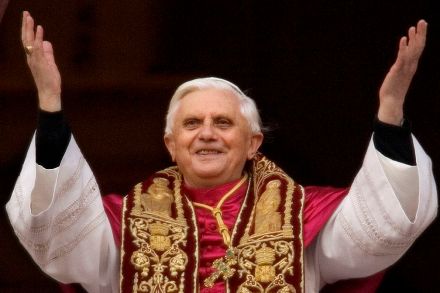
One year on from when Pope Leo became head of the Catholic church and he remains a bit of an enigma. Is he a Conservative or Liberal? What did we learn from his clash with Donald Trump? Damian Thompson is joined by editor of The Pillar Ed Condon and two Spectator favourites – Freddy Gray and Mary Wakefield.

One year of Pope Leo – a promising start?

The magic ears of Hyperion

From our UK edition

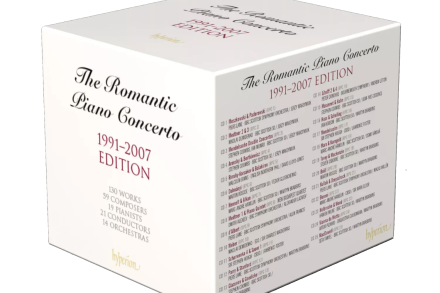
How do we evaluate Hyperion’s Romantic Piano Concerto series, which over a period of 35 years recorded more than 200 works for piano and orchestra? Was it one of the glories of the catalogue or a repository of works whose ambitions exceeded their achievement? The answer, of course, is that it was both. The paradox is unavoidable. You can’t assemble a giant collection of mostly forgotten concertos on the assumption that they all deserve to be famous – which, to be fair, Hyperion doesn’t claim: the liner notes often concede that a piece ‘perhaps understandably failed to secure a place in the repertoire’ or some such euphemism. But they may deserve to be recorded. Keyboard pyrotechnics can be their own reward, compensating for vapid melodies or structural lumps.

Is Pope Benedict’s Ordinariate for ex-Anglicans finally going to realise its potential? 

From our UK edition

30 min listen

In 2009 Pope Benedict XVI upset liberals by creating the Ordinariates, new self-governing structures for ex-Anglicans who wanted to preserve their ‘patrimony’ in their worship and evangelisation. Until now, many bishops in the English-speaking world have done their best to marginalise the Ordinariates, despite – or perhaps because of – the dynamism of their clergy. But Pope Leo has now affirmed the Ordinariates as a permanent feature of the church. Could Pope Benedict’s bold initiative soon be working as he intended? In this episode of Holy Smoke, Damian Thompson talks to two leading Ordinariate priests, Fathers Ed Tomlinson and Benedict Kiely. Don’t miss this unusually frank discussion.

Why has Trump picked a fight with the Pope?

From our UK edition

25 min listen

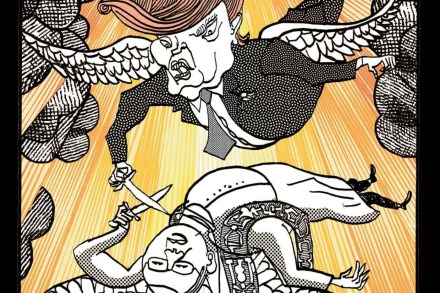
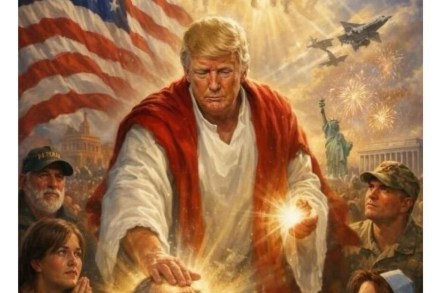
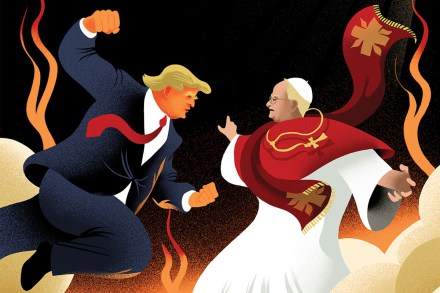
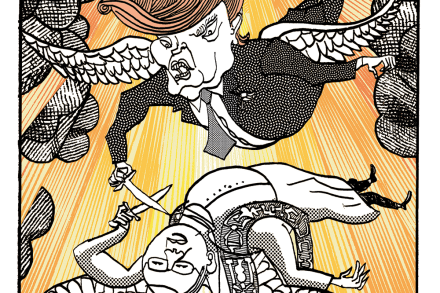
Donald Trump’s latest clash with the Pope has stunned even the more hardened of America-watchers. According to the President of the United States Chicago-born Pope Leo XIV, the spiritual leader of 1.3 billion people, is 'WEAK on crime and terrible on foreign policy.' He also claimed that, 'If I wasn’t in the White House, Leo wouldn’t be in the Vatican.' Is the war in Iran the only reason the Pope and the President have clashed? And what does it tell us about religious relations in the US today? In a special podcast collaboration, the host of Holy Smoke Damian Thompson and the host of Americano Freddy Gray discuss the dispute. Produced by Patrick Gibbons and Natasha Feroze.

Why has Trump picked a fight with the Pope?

Pope vs Trump: why Trump picked a fight with Pope Leo

Donald Trump’s latest clash with the Catholic Church stunned even the most hardened veterans of culture-war X. According to the President of the United States, the Chicago-born Pope Leo XIV, the conspicuously holy spiritual leader of 1.3 billion people, is “WEAK on crime and terrible on foreign policy.” He also claimed, “If I wasn’t in the White House, Leo wouldn’t be in the Vatican.” Spectator associate editor Damian Thompson joins Freddy Gray to discuss the dispute.

Pope vs Trump: why Trump picked a fight with Pope Leo
trump pope damian thompson

What’s really behind Trump’s clash with the Pope?

Donald Trump’s latest clash with the Catholic Church stunned even the most hardened veterans of culture-war X. According to the President of the United States, the Chicago-born Pope Leo XIV, the conspicuously holy spiritual leader of 1.3 billion people, is “WEAK on crime and terrible on foreign policy.” He also claimed that, “If I wasn’t in the White House, Leo wouldn’t be in the Vatican.” For commentators accustomed to the fog of modern diplomatic platitudes, such trash talk was the equivalent of a Holy Roman Emperor hurling insults at a medieval pontiff.

Trump has underestimated the Pope

From our UK edition

Donald Trump’s latest clash with the Catholic Church stunned even the most hardened veterans of culture-war Twitter. According to the President of the United States, the Chicago-born Pope Leo XIV, the conspicuously holy spiritual leader of 1.3 billion people, is ‘WEAK on crime and terrible on foreign policy’. He also claimed that ‘if I wasn’t in the White House, Leo wouldn’t be in the Vatican’. For commentators accustomed to the fog of modern diplomatic platitudes, such trash-talk was the equivalent of a Holy Roman Emperor hurling insults at a medieval pontiff.

How homosexuality has torn apart the United Methodist Church

From our UK edition

18 min listen

The United Methodist Church has experienced a sharp decline over the past century, from an estimated 11 million members in the 1950s to around 4 million now. However, over 1 million of those are estimated to have left since 2022 alone, due to splits over the teaching of homosexuality. Can the Church survive? And what does this tell us about Christianity in America in general – are we entering a 'post-denominational era'? Mark Tooley, president of the Institute on Religion and Democracy – and a committed Methodist, joins Damian Thompson to discuss. Produced by Patrick Gibbons.

How homosexuality has torn apart the United Methodist Church

The US hasn’t threatened to bomb the Vatican

The first American pope does not like the President of the United States. One of the few things we knew about the Chicago-born Robert Prevost when he was elected last May was that – despite having an older brother who supported MAGA – he detested the immigration policies of the Trump administration. His private X account, now deleted, made that clear. Pope Leo has rejected the president’s invitation to visit the United States to celebrate his own country’s 250th anniversary; instead, he will visit Lampedusa, the Mediterranean island collapsing under the strain of thousands of North African migrants who have risked their lives to get there. We have gone from a baffling reference to a medieval schism to the suggestion that President Trump may – what? – bomb the Vatican?

How would you sell Christianity today? with Rory Sutherland

From our UK edition

30 min listen

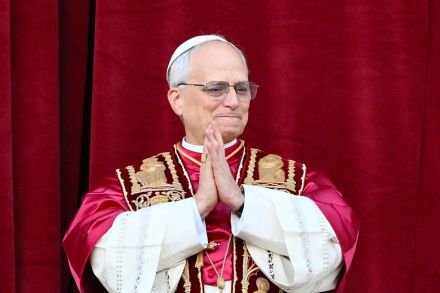
Advertising guru – and the Spectator's Wiki Man – Rory Sutherland joins Damian Thompson to try and tackle the question 'how would you sell Christianity – today?' If religions have previously thrived by providing a form of social network and an 'elevated trust mechanism', perhaps there ways in which they can adapt for modern society – especially as many people appear to be turning away from conspicuous consumption and searching for meaning. In this Easter special they ponder: are religious people less likely to be alcoholics? Does driving make you a better person? And are Churches today akin to the carrier pigeon of yesteryear? Produced by Patrick Gibbons.
How would you sell Christianity today? with Rory Sutherland

The truth about the quiet revival – with grounds for optimism 

From our UK edition

25 min listen

The past year has seen a deluge of reports and investigations about young people finding faith and flocking back to Christianity – including here on Holy Smoke. All roads lead back to a Bible Society study which claimed that – backed up by polling from YouGov – a ‘quiet revival’ was underway. Yet, one year on, YouGov has pulled the survey due to data errors and the Bible Society was forced to apologise. While the credibility of the survey is undermined, this doesn’t necessarily chime with anecdotal evidence from some quarters. So what is the truth behind the ‘quiet revival’?

The truth about the quiet revival – with grounds for optimism 

Lisa Haseldine, Matthew Parris, Damian Thompson, Peter Pomerantsev, Chas Newkey-Burden & Catriona Olding 

From our UK edition

41 min listen

On this week’s Spectator Out Loud: Lisa Haseldine reports from Svalbard; Matthew Parris reflects on the Iran crisis during Holy Week; Damian Thompson assesses how Pope Leo XIV is quietly reshaping the Vatican; Peter Pomerantsev reviews Jack Watling’s Statecraft; Chas Newkey-Burden provides his notes on marathons; and finally, from Provence, Catriona Olding reflects on comfort and companionship. Produced and presented by Patrick Gibbons.

How Pope Leo XIV is quietly reshaping the Vatican

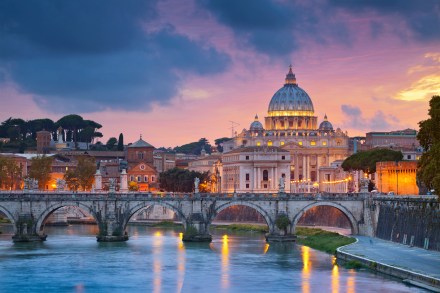
On the afternoon of Easter Sunday last year, Pope Francis was driven through St Peter’s Square in an open-topped Popemobile. A few weeks earlier he had nearly died from pneumonia, so pilgrims were thrilled to watch him blessing babies. They told journalists that it was a miracle to see the 88-year-old Argentinian in such good shape. At 9.45 the next morning the Vatican announced that Francis had just died from a stroke. And so began the preparations for a conclave that elected the second pope from the Americas. Cardinal Robert Prevost – ‘Bob’ to his friends – was a Chicago-born dual citizen of the United States and Peru. Until 2023 he’d been bishop of the Peruvian diocese of Chiclayo.

Prince William resets faith – as Sarah Mullally enthroned

From our UK edition

37 min listen

Dame Sarah Mullally has been enthroned as the Archbishop of Canterbury, the first female head of the Church of England. Prince William attended as the representative of the Monarch and – as heir to the throne – the person who will one day become Supreme Governor of the Church. His attendance came a few days after an interview appeared in The Times where Prince William seemed to be pressing 'reset' on his relationship with faith. Friend of Holy Smoke, The Daily Mail’s Robert Hardman – author of the forthcoming biography Elizabeth II. In Private. In Public.

Prince William resets faith – as Sarah Mullally enthroned

Iran: why Shia Islam’s tradition of martyrdom is key to understanding the conflict

From our UK edition

29 min listen

When Ayatollah Khamenei was assassinated early in the Iran conflict, and during the Muslim holy month of Ramadan, it was celebrated by the Trump administration – who saw this as a large step towards regime change in Iran. Yet, for Khamenei's supporters, his death secured him a place amongst other celebrated Iranian martyrs. Shia Islam has a long tradition of martyrdom, something under-appreciated in the global West, and which goes some way to explaining why the current regime has survived in the face of external threats. Yet, as Dr Eric Lob explains, there is still nuance between the faith of the theocratic regime and those adherents of Shia Islam in the country who are less political.

Iran: why Shia Islam's tradition of martyrdom is key to understanding the conflict

Who is Sarah Mullally?

From our UK edition

45 min listen

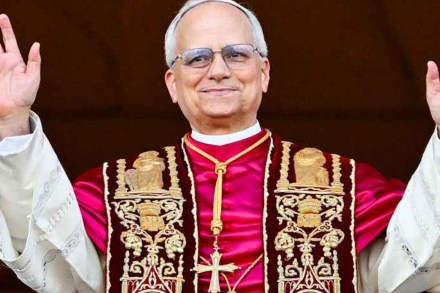
One week from the enthronement of Sarah Mullally as the new Archbishop of Canterbury, her biographer Andrew Atherstone – Professor of Modern Anglicanism at Oxford University – joins Damian Thompson for this episode of Holy Smoke. This marks the second profession she has risen to, having first been the most senior nurse in England & Wales. Archbishop Mullally has led an 'ordinary, suburban' life and is by all accounts well-liked by her congregations but what do we know of her views on some of the most controversial topics in her in-tray: abortion, gay blessings and safeguarding – to name but a few. Is it fair to say she is the 'Welby-continuity' candidate? Produced by Patrick Gibbons.
Who is Sarah Mullally?

Damian Thompson, Francis Pike, Ysenda Maxtone-Graham & Lloyd Evans

From our UK edition

25 min listen

On this week’s Spectator Out Loud: Damian Thompson says his addiction to the piano has only got worse with age; Francis Pike ponders if Kim Jong-Un is lining up a female successor; Ysenda Maxtone-Graham explains the art to left-wing boasting; and finally, Lloyd Evans contemplates becoming a magistrate. Produced and presented by Patrick Gibbons.
Damian Thompson, Francis Pike, Ysenda Maxtone-Graham & Lloyd Evans

My addiction to playing the piano is driving everyone mad

From time to time, I’ve given some famous pianists a bit of a kicking in the arts pages of this magazine. You may be a Bach specialist, but that’s no excuse for sleepwalking through all six keyboard partitas in a marathon recital. Your Beethoven Diabelli Variations may be renowned, but don’t expect a rave review if you trap me in an intimate concert venue while you pound the keys like a pneumatic drill. You’d think, though, that a journalist who snipes at world-class soloists would have the sense to keep his own amateur playing to himself. And if he’s idiot enough to post a recording on social media, he should learn to take what he dishes out. Alas, I never learn. The older I get, the more addicted I become to playing an instrument that I have no hope of mastering.

In defence of Christian monarchies

From our UK edition

30 min listen

Historian and American monarchist Charles Coulombe joins Damian Thompson to make the case for traditional monarchies. He argues that monarchs are unjustly cast as tyrants, when they should be seen as defenders of tradition – especially in an era of secular western politicians who seem to hate the countries they serve. Charles even goes further to suggest such type of rule is ‘natural’. But how can popular support for monarchies survive in the modern age?

In defence of Christian monarchies

How Russia is waging Holy War in Ukraine

From our UK edition

32 min listen

On the fourth anniversary of Russia's full-scale invasion of Ukraine, Dr Yuri Stoyanov – of SOAS university in London – joins Damian Thompson to reflect on the religious dimensions of the war once again. The theological gulf between Russia and Ukraine is perhaps comparable to the political one and, for now, seems insurmountable, with the war increasingly being framed in some spheres as a 'Holy War'. You have to stretch back to the First World War to find a war within Christendom framed in these terms, but what effect is this having on the family of Orthodox churches across Europe and the Middle East? And how can we better understand this strand of Russian 'jihadism'? Plus, what has the impact of the Papal succession been?