Dalibor Rohac

Dalibor Rohac is a senior fellow at the American Enterprise Institute in Washington DC. He tweets @DaliborRohac

Orbán’s defeat spells trouble for Trump

From our UK edition

The path ahead for Hungary’s new government – set to be formed in the coming days by Péter Magyar’s Tisza party – is not an easy one. The country is facing worsening economic problems: high inflation, slow growth, and deteriorating public finances. After 16 years of unchecked rule, the defeated Fidesz party will continue to have loyalists in key positions in business, public administration, the judiciary, and elsewhere. Despite America’s social conservatives’ fascination with Hungary, Orbán’s policies have led neither to a renewal of family life and organised religion Yet Sunday was a monumental day for European – and US – politics.
Poland’s divisions are bad news for Europe

From our UK edition

Against the background of turbulent transatlantic relations, the visit this week of Poland’s new president, Karol Nawrocki, to Washington was deemed a success. US president Donald Trump affirmed continuation of US commitment to Poland’s security and invited Poland to join G20, in a testament to the country's impressive economic record. Yet the trip also leaves a bitter aftertaste by exposing the depth of Poland’s political divisions. These splits are starting to affect Poland’s ability to throw around its weight on the global stage – precisely at a moment when Poland’s voice is more needed than ever.

The good, the bad and the ugly of the Trump-Putin summit

From our UK edition

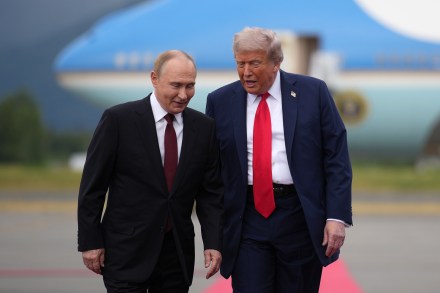
The three-hour Friday summit in Alaska between Donald Trump and Vladimir Putin ended as well as it conceivably could have ended: as a big nothingburger. But that does not mean that Ukraine and its supporters can breathe a sigh of relief. Trump may be unhappy that the prospect of his Nobel Peace Prize remains elusive as Putin has not agreed to an immediate ceasefire in Ukraine. But it is far from clear that he will end up directing his anger against Russia. The US president neither understands nor cares about understanding Putin’s motives and the threat he poses to the world To be sure, it is a good thing that nothing of substance was agreed in Anchorage.

The Polish right is radicalising

From our UK edition

In some ways, Poland’s presidential election on Sunday seems a simple continuation of the country’s long-standing status quo. Karol Nawrocki, Poland’s ‘populist’ new president, is expected to extend the existing gridlock between the president’s office and the cabinet, controlled respectively by Law and Justice (PiS) and Donald Tusk’s Civic Platform (PO). The close result in the run-off, moreover, appears to be in line with the deep polarisation of Polish public opinion between two camps that increasingly see each other as enemies, not just as political opponents. Poland’s right is radicalising and blurring its traditionally sharp foreign policy thinking Yet, this short-term continuity should not blind us to signs of looming change.

The EU is being timid with Ukraine

From our UK edition

Donald Trump may have pulled the world in a decidedly protectionist direction, but the European Union is not doing its part to lead by example and uphold the ideals of free trade – not even with Ukraine, where the strategic case for free and frictionless trade is overwhelming.  On 6 June, the EU is expected to end the existing tariff-free regime introduced after the Russian invasion, subjecting Ukrainian imports of agricultural commodities to very tight caps, as stipulated by the earlier Deep and Comprehensive Free Trade Agreement (DCFTA) between the EU and Ukraine.

Why the EU must save Radio Free Europe

From our UK edition

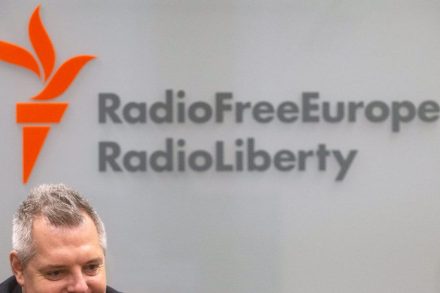
To the distress of many, Donald Trump's senior advisor Kari Lake announced the discontinuation of federal funding for several iconic news outlets administered by the US Agency for Global Media (USAGM), including Radio Free Europe-Radio Liberty (RFE-RL) and Voice of America.  These multi-language broadcasters are not simply remnants of the Cold War, nor are they 'a giant rot and burden to the American taxpayer', as Lake’s disgraceful announcement puts it. The US-funded news outlets that are being effectively closed down have been key to America’s soft power in the world, especially in unfree countries.

Trump risks playing into Putin’s hands on a Ukraine peace deal

From our UK edition

With the phone call between Donald Trump and Vladimir Putin, the quest for a peace deal for Ukraine is off to a troubling start. The conversation hinted at an eventual normalisation of United States-Russia relations and signalled that negotiations are likely to be led over the heads of Europeans – and Ukrainians – and possibly without input from Trump’s own Ukraine envoy, Keith Kellogg.  ‘As we both agreed, we want to stop the millions of deaths taking place in the War with Russia/Ukraine’, Donald Trump wrote after his conversation with the Russian leader. ‘President Putin even used my very strong Campaign motto of, ‘COMMON SENSE.’ We both believe very strongly in it.

The EU’s decarbonisation plan can’t survive Donald Trump

From our UK edition

As in a more delirious version of Bill Murray’s Groundhog Day, Donald Trump withdrew from the Paris Climate Accord on his first day in office, again. In a thinly-veiled attempt to mend Beijing’s relations with Europe, Chinese foreign ministry spokesman commented: “Climate change is a common challenge facing all of humanity. No country can stay out of it, and no country can be immune to it.” Whatever their views on climate change, Europeans and British would do well to realise that decades-long effort to reduce emissions through multilateral deals is over. Continuing on one’s own – after America’s explicit repudiation of the COP framework, and in light of the track record of economies such as China and India – is worse than embracing a cargo cult.

Georgia’s elections didn’t have to pan out this way

From our UK edition

The news that came out of Georgia late on Saturday was as saddening as it was predictable. For weeks, the country’s ruling party, the Russia-aligned Georgian Dream (GD), were advertising that they saw no alternative to staying in power following the rigged parliamentary election – promising a ban on opposition parties and even 'Nuremberg trials'. If there is any surprise at all, it is the sheer brazenness with which GD tilted the results in its favour. There were widespread violations of vote secrecy, including tracking voters outside polling stations, verbal threats and violence.

Slating Nato won’t help Donald Trump

From our UK edition

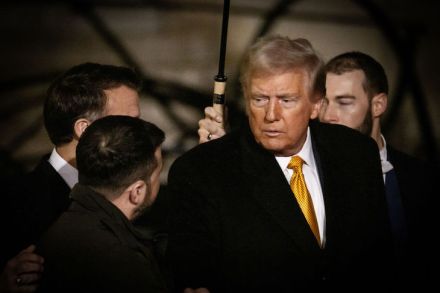
Reacting to Volodymyr Zelensky’s visit to Scranton, Pennsylvania, earlier this week, Donald Trump reiterated his long-standing ambition to bring Russia’s war in Ukraine to a quick negotiated settlement instead of continuing with open-ended military support to Kyiv. If he wins the election, Trump said, ‘the first thing I’m gonna do is call up Zelensky and call up President Putin and I’m gonna say, “You gotta make a deal, this is crazy”.’ Trump is often seen as mercurial and unpredictable – an impression he revels in – but his desire to solve conflicts with real estate-like deals forms a consistent pattern of his foreign policy.

Will Jordan Bardella’s support for Ukraine last?

From our UK edition

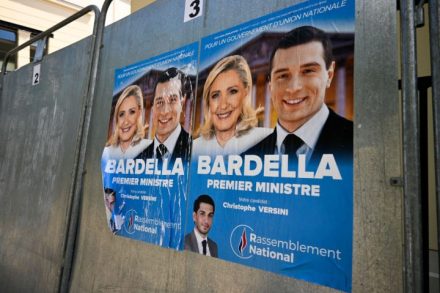
Has France’s far right just made a 180-degree turn on Ukraine? The leader of the National Rally, Jordan Bardella, expressed his support for sending 'ammunition and equipment [Ukraine] needs to hold the front' at a recent arms fair. Last year, Bardella stated 'the war would not end without a withdrawal of Russian troops and a return of complete and full sovereignty of Ukraine on the territories that are currently occupied by Russia'. Bardella, just like other figures on France’s nationalist right is hedging his bets. He is, for example, against sending 'equipment that could have consequences of escalation in Eastern Europe'. Likewise, Marion Maréchal, the niece of Marine Le Pen, wishes for Ukraine’s victory but does not want to see Ukraine join Nato.

The EU election spells trouble for Ukraine

From our UK edition

If one story dominates the cacophony of results of the European election from across the 27 countries of the Union, it is the defeat of incumbents in the EU’s largest member states: France and Germany. While their underperformance was expected, its aftershocks risk leaving Europe weak and ineffectual in the face of Russian aggression in Ukraine.  It is hard to see how Macron or Scholz will become bolder in their Ukrainian positions in the coming months In France, president Emmanuel Macron responded to the poor performance of his party, Renaissance, by calling a snap election for 30 June – less than two weeks before Nato’s summit in Washington.  The logic of his decision is simple: it is better to confront the National Rally (RN) of Jordan Bardella now than in 2027.

The assassination attempt on Robert Fico will change Slovakia for ever

From our UK edition

Slovakia’s prime minister Robert Fico is fighting for his life in hospital after being shot several times. While it is impossible to fully flesh out the consequences of today’s assassination attempt, it is safe to say that the event is a dramatic game changer for Slovak, and potentially for Central European, politics. During a meet and greet with the public following a cabinet meeting in the small mining town of Handlová, a man reportedly shouted at Fico, 'Rob, come here,' before shooting at him three or four times aiming at his chest and abdomen. The prime minister fell on the ground before being taken by his protection officers to the car and then on to the hospital in Banská Bystrica. His alleged attacker has been arrested.

The real reason Macron is suddenly talking tough on Russia

From our UK edition

What should we make of the recent hardening of Emmanuel Macron’s position on the war in Ukraine? At the beginning of the conflict, France’s president spent countless hours talking with Vladimir Putin; now, he spends his time entertaining scenarios in which French troops could be sent to Ukraine, and calling on other European leaders to stop being 'cowards'. The Wall Street Journal reports today that Macron used secret conversations with US president Joe Biden and German Chancellor Olaf Scholz to get them to change the way they deal with Ukraine. What explains Macron's new approach?

It’s time to give Poland nuclear weapons

From our UK edition

As Donald Trump marches towards the Republican nomination, a question hangs over Europe: how should the continent prepare for a world in which Nato becomes dead letters? For some, the answer is ‘strategic autonomy’; for others, it lies in procuring as much US-made kit as possible to buy goodwill with the future administration. One obvious response, however, has been left by the wayside: nuclear deterrence. When it comes to Trump-proofing the security of Eastern Europe, few measures would be as effective as arming the largest country of the region – Poland – with nuclear weapons.

The EU is incapable of defending itself

From our UK edition

For years, European leaders have recognised that ‘in a world of carnivores, vegetarians have a very tough time of it,’ as Germany’s former Foreign Minister Siegmar Gabriel put it in 2018. Six years later, as a handful of well-armed Houthi pirates all but shut down maritime trade on the Red Sea, Europe is finding itself to be a vulnerable vegetarian once again.   To prevent the Houthis blocking trade through the Suez canal, ‘Operation Prosperity Guardian’ was launched in December. Although it is ostensibly a multinational coalition, in reality it is an American project, led by a US carrier strike group. The UK has sent one ship, as have Denmark and Greece.

The EU has become paralysed by its own bad decisions

From our UK edition

In 2019, France’s president Emmanuel Macron famously called Nato ‘braindead’. Think what you will about the health of the defence alliance, but it is increasingly the European Union, not Nato, that seems paralysed, unable to think more than just a step ahead.  The EU has been trundling along in this state for some time now. On the European Commission’s recommendation, EU leaders are due to make a decision next week about opening accession negotiations with Ukraine. Yet, little groundwork has been laid to turn even this initial step into a success. Hungary’s Viktor Orbán has already fired his opening salvo, refusing to even discuss the issue and threatening to derail the €50 billion (£42.8 billion) fund set aside to assist Ukraine over the years 2024-2027.

The unfortunate reality about US support for Ukraine

From our UK edition

Pranked by a Kremlin-friendly comedy duo, Italy’s Prime Minister, Giorgia Meloni, spoke for many when she confessed her 'fatigue' with the war in Ukraine. But there is some bad news for all the Europeans 'tired' of the conflict. Europe’s real job will only begin when the current war of attrition eventually congeals along more or less static lines, with or without a formal armistice.  The task ahead will not only involve physical reconstruction, budget support, or bringing Ukraine closer to EU membership. Much more importantly, it will involve guaranteeing the stability of whatever formal or informal settlement arises from the war.

Law and Justice has lost. Where does Poland go now?

From our UK edition

If it continues to hold, the likely electoral victory of Poland’s opposition last night is good news for all those concerned by the health of Polish democracy. In a recent piece in The Atlantic, Anne Applebaum painted a dire picture of creeping state capture, suggesting that in some ways, 'Poland already [resembled] an autocracy,' and eloquently arguing why the election campaign was 'neither free nor fair.'  She has a point. Yet, notwithstanding the ruling party’s vicious and paranoia-driven campaign, the election was bound to be a highly competitive one. But even if the Law and Justice Party (PiS) won enough mandates to form a government, it would hardly be in a position to place the country on a one-way path to authoritarianism.

America’s support for Israel must not come at the price of backing Ukraine

From our UK edition

Hamas’s heinous attack and the robust Israeli response serve as a useful reminder of well-known double standards on the activist left. In an echo of those US Republicans who are unable to see Ukraine’s defence against Russian aggression with any moral clarity – framing it instead as a 'territorial dispute' – some commentators have been reluctant to condemn Hamas’s terrorism, at least not without first appropriately 'contextualising' it. The attack, however, also uncovered a more recent and worrying trope taking root on both sides of the political spectrum: the idea, implicit or explicit, that the United States can only focus on just one issue at a time.