In the shadow of Vesuvius
An exclusive extract from Daisy Dunn’s new biography of Pliny
From our UK edition
Heinrich Schliemann had always hoped he’d find Homer’s Troy. Although he had no archaeological background to speak of, he did have money, and spades, and in the 1870s this would do. Tipped off as to the probable location of the ancient citadel — beneath Hisarlik on the west coast of modern Turkey — the Prussian
From our UK edition
This Changeling Self, Radio 4’s lead drama this week, clearly ought to have gone out in August. It’s set — and was recorded — at the Edinburgh Festival and would have been a gift to marketing. ‘I love the festival!’ coos She. ‘All these millions of conversations, listen, listen, oh and stories, lots of stories,
From our UK edition
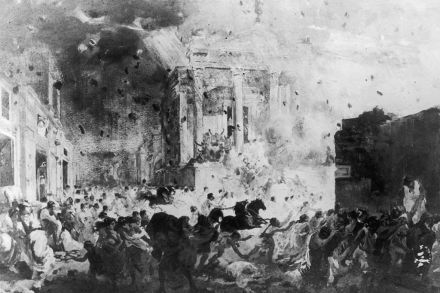
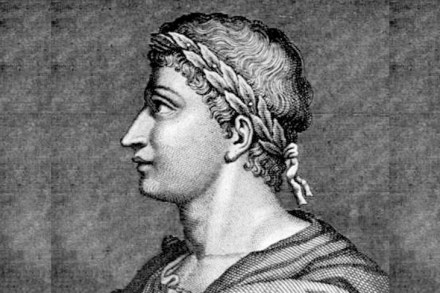
One afternoon in AD 79 an unusual cloud appeared above Vesuvius in the Bay of Naples. ‘It was raised high on a kind of very tall trunk,’ recalled Pliny the Younger, likening it to an umbrella pine tree, ‘and spread out into branches.’ When, finally, the cloud collapsed and the sky grew dark, some people
From our UK edition
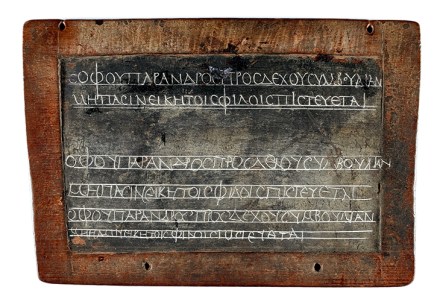
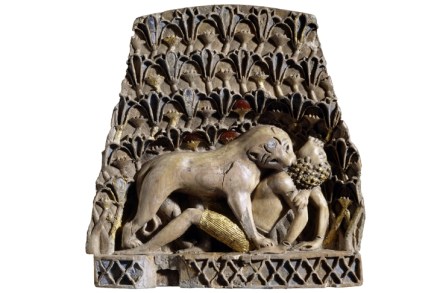
The Mesopotamians wrote on clay and the ancient Chinese on ox bones and turtle shells. In Egypt, in about 1,800 BC, someone even found the space to scrawl on a portable sandstone sphinx. Look closely towards the base of the sculpture and you will find a delicate line drawing of an ox head. Remarkably, this
From our UK edition
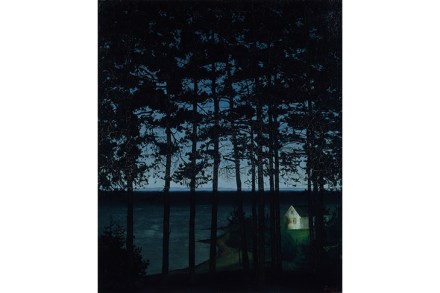
If you’re tired of hygge then you’ll like Harald Sohlberg. The Norwegian painter eschewed the cosy fireside for the great outdoors, eager to see what view might greet him as he wandered the woods and country roads of Norway in the failing light. While his contemporary Nikolai Astrup filled his landscapes with people, Sohlberg preferred
From our UK edition
The little-known painter Cyril Mann (1911-80) saw a lot from his council-flat window. Beyond the parks and trees and red-brick houses was St Paul’s, rising triumphantly through the haze. Mann, who grew up in Nottingham and trained at the Royal Academy in the 1930s, had painted the bombsites around Spitalfields and the streets of postwar
For online bigots, ancient history is the tip of the Zuckerberg
From our UK edition
The Assyrians placed sculptures of winged human-headed bulls (lamassus) at the entrances to their capital at Nineveh, in modern Mosul, to ward off evil. The mighty lamassu to the right of the Nergal Gate had been on guard for some 2,700 years when Isis vandals took a drill to it in 2015 and blew away
From our UK edition
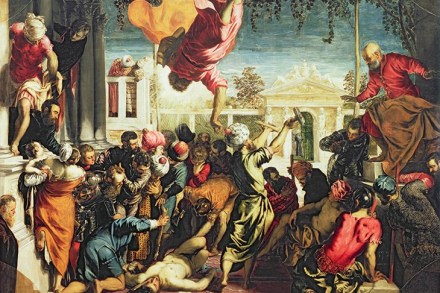
Tintoretto was il Furioso. He was a lightning flash or a thunderbolt, a storm in La Serenissima of Renaissance Italy, a maverick and a cheat. One of his friends, a fellow Venetian, likened him to a peppercorn overwhelming ten bunches of poppies. More often than not, those poppies were rival artists. He trampled them like
From our UK edition
Kublai Khan, said Marco Polo, had ‘a more extensive command of treasure than any other sovereign in the universe’. There were no jangling pockets of coins in Kanbalu. Bark had been stripped from the mulberry trees and beaten into paper notes. The notes carried delicate little pictures of earlier currency — long, frayed ropes weighed
From our UK edition
Nothing was so interesting to Yves Klein as the void. In 1960 he leapt into it for a photograph — back arched, chin raised, spread-eagled. The same year, he took out a patent for International Klein Blue (IKB), a colour inspired by the limitlessness of the sky itself. He even went so far as to
From our UK edition
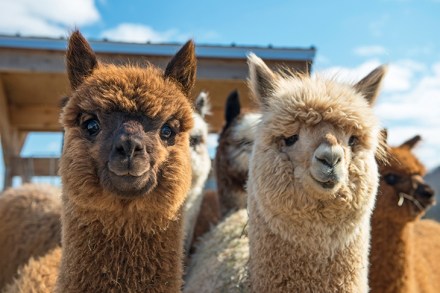
Of all the window displays in Amsterdam this spring there was just one that stopped me in my tracks. I had come for tulips, canals, the tremendous Van Gogh and Japan exhibition, but the unexpected highlight of my trip was the sight of a dozen alpacas beaming through the glass of a shop front off
From our UK edition
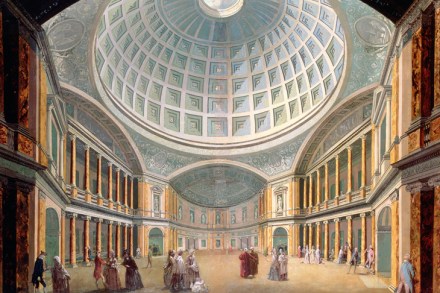
When the German novelist Sophie von La Roche visited Oxford Street in the 1780s she saw watchmakers and fan shops, silversmiths and spirit booths, and a Pantheon that rivalled the one in Rome. Edward Gibbon called the domed ballroom, which hosted glitzy concerts, ‘the wonder of the eighteenth century and of the British empire’, but
From our UK edition
Looking at the sketchbook of William Whitelock Lloyd, a soldier-artist who joined a P&O liner after surviving the Anglo-Zulu War, I’m reminded why I avoid cruises. On board this India-bound ship were: a ‘man who talks a great deal of yachting shop and collapses at the first breeze of wind’, ‘a successful Colonist’, and ‘the
From our UK edition
You wouldn’t want to stumble upon the Scythians. Armed with battle-axes, bows and daggers, and covered in fearsome tattoos, the horse-mad nomads ranged the Russian steppe from around 900 to 200 BC, turning squirrels into fur coats and human teeth into earrings. At their mightiest, they controlled territory from the Black Sea to the north
From our UK edition
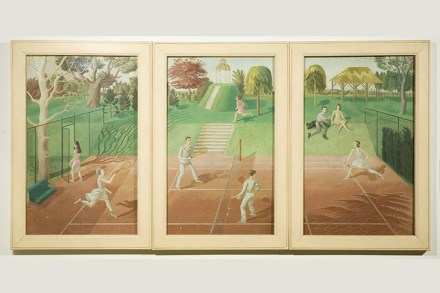
Tennis is best played with a wooden racket on a shady lawn somewhere close to Dorking. There is no need for trainers, an umpire, or a scoreboard. No need for rules at all. After Wimbledon, the tea-and-jam, grass-stained, Sunday-afternoon scenario from A Room with a View is the only one to emulate. In 1908, when
From our UK edition
There isn’t a luxury ship that wouldn’t look better for having sunk. Barnacles and rot bring such romance to the lines, like spider webs in the sea. Even the decay Damien Hirst has applied to his Treasures from the Wreck of the Unbelievable is quite appealing. It crawls over many of the objects that he
From our UK edition
The catalogue to Pallant House Gallery’s latest exhibition features a favourite anecdote. It is 1924 and a competition is being held to find the woman with the most pleasing vital statistics. As a paradigm, the judges choose the Venus de Milo. Thousands of women queue up to find out whether their measurements — not only
From our UK edition
Kublai Khan, said Marco Polo, had ‘a more extensive command of treasure than any other sovereign in the universe’. There were no jangling pockets of coins in Kanbalu. Bark had been stripped from the mulberry trees and beaten into paper notes. The notes carried delicate little pictures of earlier currency — long, frayed ropes weighed