Daisy Dunn

Hearing Percy Bysshe Shelley read aloud was a revelation

From our UK edition

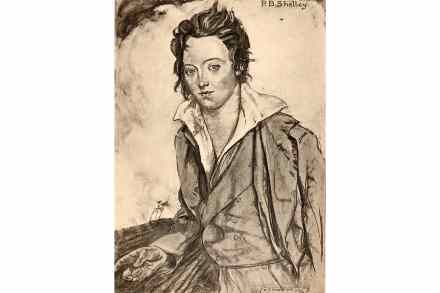
Last week I heard the actor Julian Sands give a virtuoso performance of work by Percy Bysshe Shelley to mark the bicentenary of the radical poet’s death this month. A couple of days later, I listened to a bit more Shelley, this time on the radio, and this time in the voice of Benjamin Zephaniah. Hearing his verses read aloud is so much more intimate than reading them silently. You may be sitting in a crowd, but as Shelley’s words fall into your ears, it’s possible to feel that you’re having a private audience with him. Reading the same poems in an empty room can be comparatively distancing. Zephaniah said something similar when he described his first encounter with the poetry at school.
From Leonardo to Hepworth: the art of surgery

From our UK edition

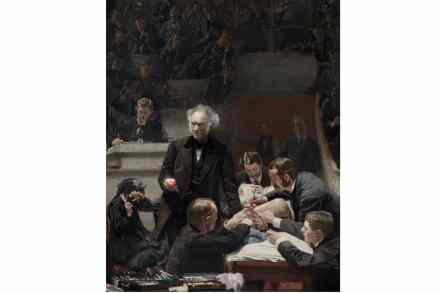
A doctor with wild grey hair and mutton chops holds a scalpel in his bloodied hand. He has paused for a moment, allowing one of his students to take his place and complete the incision. It’s a remarkably clean cut; the young man with the clamp has barely dirtied his shirt cuffs. Even so, the patient’s mother, if that’s who she is, weeps in the corner. She can see nothing but frock coats and a segment of open flesh. The 19th-century Philadelphia-based artist Thomas Eakins did not paint surgery as it was, exactly, but he did capture something of its veiled sterility. There may be no gowns or masks in his earlier medical pictures, but the wool coats and shirts worn by the doctors only do so much to soften the atmosphere of the operating theatre.

Just Stop Oil’s protest is doomed to fail

From our UK edition

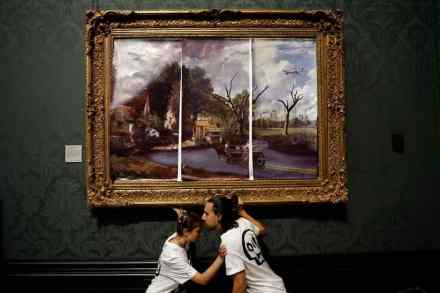
The eco-mob is at it again. Members of the protest group Just Stop Oil have progressed from blocking fuel terminals to disrupting the British Grand Prix and gluing themselves to the frames of paintings in galleries and museums across the country. To which anyone with even the vaguest recollection of the traffic-stopping stunts of Insulate Britain must sigh, 'Not very original'. Last Wednesday, a pair of activists stuck themselves to the frame of a nineteenth-century landscape by Horatio McCulloch at Kelvingrove Art Gallery in Glasgow. The following day, another pair selected the decidedly more famous ‘Peach Trees in Blossom’ by Vincent van Gogh at London’s Courtauld Gallery for the sticky-fingered treatment. Further attacks have since followed on a J.M.W.

Mary Wakefield, John R. MacArthur and Daisy Dunn

From our UK edition

24 min listen

On this week's episode: Mary Wakefield asks why no one's mentioning the cult Tom Cruise belongs to (00:54), John R. MacArthur asks if Macron should be scared by an ascendant Jean-Luc Mélenchon (06:58), and Daisy Dunn orients herself after listening to the Gucci Podcast (17:57).

How interesting an art is fashion?

From our UK edition

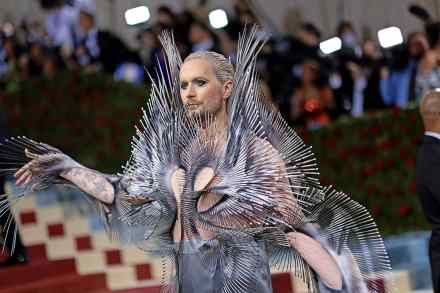
One of the New York Met Gala stylists is sharing tips for wearing a corset to an evening do. ‘Breathe a lot in the morning,’ he tells the Gucci Podcast, with a discernible smile, ‘and by the time you put on the dress, you’ll be full of oxygen.’ The image of a puffed-up toad comes to mind. It’s a bit nuts, isn’t it, the fashion world? The Met Gala is the ball where anything goes – the costumes are witty and extreme – but even so the commentary on it can be pretty earnest, especially in the American press. The stylists on this podcast speak of dressing celebrities like disco balls to reflect their evening personalities, and of relinquishing control to the fashion house.

Boldly and brilliantly unoriginal: Kermode and Mayo’s Take reviewed

From our UK edition

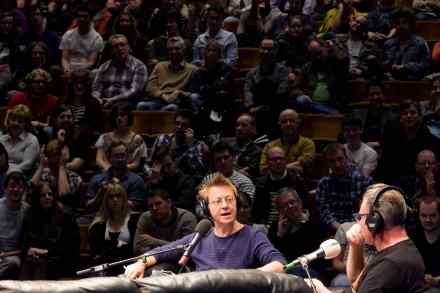
Last April Fools’ Day, Mark Kermode and Simon Mayo wound up their award-winning film review show on BBC Radio 5 Live after 21 years on air. A little more than a month later they are back with Kermode and Mayo’s Take, a podcast so similar in flavour and format that you could call it an up-yours to their critics. While Mayo stressed that it was their decision to go their own way – ‘we have decided, and to be clear: that’s no one else has decided’ – he was slightly more candid about his experience in an interview with the Radio Times a few weeks ago. People of my generation have grown up with Kermode and Mayo, and were as surprised as any by their departure. But we needn’t fret.

A wonderfully unguarded podcast about the last bohemians

From our UK edition

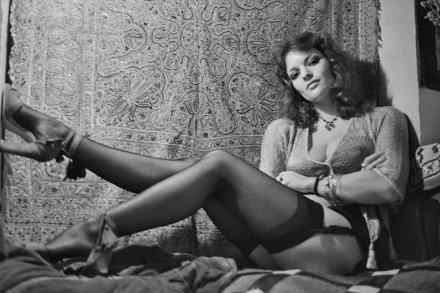
Ordinarily, if a podcast purports to be revelatory, you can assume it is anything but. There’s a glut of programmes at the moment featuring interviewer and interviewee locked in passionate heart-to-hearts in which a few, carefully selected beans are spilled to no real consequence or effect. The Last Bohemians makes no claim to shatter the earth with secrets, but the guests are so unguarded that the episodes possess that longed-for bite. Maggi Hambling reels off a to-do list she made at art school while she was seeking to lose her virginity: ‘Older man, younger man, black man, woman’. Dana Gillespie, singer and former flame of David Bowie, describes undoing her top button to be photographed in the cleavage-obsessed press of her youth.

Et in Arcadia ego

"Oxford I do not enjoy,” wrote T.S. Eliot to Conrad Aiken in February 1915. “The food and the climate are execrable, I suffer indigestion, constipation, and colds constantly.” The poet was clearly having one of his bad days. Since arriving at the university the previous October, he had found himself in and out of love with the place, which was hardly surprising, given the timing. Most of the undergraduates at Oxford had either left or were on the verge of leaving to fight for their country, meaning that the lecture and tutorial rooms were almost empty, the sports fields green through lack of use, and the centuries-old traditions stalling like motor cars on the long stretch of the High.

Oxford

Why we drink

From our UK edition

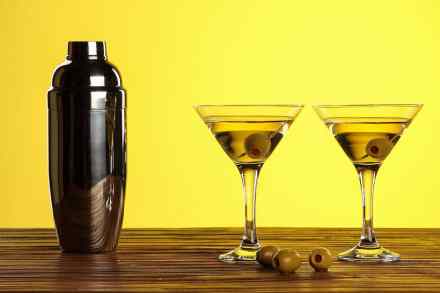
‘I like to have a martini,/ Two at the very most./ After three I’m under the table,/ After four I’m under my host.’ I never fully appreciated the brilliance of that spurious quote of Dorothy Parker until I visited Dukes Bar in Mayfair. It used to be the case – it probably still is – that you may order no more than two martinis there owing to their potency. Had she not preferred whisky to gin, Parker might well have banged her fists on that table for a third. After one-and-a-half before dinner, however, this critic would be more inclined to dance on it. Humans may respond to drink in different ways, but we are, in fact, better at processing it than most other primates. In ‘Why do we use intoxicants?

If you like First Dates, you’ll love This is Dating

From our UK edition

The tagline of This is Dating, a new podcast from across the pond, is ‘Come for the cringe, stay for the connection.’ This sums up the listening experience pretty well. If the prospect of eavesdropping on a series of strangers’ first dates sends a shiver down your spine (some of us have endured enough disastrous dates of our own), give it ten minutes and cupid’s arrow should slowly begin to sink in. The concept is similar to that of First Dates, the reality TV show in which lonely hearts pair up for dinner and judgment while a sexy French maitre d’ looks on, pitying the lack of social skills on display before him. The difference is that This is Dating doesn’t play for laughs.

The art of the high street

From our UK edition

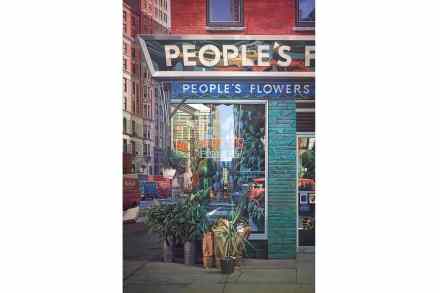
I can no longer remember when it was that high streets did not all look the same. The architectural writer James Maude Richards bemoaned the disappearance of local character from our shops as early as 1938, but even so he could include a plumassier, submarine engineer and shop of model transport in his winsome introduction to the high street. With the exception of some of the specialists, subs included, these were shops that could still be found in many towns beyond London. Eric Ravilious did the illustrations for the book (which, alongside three of the original prints, is on show at the Arc gallery in Winchester from 18 February to 15 May).

Disappointingly conventional and linear: BBC radio’s modernism season reviewed

From our UK edition

This week marks the beginning of modernism season on BBC Radio 3 and 4, which means it’s time for some pundit or other to own up to abandoning Ulysses at page seven, or to finding T.S. Eliot a bore, or to infinitely preferring the landscapes of J.M.W. Turner to the repetitive squares of Kazimir Malevich. That pundit, however, won’t be me. Modernism is rather like the birth of the Roman Empire. It could be seen as a brilliant sloughing off of everything that had decayed in favour of sensible revolution, or as the predictably reactive consequence of years of wrangling over a loss of identity.

Radio 4’s Moominland Midwinter restores Moomintroll’s innocence

From our UK edition

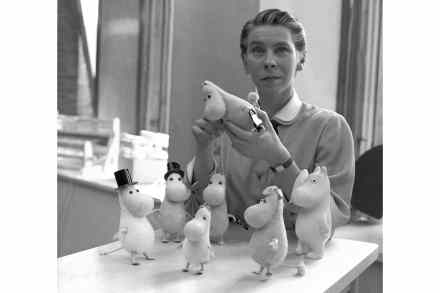
Moomins do not like winter. In one of Tove Jansson’s stories, Moomin’s Winter Follies, young Moomintroll bumps his head when the sea ‘goes hard’, prompting Moominmamma and Moominpappa to hurry the family into hibernation. They attempt to follow the tradition of their ancestors by scoffing pine needles and covering the furniture in dust sheets before bedding down on hay, but Moominpappa, for one, is troubled by the prickliness of all this: ‘Who said I must do like my ancestors?’ They briefly abandon the idea and postpone their sleep to try some winter sports, but Moomins are not really built for skiing.

The astonishing stories behind today’s culture wars: Radio 4’s Things Fell Apart reviewed

From our UK edition

Martin McNamara, the writer of Mosley Must Fall, a play on Radio 4 this week, must have had a jolt when he opened the papers to find old Oswald back in the news. Oxford University is said to have accepted £6 million from a trust set up by the fascist leader’s son, the racing driver Max, using funds passed down through the family. Cries of ‘Rhodes Must Fall’ have been echoing down the High in Oxford for many years now. If Mosley must fall, too, then this play may prove particularly timely. Although set in Whitechapel, east London, in 1936, the story consciously teeters over live issues, including immigration, the polarisation of society and the threat of violent protest.

The art and science of Fabergé

From our UK edition

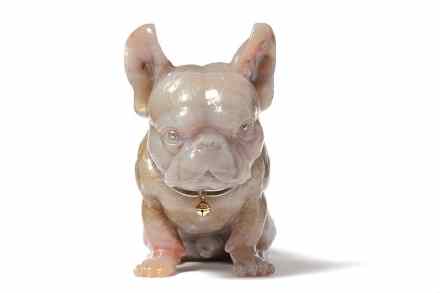
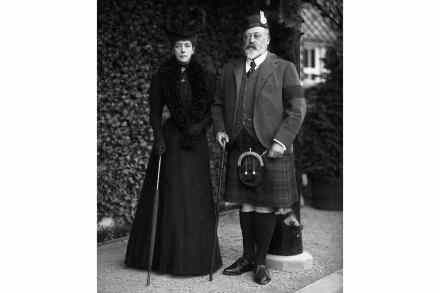
After all the magnificent presents she’d received from his workshop, Queen Alexandra was eager to meet the most famous jeweller in Russia. ‘If Mr Fabergé ever comes to London,’ she said to Henry Bainbridge, a manager of the design house, ‘you must bring him to see me.’ Peter Carl Fabergé paid a rare visit to the capital to inspect his new shop — the only one located outside the Russian empire — at 48 Dover Street in 1908. ‘The Queen wants to see me! What for?’ he asked an exasperated Bainbridge. ‘Well, you know what an admirer she is of all your things.’ Insisting that she would not wish to be troubled, Fabergé demurred, polished off his lunch and requested the time of the next train.

The best podcasts to help you become a better painter

From our UK edition

There’s a great documentary film on Netflix at the moment about the late artist Bob Ross, he of the happy little trees and friendly perm, and the battles fought over his estate. It coincides with the revival on BBC4 of his Joy of Painting TV programmes, which originally aired in the US between 1983 and 1994, but have lately struck a chord with pandemic--stressed audiences here. They are, basically, free therapy, with a suburban far-out vibe and colour-laden fan brush. I was sceptical about how genuine Ross’s demeanour was until I saw the film, which left me in no doubt that he was exactly as he appeared. When someone is as enthusiastic and well-meaning as he was, you can’t help but stifle any sniggers and jump on board.

Made me buzz like an electron: Science – Clear+Vivid with Alan Alda reviewed

From our UK edition

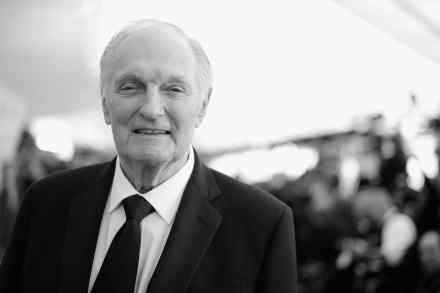
Given my affection for M*A*S*H, I can’t think why I haven’t listened to Alan Alda’s podcasts before now, besides the fact that they look quite uninviting. There is Clear+Vivid, on the power of communication, and Science: Clear+Vivid, on the power of scientific research. As someone who used to fall asleep listening to cassettes for A-Level physics, I am not easily excited by protons, and was prepared to give the latter particularly short shrift. Five hours on, however, Alda is still in my ears, and I am buzzing like an electron. Unlike many presenters, Alda, 85, doesn’t pretend not to know something just so that his interviewee will explain it to the audience, but nor does he strive to reveal how much he knows.

Fortifying snapshot of the gardener’s year: Saatchi Gallery’s RHS Botanical Art show reviewed

From our UK edition

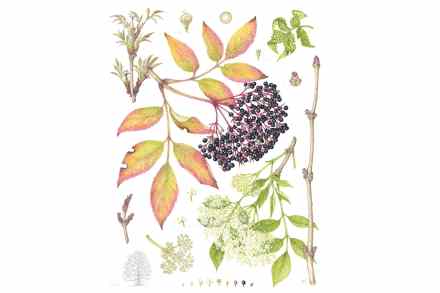
Elizabeth Blackadder, who died last month at the age of 89, was probably the most distinctive botanical artist of our time. Her paintings of lilies and irises, of cats poking their heads imperiously between poppies and freesias, are more alive than any such chocolate-box description could convey. The first woman to be elected to both the Royal and the Royal Scottish academies, Blackadder showed that botanical painting did not need to be twee and parochial. It could be as vibrant and interesting as narrative. The 15 artists and 19 photographers participating in this year’s Royal Horticultural Society exhibition at the Saatchi Gallery follow in Blackadder’s tradition.

Must all history programming be ‘relevant’?

From our UK edition

When it comes to history programming, television’s loss is increasingly audio’s gain. People moan to me most weeks over the lack of really good, rigorous, eye-opening documentaries on the screen, and I can only nod along in agreement. Oh for a Kenneth Clark-style lecture! More Michael Wood! There’s an especially strong appetite for the adventurous commissions of the 1990s and 2000s. It’s principally podcasts, now, that are pouring into this void. Stephen Fry’s Edwardian Secrets, a 12-episode sequel to his previous series on the Victorians, even sounds like an extended BBC4 documentary, replete with talking heads, choral background music and just a dash of Horrible Histories.

Floods you with fascinating facts: Trees A Crowd reviewed

From our UK edition

Listening to Trees A Crowd, a podcast exploring the ‘56(ish) native trees of the British Isles’, solved one of childhood’s great mysteries for me. Why, when you plant a pip from one type of apple, does it grow into a completely different type of apple tree? The answer — one kind of apple tree will typically cross-pollinate with another variety to pass on a different set of genes — is less interesting than the next bit. Which is that if you do plant, say, a Braeburn seed, and it takes, you’re likely to end up with crab apples.