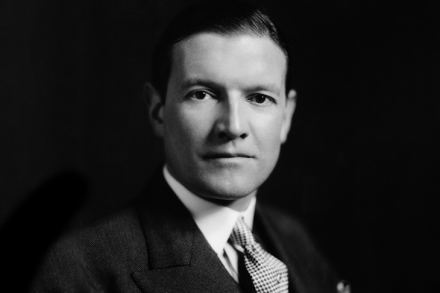
Craig Brown

Christmas I: Katy Balls, Craig Brown, Kate Weinberg, Craig Raine, Lisa Haseldine and Melissa Kite

From our UK edition

37 min listen

On this week’s Christmas Out Loud - part one: Katy Balls runs through the Westminster wishlists for 2025 (1:26); Craig Brown reads his satirist’s notebook (7:06); Kate Weinberg explains the healing power of a father’s bedtime reading (13:47); Craig Raine reviews a new four volume edition of the prose of T.S. Eliot (19:10); Lisa Haseldine provides her notes on hymnals (28:15); and Melissa Kite explains why she shouldn’t be allowed to go to church (31:19).  Produced and presented by Patrick Gibbons.

Don’t tell me to ‘unwind’!

From our UK edition

The most irritating word of the year was ‘unwind’. ‘Unwind with one of our artisan cocktails in the curated ambience of…’ and so on. For most of us, the call to ‘unwind’ promotes the very stress it purports to alleviate. Radio 3 is currently the station most fretful about unwinding, beseeching us to ‘ease into your day with welcoming harmonies’ and ‘focus for the morning with stress-busting music’. Its new ‘24/7 stream’ is called ‘Classical Unwind’. Is this a wind-up? If you’re still feeling anxious by the evening, Classic FM offers ‘Calm Classics’ at 10 p.m.: ‘The perfect soothing soundtrack to help you wind down at the end of the day.

The Book Club: Craig Brown

From our UK edition

32 min listen

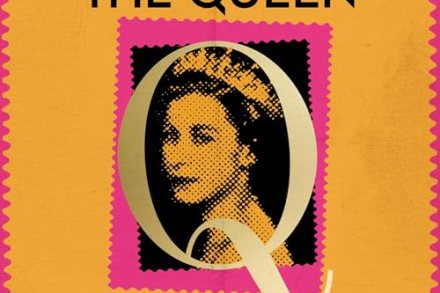
In this week's Book Club podcast my guest is the satirist Craig Brown, talking about his brilliant new book A Voyage Round the Queen. Craig tells me what made him think there was something new to say about Elizabeth II, how he found himself in possession of the only scoop of his career and about his mortifying encounter with Her Maj.

The problems of being a Bee Gee

From our UK edition

For quite some time, the prospect of death has held a fresh terror. The British Heart Foundation’s step-by-step guide to cardiopulmonary resuscitation advises performing chest compressions ‘to the beat of “Stayin’ Alive” by the Bee Gees’. This means that the last sound some of us will ever hear is ‘Stayin’ Alive’, with our chests as the drums: Feel the city breakin’ and everybody shakin’And we’re stayin’ alive, stayin’ alive!Ah! ah! ah! ah!Stayin’ alive! Stayin’ alive! Despite their success, the Bee Gees have always been regarded as naff. They are to pop music what Fanny Cradock was to cookery or Julian Fellowes is to the world of letters. Bob Stanley is on a mission to rescue their reputation.

The disappearing man: who was the real John Stonehouse?

From our UK edition

November 1974 was the month to disappear. On the 7th, Lord Lucan went missing, and a fortnight later John Stonehouse MP dis-appeared from a beach in Miami. Lucan was never found, so remains prominent in our national mythology. Nothing endures like a mystery. Stonehouse, on the other hand, was discovered in Melbourne six weeks later, living under an assumed name. His vanishing trick, so carefully rehearsed, had unravelled — partly due to Lucan, as it happened. Having been alerted to a suspicious Briton by a beady bank clerk, the Australian police thought he might be Lucan. Their first act after arresting their suspect was to lift his trouser leg to look for the missing earl’s telltale scar. Stonehouse had long had a tendency to vanish.

Rishi’s nightmare: Will inflation crush the recovery?

From our UK edition

41 min listen

Could a blip in inflation ruin the UK's economic recovery? (00:50) Why is support for the IRA becoming normalised? (12:20) What makes a great diarist? (31:15) With The Spectator's economics correspondent Kate Andrews; economist Julian Jessop; writer Jenny McCartney; politician Mairia Cahill; satirist Craig Brown; and historian, journalist and author Simon Heffer. Presented by Cindy Yu.  Produced by Max Jeffery, Alex Valizadeh, Alexa Rendell and Matt Taylor.

Chips Channon’s diaries can read like a drunken round of Consequences

From our UK edition

Most of the grander 20th-century diarists had a sniffy air about them, looking down their noses at everyone, particularly each other. Henry ‘Chips’ Channon, so snippety in his own diaries, was sniped at in others’. James Lees-Milne thought him ‘a flibbertigibbet’; to Nancy Mitford, he was ‘vain and spiteful and silly’. Kenneth Rose confided to his diary that Channon was ‘a rather stupid man’. When the bowdlerised Channon diaries were first published in 1967, edited by Robert Rhodes James, Rose could not disguise his thrill at how badly they had gone down in his own smart set. At a ‘luncheon party given by Raine Dartmouth at her pretty house in Hill Street...

Spectator Out Loud: Katy Balls, Matthew Lynn and Craig Brown

From our UK edition

33 min listen

On this episode, Katy Balls explains how No. 10 infighting could lose Scotland, and reveals how Boris plans to get his side in order. (01:05) Matthew Lynn is next on the show, and tells the story of the Up Crash. (10:10) Craig Brown finishes the podcast, reading his review of a 'dark portrait of sibling hatred': Samantha Markle's memoir.

Hellcat on the loose: Samantha Markle rants about Meghan

From our UK edition

A while ago, Samantha Markle declared that her forthcoming book would be about ‘the beautiful nuances of our lives’. Was it a misprint for beautiful nuisances? Or did she have a change of heart? Either way, there isn’t a beautiful nuance in sight. Instead, it is like a blunt object found at the scene of a crime. As royal memoirs go, it is by far the most macabre, and perhaps even loopier than the Duchess of York’s Finding Sarah: A Duchess’s Journey to Find Herself. By the third page Samantha already has her knives out. The first person to get it in the back is her mother, a forgotten figure who met Thomas Markle on a blind date.

Craig Brown on the kaleidoscopic Beatles

From our UK edition

35 min listen

My guest in this week's podcast is the multi-talented satirist Craig Brown, whose new book One Two Three Four: The Beatles In Time is, I feel confident in guessing, the most entertaining book about the Fab Four ever written. Craig joins me to talk about how he goes about his jackdaw work picking out the most curious and striking details from the mass of information in his research, what attracts him to his subjects, and why Paul McCartney has always been his favourite Beatle. Plus: a flabbergasting cameo for our own Stephen Bayley.

Diary – 3 October 2012

From our UK edition

This week sees the 30th anniversary of the death (or ‘untimely death’, as death is now invariably known) of Glenn Gould. The fame of most classical musicians tends to wither when they die, but Gould’s seems to grow and grow: his grave is the most visited in Canada, he has appeared on The Simpsons, and not long ago in its apparently straight-faced list of The 100 Most Important Canadians in History, Maclean’s magazine ranked him the No. 1 artist in the world. Such posthumous blossoming makes him rather closer to a rock star, which is, in all but the most literal sense, what he was. In fact, he makes most of today’s rock stars look doggedly conventional.

The man who read everything

From our UK edition

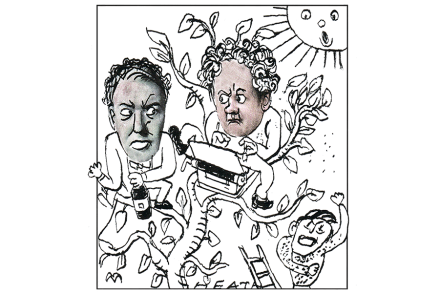
Mark Boxer once drew a caricature of his friend John Gross half-buried beneath piles of hardback books while glancing up from a copy of Tatler. It’s a caricature that contains a nugget of truth — it is rare, these days, for anyone so bookish to keep such a close eye on the toings-and-froings of high society and showbiz — but there is still something not quite right about the rather severe, tight-lipped expression on John’s face. Though he always read everything with a singular intensity, the moment he looked up he would start talking and smiling, his eyes a winning mixture of benevolence and glee.

The man who read everything | 13 January 2011

From our UK edition

As promised, here is Craig Brown's apprieciation of John Gross, published in today's issue of the Spectator. To subscribe, click here. Mark Boxer once drew a caricature of his friend John Gross half-buried beneath piles of hardback books while glancing up from a copy of Tatler. It’s a caricature that contains a nugget of truth — it is rare, these days, for anyone so bookish to keep such a close eye on the toings-and-froings of high society and showbiz — but there is still something not quite right about the rather severe, tight-lipped expression on John’s face. Though he always read  everything with a singular intensity, the moment he looked up he would start talking and smiling, his eyes a winning mixture of benevolence and glee.

Was his diary his downfall?

From our UK edition

The audiotape of Alan Clark’s Diaries — barely mentioned in this rather Dr Watsonish, sensible shoe of a biography — is well worth hearing. The audiotape of Alan Clark’s Diaries — barely mentioned in this rather Dr Watsonish, sensible shoe of a biography — is well worth hearing. Alan Clark narrates them himself, in a wonderfully high camp, pantomime manner, reminiscent of Kenneth Williams reading the Just William stories.  It’s a rib-tickling comic turn, and adds a new dimension to the original book, an additional mirror reflecting on the first mirror at a jaunty angle. Clark’s semi-parodic tone acts as a sort of wry critique on the diaries, which are themselves, of course, a wry critique on his life.

Member of the In and Out

From our UK edition

Most MPs who start writing diaries do so in order to prove to themselves how central they are to the political process. But by the time the diaries come to be published, they tend to prove the opposite. The effect is either comic or tragic, depending upon one’s point of view.     Who wrote this, for example? ‘I will have a crack at the leadership as soon as I can, partly because I am in touch with real people, partly because I can offer some leadership.’ The answer? Edwina Currie. It comes in her diary entry of 7 October 1988, when she was a parliamentary under-secretary. ‘I look at rivals like David Mellor’, she adds, ‘and I like me better.

Back to basics | 11 February 2009

From our UK edition

Wetlands, by Charlotte Roche What an odd mix of distinguished residents High Wycombe has had! Fern Britton, Benjamin Disraeli, Dusty Springfield, Karl Popper, Jimmy Carr: it’s a list that reads like a game of Celebrity Consequences in freefall. There is not much in common between those listed above. Yet a subsection of the list displays an almost obsessive interest in sexual and gastronomic experimentation. The goggle-eyed chef Heston Blumenthal, brought up in High Wycombe, has become famous for off-beat dishes such as Snail Porridge and Egg-and-Bacon Ice Cream. Ian Dury, who went to school there, is best-known for the song ‘Hit Me With Your Rhythm Stick’, a jaunty, multi-lingual (‘je t’adore, iche liebe dich!’) hymn in praise of sado-masochism.

The temple of whom (singularly possessive)?

From our UK edition

Craig Brown has to mind his Ps and Qs when he goes carol-singing with The Pedants’ Association It’s always pleasant to go carol-singing, or carols-singing, with The Pedants’ Association, formerly The Pedants Association, originally The Pedant’s Association. I first joined ten years ago with the long-term aim of attracting the requisite number of votes in order to change its title to The Association of Pedants, thus rendering the apostrophe redundant, but Rome wasn’t built in a day. In fact, far from it: Rome was built over a period of a good many centuries. Indeed, the last time I paid it a visit, I noticed a great deal of building work still in progress.