Clemmie Read

The furious tug of war between 18th-century Whigs and Tories

From our UK edition

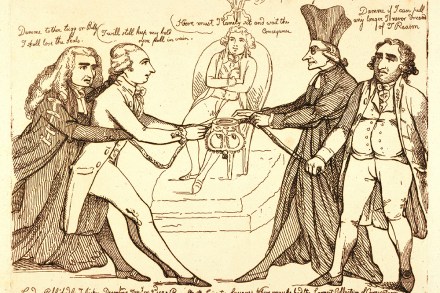
A foul-mouthed fantasist with a chin like an ironing board starts a wild conspiracy theory about the King’s brother. An alcoholic racing fanatic turns his gambler’s eye to the ballot box. A maniacal preacher gives such a polarising sermon that he paints himself as a second Christ and tours the country as a sex symbol. These are not the inventions of William Hogarth or Jonathan Swift; they are the figures who divided our political system in two, as George Owers tells us in his delightful new history of the birth of party politics. The Rage of Party traces the fevered rise of Whigs and Tories during the reigns of William III and Queen Anne.
It’s a wonder that the Parthenon remains standing at all

From our UK edition

We all have our own vision of the Parthenon. Lord Elgin, for one, seems to have treated it like Harrods. Hoping to decorate his Scottish stately home with the Marbles, he wrote long instructions to his agent: ‘The first on the list are the metopes, the bas-reliefs and the remains of the statues... Would it be permissible to speak of a Caryatid?’ The Greek gods must have thought not, because Elgin’s fortunes rapidly took a turn for the worse. He lost some of the Marbles in a shipwreck in 1802; was imprisoned in a French fortress by Napoleon; his wife had an affair with his best friend; and he lost his entire fortune in the ensuing divorce. He returned to England penniless, dreams of interior design long abandoned. And that, believe it or not, is when the drama really began.

Why are we obsessed with Japanese fiction?

From our UK edition

Imagine you come across a small café in a back alley of Tokyo where you can travel back in time to talk things over with your ex-boyfriend, as long as you come back before your coffee gets cold. Or you stumble into an enchanted library, where the librarian gives you a book to cure your frustration with your sales job. Or, to ramp it up a bit, you serially murder misogynistic businessmen, tempting them to their deaths with your acclaimed beef stew. Or – and this is a common one – your worries about financial security are calmed by the appearance of a particularly comforting cat.

Alexander Pushkin – Russia’s greatest letter-writer

From our UK edition

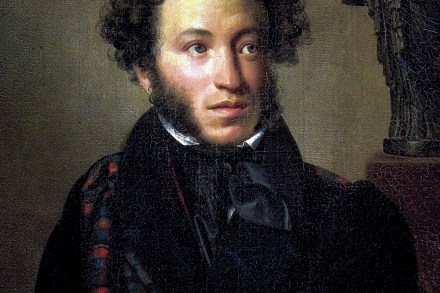
Alexander Pushkin was brought to ruin by his letters more than once. When the Russian postal police intercepted a letter suggesting that atheism was ‘the most plausible’ philosophy, he was exiled to his mother’s bleak estate in the rural north-west. But his own temper was far more dangerous. In the autumn of 1836, he received a series of anonymous letters taunting him about his coquettish wife’s affair with George-Charles d’Anthès-Heeckeren, a French officer and the adopted son of the Dutch ambassador. Pushkin, imagining the ambassador himself had written them, fired off a furious letter of accusation. He and d’Anthès-Heeckeren duelled the next day, and Pushkin was fatally shot. Aged just 37, the most famous poet in Russia had thrown his life away on a few scribbled taunts.