Clarissa Tan

For Sarkozy, AAA stands for austerity

From our UK edition

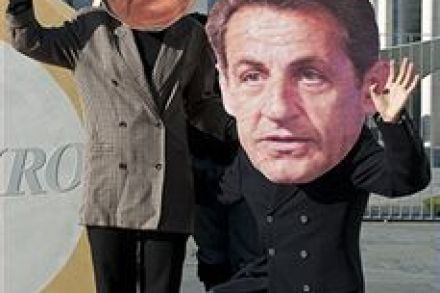
Nicolas Sarkozy has served up his second austerity budget in as many months, in a bid to retain France's AAA credit rating. The president wants to cling on to those three precious letters at all costs. There are elections in six months' time and he isn’t doing well in the polls. Austerité Part Deux consists of tax increases and spending cuts totalling €7 billion, the government announced today. There will be increases in VAT and levies on large corporations, as well as curbs on increases in welfare spending. This savings programme follows the €11 billion one announced in August. Sarko's bid to get re-elected in 2012 is in disarray.

Berlusconi may quit presto

From our UK edition

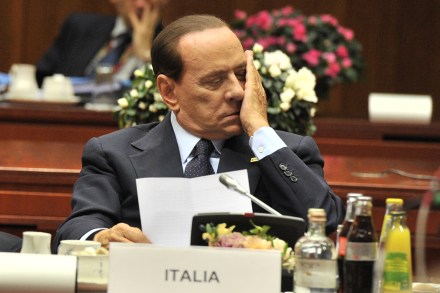
The word sweeping across Italy is that the PM may be forced to step down in a matter of hours, even "minutes". Ex-minister Giuliano Ferrara says: "That Silvio Berlusconi is about to resign is clear. It is a question of hours, some say of minutes." And he couldn't leave too soon. The Italian bond yield busted the 6.5 per cent threshold to reach 6.58 per cent this morning. It's now close to what some traders call "bailout territory". News of Berlusconi's imminent resignation has sent Italian stocks soaring though – the FTSE MIB is up 2.4 per cent. Berlusconi's scandal-ridden premiership and bunga-bunga antics have caused political deadlock in Rome and stalled the path of much-needed economic reform. Still, with Papandreou's "will he? won't he?

Showdown in Cannes

From our UK edition

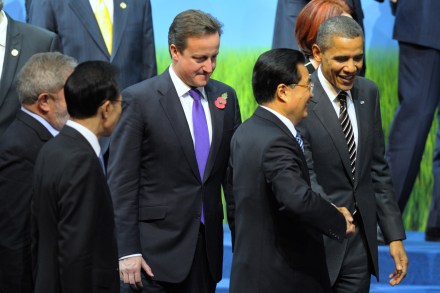
The gathering of G20 leaders in glitzy Cannes will turn out to be an affair to remember, for all the wrong reasons. If there's a red carpet, it'll probably be borrowed and will symbolise the state of many nations' finances. The main topic of the meeting will be the escalating drama in the eurozone. Here's a list of what will likely be the most keenly-watched plotlines of the two-day summit. It is not exhaustive. Greece George Papandreou scored a (personal) victory overnight by getting cabinet support for a referendum on the EU bailout plan. The referendum is now a very real prospect awaiting parliamentary approval, and one that fills other euro-leaders, and investors, with horror.

China’s win-win situation

From our UK edition

There’s only one thing more humiliating for the eurozone than China buying up its sovereign bonds — and that is if China doesn’t. To this end, head of the EFSF Klaus Regling, currently on a sales run in Asia, has said that some of the bonds of his newly souped-up SPIV may be denominated in yuan. Such a move would further enhance the renmimbi's status, increasing the possibility of it supplanting the dollar to become the world's reserve currency. And, even then, China may not be enticed. With apparently no recognition of the irony, European leaders are saying that the euro rests on ‘solid fundamentals’ while considering switching some of their national debt to another currency to make it more palatable.

Italian comic opera

From our UK edition

Politics is serious business, especially when the world’s economy is at stake, but so much of what’s going on in the eurozone now – especially in Italy - resembles opera buffa. Today in Rome, amid rumours that Berlusconi would throw in the towel in January (but not because of bunga bunga, because of bungling over economic reform), a few deputies in parliament came to blows.   The fisticuffs was over that hotly contended if not-very-sexy issue – the retirement age. At least two members of the Northern League, a key party of Berlusconi’s coalition, fought with members from the opposition FLI. ‘Two deputies grabbed each other by the throat as other parliamentarians rushed to separate them,’ reports Reuters.

The EU’s house of cards

From our UK edition

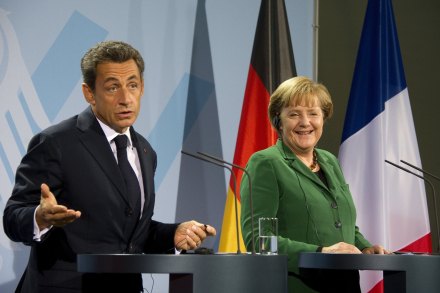
What a weekend this is going to be. Or not. Angela Merkel and Nicolas Sarkozy have said that EU leaders won’t be able to produce a bailout plan for the eurozone by Sunday, after their much anticipated weekend summit. Instead, they will only be able to come up with a plan after another summit on Wednesday.   The Sunday meeting, as some will recall, had already been delayed for exactly the same reason. The euro nations can’t agree — or, more precisely, the lynchpin nations of Germany and France can’t agree — on how to use the €440 billion bailout fund. They can’t see eye-to-eye on how much to boost it by either, and apparently the Bundestag doesn’t want to increase it at all.

Saving Private Shalit

From our UK edition

It's difficult for the outside world to understand the huge significance that Gilad Shalit's release, this morning, has for Israel. A soldier captured by Hamas five years ago, he has become a huge cause célèbre — to the extent that black cabs in London were even commissioned with his picture on it. Books that he wrote aged 11 were printed and bought in their thousands by Israelis. He was wanted back so badly that Israel has agreed to release 1,027 Palestinian prisoners, among them hardcore terrorists. Events stemming from the Arab Spring have made both sides eager to do a deal, which experts say might contribute — even if in a tiny way — towards that ever-elusive peace settlement.

Coffee House interview: “We hope Speccie readers have some sympathy”

From our UK edition

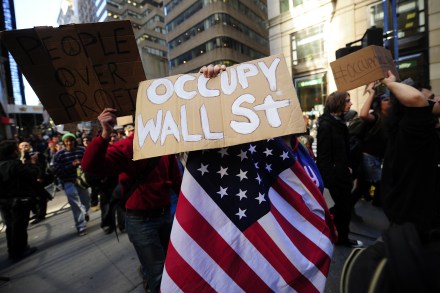
The Occupy movement – or #Occupy if you follow it on Twitter – started as an anti-banking protest in New York a month ago, and has since spread from Madrid to Tokyo to Sydney. Today at noon, Occupy London Stock Exchange will kick off, though it’s doubtful if activists will actually, well, occupy the London Stock Exchange. Occupy LSX has a website, and an email address for press enquiries. So, in the interests of spectatorship, Coffee House got in touch with Naomi Colvin, who wants to be known as a "supporter": Coffee House: It seems really official now. Do you guys have an office or something? Naomi Colvin: We don’t have an office. I don't think it’s that unusual for activist organisations to have a fairly professional press presence.

Merkel and Sarkozy plan to have a plan

From our UK edition

The euro and European stocks have risen modestly, but markets aren't exactly full of enthusiasm about Angela Merkel and Nicolas Sarkozy's announcement on the eurozone crisis yesterday. As usual, the German and French leaders were glaringly short on detail. Meanwhile, one of the few things they were clear about – doing "whatever is necessary for the recapitalisation of our banks" – is fuelling worries that any financial help for banks will further weaken the credit quality of EU governments' debts. Merkel and Sarkozy said they would present a "comprehensive" response to Greece's and the EU's problems as well as a bank recapitalization strategy by the end of the month. In other words, they plan to have a plan.

Diary – 8 October 2011

From our UK edition

This is not the best time to move from East to West. The thought occurs to me as I sit in a British bank, at its Westminster branch no less, waiting to open my first UK account. The procedure takes two hours, stretched across two appointments over two days. In the same period of time, a bank in Singapore — my home for the past 20 years — would not only have set up an account, but offered the customer five credit cards and a housing loan. When international investors like Jim Rogers say Asia is the future because things just move faster there, there’s some truth in it. ••• I’ve come to London for postgraduate study. It was not the easiest decision to make, hauling myself, mid-career, from Asia to Europe.

Another round of Easing

From our UK edition

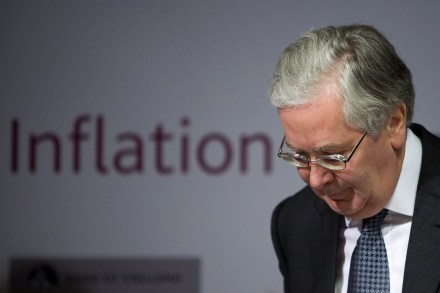
So the Bank of England has pulled the lever on a second round of Quantitative Easing. Apparently sluggish economic growth, plus more ominous signs from the eurozone, have persuaded the central bank it can’t wait any longer to print more money. But given the evidence from QE1 - only a small boost to GDP accompanied by extra inflation - it's a big gamble. Mervyn King & the rest of the Monetary Policy Committee clearly believe that more money in the system is what’s needed to kick-start growth. But even they admit that QE1 didn’t live up to expectations, so why should QE2?

Russia’s Kudrin quits – but how will he return?

From our UK edition

The dramatic – some would say theatrical – exit of Alexei Kudrin as Russia’s finance minister couldn’t have come at a worst time. The world economy is incredibly fragile and oil prices are in flux. But is Kudrin, highly respected for his fiscal policies and a member of Putin’s inner circle, merely pushing for promotion? With the ruble slumping to a 28-month low yesterday, there are signs the market is worried over the loss of a finance minister who prudently curbed Russia’s budgetary excesses and far-sightedly built up its oil wealth funds.

Euro-zonked

From our UK edition

Well, so much for that. The FTSE 100 fell as much as 1.7 per cent this morning, while overnight the euro and Asian stock markets tumbled, after Europe’s leaders announced their grand 2-trillion-euro plan over the weekend to drag the Eurozone out of the mire. It appears the markets are well past the point of believing that political leaders can get us out of this mess. The consensus is that the plan is not concrete enough. Of course, equities may recover a bit later, as they have been prone to do in past days. But the whipsawing itself is the worst sign of all; stock investors and retail-end funds are confused, panicky and probably still in denial.

Obama’s new best buddy – Warren Buffett

From our UK edition

The politics of 'get the rich' is going global and even the rich are joining in. While few countries have adopted the equivalent of Britain's 50p tax, many are baring their teeth at the very well-off. In America, this is now being done by an unlikely alliance between Barack Obama and Warren Buffet. The billionaire investor is allowing his name to be appended to Barack Obama’s new tax-the-rich-more policy, which apparently follows the ‘Buffett Rule’. The Buffett Rule, which draws its basic principle from an op-ed Buffett wrote for the New York Times, is this: people making more than $1 million a year should pay a tax rate that’s at least the same percentage of their earnings as middle-class Americans.

Britain misses out on the gold rush

From our UK edition

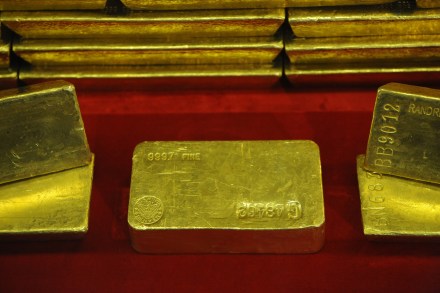
Gordon Brown notoriously sold British gold for $275 an ounce, costing Britain several billion. But has our subsequent decision not to buy gold also cost us dear? The Tory press office has had fun with gold’s rise, tweeting that it means Brown’s disastrous foray into asset management cost £12 billion. But as John Rentoul asked, a more serious question is now emerging. How much has the current government ‘cost’ Britain by failing to buy gold? Yesterday it was revealed that European central banks have turned net buyers of gold for the first time in more than 20 years. Good for them, as the yellow metal hit a record $1,920 per ounce this month. Indeed, for many central banks across the world, it’s been gold a-go-go for some time.

Britain sues the ECB

From our UK edition

As the EU debt drama continues unspooling like a perversely watchable soap opera (the FT’s Neil Hume describes it as ‘eurozone crisis porn'), an intriguing sub-plot has emerged: Britain is suing the European Central Bank. The Treasury is unhappy with an ECB move to limit the kind of euro-denominated products that can pass through UK clearing houses, suspecting it’s a bid to shift financial activity from London to Paris/Berlin. So it’s taking legal action, the first of its kind by an EU member state. This is not the first UK-EU disagreement that has surfaced in recent months, underlining the tensions between Britain and the Continent as financial centres across Europe fight over a (shrinking) business pie.

HSBC – Britain’s local bank?

From our UK edition

So what's the upshot of yesterday's Vickers review into banking? A research note issued today by UBS puts it bluntly: Lloyds to do better, Barclays to shrink and HSBC to quit Britain entirely. The UBS note, written by Alastair Ryan and John-Paul Crutchley, points out that HSBC took not a penny of bailout money. It was able to cushion its own fall - so why hang around and let British regulators hack off its investment banking division? “HSBC required no state support during the recent crisis, either explicitly through capital or implicitly through liquidity or funding support,” says the note. “This is forgotten in official UK thinking about what happened and what to do about it.

Renminbi to the rescue

From our UK edition

Italy is turning to deep-pocketed China in the hope Beijing will help stave off its financial crisis by making “significant” purchases of Italian bonds and investments in strategic companies, reports the FT. If true, this could help allay fears that Greece’s debt fiasco will engulf the entire eurozone; indeed, FT’s article late yesterday helped the euro and Wall Street stocks to recover, and European equities opened higher this morning. Once again, the EU crisis is helping cast Beijing in the role of saviour, even though the amount of Italian debt China will buy – if it buys any at all – is unclear. In July last year, China bought Greek bonds; this January, it purchased Spanish ones and in June, Hungarian.

“Travel isn’t necessary” – an interview with Paul Theroux

From our UK edition

American travel writer and novelist Paul Theroux’s latest book, The Tao of Travel, is a compilation of excerpts from his own travel writings as well as those of authors such as Nabokov, Greene, Hemingway, Samuel Johnson, Chatwin and Waugh. Currently in London on a promotional tour, we chat to him during a gap in his busy schedule. What brought about The Tao of Travel, which is a bit like a logbook with entries by many different travellers? All my life, people ask me what’s my favourite book, what’s my favourite work of journalism, my favourite movies, my favourites songs. It’s very difficult to narrow things down to a Top Ten, or even a Top 100. I thought I would like to compile all the works that were personal to me. Most anthologies are just a list.

The Royal Wedding around the world

From our UK edition

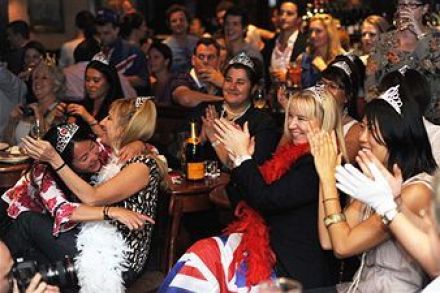
So we’ve seen the ceremony at Westminster Abbey. How was the Royal Wedding celebrated – by expats and locals alike – around the world? In Afghanistan, British troops celebrated with bunting on the front line. In Australia, foods associated with the ‘Mother Country’ flew off supermarket shelves, with the biggest sellers being Maynards wine gums and Colman’s classic mint sauce. Even Aussie republicans appear to have been inspired to hold parties and wear tiaras. In China, a couple recently had a knock-off Royal Wedding, complete with horse-drawn carriage and archway of swords. And cashing in perhaps on the wedding fervour, McDonald’s in Hong Kong started offering wedding party packages.