Clarissa Tan

Kim Jong-un is the least of Asia’s problems

From our UK edition

This may look like just a photo of rather boring-looking suits being led by a placid Eastern monk through some Asian temple, but it's created a furore in South Korea and China. The picture shows Japanese lawmakers visiting the controversial Yasukuni Shrine in Tokyo, which deifies people who have died for the Empire of Japan, including 14 convicted Class A war criminals (among them the ex-prime minster who was directly responsible for Pearl Harbour). The shrine owns a museum that may politely be called 'revisionist', displaying Imperial Army memorabilia ranging from military badges to suicide torpedoes. It's not uncommon to see men, and sometimes toddlers, dressed in World War 2 uniform marching outside.


China’s GDP shock may be good for everyone in the long run

From our UK edition

Is the Chinese economy for turning? The country has reported a 'shock' GDP growth of only 7.7 per cent for the fourth quarter. Yes, I know — if only Britain could get such shocks. But economists were expecting China to post an 8 per cent climb and, along with Fitch's recent rating downgrade and today's Moody's lowering of the nation's credit outlook, it's hard evidence the world's second largest economy is slowing. Analysts are falling over each other to slash their 2013 predictions. It's obvious how much international markets have been relying on the Chinese engine to haul the global economy out of the mire. The GDP figures sent markets tumbling - from crude oil to metals, from the euro and sterling to Prada shares. Gold is in meltdown.

TV review: The Secrets of Britain’s Sharia Courts; The Sex Clinic

From our UK edition

Sometimes a television programme raises far bigger questions than it actually gives a platform for, which is the case with Panorama’s The Secrets of Britain’s Sharia Courts (BBC1, Monday). Wedged in this half-hour slot are explosive issues such as the sovereignty of British law, the role of religion in arbitrating on marital disputes, and the place of women in Islam. The show adopts a feisty, no-holds-barred approach in this piece of investigative journalism presented by Jane Corbin, yet has strange ellipses at certain points that leave huge questions dangling. At one juncture, Corbin says, ‘The previous government gave up on its attempt to investigate sharia councils. They couldn’t get proper access to them.’ Eh?

North Korea nukes — China has a hell of a lot to answer for

From our UK edition

Let us be clear — Beijing bankrolled this monster. As Kim Jong-un continues his bellicose bluster, now having moved a second missile to North Korea's east coast, we cannot forget: it's the Middle Kingdom that has for decades funded Pyongyang's armies and kept this cruelest of regimes afloat. Forget Kim's crankiness. North Korea is one of the most gruesome, warped dictatorships the world has ever seen. It's estimated that is has up to a quarter of a million political prisoners, in gulags that are probably beyond human comprehension. When I worked as a journalist in Asia, news would filter through, now and then, of unspeakable acts done in the concentration camps, especially to women and even children.

East vs East – Asia’s new arms race

From our UK edition

It is, by now, clear that Kim Jong-un is madder than his father. He’s blasted off North Korea’s third nuclear test and plans to restart its nuclear reactor, as his people continue to starve. Last weekend his government declared that the ‘time has come to stage a do-or-die final battle’ with South Korea. He has instructed his troops to ‘break the waists of the crazy enemies’ and also ‘cut their windpipes’. For good measure he described Park Geun-hye, South Korea’s first female president, as a ‘venomous swish of skirt’ and has severed all military hotlines with Seoul, like a petulant teenager refusing to answer the phone. It would be funny, if only his nukes weren’t real.

Composition and catharsis: Review of ‘A Late Quartet’.

From our UK edition

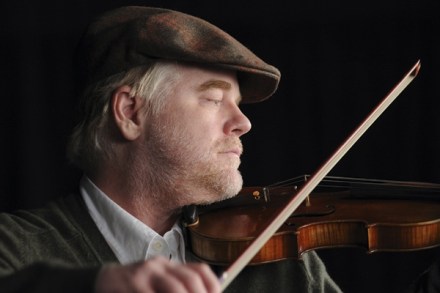
Why the sudden spate of movies about classical music quartets and impending death? Early this year, we had Quartet, about four senior singers in a retirement home. Now we have A Late Quartet, about a string ensemble facing the loss of one of its members. The film industry couldn’t possibly be subliminally associating classical music with ageing and fuddy-duddyness, could they? Shame on them. Perhaps before the year is out we’ll have The Latest Quartet, then we’ll know that classical music has carked it altogether. Anyway, of the two movies (so far), Late is by far the more masterly. It is for all intents and purposes a chamber film — intimate, intricate and with very few players. Built around Beethoven’s ‘String Quartet No.

Dr Who: there’s something in the wi-fi; How to be a Lady; The Mystery of Mary Magdalene

From our UK edition

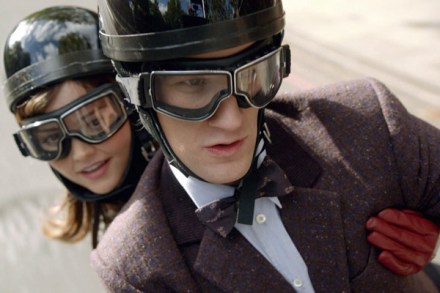
It used to be that when an arch-villain wanted to decimate a community, he’d put something in the water. Now, it’s something in the wi-fi. In the new Dr Who, the Time Lord battles a baddie who runs a group called the Spoonheads, whose mission is to upload and download stuff from the wireless internet. A bit like what I do all day, then. But wait — the Spoonheads are uploading people’s minds, to access all of human intelligence. Then they download them again, for their own evil purposes, while their victims languish in a mindless warp. The episode is called ‘The Bells of Saint John’ (BBC1, Saturday) and plays cleverly on our fascination at and fears about a technology that we cannot touch or see but is all around us.

Would you prefer to do business with the eurozone or China?

From our UK edition

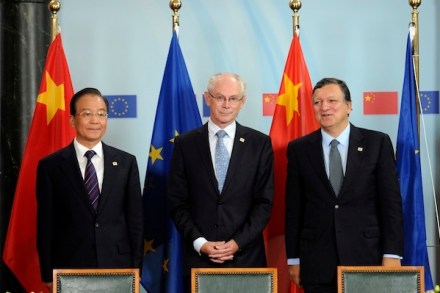
Does it really matter now whether the eurozone breaks up or not? The damage may already have been done, in terms of business confidence. A £10 billion bailout for Cyprus has been agreed, but nobody will forget that its people woke up one morning to find their bank accounts raided — something you don’t hear of happening even in developing countries. At the height of the confusion, Britain had to send out cash on a plane to its troops in Cyprus so they wouldn’t be deprived, a bit like a UN mission plopping food packets over stricken areas. The buzz is that Russian billionaires may now stage some sort of reprisal, but the real harm is that corporations, both large and small, will now be extremely wary of doing business in the eurozone.

Do politicians know what they’re doing with the Royal Charter?

From our UK edition

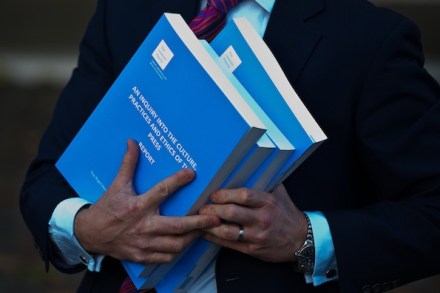
I witnessed my first-ever PMQs last week. It was, as my friend and Spectator colleague Isabel Hardman told me, not a raucous a PMQs as can usually be. Yet for me, it seemed a pretty lively parliamentary debate and — at the risk of sounding hopelessly naive — a bit of a treat to actually see important things being debated for all to see. I wonder if UK politicians know that the Royal Charter they have drawn up may one day come back and bite their butts? For what they're proposing finally influences an entire nation's conversation. If they have their way, the UK is headed for press regulation, the first time its media will be under state licensing in 300 years. It's a sad hour not only for British journalism, I think, but for journalists everywhere.

Bankers: I like them — somebody has to

From our UK edition

I like bankers. They’re an honest lot. All of us like money, but only they are upfront about it. I once witnessed a conversation between three financiers that started with them comparing their cars, then their houses, then their helicopters. None of the shilly-shallying you find at a society cocktail party, where people slyly suss out your income on the basis of your profession, your postcode, your accent and the school you went to — these bankers went straight to unvarnished one-upmanship. Such frankness can be refreshing. I like bankers because, these days, somebody has to. The second episode of Bankers (Wednesday), the BBC2 three-part documentary that’s just ended, started off in such a mean-spirited way I actually felt sorry for financial traders.

Mimics, pagans and pilgrims on TV

From our UK edition

What would you do if you had a quite extraordinary talent in impersonating everyone, from Al Pacino to Barack Obama to just any random Irish bloke? In TV land, you are probably rather baffled by it all, and unsure what to do about it as you languish in an unfulfilling half-life, until a Series of Events comes along to show you what a gift you have. This is what happens to The Mimic’s Martin Hurdle, whom we first encounter in his car stuck in traffic, entertaining himself by putting on the voice of Terry Wogan, true to it in texture and timbre, if not in spirit (‘It’s mornings like this, that I wish I was back in Phuket, bouncing a ladyboy on each knee!’).

Why do Brits seek Eastern spirituality when they have so much of their own?

From our UK edition

I used to hang around a group of friends who worked for a British events company. Their boss was a keen follower of Buddhism and all things Oriental and, since the course of business never does run smooth, regularly consulted a feng shui practitioner. The practitioner, who wanted to be called Jampa, gave advice on everything from the setting up of a branch office to the placement of a goldfish bowl. He charged £500 a visit, with the viewing of two floors in an office counting as two visits. Jampa’s real name was something like Trevor Stevens, and in the days before he started donning the saffron robes of an eastern monk he was more often spotted in the crimson cloth of a Liverpool FC supporter.

The Spectator’s new Shiva Naipaul Prize winner

From our UK edition

The Spectator is proud to announce it has a new Shiva Naipaul Memorial prize winner — Tara Isabella Burton. Tara's dazzling travel essay about the town of Tbilisi greatly impressed the judges, which this year included Colin Thubron and Joanna Kavenna. Tara's piece, which you can read here, was published in our Christmas issue. We want to blare her trumpet a bit more, and also to announce that the other five essays that made our shortlist will appear online in the coming days. These will be pieces by our runner-up Steven McGregor, who wrote poignantly about visiting the House of Lords, as well as by Dina Segal, William Nicoll, Cheryl Follon and Marianne Brown.

“This coming year, I want to live”

From our UK edition

What do New Year resolutions mean? Nothing, I have discovered, unless you resolve your old year’s first. In September I was diagnosed with colon cancer and since then, I’ve had time to think about time. It seems as though my past years have collapsed, one after another, one into the other, until I can see my experiences both all at once and as a long train of hours. Everything I’ve been has brought me to where I am now. I must look backwards to move forwards. I am not dying, yet I think much more about mortality. According to certain Eastern traditions, at the moment of death there occurs an unravelling — one revisits one’s life in reverse, unspooling from the Now into the Before, like a movie with the production credits rolling first.

Special K

From our UK edition

There’s a K-Pop Academy in London. Students go through a 12-week course and learn not only the finer points of PSY-style hip-hop, but also Korean cuisine, fashion, history and traditional music. Not everyone can attend — as with Hogwarts, one must be chosen. Applicants submit an essay to the Korean Cultural Centre and 30 students are picked each term. Once you have been selected, the course is free. I am invited to the Academy’s ‘graduation’ ceremony, where the students — all teenage girls, from all ethnic groups — express their love for all things K-Poppy. They adore Korean dance, Korean soaps, wearing the hanbok or Korean national dress. ‘I can’t believe this is over,’ I later overhear one girl wail to another in the lavatory.

Christmas story: Forever Christmas

From our UK edition

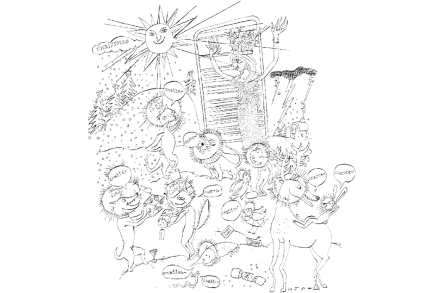
Once upon a time, in a land so far away they had heard neither of Google nor of the iPhone 5, there lived a Queen so beautiful it almost hurt to look at her. Her eyes were as clear as a mountain lake, her skin as white as milk, her hair as golden as, well, gold. This Queen ruled over a land of perpetual Winter—indeed, of perpetual Christmas. The snow fell at opportune times, when everyone was prepared for it and felt ready to shovel, and it blanketed everything prettily, from the fir trees on the hilltops to the thatched roofs in the valleys. The snow was just right, too, for making snowmen and snowballs and tobogganing and sledding. And when everyone was tired of the snow it would magically stop snowing, and the sun would shine brightly (though not enough to melt the snow).

London’s high life

From our UK edition

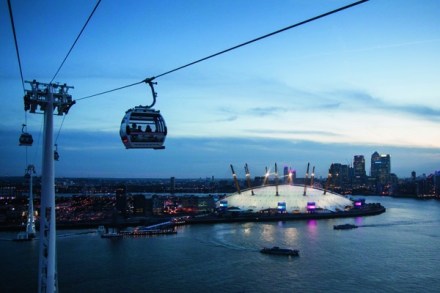
You can take a five-minute flight across the Thames on something called the Emirates Air Line. It’s a cable-car ride between North Greenwich and the Royal Docks that’s sponsored by the Gulf carrier. Much else on the ride simulates a plane trip — the tickets are called boarding passes, and when you ‘take off’ from either side of the river there’s a large digital screen showing cheery people waving you off, as at an airport. As I embark from the southern bank, a bunch of ‘Butchers from South London’ bid me goodbye. The cable cars, however, are called gondolas rather than, say, ‘cockpits’ or ‘cabins’ — and once up in the air the whole of London unfolds.

Boris in Bollywood

From our UK edition

So Cameron is making his mark on the EU budget, Gove has caused a stir with his Leveson remarks, and Osborne is prepping for his Autumn Statement. No matter. As usual, Boris is marching to the beat of his own cinematic drummer. He's going to Bollywood, on an India trip many interpret as an effort to project himself as a future world leader. The Mayor of London is visiting Delhi, Hyderabad and Mumbai, where he will appear on a top TV chat show and visit Bollywood studios. It is couched as a trade mission - 'London loves India,' he is quoted in the Hindustan Times as saying - but many items on his programme wouldn't look amiss on the schedule of a Foreign Secretary. And being Mayor instead of a minister actually allows him to add some funkier activities too.

Faking it | 22 November 2012

From our UK edition

The star of Gambit, it seems, is the Savoy. And why not? Nobody else seems to want to lay claim to this movie, a refashioning of the 1966 art con caper that starred Michael Caine. Not even Colin Firth, who spends a fair amount of time in the new film unhappily legging it, trouserless, up and down the hotel’s refurbished corridors. If you want to make an artistic copy, it had better be really good or you might as well not try, is the inadvertent message of this film. Scriptwriters the Coen brothers have taken the basic elements of the vintage Caine vehicle, which also had Shirley Maclaine, and made a crude sketch whose plot is paper-thin and whose characters are pencilled in.

The indebted superpower: China

From our UK edition

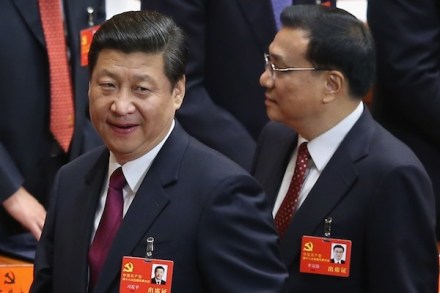
Not only the US, but China is gearing up to welcome a new President, in its case Xi Jinping. That's not the only similarity between the two global powers. While nothing can beat America's critical levels of debt (watch the media leap like lemmings over the term 'fiscal cliff'), the Middle Kingdom isn't doing too shabbily at clocking up credit of is own. It's a bit of a myth that Easterners love to save, as a report today from Standard Chartered shows. The explosion of a middle class means consumers want their shiny goods, and they want them now. China's new leader will inherit an economy that's 30 per cent more leveraged than the one his predecessor Hu Jintao took over in 2002.