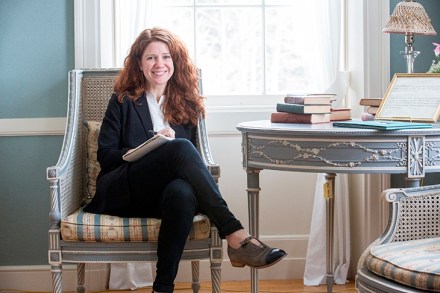
Claire Kohda

Water, water everywhere: Touring the Land of the Dead, by Maki Kashimada, reviewed

From our UK edition

Maki Kashimada won the 2012 Akutagawa Prize for Touring the Land of the Dead, the strange, unsettling novella that makes up half of this volume. It is translated here for the first time from the Japanese into English by Haydn Trowell, alongside Kashimada’s ‘Ninety-nine Kisses’, a short story based on Jun’ichiro Tanizaki’s classic novel about four unmarried women, The Makioka Sisters. In Japan, Kashimada has become known for her avant-garde, nonconformist style. These two offerings are exemplary pieces. In Touring the Land of the Dead, a woman called Natsuko returns to a hotel she went to as a child with her mother and brother; now she is with her disabled husband, who suffers from seizures.

Who is telling the truth in Kate Reed Petty’s True Story?

From our UK edition

This debut novel, which opens with ‘a high- school lacrosse party in 1999 and the rumour of a sexual assault,’ is billed as one story told in four different genres: memoir, horror, noir and thriller. It even has four covers. There is a reason for this, as Kate Reed Petty explains in an author’s note: In borrowing these forms from popular culture, I was looking for ways to push against the simplistic assumptions we too often make about power, abuse and gender — assumptions that lock us into the same stories, again and again and again. She raises certain questions. Who does a story about assault belong to? Whose version is most likely to be believed? Can the way it is told be damaging? Is the version that is true for one person necessarily true for another?

The attraction of repulsion: The Disaster Tourist, by Yun-Ko Eun, reviewed

From our UK edition

Disaster tourism allows people to explore places in the aftermath of natural and man-made disasters. Sites of massacres and concentration camps can be visited; tours operate around Chernobyl, Centralia — the city in America that is perpetually on fire — Aleppo and Fukushima. Tourists can ‘experience’ what it is like to live in a war zone, in extreme poverty or a place emptied by nuclear fallout, and then return to the safety of their homes. In Yun Ko-Eun’s The Disaster Tourist, translated from the Korean by Lizzie Buehler, the protagonist Yoona works for Jungle, a Korean disaster tourism travel company.

The devastating effects of bigamy: Silver Sparrow, by Tayari Jones, reviewed

From our UK edition

Conservative estimates place the number of those in America with more than one spouse as up to 100,000, but the figure is much higher. Bigamy, which is outlawed in 50 states, takes place in secret, with only a handful of people knowing about it. ‘It’s a shame that there isn’t a true name for a woman like my mother Gwendolyn,’ says Dana Lynn Yarboro, the ‘other’ daughter of her father’s ‘other’ wife, in Tayari Jones’s Silver Sparrow, a novel that examines the multitudinous effects of bigamy — how it can extend families, break them, confuse identity and damage lives. ‘There are other terms I know,’ Dana continues.

Spirit of place | 4 April 2019

From our UK edition

In 1923, an earthquake with a magnitude of 9 struck Tokyo and Yokohama. A huge area of Tokyo burned. But, Ueno Park, protected by the water of Shinobazu pond, survived unscathed, as did many of the people from around Tokyo who sought refuge there. Emperor Hirohito visited the park and its new homeless residents soon after, and presented it as a gift to the people of the city, renaming it UenoImperial Gift Park. Ueno Park is central to this novel by Yu Miri, whose Family Cinema won the prestigious Akutagawa Prize in 1997. Almost a century on from the Great Kanto Earthquake, the homeless victims of a different type of disaster — the 1990 economic crash — have set up huts and tents there.

A woman’s lot is not a happy one in Kim Jiyoung’s Born 1982

From our UK edition

‘Buy pink baby clothes,’ Kim Jiyoung, the protagonist of this bestselling South Korean novel is told at the obstetrician’s surgery. Jiyoung’s mother responds: ‘It’s okay, the next one will be a boy.’ There are multiple births in this book. Births of girls are always met with disappointment, while those of sons are celebrated. When Jiyoung is born in 1982, ‘abortion for medical problems had been legal for ten years ... aborting females was common practice as if “daughter” was a medical problem’.

The message in the blossom

From our UK edition

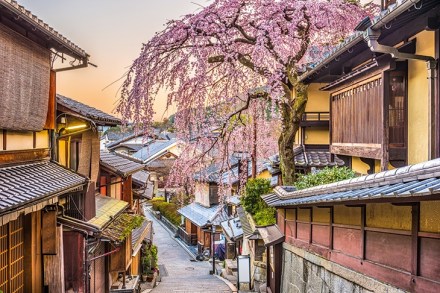
Between 1639 and 1853, seeds and scions of flowering cherry trees travelled across Japan to Edo (present-day Tokyo). Each came from the most beautiful specimens of varieties of tree from the different principalities of Japan. From mountainous regions came the light pink yama-zakura; from the chilly climates of Hokkaido and northern Honshu came the crimson Ohyama-zakura; Mame-zakura, with their neat skirt-like white petals, came from Mount Fuji; and the rainy Izu islands produced Oshima cherries, with large, white flowers. This was an era of peace. For centuries before, the various families of Japan had fought for power. Now, they all answered to a single family, the Tokugawa family, in Edo, where each lord was required to have a residence.

Round North Korea with Michael Palin in rose-tinted spectacles

From our UK edition

Michael Palin in North Korea, a two-part documentary in which the Python is given a tightly choreographed tour of that country, aired on Channel 5 last year. Palin dances with cheerfully drunk residents of the country on International Workers’ Day; picnics with his guide, a woman called So Hyang; plays catch with an inflatable globe with some children; learns Taekwondo; sees some beautiful scenery — mountains, rivers as well as cities comprised of coordinated, colourful blocks, with monuments dedicated to the Great Leaders (as the rulers of North Korea past and present are collectively called). But there are some more sinister sights, such as a road lined with huge concrete pillars, ready to be knocked down to obstruct it in the event of an invasion from the south.

Haunted by the ghosts of Ramallah

From our UK edition

On a rainy day in 1955, four-year-old Raja Shehadeh left school without putting his coat on. ‘I will soon be home, I thought, trailing the coat as it became heavy with rain.’ The walk was longer than he expected, or the rain heavier. He arrived back soaked through and fell ill with pneumonia. The journey home, without protection from the weather, could have killed him. Throughout his life in Palestine, Shehadeh has been buffeted by events that have seemed as uncontrollable as the weather. He was a very young child when his family were forced out of Jaffa by Israeli soldiers and moved to Ramallah, and 16 during the Israeli invasion of the city.

Brother sun and sister moon

From our UK edition

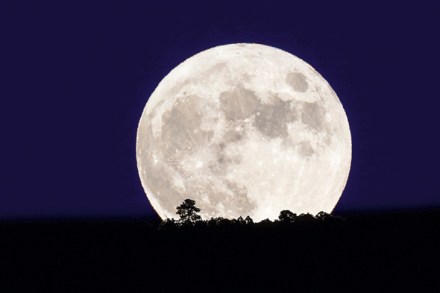
At the very back of the eye is a cluster of cells called ipRGCs. They are cells that don’t depend on vision to sense light, and that keep the circadian rhythms of both sighted and non-sighted people in sync with the sun. Without them, we would not feel the pull of sleep at night; we might fall asleep in the middle of the day and we would feel perpetually jet-lagged. It is the continuous effect of the strong, high-lux light of the sun and dim, low-lux light of the moon on these cells that keeps us, essentially, in sync with time and with society. This is too true for Linda Geddes’s interviewees in Chasing the Sun: The New Science of Sunlight and How it Shapes our Bodies and Minds (Wellcome, £14.99).

Time takes its toll

From our UK edition

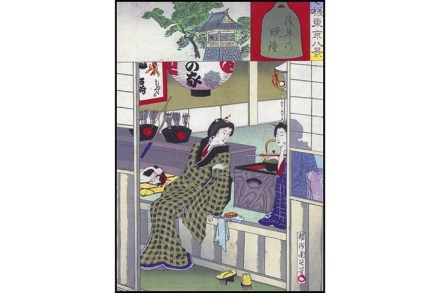
In Edo (now Tokyo), before the Meiji restoration, bells marked the beginning of each hour. The hours were named after the animals of the Chinese zodiac; the cow had its own hour, as did the mouse, the chicken, the horse, etc. In winter, daytime hours were shorter than in summer, and night hours were long. The bells told people when to rise, eat and sleep. In 1872, however, Japan switched to Western time, the use of the bells was forbidden and ‘time was torn away from nature’. Anna Sherman looks for evidence of the time bells of Edo in modern Tokyo. She describes a map that shows the sound-ranges of the bells as circles, ‘like raindrops’, that contain areas of the city and travels around and inside these circles.

Dialogue with the dead

From our UK edition

When Yiyun Li first became a writer, she decided that she would leave behind her native language, Chinese, and never write or be published in it again. She has described this decision as being like a suicide. In languages, she suggests, we form our identities. Leaving one behind is a death of a version of our self; and starting afresh in a new language is a kind of rebirth. In Where Reasons End, the English language, in which Li has made her name as a Chinese-American author, has transformed into something the narrator can no longer depend upon.

Treacherous Old Father Thames

From our UK edition

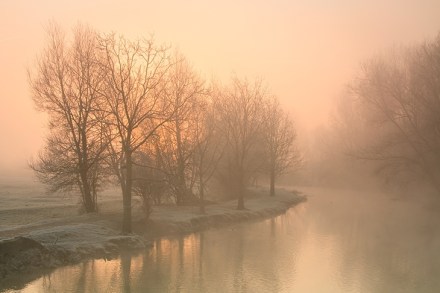
While its shape is famous — prominent on maps of London and Oxford — the Thames is ‘unmappable’, according to Diane Setterfield, because it not only ‘flows ever onwards, but is also seeping sideways, irrigating the land to one side and the other’. In Once Upon a River, she redefines the boundaries that separate land and water. The Thames ‘finds its way into wells and is drawn up to launder petticoats and to be boiled for tea’ and ‘from teapot and soup dish, it passes into mouths’. Setterfield places the Thames all around, underneath and inside her characters — it nourishes their crops but also destroys them; it hydrates people but drowns them. It’s an understatement to say that the river is a character in this novel.

A lesson in natural selection

From our UK edition

In a living room in Vineland, New Jersey, in the 1870s, a botanist and entomologist named Mary Treat studied the activities of carnivorous plants and reported her findings to her colleague, Charles Darwin (Treat is extensively referenced in Darwin’s Insectivorous Plants). Treat also corresponded with others — Charles Riley, Asa Gray — about these plants, the tower-building tarantulas she kept in her house, about ant colonies and swamp ferns, and wrote articles and books on her observations.

Trouble for Lucia

From our UK edition

In 1988, James Joyce’s grandson Stephen destroyed all letters he had from, to or about his aunt Lucia Joyce, the novelist’s daughter. Many saw the destruction of documents pertaining to Lucia, who had spent the majority of her life in asylums and had been close to her father, as the destruction of keys to understanding her father’s work. Stephen replied: ‘No one was going to set their eyes on them [the letters] and re-psychoanalyse my poor aunt.’ Stephen, still alive today, appears — though with his name blacked out — in this novel, an imagining of the life and legacy of Lucia. ‘A silly old cunt,’ he is called by a character we are made to sympathise with.

Going down in glory

From our UK edition

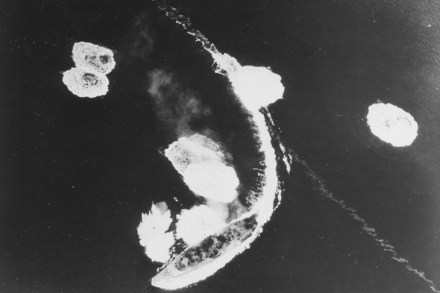
In April 1945, the Japanese battleship Yamato — the largest and heaviest in history — embarked upon a suicide mission. The ship sailed to Okinawa, where a huge American assault was taking place. Under extensive enemy fire, it sank, as was expected, to the bottom of the Pacific. With it, it took 2,280 of its crew. Survivors’ accounts exist and continued to be taken until very recently. They describe seamen lost even on board, unable to find their living quarters because of the sheer size of the vessel; arrows painted on decks to indicate the direction of the bow or stern; and the testing days before what the crew knew would be the battleship’s last mission. Jan Morris, however, does not include the human stories of the Yamato.

Perturbed spirits

From our UK edition

The events of this book take place where the world of the living and the world of the dead rub shoulders. Mama, 12-year-old Jojo’s grandmother, hears the voices — singing, talking, crying — of ghosts; Leoni, Jojo’s mother, sees her brother — ‘given, that he’s been dead 15 years now’ — sitting at the table, in the car, on the sofa between her and her friend, and every time she is high; and Richie, a 12-year-old boy whom Jojo’s grandfather, Pops, knew in prison, haunts Jojo, searching for a way ‘home’.

The colour of fate

From our UK edition

Before the narrator of The White Book is born, her mother has another child; two months premature, the baby dies ‘less than two hours into life’. The narrator is born in the dead baby’s place. ‘This life,’ she writes, in a passage directly addressed to her sister, ‘needed only one of us to live it. If you had lived beyond those first few hours, I would not be living now.’ In small, breath-like fragments, The White Book, written while Han Kang was on a writers’ residency in Warsaw, feels its way through and tries to find meaning in both lives, the narrator’s and her sister’s — or, rather, the single life they have each inhabited, at and for different times.

A woman of some importance | 6 July 2017

From our UK edition

It might seem unlikely that a Christian noblewoman could have had influence over a Muslim city in the 13th century, when women were considered by Muslim society as being ‘underlings without complete intelligence’ and by Christian society as ‘a fish hook of the devil… a source of evil… a treasury of filth’. However, Tamta — a woman of Armenian Christian heritage, who travelled extensively and acted as a link between people of various faiths and backgrounds — seems to have governed, influenced taxation, provided passage for pilgrimage and even, possibly, played a role in battles and military negotiations, in Akhlat, a Muslim city in what is now Turkey, in the early 1200s.