Cindy Yu

Cindy Yu

Cindy Yu is a Times columnist, and formerly both an assistant editor of The Spectator and presenter of our Chinese Whispers podcast.

The Spectator Podcast: can we fight back against digital addiction?

From our UK edition

It seems that everyone, young or old, has a smartphone these days. But why are the brightest in Silicon Valley taking screen time away from their children? Have they realised that we’re addicted? Also on this podcast, Tory MEPs recently voted in favour of the Viktor Orbán government in European Parliament. Are British Tories flirting with the far right? If they are, it could be because the Conservative Party has no attractive policies. Should we return to One Nation Toryism? First, it’s time for a wake-up call. Smartphones now seem so attached to us that they may as well be organically grown. Both adults and children are addicted, and it’s having an impact on their mental health.
The Vatican is strengthening its ties with China. But at what cost?

From our UK edition

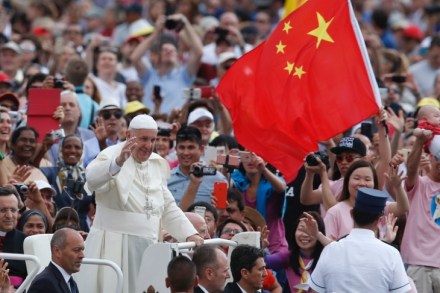
In the last decade or so there has been a thawing of relations between China and the Holy See. Sure, China can still be harsh in its treatment of some Catholics and the Vatican continues to maintain diplomatic relations with Taiwan, but a change is coming. Earlier this year, there was talk of a potential deal between Beijing and the Vatican, which would see China recognising the Pope as head of Chinese Catholics, in return the Vatican would give the Chinese government a say in the appointment of bishops. This week, we hear from two sources close to the negotiations that the deal is to be signed imminently – before the end of September. It’s no secret that Pope Francis has designs on China.

The Spectator Podcast: plots, politics, and the pains of leadership

From our UK edition

This week, Tory in-fighting comes to the fore, but could the party be even more divided than we thought? Meanwhile, across the Pond, Donald Trump continues to cause backlash. Is he to blame for an ideological shift to the left in the country? Thankfully, our own Head of State isn’t on Twitter, though that doesn’t stop people speculating about her Majesty’s personal opinions. Is the Queen a Eurosceptic? First, the Conservative Party is taking up arms against each other. This week, back room plotting came to the fore with the Brexiteer group the ERG openly discussing Mrs May’s demise and Boris Johnson dominating headlines. But James Forsyth reveals in this week’s cover piece that there are more fractures in the party than merely a Chequers/Brexiteer divide.

The Spectator Podcast: Macron vs Salvini

From our UK edition

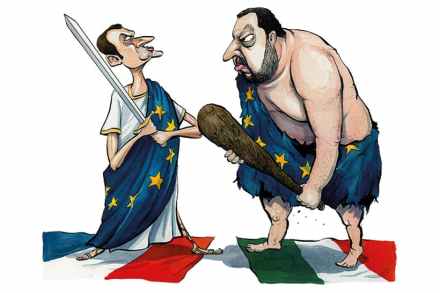
This week antagonism between Emmanuel Macron and Italy’s Matteo Salvini ratcheted up over immigration – are they the leaders of an ideological battle in Europe? But pro-immigration or not, both Macron and Salvini smashed through conventional politics in the global surge of populism. As we reach the tenth anniversary of the 2008 crash, we ask, did the financial crisis lead to greater populism? And last, why have Americans been boycotting Nike? First, is there a battle brewing in Europe over immigration?

China’s child vaccine scandal spells big trouble for president Xi

From our UK edition

The word changsheng means ‘long life’. But Gao Junfang’s Changsheng Biotech has long been in the business of robbing its victims of just that. Since taking over the company in the nineties, Gao oversaw the privatisation of the state-owned big pharma and turned it into her personal dynasty. She secured majority shares and planted her husband, her children, and their partners into the meatiest roles in the company. For decades, Gao was the entrepreneurial poster child – from rags (sort of) to riches, a walking example of the possibilities of China’s economic growth, and an idol especially for women. But last month, Gao was arrested along with 17 other people in the company. As of 2017, Changsheng had sold 250,000 dud DPT vaccines.

Why are 27,000 fewer boys going to university than girls?

From our UK edition

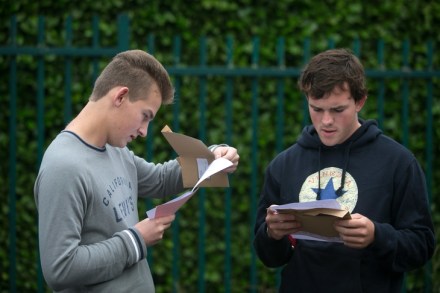
Despite the numerous photos doing the rounds of girls celebrating their exam results today, one of the main headlines from A-Level results day is the news that boys are outperforming girls in the highest grades of A*s and As. This is the second year that boys have done better than the girls (and just by 0.4 percentage points, mind). However, when it comes to the bigger picture things aren’t looking up for boys just yet. The gender gap in academic achievement has only been getting bigger in recent years, though its rate is slowing.

The Spectator Podcast: Bluffers and Royals

From our UK edition

We often complain that our politicians are all bluffers who know very little about a lot. But is the very structure of our political institutions at fault? And speaking of bluffers, Theresa May is so far successfully fudging her way through the Brexit negotiations, but can she survive after March 2019? And last, maybe all this politics has made you long for the good old days of monarchy. With Prince Charles’s art collection on exhibit, we talk about how it reflects Charles’s One Nation Toryism. PPE – that notorious Oxford degree that ostensibly teaches its students Philosophy, Politics, and Economics – and apparently, how to govern a country. Or at least, how to sound like you’re governing.

The Spectator Podcast: the New Narcissism

From our UK edition

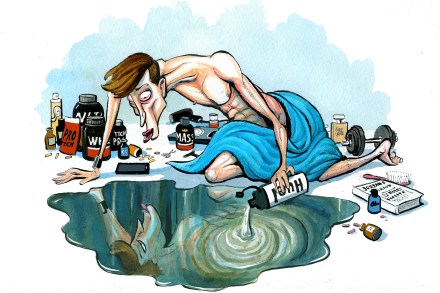
Are young men becoming too self-conscious of their body image? We discuss the trend to diet and use food replacement powders in a bid to become superhuman. We also talk about the Crocodile’s election victory in Zimbabwe – is British foreign policy in Africa too negligent? And last, how are pale rosés driving dark rosés into extinction? Huel – short for ‘human fuel’ – is taking the world by storm. This powdered food claims to have all the nutrients a human needs to survive, while being vegan, environmentally friendly, and cheap. But Lara Prendergast isn’t convinced, and in this week’s cover piece, she argues that Huel is a symptom of a wider phenomenon of male dieting and self-consciousness.

Why does China’s Xi hate Winnie the Pooh?

From our UK edition

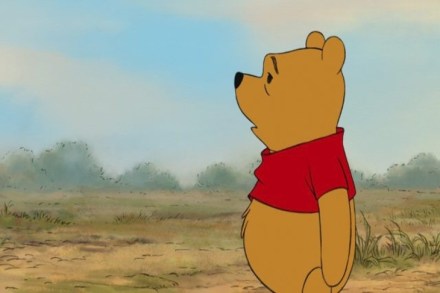
Why is Winnie the Pooh like Ai Weiwei? Both have landed in political hot water with the Chinese government. The artist Ai has a long history of running into trouble with the Chinese authorities. In fact, earlier this week, Ai’s Beijing studio was demolished for reasons unknown (though perhaps you can take a guess). And Pooh’s become an equally worthy dissident, all because he bears an unfortunate resemblance to President Xi Jinping. Judging by his waistline, President Xi is obviously settling in to his cushy job with too much tea and honey. And he’s feeling sensitive about it. So much so that Disney’s upcoming film about Pooh bear, ‘Christopher Robin’, has been banned in China.

The Spectator Podcast: China’s new diplomacy

From our UK edition

This week, China agreed to consider a trade deal with Britain post-Brexit, but does a closer relationship with China expose Britain to its expansionist ambitions? We also talk to two experts on what exactly a no-deal Britain would look like; and last, why are Britain’s great Catholic schools facing extinction? From cheap clothes to easy investments, it’s no secret that China’s rise has helped the whole world become richer. But at what cost? That’s the question that Asia expert Michael Auslin asks in this week’s cover, as Jeremy Hunt leads Britain into closer ties with China. Michael argues that Chinese trade paves the way for Beijing to strong-arm countries into China’s sphere of influence, supported by its rapidly growing military.

The Spectator Podcast: return of Ukip

From our UK edition

It’s safe to say that Brexit negotiations haven’t gone smoothly. The Tories are down in the latest polls, but Ukip is up. Are we witnessing the beginning of Ukip’s return? Meanwhile, Australians are stuck between a rock and a hard place as China and America continue to bicker; and Cosmo Landesman complains about modern parenting. You don’t have to be following Brexit very closely to know that it’s not quite going to plan. May has lost the main Brexiteers in her Cabinet, and Jacob Rees Mogg is leading a Leavers revolt from the backbenches. If you voted for a hard Brexit, you would understandably be worried. Is this what explains a recent increase in Ukip’s popularity in the polls?

Thomas Cole’s allegorical landscapes chronicling the decline of civilisation are sublime – but wrong

From our UK edition

For Americans, Thomas Cole is a household name. He painted America’s wild landscapes and lamented its destruction by the country’s early industrialisation. Yet the Lancaster-born Cole is little known in Britain, living stateside for most of his adult life. The National Gallery has been working with the Met to bring home Cole and his works. And what a homecoming it is. Inspired by Turner and Constable, Cole was a self-made man, learning to paint through tenacity and a small collection of books. Like Constable, Cole obsessed over nature and ideas of decay (Constable’s crumbling 'Hadleigh Castle' was a favourite).

The Spectator Podcast: Trump’s peace plan

From our UK edition

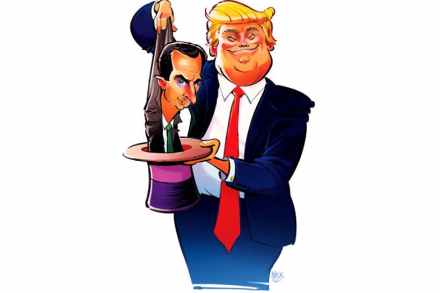
Earlier this week, Trump met Putin. But beneath the outcry against Trump’s press conference, a peace plan for Syria was slipped out. Is America withdrawing its troops and leaving Assad in place? We also ask – should we push back the March 2019 deadline for Brexit negotiations? And last, why is communism still chic? While the Twittersphere obsesses over Trump’s Helsinki press conference, a peace plan for Syria was designed, one that would see President Assad stay in place after years of civil war. Middle East expert John R Bradley explains the complex regional relations in this week’s cover – Israel and the US both want Iran out of Syria, and Russia has agreed to help with that, provided it gets access to the warmwater ports in Syria it has always wanted.

The Spectator Podcast: 190th birthday

From our UK edition

Happy birthday to the Spectator. This week, we’re celebrating our 190th birthday. Lara Prendergast takes a walk down memory lane with three editors of the Spectator, past and present. But before that, it’s the podcast as usual. This week, we’re asking - do anti-Trump protests achieve anything other than virtue signalling? And are driverless cars on a road to nowhere? Donald Trump is soon to visit the UK, and after two false alarms, this time, it will actually happen. Next Friday, Trump will be welcomed by May in London and greeted with major protests. There is a carnival of resistance organised, with special guests such as Lily Allen and a giant inflatable blimp of Trump in a nappy.

The Spectator Podcast: Angela’s ashes

From our UK edition

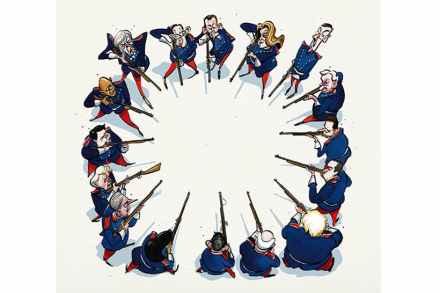
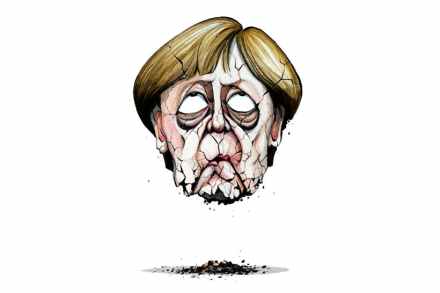
As anti-migrant sentiment sweeps across Europe, is the continent turning against Angela Merkel for her open-door policy, and is this the end of Merkel? Meanwhile, Donald Trump announced his new mission – to establish a sixth branch of the US military, the Space Force. Is this such a bad idea? And last, while it may be greedy and corrupt, should Fifa be celebrated for making the World Cup truly global? Angela Merkel is struggling. On the continent, anti-migrant sentiment is being whipped up by leaders like Austria’s Sebastian Kurz and Italy’s Matteo Salvini. At home, her re-election results were less than ideal and her coalition partner has pushed for a firmer stance on migration. Is this the end of the Merkel project?

How does the housing crisis threaten a Tory government, and how can they fix it?

From our UK edition

In Britain today, home ownership rates stand at a 30-year low. More and more families with young children are renting, while recent research from the Resolution Foundation found that one in three millennials are unlikely to ever own their own home. At the same time, Britain ranks fifth on infrastructure spending when compared to its G7 counterparts. How can the government solve problems in housing and infrastructure, and how can the private sector help in the fix? M&G Prudential brought together a group of politicians, economists and fund managers to determine the strategy, going ahead, at a recent Spectator roundtable. Fraser Nelson, Editor of the Spectator, chaired the roundtable.

The Spectator Podcast: the Diversity Trap

From our UK edition

In recent days, Lionel Shriver has been in trouble. Her criticism of the publishing industry’s diversity drive has led to her marked as a racist and even dropped from a literary judging panel. She argued that ethnic quotas harm rather than help diversity - is she wrong? As Robert Mueller’s investigation continues, several dodgy links to Britain have surfaced that could bring down Trump. And last, in the age of MeToo, is sex becoming sexier? Find out at this week's Spectator Podcast. Do quotas help or hinder racial equality? That’s the big question we’ve been asking at the Spectator recently. Since we published Lionel Shriver’s critique of Penguin Random House’s diversity drive, she has been labelled a racist and even dropped from a literary panels.

The Spectator Podcast: Next up, Nato

From our UK edition

In the last few days, world order seems to have been turned on its head as Trump antagonised his western allies at the G7 Summit, and then shook the hand of North Korean dictator Kim Jong Un. We ask, how will Trump treat his allies in the July Nato summit? We also talk to Peter Hitchens and Paul Mason about Marxism in the modern day – are there any left in Britain? And last, what is it like to be homeless in London? Over the weekend, the G7 Summit ended in a worse way than anyone could have predicted. As soon as he left, Trump tweeted harsh criticism of Justin Trudeau, and bashed Germany’s commitment to Nato.

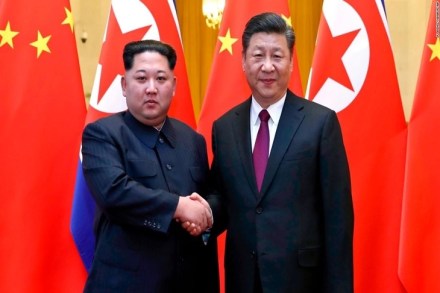
What China gets out of a Kim-Trump bromance

From our UK edition

President Xi will have been watching the meeting between Donald Trump and Kim Jong-un with bated breath, because their meeting is vital for the future of Chinese power. China and North Korea have enjoyed close ties since the dawn of Asian communism. Mao’s own son died on the frontlines of the Korean War, fighting for North Korea. And while North Korea has had sanctions applied to it for decades, China has steadfastly provided support – both economic and strategic. Only a small part of this was ideological. As China opened and reformed, the Kim brand of Communism became less palatable to Beijing and not worth fighting for. Regardless, China needs North Korea, because it serves as a physical buffer against American-allied Asia: South Korea, Japan, Taiwan.

The Spectator Podcast: Putin’s Losing Game

From our UK edition

In this week’s episode, we talk about Russia’s hidden fragility, and ask, is Putin surviving on luck? We’ll also be getting to the bottom of Trump’s tariffs – is there really no rhyme or reason to them? And last, with all that’s going on in the world, is kindness what we all need more of? The Russia World Cup is due to start in a week, and as the streets of Moscow are cleaned up in preparation, things seem to be going pretty well for Putin’s Russia. Russia has been asked to fill the void left by Trump in the Iran nuclear deal, Russophile parties are wreaking havoc to the EU establishment across Europe, and Russia’s involvement in Syria has established the country as a serious power broker in the region.